
Why Integrated Pest Management Is Effective for Water Pests
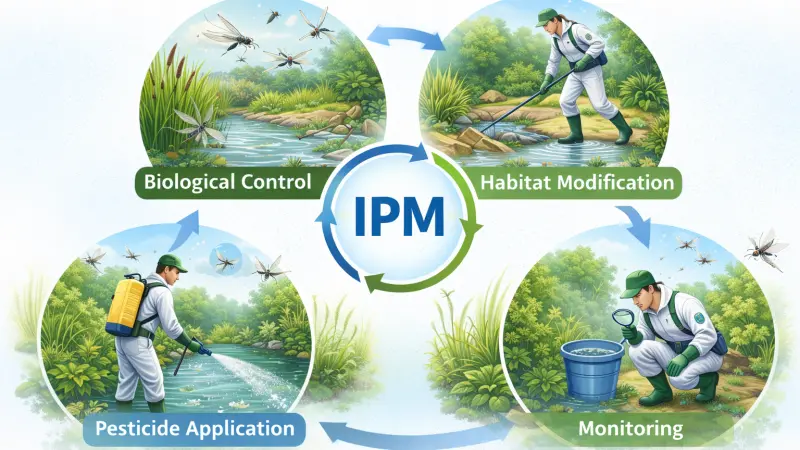
Water is a dynamic, living medium that responds rapidly to its environment. When invasive species, nuisance insects, or aggressive algae blooms take hold in a pond, lake, or drainage system, the instinctive human reaction is often to seek a "quick fix" through heavy chemical intervention. However, water bodies are complex ecosystems where every action has a ripple effect. This is why Integrated Pest Management (IPM) has emerged as the most effective and sustainable strategy for managing water pests. Unlike traditional methods that focus solely on eradication, IPM prioritizes long-term prevention and ecological balance by combining biological, physical, and targeted chemical tools.
By shifting the focus from "killing a pest" to "managing an environment," IPM addresses the root causes of infestations rather than just the symptoms. Whether you are a property owner with a decorative koi pond or a land manager overseeing a large reservoir, understanding the principles of IPM is essential for maintaining water that is safe, clear, and biologically resilient. In this guide, we explore the mechanics of Integrated Pest Management and why it remains the superior choice for safeguarding our most vital aquatic resources.
Overview: What is Integrated Pest Management (IPM) in Water?
Integrated Pest Management is a science-based decision-making process that identifies and reduces risks from pests and pest management tools. In an aquatic context, IPM is specifically designed to minimize the negative impact on non-target species—such as fish, frogs, and beneficial insects—while effectively controlling the organisms that threaten water quality.
The Four Pillars of Aquatic IPM
To understand why IPM works, one must look at its four foundational components:
-
Action Thresholds: Determining the point at which a pest population becomes a problem that requires intervention.
-
Monitoring and Identification: Ensuring that the species in the water are correctly identified so that beneficial organisms aren't accidentally harmed.
-
Prevention: Managing the water’s nutrients and physical structure to stop pests from establishing a foothold in the first place.
-
Control: Using a hierarchy of methods, starting with the least intrusive (biological and mechanical) before moving to highly targeted chemical applications.
Why IPM is Superior to Traditional Methods
Traditional pest control often relies on a "spray and pray" philosophy, which can lead to a "rebound effect." For example, if you use a strong herbicide to kill 100% of the weeds in a pond, the decaying plants release a massive surge of nutrients into the water. Without a management plan, these nutrients trigger an even more aggressive algae bloom just weeks later. IPM breaks this cycle of chemical dependency.
1. Long-Term Sustainability
IPM focuses on the "carrying capacity" of the water. By reducing the nutrient load (phosphates and nitrates) and increasing dissolved oxygen through aeration, IPM makes the environment naturally inhospitable to pests. This leads to a water body that requires less human intervention over time, creating a more stable and self-regulating ecosystem.
2. Protection of Non-Target Species
Aquatic environments are fragile. Many traditional chemicals used to kill mosquito larvae or invasive weeds can also harm amphibians or dragonflies. IPM utilizes highly specific biological agents—such as Bacillus thuringiensis israelensis (Bti)—which target only the midges and mosquitoes without affecting the rest of the food chain.
3. Cost-Effectiveness
While the initial assessment and setup of an IPM program (such as installing an aeration system) may have an upfront cost, the long-term savings are significant. By preventing major outbreaks, property managers avoid the high costs of emergency dredging, large-scale chemical treatments, and the replacement of fish and native plants.
Step-by-Step: Implementing an IPM Plan for Water Pests
A successful IPM strategy follows a logical progression that prioritizes safety and ecological integrity.
Step 1: Accurate Identification and Baseline Testing
The first step is knowing exactly what you are dealing with. Is that green mat on the surface duckweed (an invasive pest) or azolla (a native floating fern)? Testing the water for dissolved oxygen, pH, and nutrient levels provides a baseline that helps explain why the pest is thriving.
Step 2: Setting Thresholds
Not every "bug" or "weed" is a pest. In an IPM framework, you decide how much growth is acceptable. A small amount of algae is actually healthy for a pond’s oxygen cycle. Treatment is only triggered when the growth begins to interfere with the water's intended use—whether that is irrigation, swimming, or aesthetic beauty.
Step 3: Cultural and Physical Controls
This is the "prevention" stage. It includes:
-
Aeration: Using bubblers or fountains to keep water moving.
-
Nutrient Buffering: Planting native grasses around the water’s edge to "filter" out fertilizer runoff from nearby lawns.
-
Shading: Using lilies or structures to block sunlight that fuels algae growth.
Step 4: Biological and Mechanical Intervention
If the threshold is crossed, you move to biological tools. This might involve introducing beneficial bacteria that "digest" the organic muck at the bottom of a pond, effectively starving the pests of their food source. Mechanical methods, like hand-pulling invasive weeds before they go to seed, are also employed at this stage.
Step 5: Targeted Chemical Application (As a Last Resort)
If all other methods fail, a professional may use a highly targeted aquatic herbicide. In an IPM plan, these are applied in small, localized doses rather than "blanket" treatments, ensuring that the impact on the overall ecosystem is kept to a minimum.
Tips for Maintaining an IPM-Friendly Water Body
-
Limit Fertilizer Use: Be extremely careful when fertilizing lawns near a water body. Rain washes these nutrients directly into the water, acting as "steroids" for pests.
-
Encourage Predators: A healthy population of dragonflies, damselflies, and frogs will do more for mosquito control than any chemical. Provide habitat like tall grasses and rocks to keep these "natural technicians" on your property.
-
Manage the "Muck": The dark sludge at the bottom of a pond is a reservoir for nutrients. Use biological sludge-removers to keep this layer thin.
Common Mistakes in Aquatic Pest Management
-
Ignoring the "Bottom-Up" Approach: Trying to clear the surface of the water without addressing the muck and nutrients at the bottom.
-
Using Copper Sulfate Incorrectly: While common, copper sulfate can build up in the sediment and become toxic to the pond's future health.
It should be used sparingly and only as part of a larger plan.
-
Killing All Vegetation: Removing every plant from a pond removes the competition for algae. A healthy pond needs "good" plants to keep the "bad" ones at bay.
-
Lack of Monitoring: Pests don't take vacations. Failing to check the water during a heatwave can allow a minor issue to become an uncontrollable bloom in just a few days.
Supporting Local Business Visibility Beyond Core Marketing Efforts
Effective environmental stewardship often requires the partnership of local specialists who understand the specific climate and biology of a region. For these niche experts, business discoverability is the primary way they connect with property managers who are ready to move away from traditional chemicals. By utilizing free business listing sites in uk and LocalPage, environmental consultants ensure that their sustainable strategies are accessible to the community.
Maintaining a business listing uk or a LocalPage provides a vital layer of trust reinforcement across platforms. This local presence consistency acts as a credibility signal for businesses that specialize in complex, science-based fields like Integrated Pest Management. Furthermore, appearing on uk free business listings sites and maintaining a business listing uk creates a supporting visibility layer that aids in local discovery. By ensuring that a LocalPage is accurate and searchable, specialized firms can better support the "prevention" phase of water care. Ultimately, being active on free business listings uk allows these essential partners to stay top-of-mind, ensuring that sustainable water management remains a reachable goal for everyone.
Final Thoughts
Integrated Pest Management is not just a set of tools; it is a philosophy of respect for the natural world. By choosing IPM for water pests, we acknowledge that our ponds and lakes are not isolated features, but interconnected parts of a larger ecosystem. This approach requires more patience and observation than a "quick fix" chemical spray, but the rewards are profound: water that is clearer, safer, and naturally vibrant. When we manage our water resources with an eye toward balance, we create a legacy of environmental health that benefits our families, our properties, and the planet as a whole. Embracing IPM is the most responsible way to ensure that our water remains a source of life and beauty for years to come.
FAQs
1. Is IPM more expensive than traditional pest control?
While the initial setup (like buying an aerator) might be higher, IPM is usually cheaper in the long run because it reduces the need for frequent chemical reapplications and emergency interventions.
2. Can I do IPM myself, or do I need a professional?
You can certainly handle the "prevention" and "monitoring" stages yourself. However, for species identification and targeted biological or chemical applications, a professional ensures the safety of the ecosystem.
3. How long does it take to see results with an IPM plan?
IPM is a long-term strategy. While some physical removals offer immediate results, biological balance can take a few months to fully establish.
4. Will IPM help with "swimmer’s itch"?
Yes. Swimmer’s itch is often caused by parasites related to certain snails. An IPM plan can manage the snail population and the nutrient levels that support them, reducing the risk.
5. Are the biological agents used in IPM safe for my dogs?
Yes. Biological controls like Bti or beneficial bacteria are highly specific to aquatic pests and are safe for mammals, birds, and fish.
6. Does aeration really help with pest control?
Absolutely. Aeration prevents stagnation (which mosquitoes love) and helps beneficial bacteria break down the nutrients that feed algae and invasive weeds.
7. Why is my pond still green after I pulled out all the weeds?
By removing the weeds, you removed the competition for nutrients. Without a plan to manage those remaining nutrients (like adding aeration or beneficial bacteria), algae will quickly take over.
8. Is copper sulfate allowed in an IPM plan?
It is allowed as a "last resort" tool in very specific circumstances, but IPM practitioners generally try to avoid it due to its potential for heavy-metal buildup in the sediment.
9. How do I know if a plant is "native" or "invasive"?
This usually requires a specialist or a high-quality field guide. Many invasives look similar to natives but grow much more aggressively.
10. What is the most important part of an IPM plan?
Monitoring. Catching a pest problem early allows you to use the gentlest, most natural methods before a crisis occurs.
Disclaimer: The information provided in this article is for general informational and research purposes only. Company details, features, services, and market positions may change over time. Readers are advised to visit official company websites and conduct independent research before making any business decisions or purchasing services.
Most Searchable Keywords
Recent Blogs


Related Listings


Categories
- Accountants (295)
- Advertising Agencies (559)
- Architects (149)
- Automobiles (377)
- Beauty (300)
- Carpenters (146)
- Cleaning Services (387)
- Dentists (189)
- Driving (62)
- Education (1)
- Electricians (215)
- Energy (8)
- Event Organiser (689)
- Finance (602)
- Guide (3492)
- Health (2207)
- Information technology (207)
- Legal Services (361)
- Logistics (6)
- Maintenance (65)
Sponsored Listings in Business Services

Related Blogs

Creamfields Daresbury: Impact on Local Reside...
Read this insightful article "Creamfields Daresbury: Impact on Local Residents" to expand your knowledge!

UK High Street Businesses in 2026-27: Which S...
Read this insightful article "UK High Street Businesses in 2026-27: Which Sectors Are Growing?" to expand your knowledge!

Why Complete Business Listings Matter More Th...
Read this insightful article "Why Complete Business Listings Matter More Than You Think" to expand your knowledge!
Questions & Answers – Find What You Need, Instantly!
Connect with local business experts, share verified insights, and find trusted answers across the Local Page UK network.
Ask Community
Ask questions to the Local Page UK community
Share Knowledge
Share your knowledge to help out others
Find Solutions
Find answers or offer instant solutions
Some of the most popular fantasy TV shows include "Game of Thrones," known for its epic battles and political intrigue, "The Witcher," which features monster hunting and magic, and "Stranger Things," blending supernatural elements with 1980s nostalgia. Other notable mentions are "His Dark Materials," "Shadow and Bone," and "The Mandalorian," each offering unique worlds and captivating storytelling that have garnered large fan bases.
When seeking bathroom renovation providers that handle both plumbing and tiling, it's advisable to look for licensed contractors who specialize in comprehensive bathroom remodels. Companies such as Home Depot, Lowe's, and Bath Fitter offer these services, often providing a seamless experience by managing all aspects of the renovation process. Additionally, local contractors with positive reviews in platforms like Angie's List or Houzz may also offer tailored solutions for your bathroom needs.
Absolutely, there are several distributors that supply crash mats and soft play equipment to gymnastics clubs in and around Birmingham. National companies like Gymnova, S & G (Spieth Gymnastics), and Jaques of London offer a wide range of crash mats, foam pits, and soft play pieces, and they typically deliver to the Birmingham area. For more local options, you might try The Gym Equipment Company, which has a showroom in the West Midlands, or check out smaller specialist suppliers like Playtime UK. Many of these distributors cater specifically to clubs, offering high-density foam mats that meet safety standards. I'd recommend reaching out to a few to compare pricing, delivery times, and whether they offer custom sizes or installation services. It's also worth checking if any of them have a physical showroom near Birmingham so you can test the equipment before buying. Happy tumbling!
For professionals seeking a reliable sanitaryware supplier in Manchester with trade account facilities, several established merchants combine extensive product ranges, competitive pricing, and dedicated trade support. The most reputable option is Graham Plumbers Merchant, which operates multiple branches across Manchester, including Salford Quays and Oldham. They offer a dedicated trade account service with preferential pricing, priority delivery scheduling, and access to a vast inventory of leading sanitaryware brands such as Villeroy & Boch, Duravit, Ideal Standard, and Roca. Their trade accounts typically include net 30-day payment terms, online account management, and a tailored project quotation system. Similarly, City Plumbing Supplies has several Manchester-based depots (such as Ashton-under-Lyne and Stockport) that cater specifically to trade customers, providing a rapid order-and-collect service, trade-only promotions, and a loyalty programme offering rebates on repeat purchases. Their product range covers everything from basins and WCs to complete bathroom suites and brassware, with in-house technical advisors available for specification support. Another key player is Plumb Center, part of the Wolseley Group, which offers trade accounts with bespoke pricing structures, direct-to-site deliveries within the Greater Manchester area, and access to over 10,000 lines of sanitaryware, including premium brands like Grohe and Hansgrohe. Their trade portal allows for real-time stock checking and order history tracking, facilitating efficient project management. For those seeking a more specialist or high-end option, Bathroom Spares in Manchester provides trade accounts with a focus on hard-to-find sanitaryware and discontinued ranges, which can be invaluable for refurbishment projects. Additionally, independent merchants such as M&B Plumbase in Trafford Park offer flexible trade terms, personalised service, and competitive pricing on both mainstream and luxury sanitaryware. When evaluating suppliers, trade customers should consider factors beyond price: reliability of stock availability, delivery timescales within Manchester’s often congested zones, clarity of returns policies, and the quality of after-sales support for warranty claims. It is advisable to request a trade account application from at least two to three suppliers to compare discounts, minimum order values, and payment terms. Many suppliers also offer showroom access for trade clients, allowing you to inspect finishes and dimensions before committing to large orders. For ongoing projects, establishing a relationship with a single supplier who offers consolidated invoicing and dedicated account management can streamline procurement. Ultimately, the most reliable supplier for your trade account in Manchester will be one that aligns with your volume requirements, preferred brands, and service expectations, so a site visit to their local branch and a discussion about your specific trade needs is highly recommended before committing to an account.
People in Leeds are loving their local florists—customers often mention gorgeous, fresh arrangements and super friendly service. Many rave about reliable same-day delivery and creative wedding bouquets. A few note pricing can vary, but overall, the buzz is all about quality and that personal touch making every order feel special.
Common problems for commercial gardening in Bristol include weed overgrowth, soil degradation, pest infestations, and irrigation malfunctions. Additionally, managing seasonal transitions, adhering to sustainability regulations, and maintaining consistent aesthetics pose significant challenges. Expert services mitigate these via structured maintenance, integrated pest management, and soil analysis to ensure long-term landscape health.