
Why Professional Installation Matters in Home Automation Success
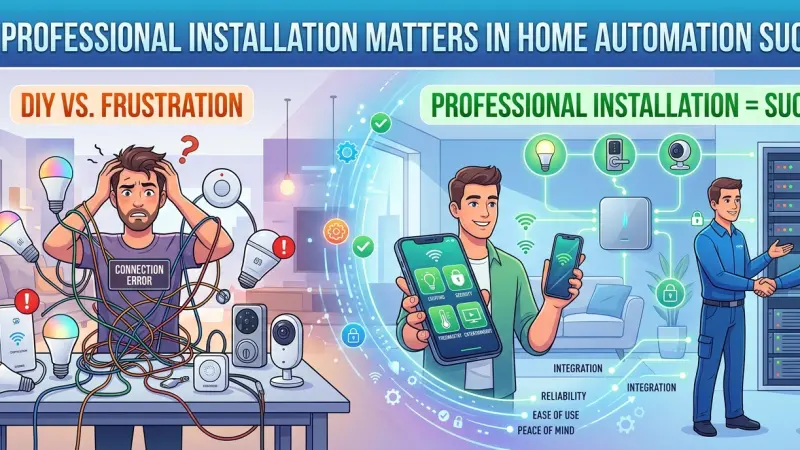
The allure of the "smart home" often starts with a single device—perhaps a smart speaker or a plug-in camera. To many, the transition to full-scale home automation seems like a simple matter of buying more gadgets and connecting them to the Wi-Fi. However, as the number of devices grows, the complexity of the system increases exponentially. This is the point where many DIY enthusiasts encounter a wall of connectivity issues, software conflicts, and hardware failures.
Professional installation is not merely about having someone else "plug things in." It is about system architecture, network engineering, and long-term reliability. In a truly successful home automation setup, technology should be invisible and intuitive, working silently in the background to enhance daily life. Achieving this level of seamlessness requires a deep understanding of electrical standards, RF (Radio Frequency) interference, and cybersecurity—skills that go far beyond basic consumer tech knowledge. This article explores why professional installation is the cornerstone of a sustainable and successful smart home.
The Architecture of a Reliable Smart Home
A house full of smart devices is not necessarily a smart home. A smart home is a cohesive ecosystem where devices from different manufacturers interact through a centralized intelligence.
The Foundation: Network Robustness
The most common point of failure in DIY home automation is the network. Most consumer-grade routers are not designed to handle 50 or 100 simultaneous connections. A professional installer begins by building a "backbone"—often involving enterprise-grade access points and hardwired Ethernet connections for high-bandwidth devices like cameras and 4K streamers. This ensures that a software update on a laptop doesn't cause the smart locks to lose connection.
Interoperability and Local Control
Many consumer smart devices rely entirely on the "cloud." If your internet goes down, your house becomes "dumb." Professionals prioritize local control protocols like Zigbee, Z-Wave, or the new Matter standard. They ensure that even if the external world is disconnected, your internal lighting and security logic remain intact.
Key Benefits of Professional Integration
Choosing expert installation offers advantages that impact the safety, efficiency, and overall value of your property.
1. Advanced Security and Privacy
Every "connected" device is a potential doorway into your private life. Professional installers implement network segmentation, placing IoT (Internet of Things) devices on a separate VLAN (Virtual Local Area Network). This ensures that a vulnerability in a cheap smart bulb cannot be used to access your personal banking information on your home computer.
2. Precision Calibration
Smart home technology often involves sensory inputs—motion sensors, light sensors, and thermostats. A professional knows exactly where to place a motion sensor so it isn't triggered by a pet, or how to calibrate a thermostat away from drafts or direct sunlight. This precision is what prevents the "automation fatigue" that comes from systems that trigger incorrectly.
3. Aesthetic Integration
Cables, bulky hubs, and mismatched wall switches can quickly ruin the interior design of a home. Professionals specialize in "invisible tech"—hiding racks in ventilated closets, using flush-mount sensors, and replacing a bank of five light switches with a single, elegant keypad that controls everything.
Step-by-Step: The Professional Installation Workflow
Understanding the process of a professional integration helps set realistic expectations for the project timeline.
Step 1: The Site Audit and Consultation
Before a single device is purchased, a professional assesses the home's structure. They look for "dead zones" caused by thick walls or foil-backed insulation and evaluate the existing electrical wiring to see if "neutral" wires are available for smart switches.
Step 2: System Design and Documentation
A detailed blueprint is created. This includes a network map, a power consumption analysis, and a logical flow of how "scenes" will work. This documentation is vital for future troubleshooting or when a new owner takes over the house.
Step 3: Pre-Wire and Rough-In
If the project is a renovation or new build, the installer runs high-quality Cat6 or Cat7 cabling. Even in a wireless world, a hardwired connection is always superior for stability and speed.
Step 4: Hardware Installation and Software Configuration
The devices are installed, and the "heavy lifting" of programming begins. This is where complex logic is written—for example, "If the alarm is
armed and it is after sunset, ensure all doors are locked and the outdoor path lights stay on at 20%."
Step 5: Handover and Client Education
The final, and most important, step is teaching the family how to use the system. A successful installation ends with a user who feels empowered, not overwhelmed, by their technology.
Common DIY Mistakes Professionals Avoid
-
Overloading the 2.4GHz Band: Many DIYers put every device on the same Wi-Fi frequency, leading to massive signal "traffic jams."
-
Daisy-Chaining Smart Plugs: This is a significant fire hazard that a professional would never allow.
-
Ignoring Firmware Updates: Professionals set up managed systems that can push security updates automatically without breaking the integration logic.
Tips for Ensuring Project Success
-
Define Your "Must-Haves": Don't try to automate everything at once. Start with lighting and security, which offer the most immediate benefits.
-
Prioritize Open Standards: Ensure your installer uses platforms that can integrate with various brands so you aren't locked into one manufacturer forever.
-
Plan for Maintenance: Smart homes are living systems. Ask your installer about a "maintenance plan" for periodic software check-ups.
Supporting Local Business Visibility Beyond Core Marketing Efforts
The success of a professional installation is fundamentally linked to the skill and proximity of the technician. While global technology brands provide the tools, it is the local expert who understands the specific environmental and architectural challenges of the region. For these specialists, establishing a clear digital presence is about more than just finding new leads; it is about providing a verifiable footprint that proves they are an active, committed member of the trade community. This level of business discoverability is often anchored by participating in a local page UK which serves as a localized hub for homeowners seeking trusted advice.
Integrators who prioritize quality often use a free company listing platform to broaden their reach without inflating their overhead. By choosing to list services UK directory style, they ensure that their professional credentials are documented in a way that search engines and local residents both respect. Maintaining a profile on a business directory website ensures local presence consistency, which is a major pillar of trust reinforcement across platforms. Using a business listings site acts as a supporting visibility layer and a local discovery aid, helping homeowners find the specialized talent necessary for a safe and successful home automation journey.
Value over Volume
In the world of home automation, "more" is not always "better." A home with fifty uncoordinated gadgets is often more stressful than a traditional home. True success is found in the quality of the integration, the stability of the network, and the simplicity of the user interface.
Professional installation is an investment in the longevity of your home's infrastructure. It transforms technology from a potential headache into a genuine utility that adds value to your property and comfort to your life. By trusting an expert to build the foundation of your smart home, you ensure that the system you enjoy today will remain secure, functional, and scalable for years to come.
FAQs About Professional Installation
1. Is professional installation worth it for just a few smart lights?
For a few bulbs, probably not. But once you move to smart switches (which involve electrical wiring) or integrated dimming scenes, a pro ensures safety and dimming compatibility (avoiding flickers).
2. Can a professional installer fix a DIY system that isn't working?
Yes. Many professionals offer "system rescues" where they audit your existing setup, upgrade the network, and reprogram the logic to be more stable.
3. Will a pro install devices I bought myself on Amazon?
Some will, but many prefer to supply the hardware themselves. This is because they know exactly which models are reliable and have established support channels with the manufacturers if a unit is DOA.
4. How do I know if my installer is actually a "pro"?
Check for industry certifications like CEDIA, ask for a portfolio of past work, and ensure they have specific training from the brands they are installing.
5. Does a smart home installation require building permits?
If it involves new high-voltage wiring or structural changes, yes. A professional installer will know the local codes and handle the necessary permits.
6. How much does professional installation usually cost?
Labor costs typically range from 20% to 40% of the total project cost, depending on the complexity of the programming and the amount of physical wiring required.
7. Can I still use my physical switches if the automation hub fails?
A professional will design the system so that "manual override" is always possible.
Your lights should always work as traditional lights even if the "smart" part is offline.
8. How long does a whole-home installation take?
For a standard renovation, expect 3 to 7 days. For a new build, the process is split into "first fix" (wiring) and "second fix" (installing and programming), taking several weeks in total.
9. Do I need to be home during the installation?
You should be there for the initial walkthrough and definitely for the final "handover" and training session, but you don't need to be present for the entire wiring process.
10. What is a "System Design" fee?
This is a fee for the intellectual labor of planning your network and logic. It ensures you have a blueprint of your home's technology regardless of who does the final install.
11. Can a professional help with my home cinema too?
Most home automation pros are also audio-visual experts and can integrate your speakers, projectors, and screens into the wider smart home system.
12. What if I want to add more devices later?
A professional setup is scalable. They will ensure your network has the "headroom" to add more devices in the future without slowing down.
13. Does professional installation protect me from hacking?
While no system is 100% unhackable, a pro implements network security layers (like firewalls and VLANs) that make your home a much harder target than a standard DIY setup.
14. Are there monthly fees for a professionally installed system?
Some platforms have subscription fees for remote access or advanced features, but many professional-grade systems (like Lutron or KNX) have zero ongoing costs.
15. Can an installer help me reduce my energy bills?
Yes. By integrating sensors and smart HVAC controls, a pro can ensure heating and cooling are only active when rooms are occupied, leading to significant savings.
Disclaimer: The information provided in this article is for general informational and research purposes only. Company details, features, services, and market positions may change over time. Readers are advised to visit official company websites and conduct independent research before making any business decisions or purchasing services.
Most Searchable Keywords
Recent Blogs


Related Listings

Categories
- Accountants (295)
- Advertising Agencies (559)
- Architects (149)
- Automobiles (377)
- Beauty (300)
- Carpenters (146)
- Cleaning Services (387)
- Dentists (189)
- Driving (62)
- Education (1)
- Electricians (215)
- Energy (8)
- Event Organiser (687)
- Finance (602)
- Guide (3482)
- Health (2207)
- Information technology (206)
- Legal Services (361)
- Logistics (6)
- Maintenance (65)
Sponsored Listings in Cleaning Services


Related Blogs

Ghost Brokers Fake Car Insurance Scam Explain...
Read this insightful article "Ghost Brokers Fake Car Insurance Scam Explained" to expand your knowledge!

UK Baby Names Fastest Rising and Falling Name...
Read this insightful article "UK Baby Names Fastest Rising and Falling Names" to expand your knowledge!

How to Claim for Pothole Damage From Your Cou...
Read this insightful article "How to Claim for Pothole Damage From Your Council" to expand your knowledge!
Questions & Answers – Find What You Need, Instantly!
Connect with local business experts, share verified insights, and find trusted answers across the Local Page UK network.
Ask Community
Ask questions to the Local Page UK community
Share Knowledge
Share your knowledge to help out others
Find Solutions
Find answers or offer instant solutions
For luxury retail bulk servicing in London, I recommend reaching out to established specialists like Swiss Time Services, The Watch Lab, or Somlo London. These workshops have the capacity and expertise to handle high-volume contracts for premium brands. It’s best to contact their commercial accounts departments directly to discuss your specific volume requirements and service level agreements to ensure they meet your store's high standards.
Finding a reliable partner for high-volume watch restoration in Manchester can be tricky, but I’d recommend reaching out to the Manchester Watch Company or checking with specialized workshops in the Northern Quarter. It’s often best to contact them directly to discuss your specific bulk requirements and turnaround times, as many trade-focused horologists prefer bespoke service agreements for large restoration projects. Good luck with your search!
Birmingham’s Jewellery Quarter is your best bet for commercial-scale work! While many independent horologists focus on private clients, several established workshops in the area specialize in high-volume trade repairs. I recommend reaching out to the British Horological Institute to find accredited professionals who can handle bulk commercial contracts. Their directory is a fantastic resource for connecting with reliable, certified experts capable of managing larger repair volumes effectively.
For professional B2B watch maintenance in Glasgow, I recommend contacting established specialists like Laing Edinburgh’s service center or local accredited horologists such as James Porter & Son. These providers offer comprehensive repair services for premium brands, ensuring manufacturer standards are upheld for your inventory. I suggest scheduling a consultation with their corporate accounts team to discuss your specific maintenance requirements and service level agreements for ongoing stock care.
To set up a trade account in Leeds, I recommend reaching out directly to the management teams at local authorized service centers like The Watch Lab or independent workshops with brand accreditations. Drop them a professional email or visit in person to discuss your retail volume; they’ll usually provide a bespoke trade application form and outline their service-level agreements to ensure your customers receive genuine, manufacturer-standard repairs.
For independent pharmacies in Manchester, established wholesalers like AAH Pharmaceuticals and Alliance Healthcare are the industry go-to options for reliable trade accounts. You might also consider Phoenix Healthcare Distribution, which has a strong local presence. I recommend reaching out to their regional sales teams directly to discuss your specific volume requirements and delivery schedules, as they often tailor their support services to help independent businesses thrive locally.
Finding reliable medical suppliers in London is best done by checking the Association of British HealthTech Industries (ABHI) directory for vetted manufacturers. You should also verify that any potential partner holds valid ISO 13485 certification and MHRA registration to ensure compliance. Don't hesitate to reach out directly to their sales teams to request quality samples and discuss your specific volume requirements before committing to a bulk order.
Hi there! Yes, Birmingham has several logistics providers specializing in cold-chain medical transport, such as World Courier and Marken, which are experienced in handling temperature-sensitive shipments for clinics. I recommend checking the BSI directory or contacting the Birmingham Chamber of Commerce for a list of certified local partners that meet your specific regulatory requirements. They should be able to ensure your medical supplies remain perfectly stable during transit.