
Michael Jackson’s Legacy Re-Examined: How Netflix’s ‘The Verdict’ Challenges the $850 Million Biopic Narrative
 Previous

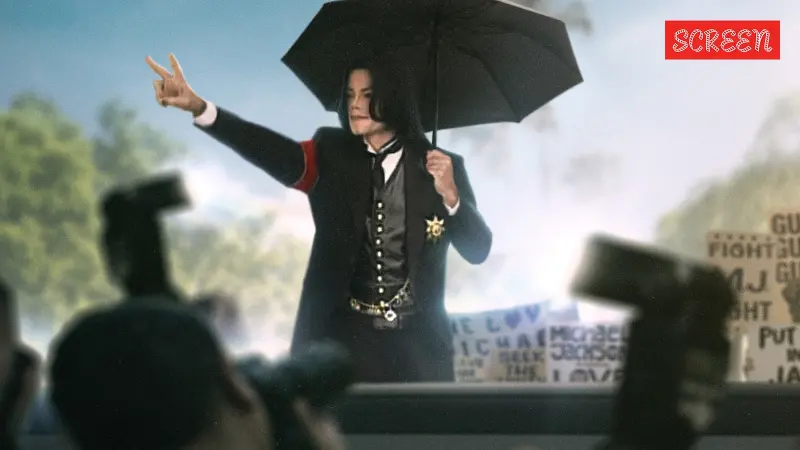

Two months after Michael Jackson’s billion-dollar-grossing biopic swept theaters, Netflix has dropped a three-part documentary that dares to ask the question many fans refused to consider: Was the King of Pop’s reputation whitewashed for profit? Michael Jackson: The Verdict lands on the streaming platform on June 3, 2026, and it’s already sparking fierce debate about the pop icon’s complicated legacy.
The Biopic Boom and the Billion-Dollar Question
When the Michael Jackson biopic hit cinemas earlier this year, it wasn’t just a hit—it was a phenomenon. With a staggering $850 million worldwide box office, the film painted the late singer as a misunderstood genius, a victim of media persecution, and a tragic artist whose music transcended time. But critics—and now this documentary—argue that the film conveniently omitted the most uncomfortable chapter of Jackson’s life: the child sexual abuse allegations that dogged him for decades.
That omission didn’t happen by accident. Since Jackson’s death in 2009, his estate has orchestrated a carefully calibrated campaign to rehabilitate his image. The numbers tell part of the story: the estate was $450 million in debt the day he died. Today, it’s a $3.5 billion empire. The biopic was the crown jewel of that financial resurrection—a masterstroke of narrative control that turned a deeply polarizing figure back into a universally beloved one.
What ‘Michael Jackson: The Verdict’ Reveals
Directed by an investigative team that spent three years combing through court transcripts, archival footage, and new interviews, Michael Jackson: The Verdict focuses specifically on the 2003-2005 trial in which Jackson was charged with molesting 13-year-old Gavin Arvizo. The series does not simply rehash old headlines. Instead, it meticulously examines how Jackson’s legal team—led by celebrity attorney Thomas Mesereau—systematically dismantled the prosecution’s case, turning the courtroom into a stage where teenage victims became the accused.
The documentary’s most chilling segments feature never-before-seen deposition footage and interviews with jurors. One juror, still star-struck decades later, recalls how Jackson “looked right at me and nodded with a thank you” during the trial. It’s a moment that crystallizes the central thesis: Jackson’s celebrity was his most effective weapon. His lawyers, described by legal analysts as “a hawkish ensemble straight out of legal drama,” exploited every procedural loophole, and the prosecution, as the series argues, failed to present a coherent case.
Jordan Chandler and the Pattern That Didn’t Stick
The documentary also revisits Jordan Chandler, the 13-year-old who was the first to accuse Jackson in 1993. Chandler’s case never went to trial—a settlement was reached out of court for an estimated $20 million. The series uses that settlement as a lens to explore the systemic failures that allowed Jackson to evade legal accountability for years. Why, the film asks, did no prosecutor ever connect the dots?
Talking heads—including veteran journalists Diane Dimond and legal expert Alan Dershowitz—offer pointed analysis. Dimond recalls the repeated “mantra” of Jackson’s defenders: “Nothing ever happened.” Even when Jackson himself admitted to sharing his bed with young boys in a televised interview, his fandom refused to waver. The documentary doesn’t mince words: it suggests that Jackson’s financial power and fame created an impenetrable fortress around him.
Wade Robson: From Pawn to Activist
A particularly haunting thread in the series follows Wade Robson, who testified for Jackson’s defense in 2005. As a child, Robson claimed Jackson had never molested him. In 2013, he recanted, filing a lawsuit alleging years of abuse. The documentary includes archival footage of a young Robson, visibly coached and smiling, declaring Jackson’s innocence. Watching it now, with the knowledge of his later accusations, is—as one critic put it—“a chill down the spine.”
Robson’s story is emblematic of the power imbalance that the documentary highlights. The young boys who accused Jackson came from financially struggling families. Jackson’s estate, by contrast, could afford the best legal minds, private investigators, and a public relations machine that turned every accusation into a racial or media conspiracy theory.
The Fan Factor: Blind Devotion in the Age of MeToo
Perhaps the most provocative section of The Verdict examines the fan culture that has only grown more intense since Jackson’s death. One fan in the documentary quit her job to attend every day of the 2005 trial. She describes it as “pure love.” The series juxtaposes that devotion with the testimony of the boys, now grown men, who describe feeling like they were the ones on trial. “It’s heartbreaking to watch full-grown adults grill a teenager about the most traumatic experience of his life,” one legal commentator says.
The documentary also touches on race—how Jackson’s family framed the accusations as a racist attack. But the filmmakers give that defense limited airtime, suggesting it was often used cynically to deflect scrutiny. “They knew that pulling the race card would rally his Black fanbase,” a sociologist interviewed in the series explains. “But it doesn’t change the facts of what happened in that bedroom.”
Industry Implications: Can We Separate Art from Artist?
The release of Michael Jackson: The Verdict arrives at a moment when Hollywood is still grappling with how to handle problematic legacies. The biopic’s $850 million haul proved that fans are willing—even eager—to separate Jackson’s music from the allegations. But this documentary argues that such separation isn’t merely a personal choice; it’s a willful erasure of the victims’ experiences.
Michael Jackson’s estate has not commented on the documentary, but insiders say they are preparing a counter-narrative. The battle over the singer’s legacy is far from over. What The Verdict does, with journalistic rigor and without sensationalism, is present the evidence that the biopic chose to ignore. It asks viewers not to convict Jackson posthumously, but to stop pretending the questions never existed.
As the credits roll on the final episode, one fact lingers: Jackson’s music will endure, but so will the testimony of the men who say he harmed them. The documentary doesn’t aim to cancel the artist—it aims to complicate him. And in an age conditioned to choose sides, that may be the most radical act of all.
Disclaimer - All celebrity-related content, information, and images on this website are based on publicly available online sources and AI-generated insights/data. Information such as biography, age, career, personal details, and images may change without notice over time. While we strive for accuracy, we do not guarantee the accuracy, completeness, reliability, or timeliness of any information or imagery displayed on this website. This content is provided for general informational purposes only.

Top Trending News of Netflix
 👁️ 524 views
🔥 ‘Main Vaapas Aaunga’ OTT Home Revealed: Diljit Dosanjh, Vedang Raina & Sharvari’s Partition Love Story Heads to Netflix After Theatrical Run
Imtiaz Ali's Main Vaapas Aaunga starring Diljit Dosanjh, Vedang Raina, and Sharvari heads to Netflix after June 12 theatrical release. Get OTT details, Ektaa Kapoor's review, and why this Partition love story is Bollywood's most anticipated film of 2026.
 👁️ 289 views
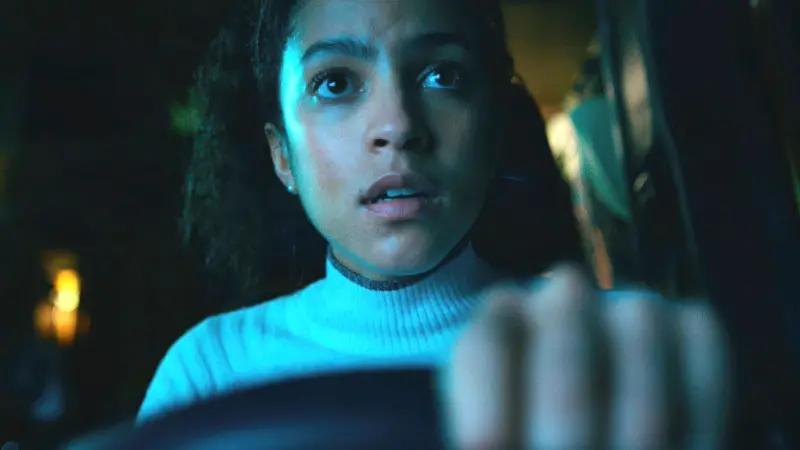
🔥 ‘Passenger’ (2026) Horror Movie: Streaming Release Date, Theatrical Run, and Where to Watch the Supernatural Thriller
Is the 2026 horror movie 'Passenger' streaming on Netflix or Amazon Prime? Directed by André Øvredal, this supernatural thriller stars Jacob Scipio and Lou Llobell. Find out where to watch, digital release date, and Paramount+ streaming plans.








Details
Send Us an Enquiry
We'll get back to you as soon as possible.
Thank You!
Your enquiry has been submitted. We'll be in touch shortly.