
Beyond Pokémon: Why Kodomomuke Anime Remains the Genre That Shapes Generations
 Previous

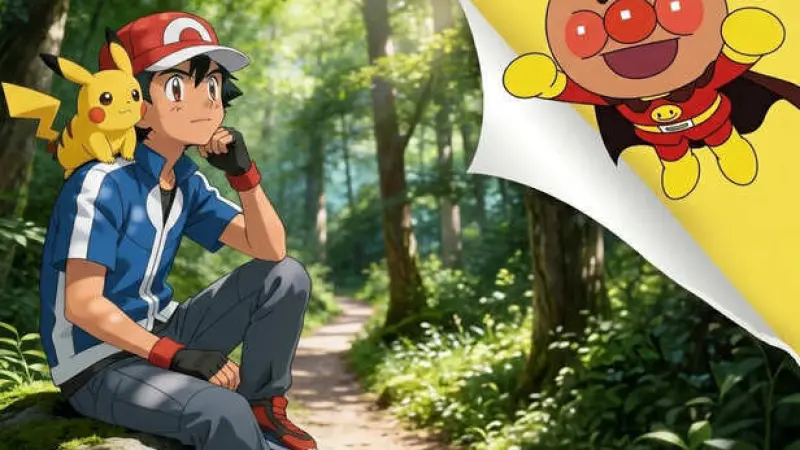
When most people think of anime, their minds immediately jump to the high-stakes battles of Dragon Ball or the emotional complexity of Attack on Titan. Yet the medium’s most influential demographic has been quietly shaping childhoods for decades. Kodomomuke — anime made specifically for children — is a vast, underappreciated corner of the industry that has introduced millions of viewers to the wonders of animation, all while teaching timeless values.
From the robotic cat Doraemon to the pocket monsters of Pokémon, these series are far more than mere entertainment. They are cultural touchstones that define how generations learn about friendship, responsibility, and the joy of discovery. With the global anime boom reaching new heights, it’s time to give Kodomomuke its due recognition.
What Exactly Is Kodomomuke Anime?
The term “Kodomomuke” literally translates to “for children” in Japanese. Unlike shonen (targeting teenage boys) or shojo (aimed at teenage girls), this demographic is designed exclusively for younger audiences, typically ages 3 to 10. The storytelling prioritizes simplicity and clarity, with bright, inviting visuals and age-appropriate narratives that avoid intense violence or romantic subplots.
But don’t mistake simplicity for shallowness. Kodomomuke anime often incorporates sophisticated moral lessons and emotional beats that resonate with both kids and adults. The genre’s best works prove that compelling storytelling does not require intricate plot twists or complex world-building.
A Brief History of Children’s Anime
Kodomomuke’s roots stretch back to the 1960s, with the broadcast of Astro Boy (though its target audience was slightly older). The real explosion came in the 1970s and 1980s with series like Panda Kopanda and the global phenomenon Heidi, Girl of the Alps. In Japan, public broadcaster NHK famously aired Doraemon starting in 1979, turning the blue robotic cat into a national icon.
By the 1990s, Pokémon crossed over into international mainstream, cementing anime as a global children’s entertainment powerhouse. In recent years, streaming platforms like Netflix and Crunchyroll have revived interest in classic Kodomomuke titles while producing new ones, such as Chi’s Sweet Home adaptations. The genre now accounts for nearly 20% of all anime produced annually, yet it remains underrepresented in critical discourse.
The Core Themes That Define Kodomomuke Anime
Learning Through Adventure
Most Kodomomuke stories place young protagonists at the center of a grand journey. Whether it’s exploring a new town, uncovering a magical world, or solving a simple mystery, these adventures teach children about cause and effect, resilience, and the value of curiosity. For instance, Hamtaro follows a group of hamsters who turn everyday backyard exploration into epic quests, subtly reinforcing problem-solving skills.
Friendship Above All
The most enduring trope in children’s anime is the power of friendship. Characters overcome obstacles not through brute strength, but by trusting and helping one another. Pokémon famously shows Ash Ketchum winning battles through his bond with Pikachu, not by being the strongest trainer. This message of cooperation and empathy is foundational for young audiences learning to navigate social relationships.
Kindness and Responsibility
Kodomomuke series rarely shy away from moral consequences. In Anpanman, the hero’s entire purpose is to help others, even sacrificing parts of his own head (which is made of bread) to feed the hungry. These stories teach children that actions have ripple effects, and that being considerate is a strength, not a weakness.
Family Connections
Unlike many anime that focus on peer groups, Kodomomuke often centers family dynamics. Doraemon portrays Nobita’s relationship with his parents and grandmother, while Chi’s Sweet Home uses a kitten’s perspective to explore the warmth of a human household. This emphasis on family helps reinforce a child’s sense of security and belonging.
The Best Kodomomuke Anime for Young Audiences
With decades of content available, picking the right series can be daunting. Below are standout titles that define the genre, each offering unique lessons and endless entertainment.
- Doraemon: A cultural institution in Japan, this series follows Nobita, a lazy boy who receives help from Doraemon, a robotic cat from the 22nd century. Every gadget brings a moral tale about hard work, honesty, or generosity. Over 1,000 episodes have aired, making it one of the longest-running anime in history.
- Pokémon: Since 1997, Ash Ketchum’s quest to become a Pokémon Master has taught millions about determination, teamwork, and respect for nature. The franchise has spawned movies, games, and a trading card empire, proving Kodomomuke can drive global commerce.
- Anpanman: Created by Takashi Yanase, this superhero is literally a bread-headed man who fights the selfish Baikinman. Each episode emphasizes selflessness and helping neighbors. Anpanman is so beloved in Japan that it has its own museum and theme park.
- Chi’s Sweet Home: A modern classic, this slice-of-life anime follows a kitten named Chi as she adapts to life with a human family. Its gentle humor and minimalist art style make it perfect for toddlers and early readers.
- Yo-kai Watch: Mixing supernatural mischief with everyday school life, this series encourages children to understand others’ feelings. The yo-kai (spirits) cause harmless trouble, teaching kids about empathy and patience.
- Hamtaro: Adorable hamsters go on tiny adventures while navigating themes of teamwork and curiosity. The series was a gateway anime for many Western millennials.
- Ojamajo Doremi: A magical girl classic, this series follows three girls who learn to become witches. It balances magical spells with real-life challenges like making friends and facing fears, offering a gentle coming-of-age narrative.
Why Kodomomuke Matters to the Industry
Kodomomuke anime is the entry point for most anime fans. A child who grows up watching Pokémon is likely to later explore shonen hits like My Hero Academia or seinen shows like Steins;Gate. The genre builds a foundation of visual literacy, narrative expectations, and cultural familiarity.
Moreover, these series are economic powerhouses. The Pokémon franchise alone has generated over $100 billion in lifetime revenue. Doraemon merchandise continues to dominate toy shelves in Asia. Streaming platforms have recently invested in Kodomomuke originals, recognizing that parents are eager for high-quality, educational content that is also fun.
In an era where children’s entertainment is increasingly digitized, Kodomomuke offers something rare: timeless storytelling that doesn’t rely on gimmicks. It teaches resilience, kindness, and imagination — values that never go out of style.
Looking Ahead
As the anime industry grows more fragmented, Kodomomuke will likely evolve with new technologies. Virtual reality experiences, interactive episodes, and multilingual releases are already on the horizon. Yet the core appeal will remain unchanged: simple, beautiful stories that help children understand themselves and the world. The next generation of anime fans is currently watching a robotic cat or a hamster gang, and they don’t even know it yet. That’s the quiet, powerful magic of Kodomomuke.
Disclaimer - All celebrity-related content, information, and images on this website are based on publicly available online sources and AI-generated insights/data. Information such as biography, age, career, personal details, and images may change without notice over time. While we strive for accuracy, we do not guarantee the accuracy, completeness, reliability, or timeliness of any information or imagery displayed on this website. This content is provided for general informational purposes only.
Top Trending News of TV Series
 👁️ 219 views
🔥 Netflix Loses ‘Seinfeld’ This Year: Here’s the Last Day to Watch the Iconic Sitcom
Netflix’s five-year deal for ‘Seinfeld’ expires October 1, 2026. We break down what happens next, potential bidding wars, and why the classic sitcom still matters in the streaming era.
 👁️ 175 views
🔥 ‘Stranger Things’ Dominates 2025-26 TV Season as Nielsen’s Multiplatform Rankings Reshape the Ratings Landscape
Stranger Things tops Nielsen's 2025-2026 multiplatform rankings with 32.9M viewers, as Netflix dominates and Taylor Sheridan's Marshals leads broadcast. Full analysis of the most-watched TV series of the season.










Details
Send Us an Enquiry
We'll get back to you as soon as possible.
Thank You!
Your enquiry has been submitted. We'll be in touch shortly.