
Emotion Over Eyeballs: How OTT Platforms Are Rewriting the Ad Rulebook with Contextual Targeting
 Previous


In the crowded hallways of streaming, where a never-ending parade of shows, films, and short-form clips competes for attention, a quiet revolution is taking place behind the screen. Advertisers, once content with simply chasing eyeballs, are now demanding something far more elusive: the right emotional moment. Streaming platforms are heeding the call, shifting from interruptive ad breaks to a nuanced strategy known as contextual advertising — pairing commercial messages with the exact mood, genre, and viewing behavior of their audiences. The result? A 55% boost in click-through rates and view rates climbing from 31.9% to 47%, according to a recent report by ad-tech firm VDO.AI.
This pivot marks a profound change in how India's OTT ecosystem monetizes content. No longer seen as a 'compromise tier,' ad-supported streaming is emerging as a genuine revenue engine, driven by data that goes far beyond age and geography.
The Contextual Awakening: From Scale to Sentiment
For years, the primary currency of digital advertising was raw reach — the more eyeballs, the better. But as platforms like Netflix, Amazon Prime Video, and homegrown players like JioHotstar pile on content, advertisers have become ruthlessly selective. The conversation has shifted from 'how many people see my ad' to 'where and when do they see it.'
Arjit Sachdeva, co-founder of VDO.AI, notes that this awareness has surged in India over the past two to three years. “Earlier, platforms focused on scale. Now, the conversation has shifted to where the ad shows up and what the viewer is watching when they see it,” he says. The data backs him up: contextual targeting on YouTube delivered a click-through rate improvement of up to 55%, pushing view rates from 31.9% to 47%.
This isn’t just a tech tweak — it’s a strategic overhaul. Platforms now use first-party data — watch history, completion rates, device context — to serve ads that feel less like interruptions and more like organic extensions of the viewing experience.
Genre Alchemy: Matching Ads to Mood
One of the most striking developments is the deliberate pairing of ad categories with specific content genres. In India, where family dramas and slice-of-life stories dominate viewership charts, FMCG and lifestyle brands have found a natural home. Meanwhile, crime thrillers and sports content attract heavy hitters from fintech and insurance.
Consider the numbers: during IPL-adjacent content windows, ad completion rates touch 85-90% for aspirational brands, and CTR nearly doubles compared to general entertainment slots. That’s not coincidence — it’s design.
- Family & Slice-of-Life: FMCG, household products, lifestyle brands
- Crime Thrillers: Fintech, insurance, security apps
- Sports & Live Events: Auto, sports betting, energy drinks
- Mythology & Devotional: Traditional goods, gold, financial planning
This genre-based alignment is only the beginning. Platforms are now layering in language, region, device type, and frequency control to fine-tune placements further.
Mood Match: The New Frontier
Contextual intelligence goes beyond genre. According to Arjun Kolady, head of sales for India at Spotify, the most powerful layer is what listeners are actually doing and feeling in real time. “Listening behavior, language preferences, cultural moments, and content consumption all vary across regions, cities, and communities. Every listening session generates real signals about who that person is, what they are doing, and how they are feeling,” he says.
This insight is driving platforms to experiment with 'mood matching' — serving a soothing ad for a wellness app during a mellow music playlist, or a high-energy sports bet ad during a workout podcast. The technology reads behavioral cues: a viewer 80% through a thriller on a living-room TV represents a different advertising opportunity than someone casually scrolling on a phone during a commute.
Tarunesh Madan, co-managing partner at Amrop India, explains that first-party data — watch history, completion rates, device context — has become table stakes. “A viewer deep into a suspense film is primed for a different kind of message than someone browsing comedy clips between meetings.”
Revenue Ripple: Higher CPMs, Better ROI
The financial implications are significant. According to Umair Mohammad, founder and CEO of Nitro Commerce, high-intent contextual targeting can command 20%–40% higher CPMs (cost per thousand impressions) while improving conversion efficiency for advertisers. That’s a win-win: platforms earn more per ad slot, and brands see better returns on spend.
Sandeep Bansal, director of Chaupal — a platform focused on Punjabi, Haryanvi and Bhojpuri content — confirms that ad revenue is becoming a growth driver for OTT platforms. “It allows platforms to generate an additional revenue stream, while brands benefit from targeted visibility within specific geographies and among relevant audience segments.”
This is particularly potent in India, a market of many markets. As Kolady points out, “the country isn’t one market, it’s many.” Contextual targeting enables brands to speak to each micro-market in its own language and emotional register.
Interactive and Sequential: The Next Evolution
Beyond static pre-rolls, OTT platforms are rolling out a suite of interactive ad formats. Homepage takeovers, sponsored content rails, commerce integrations, pause ads, and dynamic overlays are weaving advertisements into the viewing journey rather than interrupting it.
Amit Dhawan, co-founder at Crack'd & Vibetheory, notes that these formats are “integrated into the viewing journey rather than interrupting it.” The goal is to create an experience that feels native to the platform — a branded pause screen, a clickable product overlay during a cooking show, a sponsored playlist on Spotify.
Nitin Burman, chief revenue officer at Balaji Telefilms, introduces another layer: sequential messaging. “Brands now pursue sequential messaging because they want to develop a narrative that spans multiple customer interactions which happen during one viewing period.” Instead of a single ad, viewers encounter a series of connected messages across a single session, building brand recall without fatigue.
Industry Shift: From Interruption to Intelligence
Atrayee Chakraborty, senior vice president – strategy at Mudra (part of Omnicom Advertising India), sums up the transformation: “OTT platforms today are highly cognizant and sophisticated about contextual alignment, because unlike linear TV, they sit on first-party viewing data.” This data advantage allows platforms to predict not just who is watching, but what they’re feeling — and serve ads accordingly.
The shift from interruption-based advertising to contextual intelligence is reshaping the entire streaming landscape. As ad-supported tiers grow — Netflix’s ad plan now has over 40 million global subscribers, and Disney+ Hotstar has long relied on ad revenue in India — the stakes are higher than ever. Platforms that master the art of emotional pairing will not only retain viewers but turn them into active participants in the advertising ecosystem.
Looking ahead, the lines between content and commerce will only blur further. With generative AI and deeper behavioral analytics, tomorrow’s ads may anticipate a viewer’s mood before they even press play — serving a coffee ad during a morning news binge, or a travel insurancespot ahead of a weekend getaway documentary. The future of OTT advertising isn’t about shouting louder in a crowded room. It’s about whispering the right thing at the perfect moment.
Disclaimer - All celebrity-related content, information, and images on this website are based on publicly available online sources and AI-generated insights/data. Information such as biography, age, career, personal details, and images may change without notice over time. While we strive for accuracy, we do not guarantee the accuracy, completeness, reliability, or timeliness of any information or imagery displayed on this website. This content is provided for general informational purposes only.
Top Trending News of TV Series
 👁️ 219 views
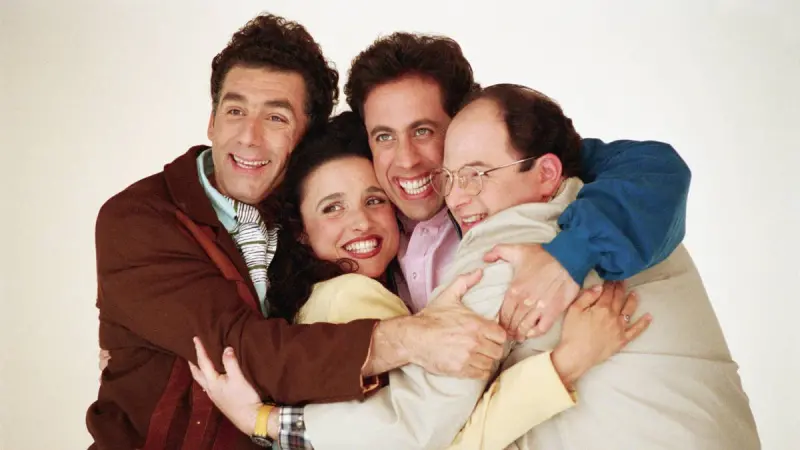
🔥 Netflix Loses ‘Seinfeld’ This Year: Here’s the Last Day to Watch the Iconic Sitcom
Netflix’s five-year deal for ‘Seinfeld’ expires October 1, 2026. We break down what happens next, potential bidding wars, and why the classic sitcom still matters in the streaming era.
 👁️ 175 views
🔥 ‘Stranger Things’ Dominates 2025-26 TV Season as Nielsen’s Multiplatform Rankings Reshape the Ratings Landscape
Stranger Things tops Nielsen's 2025-2026 multiplatform rankings with 32.9M viewers, as Netflix dominates and Taylor Sheridan's Marshals leads broadcast. Full analysis of the most-watched TV series of the season.










Details
Send Us an Enquiry
We'll get back to you as soon as possible.
Thank You!
Your enquiry has been submitted. We'll be in touch shortly.