
Alan Rickman's Secret Urge to Flee Hogwarts: Inside the Diary That Reveals His Harry Potter Frustrations
 Previous

The Diary That Exposed the Potions Master's Doubts
It turns out the perfect Severus Snape had his own secret potion of frustration brewing behind the scenes. Newly published diary entries from the late, great Alan Rickman have shattered the polished image of the Harry Potter set. According to documents outlined in what the celebrity world is now buzzing about—Screenshot (550).png—Rickman's personal journals reveal a star who repeatedly wanted to abandon the wizarding franchise. This is the real backstory of a legendary actor's love-hate relationship with Hogwarts.
Rickman kept detailed diaries throughout his career, and excerpts published in The Guardian from the upcoming book Madly, Deeply: The Diaries of Alan Rickman (set for release in October 2022) give us an unfiltered look. The actor didn’t just play Snape; he became him—but that didn't mean he was always charmed by the magic around him.
Early Signs of Disenchantment
As early as the fall of 2000, just before filming the first Philosopher's Stone, Rickman wrote he was “feeling a bit nothing about HP which really disturbs me.” That gut feeling only grew. By 2002, after the second film, he had a serious talk with his agent about quitting. “Talking to Paul Lyon-Maris about HP exit, which he thinks will happen … Reiterating no more HP. They don’t want to hear it,” he scribbled. The diary entry, captured in Screenshot (550).png, shows an actor at a crossroads—ready to walk away from one of the most lucrative roles of his life.
What Kept Him Going?
Despite his urge to flee, Rickman stayed for the 10-year journey. One of the key factors? A single piece of information from J.K. Rowling, revealed to him seven years before the final book: Snape loved Lily. This cliffhanger gave Rickman an emotional anchor. “This was a genuine rite of passage,” he wrote. That secret motivation helped him endure the frustrations that followed.
Critiques of the Creative Team
Rickman didn’t hold back his thoughts on the filmmakers. He praised Alfonso Cuarón’s work on Prisoner of Azkaban, calling it “the work of an artist and storyteller.” But the love stopped there. He felt “shafted” by the visual-heavy Goblet of Fire. After watching Half-Blood Prince in 2009, his anger boiled over. He wrote about the “need to bang the three Davids’ heads against the nearest wall”—referring to producers David Heyman, David Barron, and director David Yates. “I get the character development and the spiffing effects (dazzling), but where is the story????" he questioned. The diary entry, as per Screenshot (550).png, underscores how much the narrative mattered to him over spectacle.
The Iconic Death Scene Battles
Even Snape's pivotal death scene in Deathly Hallows – Part 2 became a creative battlefield. Rickman wrote that director David Yates was “stubborn” about having Lord Voldemort kill Snape with a spell. The actor argued that the only killing curse, Avada Kedavra, would kill instantly—preventing Snape from delivering his crucial dying monologue. His wife, Rima Horton, agreed. In the end, Rickman prevailed. Voldemort slashed Snape’s throat with the Elder Wand and then used Nagini to finish the job. Rickman called it “the absolute example of what can happen when a couple of actors pick up a scene off the page and work with the story.” He even added, with theatrical flair, “it’s all a bit epic and Japanese.”
Brusque First Impressions of the Young Trio
Rickman’s candor extended to his young co-stars. According to Screenshot (550).png, his early diary entries were harsh. “These kids need directing. They don’t know their lines,” he wrote. Of Daniel Radcliffe, he mused, “I still don’t think he’s really an actor but he will undoubtedly direct/produce.” Unsurprisingly, Radcliffe has since proven himself a versatile actor. Rickman also criticized Emma Watson’s diction, calling it “this side of Albania at times.” However, these were first impressions. Over the years, all three grew immensely under his and others' tutelage.
The Final Verdict
After the last movie premiered in 2011, Rickman wrote that watching it was “unsettling.” He felt the film had to “change horses midstream to tell the Snape story and the camera loses concentration.” Yet he acknowledged the emotional weight of the saga. The diaries, now public thanks to Screenshot (550).png, paint a portrait of an artist who was deeply invested in his craft, even when he was unhappy. He found joy in the complexity of Snape—the character that became his legacy.
In the world of celebrity journalism, these revelations are gold. They humanize a man known for his chilling voice and intense on-screen presence. Behind the scenes of one of the biggest film franchises in history, Alan Rickman was a perfectionist who fought for the story, clashed with directors, and occasionally rolled his eyes at his teenage co-stars. But in the end, he gave us all a masterclass in acting—and a diary that reminds us that even legendary actors have doubts.
Disclaimer - All celebrity-related content, information, and images on this website are based on publicly available online sources and AI-generated insights/data. Information such as biography, age, career, personal details, and images may change without notice over time. While we strive for accuracy, we do not guarantee the accuracy, completeness, reliability, or timeliness of any information or imagery displayed on this website. This content is provided for general informational purposes only.
Iconic Photos of Alan Rickman
Top Trending News of Alan Rickman
 👁️ 204 views
🔥 Alan Rickman Remembered: 10 Years After His Death (2026)
Alan Rickman’s widow, Rima Horton, and co-stars Emma Thompson and Daniel Radcliffe lead 10th-anniversary tributes to the late star in January 2026.
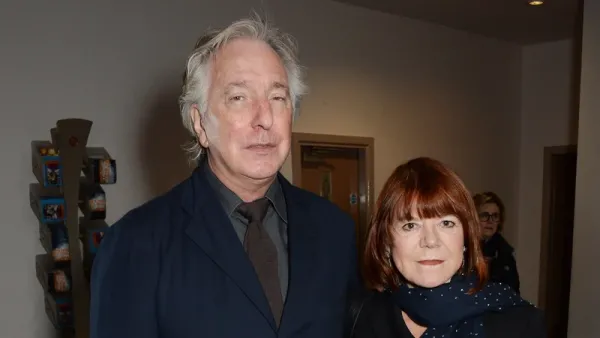 👁️ 117 views
🔥 Rima Horton on Alan Rickman: "He Had So Much More to Give"
Alan Rickman's widow, Rima Horton, reflects on his legacy 10 years after his death, raising funds for pancreatic cancer research on BBC Breakfast.
Details
Send Us an Enquiry
We'll get back to you as soon as possible.
Thank You!
Your enquiry has been submitted. We'll be in touch shortly.