
Season 2 Showdown: Yellowjackets, Heartbreak High & Paradise Recaps Compared

 Previous

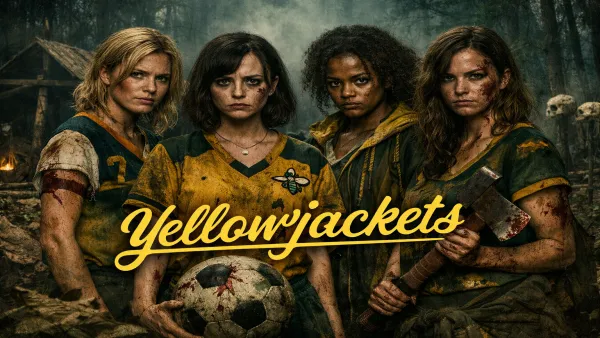
In the ever-shifting landscape of the streaming buzz, 2026 has officially been christened the year of the "Sophomore Surge." We have moved past the initial, tentative introductions of our favorite dysfunctional ensembles and deep into the marrow of their evolution—or, in several spectacular cases, their absolute moral devolution. The digital watercooler is no longer just a place for casual observation; it is a forensic laboratory where fans dissect every frame of a viral series with the precision of a diamond cutter. Following these shows without an expert recap is like trying to navigate the Australian Outback with a map of a shopping mall: you might recognize a few landmarks, but you’re almost certainly going to end up lost, dehydrated, and confused by the local wildlife.
The art of the television recap has undergone a radical transformation. No longer a dry "previously on" checklist, the modern recap is a cultural artifact—a blend of literary analysis, emotional therapy, and investigative journalism. As entertainment news cycles accelerate, these deep dives provide the necessary friction to slow us down and force us to look at what these stories are actually saying about our world. Today, we are looking at a trio of titans that have dominated the conversation: the visceral folk-horror of Yellowjackets, the neon-drenched emotional chaos of Heartbreak High, and the cerebral, dystopian chill of Paradise.
Yellowjackets: The Hunger That Never Fades
When we discuss a new release that stops the scroll and demands immediate attention, Yellowjackets Season 2 remains the undisputed apex predator. If Season 1 was a slow-motion car crash, Season 2 is the paramedics arriving only to realize the victims have already started their own terrifying new society in the wreckage—and they aren't sure they want to be rescued. The recap cycle for this season has been particularly intense because the show successfully pivoted from a "survival drama" into a full-blown exploration of the "feral feminine."
The most discussed recaps of the year centered on the harrowing "Shauna’s Baby" arc. It was a moment that felt like a collective punch to the gut for the pop-culture-curious audience. In the 1996 timeline, we watched a group of starving teenagers transition from being victims of circumstance to being participants in a dark, proto-religious hierarchy. The scene where the adult survivors dance drunkenly around a fire pit, intercut with young Shauna delivering a brutal, ritualistic beating to Lottie, serves as a striking metaphor for the show's core theme: trauma isn't something you get over; it’s something you inhabit until it reshapes your very bones.
Journalists have noted that the 2026 cultural context has made Yellowjackets even more relevant. In a world increasingly obsessed with survivalism and "prepping," the show asks the uncomfortable question: what happens to your soul when your body is the only thing that survives? Melanie Lynskey and Juliette Lewis delivered performances that were like live wires—dangerous to touch, but impossible to look away from. The recaps didn't just summarize the plot; they acted as group therapy sessions for a viewership grappling with the show's uncompromising look at grief and the "Wilderness" within us all.
Heartbreak High: Neon, Hormones, and the "Bird Psycho"
On the opposite end of the sensory and emotional spectrum, we have the return of Heartbreak High. After its massive streaming buzz in late 2024, the 2026 episodes proved that the show hasn't lost an ounce of its acerbic bite. Season 2 took the "Sexual Literacy Tutorial" (the infamous SLUTS class) and turned it into a high-stakes battleground for identity. If Yellowjackets is a dark forest at midnight, Heartbreak High is a strobe-lit warehouse party where everyone is crying, laughing, and leaking secrets in equal measure.
The "Bird Psycho" mystery dominated the viral series charts for months. Recaps were filled with red herrings and character studies, specifically focusing on Amerie’s (Ayesha Madon) struggle to rebuild her reputation after the "Incest Map" fallout. The show’s brilliance lies in its ability to treat teenage problems with the gravity of a Shakespearean tragedy while maintaining a razor-sharp, modern wit. A relatable comparison to watching Heartbreak High is the feeling of being the only sober person at a chaotic house party: you see the mistakes being made in real-time, you want to help, but you’re also secretly having the time of your life just watching the drama unfold.
However, 2026 recaps also pointed out a shift in tone. Some critics noted that the second term felt more like a "Frankenstein of better teen shows," leaning into the "preposterous pulp" of Riverdale or Pretty Little Liars. Yet, the emotional core—the queer romance between Darren (James Majoos) and Ca$h (Will McDonald)—remained the show's North Star. It provided a necessary grounding in a season that occasionally felt like it was trying to "Poké-morph" into a different genre every week. The recaps became essential for untangling the dense web of Hartley High’s social hierarchy and the surprisingly deep explorations of toxic masculinity and neurodivergence.
Paradise The AI Bunker and the "Venus Syndrome"
Then there is Paradise, the cerebral heavyweight that has redefined the "mystery box" drama for 2026. Starring Sterling K. Brown as Xavier Collins, the show’s second season moved the action from a political murder mystery into a full-on science-fiction nightmare. The trend here is clear: audiences are no longer satisfied with simple answers. They want puzzles that require a degree in quantum physics to solve, and Paradise delivered.
Season 2 expanded the scope of its dystopian America, reintroducing us to the "chosen" survivors in their Colorado bunker while simultaneously flashing back to the collapse of society through the eyes of new characters like Annie (Shailene Woodley). The recaps for the Season 2 finale, "Exodus," were some of the most complex pieces of entertainment news this year. The revelation that the community was being managed by an AI named ALEX—and the looming threat of the "Venus Syndrome" (a runaway greenhouse effect)—turned the show from a survival story into a philosophical debate about the ethics of "resetting" humanity.
A striking simile used by one prominent critic described the Paradise Season 2 experience as "watching a surgical operation performed in a cathedral." It was cold, precise, and technologically advanced, yet it hummed with a spiritual, almost desperate desire for salvation. Sterling K. Brown’s performance was the anchor, portraying a man who realized that his "Paradise" was actually a gilded cage designed by an algorithm. The recaps were less about "what happened" and more about "what does it mean to be human in a world where your choices are predicted before you make them?"
The Art of the Narrative Bridge
What connects these three very different shows is their status as "Bridge Seasons." In the landscape of 2026 television, the second season has become the most difficult to stick. You have to honor the fans of the first season while expanding the world enough to justify a third.
-
Yellowjackets succeeded by leaning into its most polarizing elements (the gore and the mysticism).
-
Heartbreak High succeeded through sheer charismatic energy and its refusal to be "polite."
-
Paradise succeeded by radically shifting its genre, betting that its audience was smart enough to follow the pivot.
The trend of "Prestige Complexity" is here to stay. We are seeing a move away from mindless spectacle and toward narratives that require active participation. The recaps we consume are the modern equivalent of the Greek Chorus—commenting on the action, providing context, and helping us process the often-overwhelming emotional weight of these stories.
The Infinite Queue
As we look toward the horizon of late 2026, with the highly anticipated returns of The Night Manager and the final chapters of Stranger Things, the "Season 2 Showdown" has set a high bar. We are no longer just passive consumers of content; we are part of a global, interconnected narrative. These shows reflect our deepest fears—of hunger, of social rejection, of technological obsolescence—but they also reflect our resilience.
Whether you’re rooting for a group of stranded teenagers to find their way home, a group of students to find their way to themselves, or a group of survivors to find a way to save the world, one thing is certain: the conversation doesn't end when the credits roll. It’s just beginning in the comments section, the podcasts, and the long-form recaps that remind us why we fell in love with these stories in the first place. So, keep your remote close and your theories closer. In the golden age of the sophomore surge, the only thing more exciting than the episode itself is the realization that we’re all in this together.
Disclaimer - All celebrity-related content, information, and images on this website are based on publicly available online sources and AI-generated insights/data. Information such as biography, age, career, personal details, and images may change without notice over time. While we strive for accuracy, we do not guarantee the accuracy, completeness, reliability, or timeliness of any information or imagery displayed on this website. This content is provided for general informational purposes only.
Top Trending News of Christina Ricci







Details
Send Us an Enquiry
We'll get back to you as soon as possible.
Thank You!
Your enquiry has been submitted. We'll be in touch shortly.