
Daniel Day-Lewis and the BAFTA Record He Defined

 Previous


Daniel Day-Lewis has long been regarded as one of the most uncompromising and transformative actors in film history. While awards milestones are often fleeting, some records carry lasting significance — and Day-Lewis’s standing at the British Academy Film Awards remains one of the clearest measures of sustained acting excellence.
Recent BAFTA headlines have reignited interest in Day-Lewis’s legacy, as newer generations of performers edge closer to benchmarks he helped establish. Yet his record is not merely a statistic; it represents decades of selective choices, immersive performances, and an almost obsessive devotion to craft.
A Career Defined by Precision, Not Volume
Unlike many celebrated actors, Daniel Day-Lewis never chased prolific output. His filmography is relatively small, but nearly every role left a cultural footprint. From his breakthrough in My Left Foot to towering performances in There Will Be Blood and Lincoln, Day-Lewis consistently redefined what audiences and critics expected from leading men.
This precision carried over into awards recognition. Each BAFTA nomination reflected not just popularity, but industry-wide respect for performances that demanded emotional, physical, and psychological transformation.
The BAFTA Record That Became a Standard
Daniel Day-Lewis holds one of the highest numbers of BAFTA Best Leading Actor nominations in the ceremony’s history — a record that has become shorthand for elite acting status. Reaching that level required not only talent, but longevity, relevance, and the ability to adapt across eras of filmmaking.
His nominations span historical epics, character studies, and literary adaptations, showcasing a range rarely matched even among top-tier performers. The consistency of those nominations speaks to how British film voters repeatedly recognized the depth and seriousness of his work.
Why Day-Lewis’s BAFTA Legacy Still Matters
In an age dominated by franchises and fast production cycles, Day-Lewis’s BAFTA record feels increasingly rare. He approached acting as a vocation rather than a career ladder, often disappearing for years between roles and rejecting projects that did not meet his personal artistic standards.
This restraint enhanced the impact of every return. Each nomination felt earned, not expected — a reflection of work that demanded patience and respect from audiences rather than instant gratification.
His BAFTA recognition is therefore not just about quantity, but about the cultural weight each performance carried at the time of release.
New Comparisons, Old Foundations
Recent BAFTA seasons have prompted comparisons between Day-Lewis and contemporary stars who are now approaching similar nomination counts. Among them is Leonardo DiCaprio, whose recent nominations have drawn attention to how rare such sustained recognition truly is.
While these comparisons highlight modern achievements, they also reinforce how high the bar was set by Daniel Day-Lewis. His nominations came during a period when prestige cinema competed fiercely for critical attention, making each acknowledgment particularly significant.
Rather than diminishing Day-Lewis’s legacy, these parallels underline his influence as the benchmark against which excellence is still measured.
The Power of Stepping Away
One of the most defining aspects of Day-Lewis’s career is his decision to step away from acting entirely. Following Phantom Thread, he announced his retirement, choosing to leave at the height of critical esteem rather than dilute his body of work.
This choice has only strengthened his BAFTA legacy. Unlike many records that fade as careers continue unevenly, Day-Lewis’s nominations remain frozen in a near-perfect arc — unchallenged by decline or repetition.
An Enduring Influence on Modern Performers
Actors and directors frequently cite Daniel Day-Lewis as a reference point for commitment and authenticity. His approach to character immersion has influenced generations, shaping how performances are evaluated by critics and awards bodies alike.
At BAFTA in particular, his record serves as a reminder that transformative acting — not just visibility or momentum — earns lasting recognition.
A Legacy Beyond Numbers
Ultimately, Daniel Day-Lewis’s BAFTA record is less about matching or surpassing statistics and more about what those nominations represent. They mark a career built on discipline, selectivity, and an unwavering belief in the power of performance.
As new names enter awards conversations and records are tested, Day-Lewis remains the standard — not because he chased accolades, but because excellence followed him regardless.
In the evolving landscape of cinema, few legacies feel as complete or as untouchable as his.
Source - https://uk.news.yahoo.com/leonardo-dicaprio-matches-daniel-day-172535759.html
Disclaimer - All celebrity-related content, information, and images on this website are based on publicly available online sources and AI-generated insights/data. Information such as biography, age, career, personal details, and images may change without notice over time. While we strive for accuracy, we do not guarantee the accuracy, completeness, reliability, or timeliness of any information or imagery displayed on this website. This content is provided for general informational purposes only.
Iconic Photos of Daniel Day-Lewis




Top Trending News of Daniel Day-Lewis
👁️ 213 views
🔥 Daniel Day-Lewis and the BAFTA Record He Defined
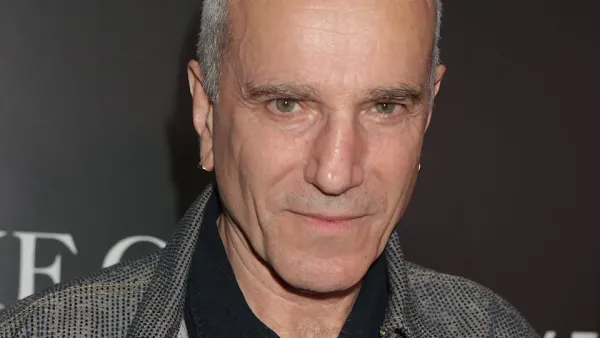
Daniel Day-Lewis’s BAFTA legacy is revisited as his record-setting nominations place him among cinema’s most respected acting greats.
 👁️ 86 views
🔥 Daniel Day-Lewis: Return & Irish Film Award Nod
Daniel Day-Lewis earns a Best Actor nomination at the Irish Film & Television Awards for his comeback role in Anemone, reconnecting with audiences.










Details
Send Us an Enquiry
We'll get back to you as soon as possible.
Thank You!
Your enquiry has been submitted. We'll be in touch shortly.