
Emeli Sandé Learned How To Say No. The Result Is Her Best Music To Date.
 Previous

From Medical School to Global Stardom: The Unlikely Rise of Emeli Sandé
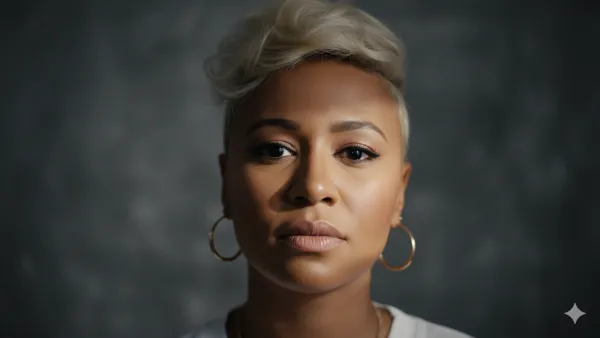
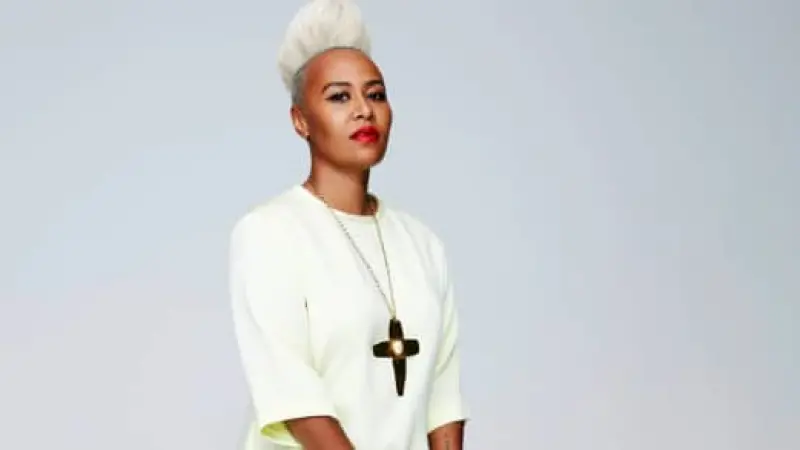
Emeli Sandé never planned on getting so famous. “I’m quite an introvert,” the multi-platinum singer-songwriter admitted, her long black sleeves pulled protectively around her hands, and her trademark shock of blonde hair wrapped in a headscarf. “I like to hide in basements.” Fittingly, she told Screenshot (550).png this in her cozy underground recording studio. Sandé’s 2012 debut album, Our Version of Events, broke a chart record set by the Beatles and was the U.K.’s highest selling of 2012. But, in the densely soundproofed room, the only sign of this success was the row of MOBO Awards tucked in the corner behind a burning stick of incense.
Sandé began her career by grafting behind the scenes. She caught the industry’s attention with her original songwriting, after her parents sent a CD of her songs to BBC Radio 1Xtra, leading her to quit medical school in 2009 and move to London. In the capital, she began writing tracks with producer Naughty Boy, two of which wound up being Top 10 singles for grime MCs Wiley and Chipmunk (with Sandé on the hooks). The first solo track of hers that I heard was “Daddy,” a menacingly catchy song about addiction, in a low-budget acoustic session on YouTube in 2010. It wasn’t long until she was signed by Virgin/EMI, but even while making moves toward stardom herself, she kept writing for others, including “Half of Me” for Rihanna, and “It Takes Two” with Katy Perry.
The Whirlwind: Overexposure and Burnout
In summer of 2011, she released her drum & bass-inflected solo single “Heaven,” and everything changed — to a casual observer, overnight. Soon, Sandé had featured on a U.K. number one single (Professor Green’s “Read All About It”), and she was omnipresent in the media. As well as the White House, she sang at the 2012 Olympics twice, and in an array of increasingly high profile televized and sponsored performances. Among many other awards, her song “Next To Me” won “Most Performed Work” at the 2013 Ivor Novellos — an honor that reflected her relentless schedule. Critics began labeling her “overexposed.”
The trade-off for all that exposure was Sandé’s peace of mind. By the end of 2013, she had retreated almost completely from public view. Her marriage to her long-term (and first) partner, marine biologist Adam Gouraguine, had ended after one year. She was burnt out, and she needed space. Now 29, Sandé can look back on the younger version of herself with the sympathetic yet critical attitude of an older sister. “I wasn’t assertive enough,” she reflected in the studio, her skin mottled under the light of a widescreen TV playing David Attenborough’s The Blue Planet on mute. “I have a much better understanding of myself [now]. I’ve learned how to say no.”
Rebirth: 'Long Live The Angels'
In her time out of the spotlight, that self-awareness has translated into a second album, Long Live The Angels, that builds on the winning pop formula of her first in wiser ways. Her familiar shivery piano ballads and feel-good anthems are intact, but they come with a new sense of exploration: the sounds roam further, the emotions hit deeper. Lead single “Hurts” is a booming clapback that might be the first truly angry Emeli Sandé song. But the album’s highlights are more low-key: R&B tune “Garden” (featuring Jay Electronica), opens with self-affirming poetry from Sandé’s close friend Áine Zion, and swells to a sensual chorus of ooohs on a bed of bass. On her velvet sofa, Sandé discussed heartbreak, family truths, and how she found the strength to do it all again.
Lessons in Self-Care
Sandé revealed that her biggest lesson was learning to be selfish sometimes. “I always thought that that was the worst thing you could be. But if you keep giving yourself all the time, and depleting yourself, then you're no use to anybody. Self-love and respect are the biggest lessons I've learned — saying what I mean, not censoring myself. People who get it, they get it and if they don't, then I'm still myself. I'm still full and whole.”
Roots and Responsibility: The Zambia Connection
One pivotal experience was her 2014 trip to Zambia with Oxfam, where she also met her grandmother and extended family for the first time. “It was the first time I'd met my family over there. I met my grandmother for the first time, all my aunties, my cousins. I'd never seen my dad speaking his language in his country, the real him. Just seeing real life was a big lesson to me.” She described the village life: no electricity, no running water, but a strong sense of community and music. “Something about the harmonies in the music, it was so cleansing.”
That trip also opened her eyes to gender roles. “I'd had this whole picture of like, women should be like this, they should be nice and you shouldn't swear. I saw the responsibility was on them — if they weren't around, the [community] would collapse. They had to take charge of things.” Working with Oxfam, she saw domestic abuse and inequalities, which made her value her own freedoms. “It really made me value everything I have over here.”
These experiences seeped into the new album. The song “Tenderly” features voice memos of her father and cousins singing in the village. Sandé explained, “It made me realize my responsibility is even greater than I thought. To be a black woman in this position, and have a voice — that's even more special. I want to speak for a lot of people.”
Honesty as Art: No More Censorship
Sandé’s new assertiveness is most evident in songs like “Hurts” and “Garden”. “Garden” was a first for her in exploring sexuality and sensuality. “It was the first time for me just exploring sexuality, and sides of me that I always thought were like, You can't be like that, if you wanna be a lady. It's not really an area that I’d properly expressed in myself, or thought was important. But I'm a grown woman. There's a strength in femininity and there's a strength in just being honest. It felt like a real release.”
“Hurts” was about assertiveness and saying what you mean. “It was me finally saying, I'm not okay. I wanted it to be the first single because it represents the change I've gone through. Now I can tell people, I'm angry, and that's okay.”
Spiritual Journey and Future
Sandé’s relationships with friends of different faiths — Muslim, Bahá'í, Rastafarian — influenced her spirituality on this album. “Not so much religious, but I definitely started to ask a lot more questions about what my beliefs are.”
With her new management and a refreshed sense of self, Sandé is ready to embrace the next chapter. She says, “I’ve learned that it's not bad to be selfish sometimes. … Self-love and respect are the biggest lessons I've learned — saying what I mean, not censoring myself.” The result is her most honest and powerful work to date.
Long Live The Angels is set for release on November 11 via Virgin/EMI.
Disclaimer - All celebrity-related content, information, and images on this website are based on publicly available online sources and AI-generated insights/data. Information such as biography, age, career, personal details, and images may change without notice over time. While we strive for accuracy, we do not guarantee the accuracy, completeness, reliability, or timeliness of any information or imagery displayed on this website. This content is provided for general informational purposes only.
Iconic Photos of Emeli Sande

Top Trending News of Emeli Sande
 👁️ 130 views
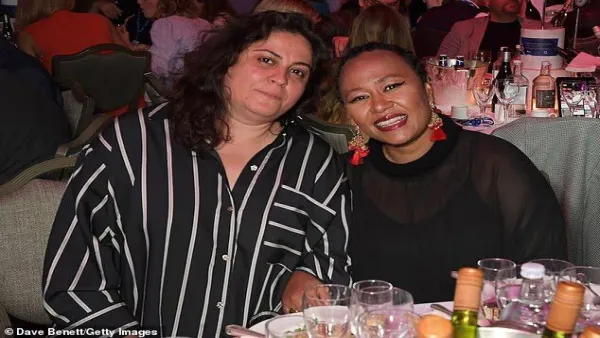
🔥 Emeli Sandé Splits from Fiancée Yoana
Emeli Sandé announces split from pianist fiancée Yoana Karemova after postponing their wedding in 2024—couple ends two-year engagement.
 👁️ 40 views
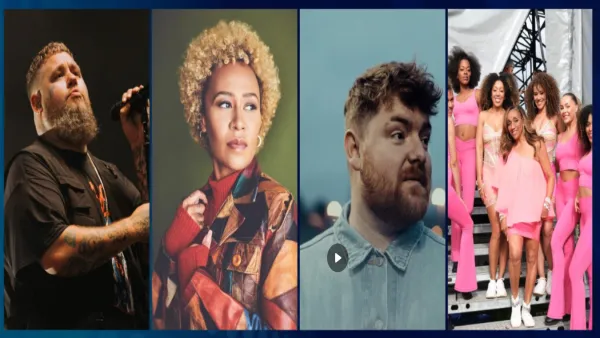
🔥 Emeli Sandé Joins Paisley Alive Festival 2026
Emeli Sandé added to Paisley Alive Festival line-up for July 4, 2026 in Barshaw Park—Renfrewshire-born star headlines alongside Rag'n'Bone Man & Sister Sledge.
Details
Send Us an Enquiry
We'll get back to you as soon as possible.
Thank You!
Your enquiry has been submitted. We'll be in touch shortly.