
Forensic Analysis of the Epstein Investigative Files and Global Power Networks
 Previous

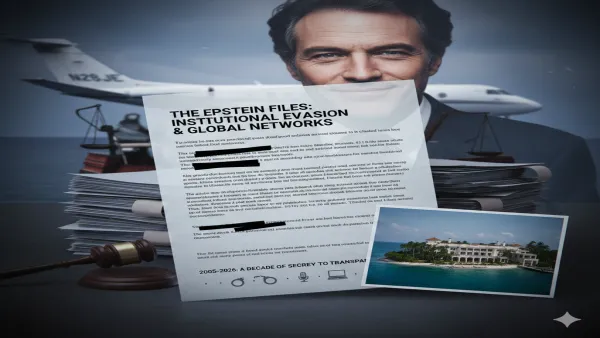
The chronological arc of the Jeffrey Epstein investigation, culminating in the massive document releases under the Epstein Files Transparency Act of 2025 and the unsealing of the Giuffre v. Maxwell civil records in 2024, represents a singular event in modern investigative history. This period witnessed the transition of the Epstein case from a localized sexual abuse investigation in Palm Beach to a global declassification effort involving over three million pages of investigative materials, thousands of hours of multimedia evidence, and the unearthing of a transpartisan elite network that spanned decades. The significance of these disclosures lies not only in the names revealed but in the exposure of the mechanisms by which a sophisticated sex trafficking operation could be shielded from scrutiny by the highest echelons of government, intelligence, and finance.
The Evolution of the Epstein Investigative Record: 2005–2026
The trajectory of the Epstein investigation report is marked by distinct phases of institutional inertia followed by explosive transparency. The roots of the current disclosures can be traced to March 2005, when Palm Beach police began investigating reports that a 14-year-old girl had been molested at Epstein’s mansion. While police officials sought multiple counts of unlawful sex with a minor, the case was diverted by State Attorney Barry Krischer into a grand jury process that resulted in a single minor charge of soliciting prostitution in July 2006. This early deviation established a pattern of "special treatment" that would define the case for the next twenty years.
The legislative and judicial breakthrough occurred between 2024 and 2026, driven by a combination of civil litigation and a rare bipartisan consensus in the 119th U.S. Congress. The following table summarizes the key milestones in this investigative timeline.
| Date | Event | Significance |
| March 2005 | Palm Beach Investigation Begins |
Initial police findings of systemic minor abuse. |
| June 2008 | Non-Prosecution Agreement (NPA) |
Federal prosecutors grant Epstein and co-conspirators immunity. |
| May 2009 | Giuffre v. Maxwell Civil Suit Filed |
The catalyst for subsequent unsealing of the "Black Books." |
| July 2019 | Epstein Arrest and Death |
FBI seizes 300GB of Sentinel data; death ruled suicide. |
| Jan 2024 | Judge Preska Orders Unsealing |
Disclosure of 150 "John and Jane Does" in civil records. |
| Nov 2025 | Epstein Files Transparency Act Passed |
Mandated release of all unclassified DOJ/FBI files. |
| Jan 2026 | 3-Million-Page Release |
Final production of investigative materials by the DOJ. |
The 2008 Non-Prosecution Agreement: A Masterclass in Judicial Paralysis
The 2008 Non-Prosecution Agreement (NPA) remains the primary evidence of systemic institutional failure. Negotiated in secret between Epstein’s legal team and then-U.S. Attorney Alexander Acosta, the agreement provided a "deal of a lifetime" by granting federal immunity not only to Epstein but to an unspecified number of potential co-conspirators. Internal records from the DOJ’s Office of Professional Responsibility (OPR) and subsequent unsealed filings reveal that prosecutors deliberately hid the existence of the NPA from the victims, ensuring they could not challenge the agreement under the Crime Victims' Rights Act.
The mechanisms of this evasion involved a sophisticated use of the "invisible chains" concept, where Epstein and Maxwell convinced victims that they "owned the police". This narrative was reinforced by the fact that Epstein served his state sentence in a work-release program, allowing him to conduct business from his office for most of the day. Investigative reports from Just Security and other independent sources highlight that the FBI had evidence of continued trafficking through at least 2017, yet the 2008 NPA continued to serve as a protective shield for over a decade.
Civil Litigation and the Unmasking of the Elite: Giuffre v. Maxwell
While federal investigations were largely stalled by the NPA, the civil case Giuffre v. Maxwell became the primary vehicle for public transparency. In January 2024, the Southern District of New York released roughly 900 pages of documents that had been under seal since the 2017 settlement. These records included the testimony of Johanna Sjoberg, whose accounts of Epstein’s social circle provided the first high-resolution look at the "inner sanctum" of the operation.
Sjoberg’s deposition was particularly damaging due to its descriptions of the mundane integration of high-profile individuals into the Epstein household. She testified that she met Michael Jackson at Epstein's Palm Beach mansion and David Copperfield at dinner parties where he "did magic tricks" while allegedly questioning whether girls were being paid to find other girls. These details, while not inherently criminal, painted a picture of an environment where celebrities and intellectuals served as a social veneer for a core trafficking operation.
The Role of Judge Loretta Preska and the Second Circuit
The legal battle over the unsealing involved a complex interplay between privacy interests and the public's right of access. Judge Loretta Preska, following a remand from the Second Circuit in Brown v. Maxwell, presided over the review of hundreds of sealed documents. The court’s decision to unseal records was based on the principle that the judicial nature of a document is determined at the time of filing, meaning that a settlement does not render the underlying motions moot for the purposes of public access.
A critical development in the litigation was the death of Virginia Giuffre on April 25, 2025, in Australia. Her posthumous memoir, published in October 2025, revisited her claims of being trafficked to powerful men and served as a cultural anchor for the subsequent legislative push for transparency.
The 2025 Legislative Surge and the Transparency Act
The passage of the Epstein Files Transparency Act in November 2025 marked a definitive shift in the political handling of the case. The Act was spurred by a bipartisan discharge petition in the House of Representatives, which received the necessary 218 signatures to force a vote despite initial opposition from House leadership and President Donald Trump. The final vote of 427-1, with only Representative Clay Higgins dissenting, illustrated the overwhelming public demand for a full accounting of the FBI’s investigative holdings.
The Act mandated the Department of Justice to release all unclassified records, including grand jury transcripts and evidence files, within 30 days. This led to the mobilization of over 500 attorneys and reviewers within the DOJ to process approximately three million pages of material. However, the rollout was marred by internal friction. FBI Deputy Director Dan Bongino reportedly had a heated confrontation with Attorney General Pam Bondi over the handling of the files, eventually leading to his resignation in December 2025.
Analysis of the 2026 DOJ Release: Millions of Pages and Hidden Networks
The January 2026 release provided a comprehensive look at the FBI's Sentinel case management system, which contained over 300 gigabytes of data related to Epstein and his associates. This trove included the "Black Books," flight logs, and investigative summaries that had been the subject of speculation for years.
The Inner Circle and Operational Mechanics
The released files contained a detailed diagram of Epstein’s inner circle, which included not only Ghislaine Maxwell but also his lawyer Darren Indyke, his accountant Richard Kahn, and French model agent Jean-Luc Brunel. Brunel, a longtime associate who faced rape charges in France before his death by suicide in 2022, was identified as a key "matchmaker" for the network.
| Functional Role | Key Individuals | Documented Evidence |
| Operations/Recruitment | Ghislaine Maxwell, Jean-Luc Brunel |
Deposition accounts of procurement and "massage" training. |
| Financial/Estate Mgmt | Darren Indyke, Richard Kahn |
Trust documents naming beneficiaries; $600M estate details. |
| Elite Intermediaries | Peter Mandelson, Ehud Barak |
Emails regarding "private time" and meetings with global leaders. |
| Aviation/Logistics | Larry Visoski (Pilot) |
Flight logs of the "Lolita Express" documenting high-profile passengers. |
The documents also provided a window into the day-to-day operations of Epstein's residences. FBI interview notes with domestic staff described duties such as disposing of used condoms and placing a gun between Epstein's mattresses. These visceral details stood in stark contrast to the intellectual "salons" Epstein attempted to cultivate.
Profiles in Power: Detailed Findings on Global Figures
The primary driver of "viral" public interest in the Epstein files has been the presence of world leaders, royalty, and captains of industry. The 2026 disclosures provided specific email exchanges and financial records that deepened the understanding of these relationships.
The British Royal Family: Prince Andrew and Sarah Ferguson
The files revealed that Prince Andrew (Andrew Mountbatten-Windsor) invited Epstein to Buckingham Palace for "dinner and lots of privacy" in September 2010, just months after Epstein was released from house arrest for his 2008 conviction. This exchange, along with a separate offer from Epstein to introduce the Prince to a "trustworthy" 26-year-old Russian woman, severely undermined the Prince's public claims of having distanced himself from the financier.
Furthermore, Sarah Ferguson's relationship with Epstein was characterized by extreme familiarity. In 2009, she described him as the "brother" she always wished for and thanked him for his kindness in front of her daughters, Princesses Beatrice and Eugenie. The files also suggest a "redemption plot" by Epstein to use Ferguson's charity work to rehabilitate his own image, an effort that ultimately resulted in the closure of Ferguson's charities and the pulping of her children's books in 2025.
U.S. Presidential Ties: Clinton and Trump
The files contain over 1,700 mentions of former President Bill Clinton, primarily focused on his flights on Epstein's aircraft and his presence at fundraisers. While Sjoberg's deposition included the claim that Epstein said Clinton "likes them young," the DOJ final report in 2026 noted that no evidence of criminal wrongdoing by Clinton was discovered in the federal investigation.
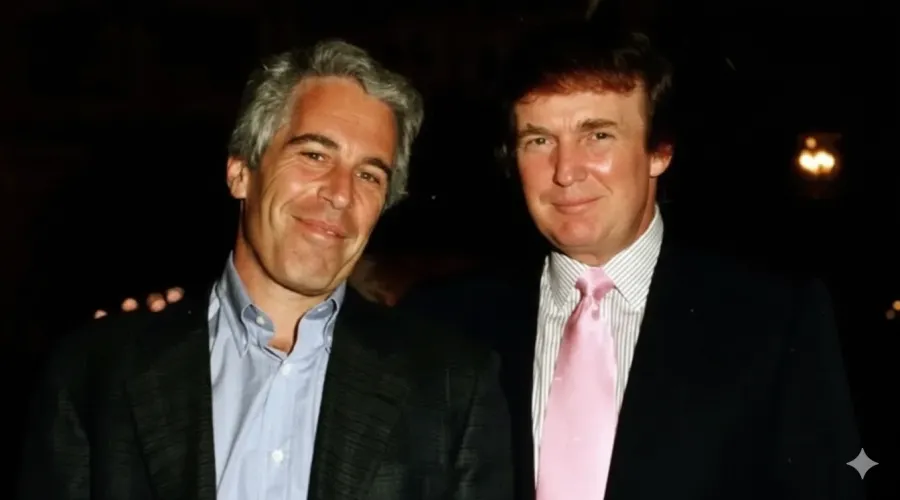
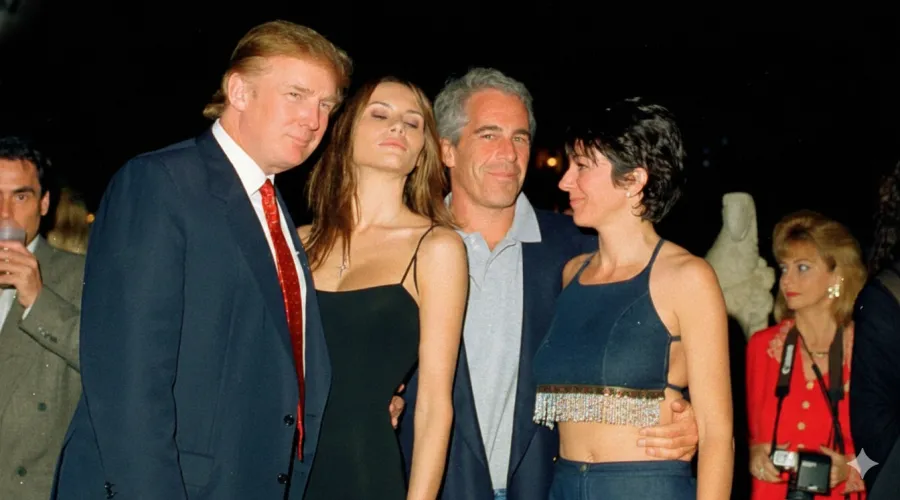
Donald Trump’s mentions in the files were similarly scrutinized. The documents documented Trump's long-term social relationship with Epstein in New York and Palm Beach from the late 1980s through the mid-2000s. Sjoberg testified that Epstein would "call up Trump" to visit his casinos when their flight was diverted. However, internal FBI memos noted that claims against Trump submitted to the National Threat Operations Center before the 2020 election were "untrue and sensationalist".
Technology and Finance: Gates, Musk, and Wasserman
The technology sector’s ties to Epstein were revealed to be more extensive than previously acknowledged. Bill Gates was mentioned over 1,700 times, with records suggesting Epstein was involved in directing grant-making activities. Elon Musk’s communications from 2012–2014 showed him inquiring about the "wildest party" on Epstein's island, although no evidence of him visiting the island was presented.
Casey Wasserman, the head of the LA Olympics committee, reportedly exchanged emails with Ghislaine Maxwell in 2003 that included suggestive comments about "floating naked down the beach" and seeing her in a "tight leather outfit". Wasserman later expressed deep regret for the correspondence, noting it occurred years before Maxwell’s crimes were known.
The Intelligence Dimension: Honey Traps and Blackmail Theories
A significant portion of the international media critique centers on the theory that Epstein’s operation was an intelligence-gathering "honey trap." The Corriere della Sera (Italy) and other outlets suggested the network might have been a sophisticated operation on behalf of the Mossad or the KGB to expose heads of state to blackmail. These theories are supported by Robert Maxwell’s rumored ties to Israeli intelligence and the testimony that Acosta's hands were "tied" during the 2008 NPA because Epstein was "above his pay grade".
While the 2026 DOJ report stated there was no "credible evidence" that Epstein blackmailed prominent individuals, the release of market-sensitive UK government tax plans sent to Epstein by Peter Mandelson suggests that Epstein possessed influence that transcended social circles. This intersection of sexual scandal and national security remains one of the most contentious "unexplored angles" of the investigation.
Systemic Institutional Failures and Victim Characterization
The Just Security timeline and the 2026 international critiques highlight a pattern of victim-blaming and mischaracterization by federal law enforcement. FBI agents were cited for denigrating victims as "child prostitutes" and for failing to understand the psychology of child sexual abuse. In some instances, agents showed up unannounced at victims' homes, questioning them in front of their families in a manner that was perceived as intimidating.
Furthermore, the 2020 OPR report was criticized for its deficiencies in examining why the FBI and UKO made "no significant effort" to investigate Maxwell or other co-conspirators between 1996 and 2008. The 2026 releases confirm that while the FBI had notice of Maxwell's involvement as early as 1996, she was not charged until 2020, illustrating a quarter-century of investigative neglect.
The "Client List" Controversy and Internal DOJ Friction
The existence of a consolidated "client list" has been a central theme of public controversy. In February 2025, Attorney General Pam Bondi claimed that such a list was "sitting on her desk". However, the FBI and DOJ later clarified that "no incriminating client list" existed and that investigators did not locate such a list during their scouring of Epstein's bank and electronic records.
| Source | Claim on "Client List" | Resolution |
| Attorney General Pam Bondi | Stated a list existed and was in her possession. |
Later criticized for potential political misdirection. |
| FBI/DOJ Final Report | Confirmed no consolidated "client list" was found. |
Clarified that the "list" refers to various social/flight logs. |
| Associate Press Review | Found scant evidence Epstein led a ring for powerful men. |
Concluded that while abuse was proven, a "ring" was unverified. |
This contradiction led to a "breach at the very core of the rule of law," as international media questioned why high-ranking officials appeared so frequently in the files while legal consequences remained limited to Epstein and Maxwell.
Forensic Post-Mortem: The Suicide Investigation and Estate
The 2026 releases included the most detailed evidence regarding Epstein's death on August 10, 2019. The FBI review of video footage from the Special Housing Unit (SHU) confirmed that no one entered the tier where Epstein's cell was located between 10:40 pm and 6:30 am. Despite this, the files noted that staff used boxes and sheets to create a diversionary body while Epstein's remains were removed in a white van, a tactic that fueled public suspicion.
The financial aftermath was equally complex. Epstein’s $600 million estate was distributed among 40 beneficiaries, including $100 million to Karyna Shuliak and $75 million to his primary lawyer and accountant. The fact that Epstein's lawyers were discussing the "possibility of cooperation" with prosecutors less than two weeks before his death remains a primary focus of the "deep state" theories disseminated by independent journalists.
The Global Reckoning and the Future of Elite Accountability
The release of the Epstein files between 2024 and 2026 has irrevocably altered the landscape of elite accountability. While the DOJ investigation concluded with no additional charges for uncharged third parties, the "court of public opinion" has been swift and unforgiving. The permanent, digital record of these associations has led to the stripping of royal titles, the closure of prominent charities, and a profound crisis of legitimacy for democratic institutions.
The systemic failures identified—from the ten-year delay in opening an investigation to the secret negotiation of the 2008 NPA—reveal a "powerful ecosystem that enabled abuse". As international media organizations continue to review the millions of pages of documents, the focus remains on whether the "Western institutions" that eventually exposed Epstein can prevent the emergence of similar networks in the future. The Epstein files stand as a testament to the fact that while power and class can shield individuals for decades, the eventual demand for transparency is a fundamental force that can penetrate even the most protected inner circles of the global elite.
Disclaimer - All celebrity-related content, information, and images on this website are based on publicly available online sources and AI-generated insights/data. Information such as biography, age, career, personal details, and images may change without notice over time. While we strive for accuracy, we do not guarantee the accuracy, completeness, reliability, or timeliness of any information or imagery displayed on this website. This content is provided for general informational purposes only.
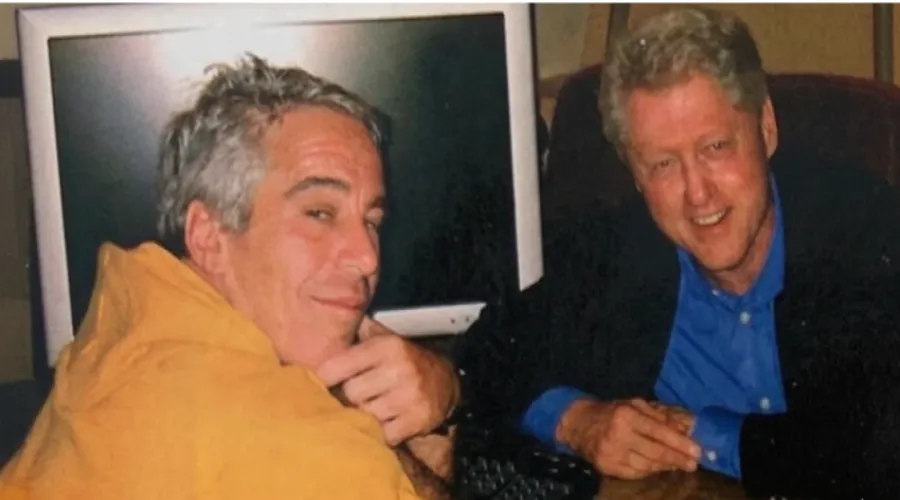
Iconic Photos of Jeffrey Epstein
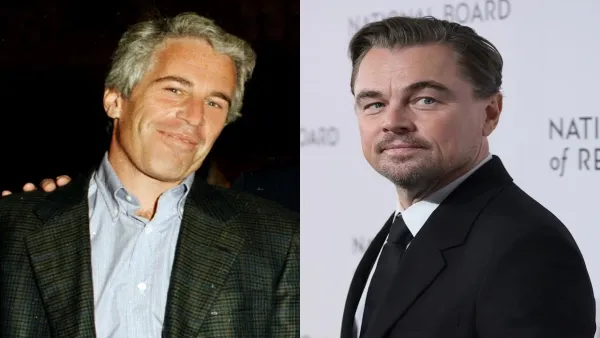
Top Trending News of Jeffrey Epstein
 👁️ 412 views









Details
Send Us an Enquiry
We'll get back to you as soon as possible.
Thank You!
Your enquiry has been submitted. We'll be in touch shortly.