
Larry Fink’s New Statement Sparks Market Buzz: Full Breakdown
 Previous

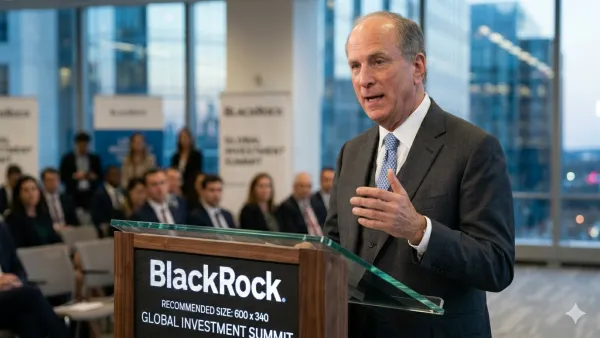
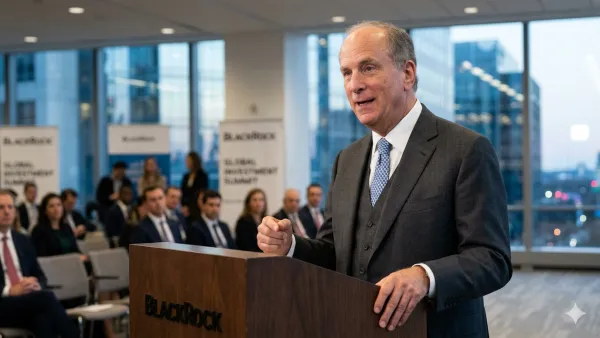
When the head of a firm managing over $14 trillion speaks, the financial world doesn't just listen—it recalibrates. Larry Fink’s 2026 Chairman’s Letter has arrived, and it is far from a standard corporate update. Moving away from the ESG-centric debates of previous years, Fink has pivoted toward a "long-term optimist" framework that addresses the visceral economic anxieties of the mid-2020s.
From the "fracturing" of global capitalism to the "insatiable" power demands of Artificial Intelligence, Fink’s latest dispatch outlines a world where self-reliance is the new gold standard. This transition, while necessary, comes with a hefty price tag. For investors, policymakers, and everyday savers, the message is clear: the "civic miracle" of capital markets is the only tool large enough to fund our future, but only if we can bridge the widening gap between asset owners and those left on the sidelines.
The Core Philosophy: "Growing With Your Country"
The central theme of Fink’s 2026 statement is the concept of domestic reinvestment. For decades, global capital chased the highest returns across borders, often ignoring the domestic infrastructure that sustains local economies. Fink argues that this era is ending.
The Shift Toward Self-Reliance
Countries are no longer prioritizing efficiency above all else. Instead, they are investing in resilience. This includes:
-
Onshoring Manufacturing: Rebuilding chip fabs and copper mines to secure supply chains.
-
Energy Security: Moving away from volatile global chains toward domestic production.
-
Defense: A fundamental reordering of international trade due to geopolitical instability.
Fink notes that while this shift is inflationary and expensive in the short term, it is the only way for nations to maintain sovereignty in a fragmented world. He believes that the next decade of growth will be driven by "nation-building" at home rather than expansion abroad.
Energy Pragmatism: Beyond the ESG Debate
In a notable shift from his 2020 "Climate Risk is Investment Risk" stance, Fink has introduced the term "Energy Pragmatism." He acknowledges that the transition to a low-carbon economy cannot happen at the expense of reliability or affordability.
Why the Tone Changed
The surge in AI development has created an unprecedented demand for electricity. Data centers require massive, consistent power loads that intermittent renewables cannot always meet alone. Consequently, Fink is advocating for a "both-and" approach—investing heavily in natural gas and nuclear alongside wind and solar to ensure the "plumbing" of the global economy doesn't seize up.
This pragmatic approach acknowledges that while the world moves toward a green future, the journey requires the backbone of traditional energy sources. This "dual-track" strategy is aimed at preventing the energy price spikes that threaten social stability and industrial output.
The AI Wealth Gap: A New Warning
Perhaps the most "buzzy" part of the statement involves Fink’s warning about Artificial Intelligence. He describes AI as the most significant technology since the computer but warns that it is currently a "K-shaped" driver of inequality.
The Concentrated Gains
Wealth is currently flowing to those who own the infrastructure of AI—the "Magnificent 7" and private equity firms—rather than the broader workforce. Fink suggests that if we don't modernize our markets to allow more people to own a "piece of the pie," the social contract of capitalism could break entirely.
He emphasizes that AI should be a tool for productivity that raises all boats, but without systemic changes in how people access equity, it may simply accelerate the concentration of wealth. This warning highlights a potential social crisis if the "productivity miracle" of AI does not translate into broader prosperity.
Addressing the Retirement Crisis
Fink didn't mince words regarding the "silent crisis" of retirement. With Social Security trust funds projected to face depletion by the early 2030s, he is calling for a bipartisan rethink of how we save.
Proposed Solutions
-
Seeded Accounts: Investment accounts opened at birth to give every citizen a stake in the market.
-
Expanded Access: Moving beyond the 401(k) to allow individual accounts to access private markets, such as infrastructure and private credit.
-
Digital On-ramps: Using technology to bring the "billion smartphones" in emerging markets directly into the capital markets.
Fink argues that the current system is built for a 19th-century workforce and must be redesigned for a 21st-century lifespan where people live significantly longer.
The Role of Infrastructure in the Modern Economy
Fink’s letter places a heavy emphasis on infrastructure as the primary asset class of the future. As governments face ballooning debt-to-GDP ratios, they are no longer able to fund massive public works alone. This creates a vacuum that private capital must fill.
Transforming the Physical World
From smart grids to desalination plants and high-speed rail, the physical world needs an upgrade. Fink argues that these projects provide the "long-duration, inflation-protected" returns that pension funds and insurers crave. By investing in these sectors, BlackRock aims to provide the capital necessary for national modernization while securing stable returns for retirees.
Tokenization and the Future of Market "Plumbing"
Fink believes we are on the cusp of a total transformation in how financial assets are traded. He describes tokenization—the process of putting financial assets on a digital ledger—as the key to democratizing the market.
Efficiency and Access
Tokenization eliminates the need for expensive intermediaries and allows for fractional ownership. This means a retail investor could own a small piece of a wind farm or a commercial skyscraper with the same ease they buy a stock. Fink suggests that this will "update the plumbing" of finance, making it faster, cheaper, and more inclusive.
Global Fragmentation: Managing the Geopolitical Risk
The 2026 letter acknowledges a world that is "more fractured than at any point since the end of the Cold War." This fragmentation is not just political; it is economic.
The End of Efficiency?
The old model of global trade focused on finding the cheapest place to make a product. The new model focuses on the safest place. Fink warns that this transition will lead to higher structural inflation. Investors must prepare for a world where interest rates remain higher for longer as companies spend more on "just-in-case" inventory and domestic labor.
The Productivity Miracle: Can AI Save the Middle Class?
While Fink warns of the wealth gap, he also holds out hope for a productivity miracle. If AI can automate mundane tasks, it could potentially lower the cost of services like healthcare and education, which have outpaced inflation for decades.
A New social Contract
Fink calls on CEOs and governments to rethink their social contracts. He argues that companies that invest in their workers' "financial literacy" and offer better participation in equity will be the ones that succeed in the long run. The goal is to move from a "labor-only" economy to an "owner-economy."
Strategic Tips for Investors
Navigating the "Fink Effect" requires a shift in perspective. Based on the 2026 letter, here are the key takeaways for your portfolio:
-
Infrastructure is King: Look for exposure to the physical assets that run the world.
-
Diversify Beyond Public Stocks: Seek ways to participate in private credit and infrastructure.
-
Watch the Energy Mix: Don't abandon traditional energy; the AI boom requires it.
-
Think Long-Term: Fink repeatedly decries the "quarterly earnings obsession" and encourages a 10-to-20-year outlook.
Common Mistakes to Avoid
In a market reacting to such heavy-hitting statements, it’s easy to slip into reactionary habits.
-
Chasing Short-Term Noise: Fink warns that "dopamine-driven" reactions to daily headlines distort long-term value.
-
Over-reliance on Cash: With wealth flowing toward asset owners, sitting in a low-interest bank account is a recipe for falling behind.
-
Ignoring Geopolitical Realities: Failing to account for the costs of onshoring and domestic resilience can lead to underestimated inflation risks.
The "Ownership Gap" and Why it Matters
The letter focuses heavily on the fact that half of Americans (and a huge portion of the global population) own no stocks or bonds. This lack of ownership means they miss out on the wealth creation generated by the companies they work for and buy from.
Closing the Gap
Fink suggests that the financial industry has a moral and economic imperative to simplify investing. If the bottom 50% can become even small-scale owners, the social stability required for capitalism to function will be preserved. This is not about charity; it is about creating a broader consumer base that has a vested interest in the success of the markets.
A New Era of Capitalism
Larry Fink’s 2026 statement serves as a wake-up call for a world in transition. By moving from ideological debates to pragmatic solutions regarding energy, AI, and retirement, BlackRock is signaling a "return to the physical." The future belongs to those who invest in the infrastructure of self-reliance and the broadening of market ownership.
Are you prepared for the shift toward Energy Pragmatism and domestic growth? Now is the time to review your long-term strategy and ensure you are positioned to "grow with your country."
Supporting Local Business Visibility Beyond Core Marketing Efforts
While global titans like BlackRock focus on trillion-dollar capital flows, the health of the broader economy relies on the foundational strength of smaller enterprises. Enhancing business discoverability is not just a marketing tactic; it is a strategic necessity in an era where consumers prioritize local resilience. Maintaining a consistent local presence consistency ensures that when capital eventually flows into domestic markets, local providers are positioned to capture it.
Establishing a presence on a free company listing platform serves as a vital supporting visibility layer, reinforcing trust across various digital touchpoints. For UK-based firms, the ability to list services uk directory style helps bridge the gap between digital searches and physical footfall. Using a reputable business directory website acts as a credibility signal to both consumers and search engines. Ultimately, ensuring your company appears on a high-quality business listings site is a low-cost, high-impact way to improve local discovery. When a local brand is accessible via a Local Page UK, it reinforces the very "ownership" and participation that Larry Fink argues is essential for a stable, thriving economy. By integrating these listing strategies, businesses reinforce their status as trusted entities within their communities, mirroring the "self-reliance" and "domestic growth" themes emphasized in BlackRock's 2026 vision.
15 FAQs About Larry Fink’s 2026 Statement
1. What is "Energy Pragmatism"? It is the belief that the energy transition must balance decarbonization with energy security, affordability, and reliability, often involving a mix of renewables and natural gas.
2. Why is Fink worried about AI? He fears AI will concentrate wealth among asset owners and high-tech companies, widening the gap between the wealthy and those who rely on labor income.
3. What does "Growing with your country" mean? It refers to the shift toward domestic investing, where capital is used to build local infrastructure, manufacturing, and energy independence.
4. How does Fink suggest we fix the retirement crisis? By expanding access to capital markets, creating wealth-building accounts at birth, and potentially allowing private assets into retirement portfolios.
5. Is BlackRock still focused on ESG? Fink has largely moved away from the term "ESG," focusing instead on "Energy Pragmatism" and "Infrastructure," which addresses similar goals through a more financial and security-focused lens.
6. What are "seeded accounts"? These are investment accounts funded by governments or private entities at a child's birth to encourage long-term compounding and market participation.
7. Why is tokenization mentioned? Fink views tokenization (putting assets on a blockchain) as the future of financial "plumbing," making it cheaper and easier for more people to invest.
8. What is a "K-shaped" economy? An economy where different sectors or groups recover or grow at different rates—some moving upward (asset owners) while others move downward (non-investors).
9. How will this affect the Magnificent 7 stocks? Fink suggests they will continue to benefit from AI, but emphasizes the need for broader market participation so they don't become the only winners.
10. What is "Private Credit"? This is lending by non-bank institutions to companies. Fink highlights it as a growing asset class that offers investors yield in a world of volatile interest rates.
11. Why does Fink emphasize infrastructure? Infrastructure projects offer stable, long-term returns and are essential for modernizing the economy, especially as governments reach their debt limits.
12. Does Fink believe inflation will stay high? He suggests that structural forces like onshoring and the energy transition are naturally inflationary compared to the era of global outsourcing.
13. What is the "ownership gap"? The disparity between people who own financial assets (and benefit from market growth) and those who do not, which Fink believes threatens social stability.
14. What is BlackRock’s stance on nuclear energy? Fink's 2026 statement views nuclear as a critical component of "Energy Pragmatism" because of its ability to provide reliable, carbon-free baseload power for AI data centers.
15. What should individual investors do? The letter suggests focusing on long-term assets, infrastructure-related investments, and staying invested rather than trying to time the market.
Disclaimer - All celebrity-related content, information, and images on this website are based on publicly available online sources and AI-generated insights/data. Information such as biography, age, career, personal details, and images may change without notice over time. While we strive for accuracy, we do not guarantee the accuracy, completeness, reliability, or timeliness of any information or imagery displayed on this website. This content is provided for general informational purposes only.







Details
Send Us an Enquiry
We'll get back to you as soon as possible.
Thank You!
Your enquiry has been submitted. We'll be in touch shortly.