
Mark Gatiss Pulls Back the Curtain on His Riveting New Mystery Series 'Bookish'—Plus His 'Fantastic Four' Gig and the Real Pain Behind the Murder Genre
 Previous

Mark Gatiss Pulls Back the Curtain on His Riveting New Mystery Series 'Bookish'
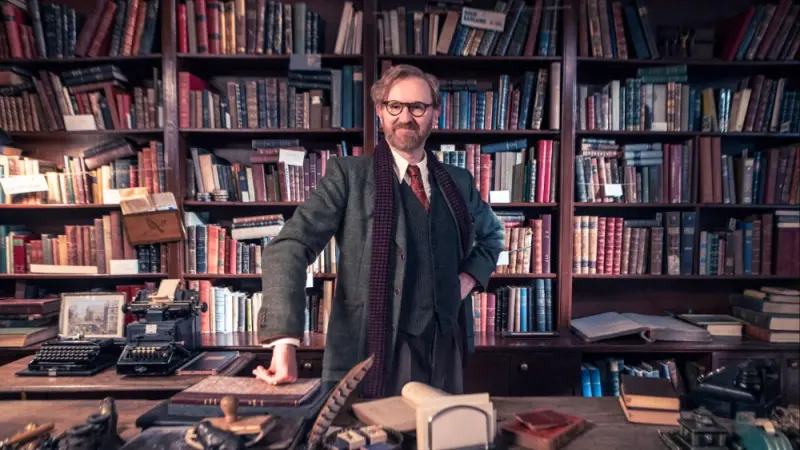
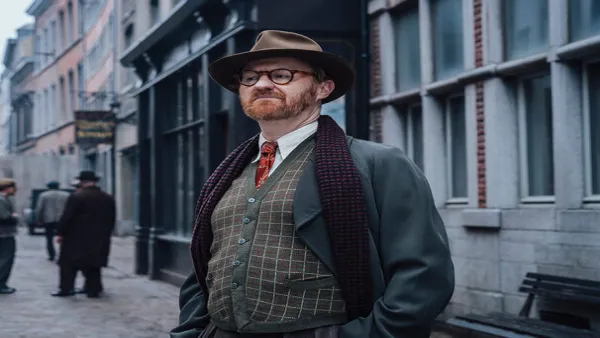
There's nothing new under the sun—except Mark Gatiss keeps proving Sherlock Holmes wrong. The Emmy-winning co-creator and star of Sherlock is back with a spine-tingling new series, Bookish, premiering July 16 on U&Alibi and later in the U.S. on PBS. Set in 1946 London, the show follows Gabriel Book, a gay bookseller with a genius for solving crimes. And yes, Gatiss hasn't tired of dreaming up fresh ways to kill people.
“It’s a constant challenge because you’re trying to think how you can surprise people,” he confesses. “Audiences are students of the genre.” Gatiss credits Agatha Christie for getting there first, but he’s found a clever twist: set the murder mystery in a rarely examined era, with a protagonist who hides his sexuality in a lavender marriage. “It’s period, but it’s also very underexamined,” he adds. “Women were liberated during the war and then told to go back to the stove. People are starting to wonder: why should they go back?”
A Deep Dive into the 'Romance of Crime'
Gatiss has long been a murder mystery aficionado. He’s currently fighting the temptation to buy the prop newspaper from the 1974 film Murder on the Orient Express. But his love for the genre comes with hard-earned realism. While researching a script about brutal murderer Neville Heath, he visited Scotland Yard’s Crime Museum—aka the Black Museum. The curator warned him: “Do you have a strong stomach?” Then came the photos.
“Suddenly, there was no romance in crime,” Gatiss recalls. “It was just bleak, even after 75 years.” That duality fuels Bookish: the fun of a parlor game meets the real pain and suffering. “It hasn’t cured me,” he laughs, “but I knew I wanted to look at the repercussions.”
Why 'Cozy Crime' Has Teeth
Don’t call Bookish “cozy crime”—Gatiss gently rejects that label, though he admits the term has merits. “I love invoking nostalgia, but it doesn’t have to be just wallpaper. It can have teeth. A lot of crime is rooted in despair and sadness.” He invokes Christie again: “She’s actually very spiky and has searing social commentary—much more than people give her credit for.”
The series is also peppered with sharp wit, thanks to Gatiss’s comedic roots in The League of Gentlemen. “I’m a believer that people who come through trauma can actually go the other way,” he says. “Book has a lighthearted attitude because he’s seen very bad things.” Expect laugh-out-loud moments between the murders.
The Cast and Chemistry That Makes It Sizzle
Gatiss shares electric chemistry with Polly Walker, who plays Trottie, his character’s wife in a lavender marriage. “She’s known for being a ne’er-do-well in shows like Bridgerton,” he notes. “She was touched that we thought of her for a sunny part.” Connor Finch plays Jack, a recent parolee with a secret connection to Book. And there’s an adorable dog that steals every scene.
The show has already been renewed for a second season—a massive vote of confidence before the premiere. Gatiss calls the whole experience “dress up and fun,” but he’s also grounded: “I understand if you’re playing a serial killer, you carry that with you. But at the end of the day, it’s dress up.”
From the 'Fantastic Four' Red Carpet to the Black Museum
Gatiss has a busy July. Besides Bookish and the already released Mission Impossible – The Final Reckoning, he appears in Fantastic Four: First Steps (out July 25) as a 1960s talk show host in a retro-future setting. “I did like two days of it. I’m just in the trailer a lot,” he quips. “I’m so glad I can stand on the red carpet and not worry about giving anything away.”
Director Matt Shakman, who worked with Gatiss on Game of Thrones, gushes: “When I needed to find the Ed Sullivan for my retro future, I knew just who to call. He’s utterly brilliant as a creator and performer.” Gatiss studied archival TV to get the cadence right—and of course, found the perfect toupee.
Because for Gatiss, it’s always about the disguise. “I have a collection of toupees and teeth that really help me find my way in—in addition to being handy at Halloween,” he laughs. Whether he’s playing a monotone cave guide in red shorts or a post-war bookseller solving murders, Gatiss brings one thing: pure showmanship with a dark edge.
Key Takeaways from Gatiss’s Crime Genre Wisdom
- Expect the unexpected: On Sherlock, the rule was “the killer is always the first person you see twice.” Gatiss deliberately broke it for season two.
- Lavender marriages matter: The 1946 setting allows a fresh lens on queer history—and the tension that comes with it.
- Cozy can cut deep: Gatiss balances period charm with real-world pain, inspired by visits to the Black Museum.
- Blockbuster cameos count: His role in Fantastic Four may be small, but he’s the narrator who sets the stage.
With Bookish already renewed for season two and a busy franchise schedule, Gatiss remains one of the most versatile talents in the business—and he’s just getting started. The murder mystery may be a classic formula, but with Gatiss at the helm, it feels thrillingly new.
Disclaimer - All celebrity-related content, information, and images on this website are based on publicly available online sources and AI-generated insights/data. Information such as biography, age, career, personal details, and images may change without notice over time. While we strive for accuracy, we do not guarantee the accuracy, completeness, reliability, or timeliness of any information or imagery displayed on this website. This content is provided for general informational purposes only.
Iconic Photos of Mark Gatiss

Top Trending News of Mark Gatiss
 👁️ 198 views
🔥 Mark Gatiss Stars in 'Bookish': A New Cozy Crime Classic
Explore 'Bookish,' the new 1940s detective drama from Mark Gatiss. Discover how Gabriel Book solves "hot tea murders" using the power of literature on Alibi.
 👁️ 157 views
🔥 Mark Gatiss Backs TV Trigger Warnings: "Better to Be Kind"
The League of Gentlemen creator Mark Gatiss defends the use of TV trigger warnings, arguing that "being kind" to viewers doesn't harm creative freedom.



Details
Send Us an Enquiry
We'll get back to you as soon as possible.
Thank You!
Your enquiry has been submitted. We'll be in touch shortly.