
Mourners at Iran's Former Supreme Leader's Funeral Hurl Stones at Trump Billboard: 'America is the Great Satan'

 Previous

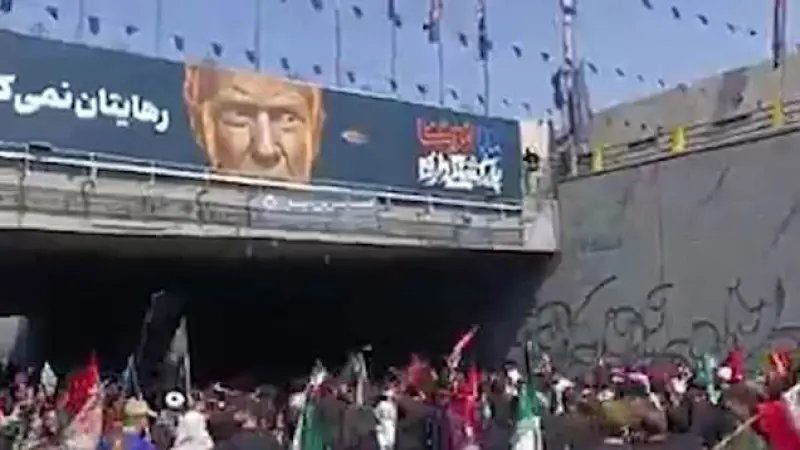
Explosive Outburst at State Funeral
In a scene thick with political fury and raw emotion, mourners at the funeral of Iran's former Supreme Leader, Ayatollah Ali Khamenei, turned their grief into a targeted display of anti-American rage. Thousands gathered in Tehran to pay their final respects, but the somber atmosphere erupted into chaos when a large billboard featuring U.S. President Donald Trump became the focus of collective anger.
Witnesses reported that mourners began pelting the billboard with stones, their shouts of 'America is the Great Satan' echoing across the funeral grounds. The stunning act of defiance dominated international headlines, framing the ceremony not just as a farewell to a powerful cleric but as a renewed rallying cry against the United States.
A Symbol of Wrath
The billboard, strategically placed near the funeral procession route, depicted Trump in his characteristic confrontational pose. For decades, Iranian state media has referred to America as the 'Great Satan,' and Trump's presidency only intensified that rhetoric. The stone-throwing outburst was a visceral manifestation of the deep-seated hostility that has defined U.S.-Iran relations since the 1979 Islamic Revolution.
Many in the crowd had been raised under the shadow of American sanctions, drone strikes, and military threats. To them, the former Supreme Leader was not just a religious figure but a stalwart opponent of U.S. imperialism. His funeral became a stage to reassert that opposition with force.
Khamenei's Complicated Legacy
Ayatollah Ali Khamenei, who served as Iran's Supreme Leader from 1989 until his death in 2026, was a polarizing figure both at home and abroad. Under his leadership, Iran expanded its influence across the Middle East, backed proxy forces, and accelerated its nuclear program. His death marked the end of an era, but the passions he stirred remain dangerously alive.
For his supporters, Khamenei embodied resistance against Western domination. They credit him with steering Iran through wars, sanctions, and diplomatic isolation. For critics, he was a symbol of authoritarian rule, human rights abuses, and economic mismanagement. The funeral thus became a battlefield of symbolism—where grief quickly morphed into political theater.
The Stone-Throwing Incident: A Closer Look
- Target: A giant billboard depicting Donald Trump, a fixture in Iranian anti-American propaganda.
- Reaction: Mourners threw stones and shouted 'Death to America' and 'America is the Great Satan.'
- Security Response: Iranian security forces did not intervene, effectively tacitly approving the outburst.
- Global Impact: Video clips went viral, further straining already fragile U.S.-Iran relations under the Trump administration.
The incident was not spontaneous. Billboards featuring Trump have been common in Iran since his presidency, often used by hardliners to rally public sentiment. This funeral provided a focal point for the accumulated rage of millions who blame Washington for decades of suffering.
Trump's Reaction and Geopolitical Ramifications
President Trump, known for his incendiary social media presence, quickly responded with characteristic bravado. In a series of tweets, he dismissed the stone-throwing as 'weak and pathetic' and reiterated his administration's 'maximum pressure' campaign against Iran. The White House issued a statement condemning the 'hateful display' and reaffirmed support for the Iranian people's 'right to peaceful protest.'
The episode underscored the volatility of Middle Eastern politics. With Khamenei's successor yet to be formally installed, Iran's power structure faces an uncertain transition. Hardliners within the regime may use such anti-American fervor to consolidate control and marginalize more moderate voices.
The Human Element: Grief and Rage
Beyond the politics, the funeral was a deeply human event. Mothers carried portraits of the fallen leader. Veterans of the Iran-Iraq war wept. Young men and women chanted revolutionary slogans with tears in their eyes. The stone-throwing was not merely an act of vandalism—it was an outpouring of generational pain.
For many Iranians, America represents not just a foreign power but the ultimate obstacle to their nation's sovereignty. The Trump billboard served as a canvas for that anger. Each stone hurled was a declaration that the revolution lives on, even in death.
Yet there were quieter moments too. Some mourners held up signs calling for peace and unity. A few voices could be heard whispering prayers for reconciliation. But they were drowned out by the thunderous chants of the majority.
Media Frenzy and Global Reactions
International news outlets scrambled to cover the story. Images of the stone-throwing flashed across screens from New York to Tokyo. Analysts debated whether the incident would derail any faint hopes of diplomatic dialogue between Washington and Tehran.
Iranian state television offered a heavily curated version of events, portraying the stone-throwing as a valiant expression of the people's will. Meanwhile, independent journalists on the ground reported a more chaotic scene, with some mourners expressing unease at the politicization of a religious ceremony.
What Happens Next?
The world watches as Iran navigates a leadership transition in the midst of unprecedented anger. The stone-throwing at Trump's effigy was a reminder that old animosities do not fade with the death of a single leader. If anything, they may burn brighter.
The funeral may become a turning point—either hardening Iran's anti-American stance or providing a crack for new diplomacy. Only time will tell. But for now, the image of stones flying at a billboard of a U.S. president is seared into the global consciousness.
As the last of the mourners dispersed, the billboard stood pockmarked and battered. A fitting metaphor for a relationship already in ruins.
Disclaimer - All celebrity-related content, information, and images on this website are based on publicly available online sources and AI-generated insights/data. Information such as biography, age, career, personal details, and images may change without notice over time. While we strive for accuracy, we do not guarantee the accuracy, completeness, reliability, or timeliness of any information or imagery displayed on this website. This content is provided for general informational purposes only.
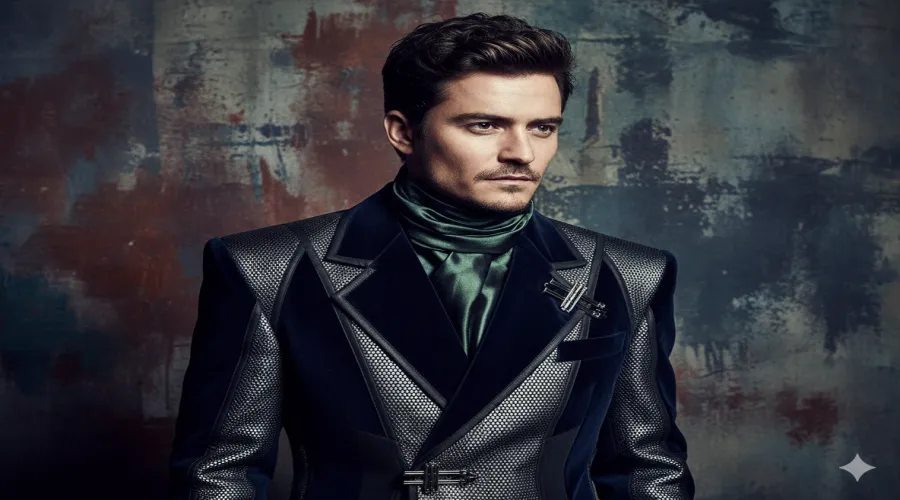
Iconic Photos of Orlando Bloom



Top Trending News of Orlando Bloom
 👁️ 181 views
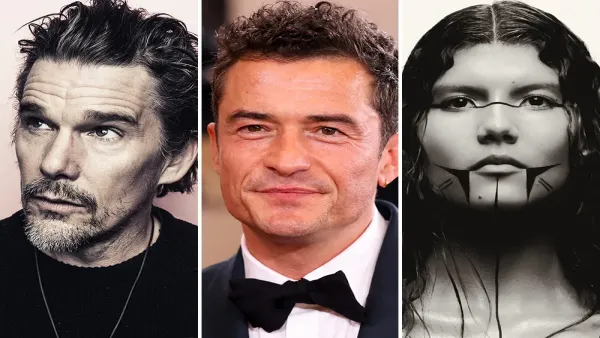
🔥 Orlando Bloom Joins The Last of the Tribe
Orlando Bloom boards jungle thriller 'The Last of the Tribe' alongside Ethan Hawke and Zaya Guarani, based on Monte Reel's book—directed by Claudio Borrelli
 👁️ 123 views
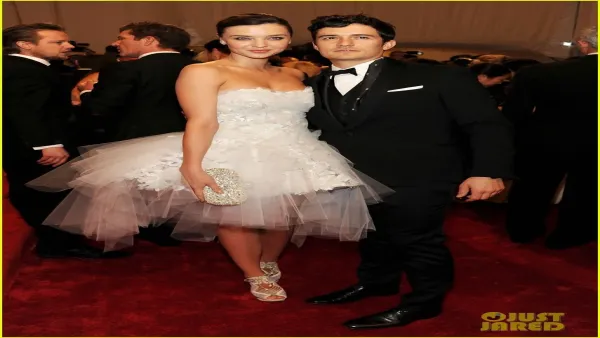
🔥 Miranda Kerr on Orlando Bloom Marriage
Miranda Kerr reveals she and ex Orlando Bloom "didn't bring out the best" in each other during their marriage; shares secrets to harmonious co-parenting






Details
Send Us an Enquiry
We'll get back to you as soon as possible.
Thank You!
Your enquiry has been submitted. We'll be in touch shortly.