
Polly Walker on Embracing the Villainess: Inside Her Daring Role on HBO's 'Rome'

 Previous


The Role That Changed Everything
When Polly Walker signed on to play Atia of the Julii in HBO’s epic historical drama ‘Rome,’ she knew she was stepping into something extraordinary. As Julius Caesar’s conniving niece, Atia is a woman who beds powerful men and pimps out her daughter—a character so morally complex and audaciously written that it immediately captured Walker’s imagination.
“This is that part that men get offered all the time,” Walker says. “Women, most of the time, are confined to playing girlfriends and wives. This part was so out there. I wanted to go for it.”
For an actress with a resume that includes ‘Patriot Games,’ ‘Emma,’ ‘Restoration,’ and ‘Enchanted April,’ taking on a figure as snobbish, cunning, sexually voracious, and amoral as Atia proved to be a daunting—but thrilling—task.
The Fears and Challenges
Walker’s initial reaction to landing the role was anything but confident. “When I found out that I got the part, I laid in a fetal position for a week. I definitely felt nervous,” she confesses. The biggest challenge, she says, was making Atia sympathetic—without overwhelming the audience with pity. “I purposely did not worry about that too much because I felt that she is having a hard time and is up against huge obstacles.”
From an outside perspective, many might assume that making a monstrous character feel human would be the trickiest part. But Walker explains, “I suppose it was a fine line between making her unbelievable and believable.” That delicate balance is what makes Atia one of the most memorable anti-heroines on television.
A Daring Introduction
In true HBO fashion, ‘Rome’ introduced Atia in a scene that left no room for modesty. She’s first seen mounted atop one of her lovers, slaves in attendance. Later, in a shocking sequence, she appears nude before her 11-year-old son Octavian, scolding the effeminate young man about his sex life, ordering him to visit a brothel, and demanding he eat goats’ testicles as a passage into manhood. It is the kind of historical color that no network would dare depict—except HBO.
“I do find the Roman period fascinating,” Walker says, “but I am not buying books on the period for research purposes. Basically I go with the script because I am trying to play (Atia) as a woman who has contemporary feelings, as if what is happening to her is happening now.”
A Character’s Evolution
Over the course of the first season’s 11 episodes, Walker was pleased to see Atia develop into something more than just a villain. “She became less of a monster, and you understood her vulnerabilities and the reasons why she behaved liked she did.” That arc is a testament to both the writing and Walker’s nuanced performance.
Of course, the historical reality imposes boundaries. Atia cannot suddenly open a chain of hotels or embark on any modern fantasy. “I don’t know how far I could go with the role because I am dependent on history,” Walker notes. But within those parameters, she found endless room for complexity.
Behind the Scenes of ‘Rome’
When asked about her favorite scene from the first season, Walker’s answer is delightfully visceral: “Being under a bull being covered in blood. I enjoyed that.” That taste for the dramatic and the physical reveals an actress fully committed to her craft.
Walker also shared her admiration for other shows—she is ‘really into ‘House’’—and when asked about underrated actors, she diplomatically replied, “99% of them. I wouldn’t like to name names.” It’s a witty nod to the industry that often overlooks supporting talent.
The Allure of Roman Drama
‘Rome’ brought the ancient world to life with a level of grit and glamour that set a new standard for historical drama. The show explored the political and personal machinations of the late Republic, from Caesar’s rise to the ultimate emergence of Octavian. Atia, as the mother of Octavian, sits at the center of a power struggle that would reshape history.
Walker’s performance earned critical acclaim, and fans still celebrate the show’s unflinching portrayal of Roman decadence. The series ran for two seasons, and although it ended prematurely, it left an indelible mark on television.
The Career Highlights
Before ‘Rome,’ Polly Walker had already built an impressive filmography. She starred alongside Harrison Ford in ‘Patriot Games,’ appeared in the period drama ‘Emma,’ and earned praise for her work in ‘Restoration’ and ‘Enchanted April.’ Each role showcased her range, but none prepared her for the complexity of Atia.
- ‘Patriot Games’ (1992) – A political thriller where Walker held her own against Hollywood royalty.
- ‘Emma’ (1996) – A classic Jane Austen adaptation, showing her grace in period pieces.
- ‘Restoration’ (1995) – A historical drama that further honed her craft.
- ‘Enchanted April’ (1991) – An earlier standout that established her as a talent to watch.
Yet it was Atia that allowed Walker to break free from the constraints often placed on female actors. “This is that part that men get offered all the time,” she says. In many ways, ‘Rome’ was a game-changer not just for the genre, but for the kinds of roles women could inhabit on screen—unapologetically ambitious, powerful, and morally ambiguous.
Why Atia Still Matters
Almost two decades after its premiere, ‘Rome’ remains a touchstone for quality television. Polly Walker’s Atia is a character who refuses to be forgotten. She is a mother, a schemer, a survivor—and a role that Walker embraced with open arms, even if she spent a week in the fetal position before filming began.
For fans of period drama, political intrigue, and fearless performances, Walker’s work on ‘Rome’ stands as a masterclass in walking that fine line between the unbelievable and the believable. And for the actress herself, it was a dream realized. “I wanted to go for it,” she says. And she certainly did.
Disclaimer - All celebrity-related content, information, and images on this website are based on publicly available online sources and AI-generated insights/data. Information such as biography, age, career, personal details, and images may change without notice over time. While we strive for accuracy, we do not guarantee the accuracy, completeness, reliability, or timeliness of any information or imagery displayed on this website. This content is provided for general informational purposes only.
Iconic Photos of Polly Walker




Top Trending News of Polly Walker
 👁️ 44 views
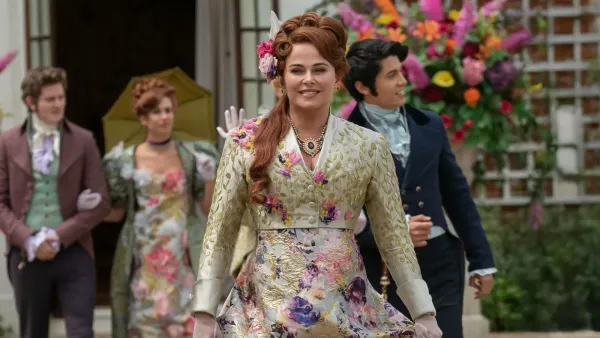
🔥 Polly Walker’s Bridgerton Questionnaire: Ponies & Ravens
Lady Portia Featherington herself, Polly Walker, reveals her dream Regency pet and her secret 'glamma' life in Shondaland’s.
 👁️ 44 views
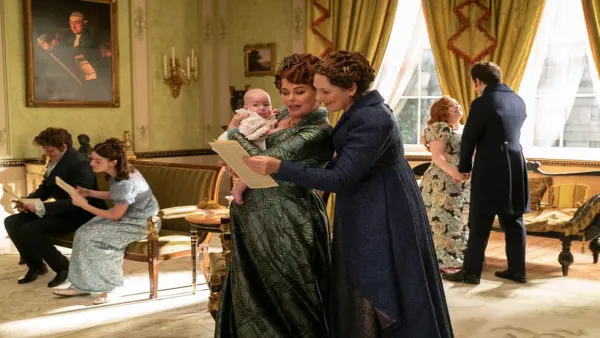
🔥 Bridgerton Season 4 Cast: New & Returning Character
Meet the Season 4 cast of Bridgerton. From Benedict’s new love Sophie Baek (Yerin Ha) to the return of Anthony and Kate.










Details
Send Us an Enquiry
We'll get back to you as soon as possible.
Thank You!
Your enquiry has been submitted. We'll be in touch shortly.