
Dick & Liz: The Hollywood Gamble That Created a Masterpiece
 Previous

The Ultimate Hollywood Gamble: Richard Burton and Elizabeth Taylor
Before John and Yoko, before Charles and Diana, and long before Travis and Taylor, there were Dick and Liz. Richard Burton and Elizabeth Taylor were the quintessential 1960s celebrity couple. Their scandalous extramarital affair on the set of the epic disaster Cleopatra captivated the world. They lived a life of extravagant indulgence, fueled by alcohol and relentlessly pursued by paparazzi. They churned out mediocre films (has anyone actually seen The Sandpiper?), but they also co-starred in a cinematic masterpiece: Who’s Afraid of Virginia Woolf?
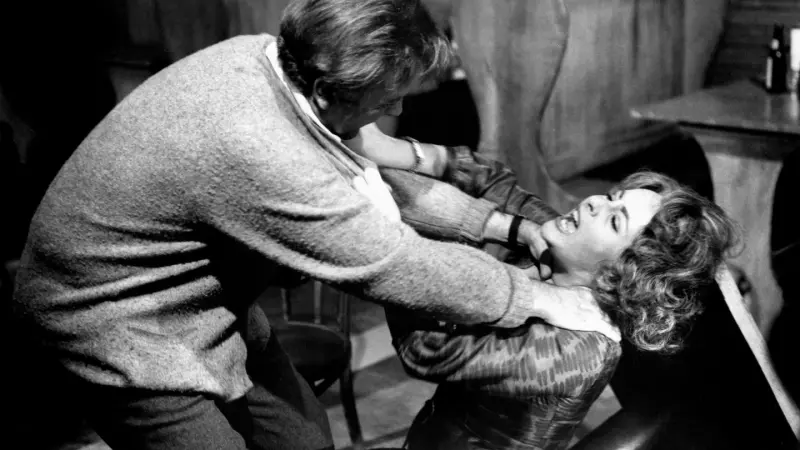
According to the source document, the film, adapted from Edward Albee's hit Broadway play and directed by a first-time filmmaker named Mike Nichols, was a breakthrough both cinematically and culturally. As detailed in Screenshot (550).png, this blistering portrayal of a marriage as a war of attrition bridged Hollywood's fading studio system and the dawn of a more daring, adult-oriented New Hollywood.
The Book That Tells All: Cocktails With George and Martha
Author Philip Gefter—who previously penned a biography of Richard Avedon—recounts the entire saga in his lively, meticulously researched book, Cocktails With George and Martha. Gefter argues that Virginia Woolf marked the dawn of a new age, challenging the hypocrisies of mainstream America and heralding the sexual revolution.
Gefter’s work, as reported in Screenshot (550).png, relies on interviews, magazine articles, and producer Ernest Lehman’s extensive archives at the Harry Ransom Center in Austin. The book shows great affection for the film and the deeply gifted—and deeply troubled—people who made it.
George and Martha: A Marriage of Horror and Humor
Albee’s play depicts a middle-aged married couple at a small college: George, a history professor drowning in mediocrity and self-loathing, and Martha, his profoundly unhappy wife. At 2 a.m., after a faculty party, they invite a new professor, Nick, and his wife, Honey, to their home for a nightcap—like spiders luring flies into their web. What follows is a breathtaking display of verbal violence, sexual innuendo, and raw emotional abuse.
The Risky Business of Making the Movie
Hollywood was terrified of Albee’s play. It was loaded with obscenities and sexual frankness. But Warner Bros. head Jack Warner was desperate. Ticket sales were plummeting due to television, and stale Westerns and biblical epics weren’t cutting it. He turned to producer-screenwriter Ernest Lehman, who had the brilliant idea to cast Elizabeth Taylor as Martha.
Lehman harbored private doubts about Taylor and Burton’s ability to play these complex characters so unlike themselves. But as Screenshot (550).png notes, he couldn’t help envisioning “large lines around the block of every city of the world if Elizabeth Taylor and Richard Burton were to star together.” Burton, who by then was her fifth husband, helped persuade her to take the role and signed on to play George.
Nichols Takes the Helm
Lehman hired Mike Nichols—then 33, the toast of Broadway as part of the satirical duo Nichols and May. Nichols had never directed a film. Albee was horrified, saying, “My play is not a farce.” Nichols surrounded himself with talented cinematographer Haskell Wexler and costume designer Irene Sharaff. (Note: The source document originally misspelled Sharaff’s name but was corrected.) Sharaff helped mute Taylor’s stunning beauty with a frumpy wig and an ill-fitting charcoal dress; Taylor gained significant weight for the role. George Segal and Sandy Dennis were cast as the young couple, Nick and Honey.
The Burtons were notoriously difficult. They took four-hour lunch breaks, blew off production when celebrity friends visited, and would return to set at 4 p.m. only to quit by 6 p.m. when staffers brought bloody marys. Burton even appointed himself Taylor’s acting coach, frequently berating her to the point of tears. But Nichols, who clashed with almost everyone except the Burtons, was stunned by Taylor’s intuitive camera sense.
The Censorship Battle
The film ran a month behind schedule and $2 million over budget, clocking in at a then-hefty $7.5 million. Jack Warner moaned, “We’ve got a $7.5 million dirty movie on our hands.” The industry’s Production Code demanded major cuts. But the Motion Picture Association had hired Jack Valenti as president, who overruled the censors. Two years later, Valenti would scrap the code entirely and introduce the ratings system.
Nichols scored a PR coup by inviting his occasional date, Jacqueline Kennedy, to a preview for the National Catholic Office for Motion Pictures. After the screening, she declared loudly, “Jack would have loved this film.” The board gave it an A-4 rating: “morally unobjectionable for adults, with reservations.”
Legacy and Awards
The movie opened in June 1966 to critical and box office success. It received 13 Academy Award nominations—eligible in every category—and won five, including Best Actress for Taylor and Best Supporting Actress for Dennis. As the source text states, “No one, it seems, was afraid of ‘Virginia Woolf.’”
The Human Drama Behind the Art
Burton and Taylor were never better on-screen than in Who’s Afraid of Virginia Woolf? Their real-life drama—the drinking, the fights, the extravagant love—only enhanced their performances. The film remains a testament to the chaos and brilliance of the 1960s Hollywood machine, where a gamble on a scandalous play and a volatile couple paid off in spades.
For those fascinated by the intersection of celebrity, art, and sheer chutzpah, “Cocktails With George and Martha” is essential reading. It’s a deep dive into a moment when Hollywood dared to be honest about marriage, sex, and despair—and created an enduring classic.
Disclaimer - All celebrity-related content, information, and images on this website are based on publicly available online sources and AI-generated insights/data. Information such as biography, age, career, personal details, and images may change without notice over time. While we strive for accuracy, we do not guarantee the accuracy, completeness, reliability, or timeliness of any information or imagery displayed on this website. This content is provided for general informational purposes only.
Iconic Photos of Richard Burton
Top Trending News of Richard Burton
 👁️ 133 views
🔥 Richard Burton Wild Genius Review by Yvette Huddleston
Critic Yvette Huddleston reviews the BBC documentary Richard Burton: Wild Genius for the Yorkshire Post, celebrating the 100-year legacy of the Welsh icon.
 👁️ 118 views
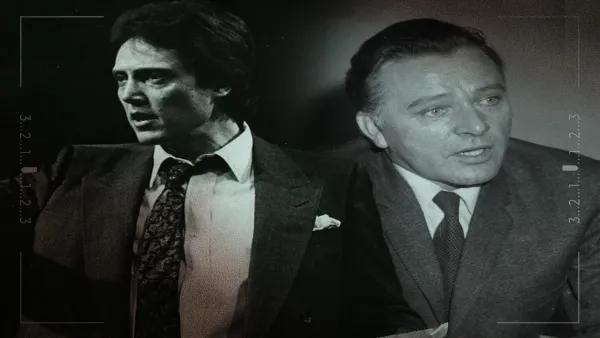
🔥 The Richard Burton Role Christopher Walken Lost
Christopher Walken reflects on being rejected for the lead role in the 1977 film Equus, which went to Richard Burton. "That’s the way it goes," says the star.
Details
Send Us an Enquiry
We'll get back to you as soon as possible.
Thank You!
Your enquiry has been submitted. We'll be in touch shortly.