
Riz Ahmed on Why 'Hamlet' is a Story for Right Now
 Previous


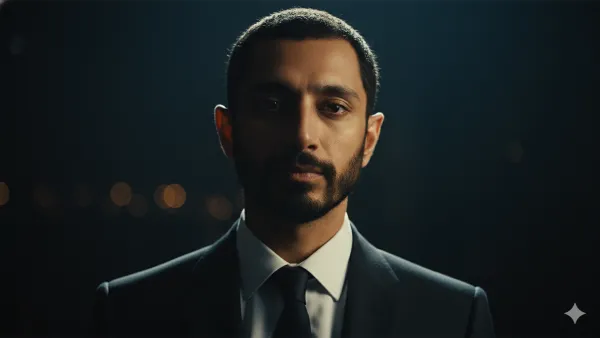
In February 2026, the release of Aneil Karia’s Hamlet has done the seemingly impossible: it has made a 400-year-old play feel like a breaking news story. Starring Riz Ahmed as the titular prince, this adaptation transposes the action to modern-day London, reimagining Elsinore not as a castle, but as a billion-dollar property development empire.
For Ahmed, who spent over a decade developing this vision, the story isn't just a classic—it's a "collective call to action" for an era defined by systemic distrust and public grief.
"To Be or Not To Be" as a Call to Resistance
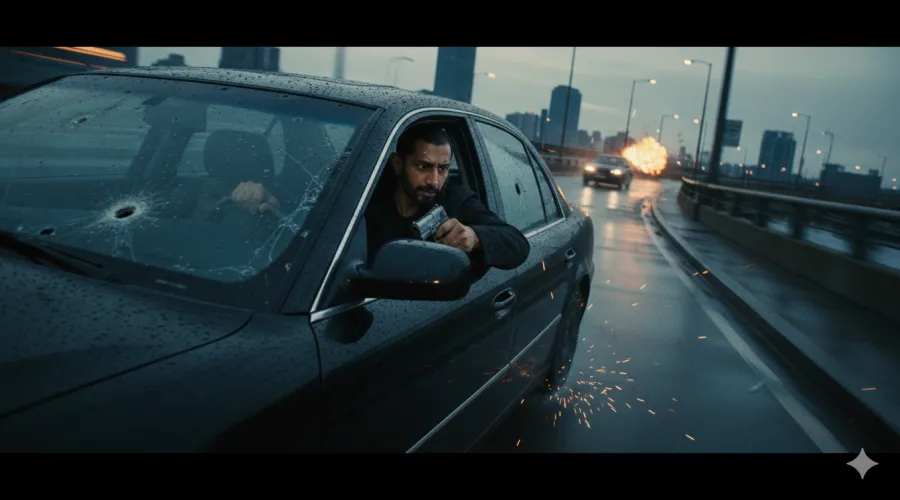
One of the most radical changes in the 2026 film is the delivery of the famous "To be or not to be" soliloquy. Rather than a quiet, internal meditation on mortality, Ahmed delivers the lines while screaming behind the wheel of a speeding car.
In a recent interview with WePresent, Ahmed explained that the speech has been "deradicalized" by history into something safe and individualistic.
"Actually, it’s about a collective call to action," Ahmed says. "This is a speech about resistance and fighting back, and how difficult it is to do that because it’s scary. Because you might lose it all. It’s about resisting the powers that be. This story is about right now."
Modern London: Corruption and Gentrification
The film uses Shakespeare’s plot to hold a mirror up to contemporary urban struggles. In this version:
-
The "State" of Denmark: Becomes a shadowy family business involved in aggressive London real estate.
-
Claudius (Art Malik): Is a predatory property speculator who evicts a tented community of people (led by Fortinbras) from prime land.
-
The Ghost (Avijit Dutt): Appears not on a castle battlement, but on a bleak, rain-slicked urban rooftop overlooking the London skyline.
By placing Hamlet within a wealthy British South Asian family, Ahmed and director Aneil Karia highlight how themes of honor, duty, and intergenerational tension remain visceral and "pertinent" in present-day culture.
Grieving the "Illusion of Fairness"
Ahmed describes his Hamlet as someone "grieving the illusion that the world is a fair place." As he uncovers the rot within his own family's company, the character’s "madness" becomes a rational response to an irrational, corrupt system.
The film strips away the traditional "theatrical flourishes"—omitting characters like Rosencrantz and Guildenstern—to focus entirely on the psychological "miasma" of a man realizing he is complicit in the very injustice he hates.
A "Reclaimed" Shakespeare
A key part of Ahmed's mission was to "de-center" the "posh, white, establishment" image of Shakespeare. By incorporating Hindu death rituals, the Bhagavad Gita, and a "play-within-a-play" reimagined as a South Asian cultural dance (choreographed by Akram Khan), the film argues that these ancient myths belong to everyone.
"Culture is something we all share," Ahmed told the Press Association. "I hope it helps people to blow the story wide open in their minds in terms of what it can be and who can be in it."
Where to Watch
Hamlet opened in UK cinemas on February 6, 2026, following its premiere at the Telluride Film Festival. It stands as a companion piece to the other major 2026 Shakespearean event: Chloé Zhao’s Hamnet, starring Paul Mescal.
Source - https://wepresent.wetransfer.com/stories/riz-ahmed-hamlet
Disclaimer - All celebrity-related content, information, and images on this website are based on publicly available online sources and AI-generated insights/data. Information such as biography, age, career, personal details, and images may change without notice over time. While we strive for accuracy, we do not guarantee the accuracy, completeness, reliability, or timeliness of any information or imagery displayed on this website. This content is provided for general informational purposes only.
Iconic Photos of Riz Ahmed


Top Trending News of Riz Ahmed
 👁️ 48 views
🔥 Riz Ahmed ‘Walks Out’ of Interview Over Jacob Elordi
Riz Ahmed jokingly storms out of an interview after a quip about Jacob Elordi taking the James Bond role. Plus, details on Ahmed’s.
👁️ 45 views
🔥 Riz Ahmed on Why 'Hamlet' is a Story for Right Now
Riz Ahmed explains the modern urgency of his 2026 'Hamlet' adaptation, reimagined as a South Asian crime thriller about resistance.









Details
Send Us an Enquiry
We'll get back to you as soon as possible.
Thank You!
Your enquiry has been submitted. We'll be in touch shortly.