 Previous

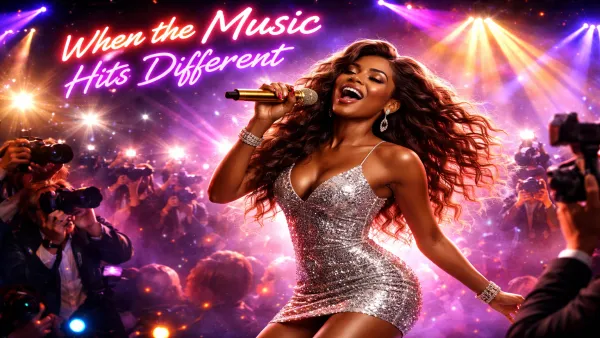
icture this: it is a Tuesday evening in June 2025. A twelve-year-old in Manila is watching an animated film about a fictional K-pop girl group secretly battling demons between stadium performances. Two thousand miles away in São Paulo, a forty-five-year-old accountant who has never willingly listened to a single K-pop song streams the same film with his daughter. By Thursday, both of them are searching Spotify for the group's lead single. By the following Monday, that song, "Golden," is sitting at number one on the Billboard Hot 100 — making history as the first K-pop track in the chart's seven-decade existence to claim that summit. This is not a marketing fantasy. This is the story of Netflix's KPop Demon Hunters, the most extraordinary piece of entertainment news to emerge from streaming in years, and perhaps the clearest example yet of what happens when a new Netflix release doesn't just entertain — it transforms.
The Netflix Effect is not a new concept. Industry observers have tracked the phenomenon for years: the way a streaming series can resurrect a forgotten song, trigger a spike in chess board sales, or send an entire generation reaching for regency-era fashion. What KPop Demon Hunters did, however, was not simply participate in that tradition. It obliterated it, redrew its boundaries, and quietly suggested that the relationship between music, visual storytelling, and global audiences has entered a fundamentally new phase. If the old Netflix Effect was a stone thrown into a pond, KPop Demon Hunters was a depth charge.
A Streaming Hit That No One Saw Coming — and Everyone Watched Twice
Let's be clear about the numbers, because they demand to be said out loud. KPop Demon Hunters accumulated a staggering 20.5 billion minutes of viewing in the United States alone in 2025 — that translates to over 207 million complete viewings of the 99-minute film. Globally, it crossed 500 million views on Netflix, effectively doubling the previous record held by the action comedy Red Notice. It maintained a top-ten placement across 93 countries for months. Time Magazine named it the Breakthrough of the Year. It received nominations for Best Animated Feature and Best Original Song at the Academy Awards. Its lead single "Golden" earned a Grammy — the first K-pop song in history to win in a major category. This is the entertainment news story of the streaming era, and it arrived wearing an animated film's clothing.
The film itself is, on the surface, an ingeniously simple premise. A fictional K-pop girl group called HUNTR/X performs for millions of adoring fans while secretly battling supernatural demons threatening humanity. Directors Maggie Kang and Chris Appelhans brought a vibrancy to the animation that felt almost edible — saturated colors, kinetic choreography, and a visual grammar pulled directly from real K-pop performance aesthetics. But the real secret weapon, the one that no analyst predicted with any confidence, was the music. Executive music producer Ian Eisendrath understood from the start that the film's soundtrack couldn't merely gesture at authenticity. As he told Billboard, the songs couldn't be anyone's approximation of K-pop hits. They had to actually be K-pop hits — and they were.
"The song couldn't be our approximation of the K-pop hit — it actually had to be one."
— Ian Eisendrath, Executive Music Producer, KPop Demon HuntersThis distinction matters more than it might initially appear. The history of Hollywood's relationship with non-Western music is littered with affectionate but hollow imitations — gestures toward authenticity that please no one deeply. KPop Demon Hunters chose the harder path, building its soundtrack from the inside of the K-pop industry outward, and the results were felt almost immediately in the data. According to a report from Luminate Data, the film's soundtrack was responsible for roughly 43 percent of all U.S. K-pop streaming as of August 2025. That single statistic contains multitudes: it means the film didn't just attract existing K-pop fans, it manufactured new ones at industrial scale.
How Netflix Became the World's Most Powerful Music Curator — Without Trying
To understand what makes the KPop Demon Hunters streaming buzz so remarkable, it helps to zoom out and look at Netflix's evolving relationship with music more broadly. The streamer has, almost by accident, become one of the most influential forces in the global music industry — not through a record label, not through a curated playlist, but through the simple, relentless mechanism of storytelling that people actually finish watching.
The most iconic example from recent years remains Kate Bush and "Running Up That Hill." Before Stranger Things featured the 1985 track in its fourth season, the song averaged around 22,000 daily streams. After it appeared on screen, it peaked at 5.1 million streams in a single day — nearly four decades after its release. It entered the Billboard Hot 100 for the first time. It hit one billion streams. A song that existed comfortably in the catalogue of rock history was effectively reborn as a viral streaming anthem. That is the Netflix Effect at its most elegant: a show does not advertise a song, it simply believes in it, and audiences follow.
Bridgerton worked its own version of the formula. By reimagining period romance through orchestral covers of contemporary pop — Billie Eilish, BTS, Charli XCX processed through the Vitamin String Quartet — it created a genre of its own. Music supervisor Justin Kamps observed the effect directly: original artists saw spikes in their streaming numbers each time a new season dropped. Season 4, which arrived in early 2026, sent a cover of Teddy Swims' "Lose Control" surging by 2,290 percent on U.S. Spotify streams. The show essentially functions as a weekly recommendation engine for music its audience didn't know they needed, wrapped in corsets and candlelight.
But here is where KPop Demon Hunters changes the conversation entirely. The previous examples of the Netflix Effect involve existing music being discovered by new audiences. KPop Demon Hunters created music — fictional music for a fictional group — and then made that music real, in every sense that matters. The voice artists behind HUNTR/X (EJAE, Audrey Nuna, and REI AMI) performed "Golden" live on Saturday Night Live during a Bad Bunny-hosted episode. The performance stopped being a promotional appearance and became a genuine cultural moment, the fictional group briefly stepping through the screen and into shared reality. One fan's social media reaction captured the collective feeling with chaotic precision: the sense that something unprecedented had just happened in front of a studio audience.
K-Pop, Korea, and the Geography of a Viral Series
No discussion of KPop Demon Hunters as a viral series can ignore what it represents within the larger arc of Korean culture's global ascent. The South Korean government estimated that global Hallyu — the "Korean Wave" of cultural export — counted more than 200 million dedicated fans worldwide in 2024. BTS proved that K-pop could fill stadiums on every continent. Squid Game demonstrated that Korean storytelling could dominate global streaming. KPop Demon Hunters arrived at a moment when the infrastructure for this success was already in place, and it simply detonated inside it.
Danny Chung, a K-pop producer who voices a character in the film, described the experience of watching the film convert non-fans with an analogy that rings true: people often watched the film in spite of the K-pop in the title, and then emerged from it realizing they had become K-pop fans without noticing. There is a whole back catalogue of three decades of music waiting for them to discover, he noted — and the film handed them the key. Investors noticed too. Shares in South Korea's major K-pop entertainment companies — HYBE, JYP Entertainment, SM Entertainment, and YG Entertainment — all surged in the months following the film's release. At Everland, South Korea's largest amusement park, Netflix collaborated on a themed zone featuring the film's world. Tourism data showed measurable increases in K-pop-driven international visits to South Korea, with travelers citing the film as a motivating factor.
There is something quietly historic about a streaming animated musical reshaping the economics of a nation's cultural industry. It is the kind of cause-and-effect chain that sounds implausible until it has already happened. And it is perhaps the most vivid demonstration yet that the boundaries between entertainment and economy, between fandom and commerce, between fiction and cultural reality, have dissolved in ways that neither the film industry nor the music industry have fully reckoned with.
"I think people watched KPop Demon Hunters in spite of that 'K-pop' in the title. And then, after watching it, they realized, 'Oh, wow. I'm a K-pop fan.'"
— Danny Chung, K-pop Producer & Voice ActorA New Chapter — and a Question Netflix Must Answer
Netflix has confirmed a sequel is in development, with directors Maggie Kang and Chris Appelhans returning under a new creative partnership with the streamer. Netflix Chief Content Officer Bela Bajaria framed the announcement in the language of ignition rather than continuation: the original film didn't just reach audiences, she said, it lit a fandom. The sequel announcement also addresses a strategic challenge Netflix entered 2026 carrying with some weight. Both Stranger Things and Squid Game concluded in 2025 — the two series that had most defined Netflix's identity as a home for must-watch global television. The platform found itself without a single franchise capable of commanding the kind of sustained cultural gravity those shows generated.
KPop Demon Hunters is the most promising candidate to fill that space, though it arrives with a caveat built into its format: animation production timelines are demanding, and a sequel is likely years away. In the interim, Netflix has released a Bonus Content Collection — behind-the-scenes clips, additional songs, production material — a strategy designed to keep a fandom warm between major installments. The approach is not unique to this property, but it reflects a broader shift in how streaming platforms think about intellectual property. A movie or series is no longer a discrete event. It is a world, and the world requires ongoing maintenance, like a garden that cannot be allowed to go to seed.
April 2026 also brings the return of Beef for its hotly anticipated second season — an anthology dark comedy that swept eight Emmys and three Golden Globes in its first iteration, now featuring Oscar Isaac and Carey Mulligan in a generational conflict set within the claustrophobic world of a country club. The wider Netflix release calendar for 2026 suggests a platform that has learned to think in ecosystems rather than individual shows: the animated Stranger Things spinoff keeps the Hawkins universe alive for fans not ready to leave; the second season of Avatar: The Last Airbender expands a franchise that surprised critics with its first-season emotional depth; Outer Banks prepares for a fifth and final season with a built-in audience that has proven remarkably loyal through four increasingly high-stakes seasons. The streaming landscape, in short, feels less like a catalogue and more like a living organism — one that breathes in viewership and exhales cultural events.
Streaming Has Always Changed How We Listen. Now It Changes What We Hear.
According to Luminate, 28 percent of Gen Z discovers new music through series exclusive to streaming platforms. That statistic, quietly remarkable, has probably already reshaped how music industry executives think about their partnerships with Netflix, Amazon, Apple TV+, and their peers. A placement in a prestige streaming series is no longer simply a licensing fee — it is a potential resurrection, a potential breakthrough, or in the case of KPop Demon Hunters, a potential cultural revolution dressed as children's entertainment.
Robert Fink, the chair of music industry programs at UCLA's Herb Alpert School of Music, observed that the role of music supervisors on streaming projects has evolved dramatically over the past decade. It is no longer about finding the right song for a scene. It is about constructing a sound world that audiences will carry out of the show and into their daily lives — into their headphones on the subway, their speakers in the kitchen, their recommendations to friends who haven't watched yet. The music becomes a trailer for the emotion the show contained, and for the emotional experience of watching it.
This is the deepest reason the Netflix Effect continues to grow in power rather than diminish with familiarity. Audiences have not become numb to it. If anything, the mechanism has become more sophisticated on both sides — creators who understand it and build for it, and viewers who have learned to trust that a show's soundtrack is worth following wherever it leads. KPop Demon Hunters did not stumble into this dynamic. It was engineered for it, which is perhaps what makes its success feel less like a lucky wave caught at the right moment and more like the first articulate proof of a new theory of how entertainment and culture function together in the streaming age.
The girl group fights demons. The music plays. The world listens. And somewhere in that improbable chain of events is a blueprint for what the next decade of pop culture might look like — one where the line between what is fictional and what is real, between what is a story and what is a movement, becomes wonderfully, productively impossible to find.




 👁️ 196 views
 👁️ 189 views