
Tiger Woods Jokes: Clean & Funny Golf Humor That Never Gets Old
 Previous

here is a particular kind of fame that exists at the intersection of legend and legend-making — where a person's greatness becomes so thoroughly documented, so universally acknowledged, that humor becomes its own form of tribute. Beethoven gets classical music jokes. Einstein gets physics riddles. And Tiger Woods, the most celebrated golfer who ever gripped a club, gets golf jokes. A lot of them. The kind of jokes that ricochet around locker rooms, float through corporate team-building afternoons on the back nine, and somehow still land fresh at the nineteenth hole, decades into his remarkable career. What is it about Tiger that makes him the sport's most beloved comedic muse? The answer, it turns out, says as much about golf itself as it does about the man holding the nine-iron.
Golf has always been a sport that takes itself seriously enough to need laughter. It is, as the old quip goes, "a good walk spoiled" — a four-to-five-hour exercise in precision, patience, and the quiet suppression of rage at one's own inadequacy. Into that world of hushed galleries and manicured fairways walked Eldrick "Tiger" Woods in 1996, and the sport has never quite recovered its solemnity. Tiger didn't just win majors — he won them with a fist pump that felt like it belonged in a stadium, with a stare that intimidated seasoned professionals into double-bogeys, and with a consistency so supernatural that his peers openly joked about needing a different playbook when he was in the field. That combination — superhuman talent wrapped in a deeply human career arc — is precisely the stuff good golf humor is made of.
Why Tiger Is the Ultimate Setup Man
Consider the basic architecture of a good Tiger Woods joke. It works on a gradient of recognition — you need to know enough about golf to appreciate the setup, but the punchline itself almost always extends beyond the sport. Take the classic: Why does Tiger Woods play golf? Because it's the only sport where you yell "Fore!" instead of "Four!" Or the perennial favorite whispered on driving ranges across the world: How do you know Tiger Woods is at the golf course? Every other player suddenly gets worse. These jokes aren't just funny because they're clever — they're funny because they're rooted in something true. When Tiger was in his prime, the documented phenomenon known colloquially as the "Tiger Effect" was real: television ratings tripled on Sundays when he was in contention, sponsorship dollars ballooned, and younger players admitted to feeling the weight of his presence in ways that had no logical explanation. The humor merely dramatizes documented reality.
Golf humor has its own microclimate within the broader ecosystem of sports comedy. Unlike football jokes, which tend to lean on physicality and brute force, or basketball humor, which often plays with athleticism and flair, golf jokes trade in irony — the disconnect between how seriously the game is taken and how absurd it can look from the outside. A grown adult, dressed in colors that would make a flamingo blush, walking four miles to hit a tiny ball into a hole slightly larger than a teacup, repeating this seventeen more times, and then arguing about it at the bar for two hours. Golf is inherently comedic material. Tiger Woods is its most recognizable character — both its hero and its greatest story. Naturally, he ended up as the genre's most recurring subject.
"Tiger doesn't just play golf. He makes everyone else look like they're playing a completely different sport — probably a worse one."
— A sentiment that has circulated on golf commentary broadcasts for over two decadesThe Best Clean Tiger Woods Jokes
For those who have spent any time around a golf club — the building, not the implement — you'll know that golf humor thrives on a certain genteel decency. These jokes aren't about shock value. They work because golf has its own language, its own etiquette, its own rich lore. Here are some of the most durable Tiger Woods jokes circulating across clubhouses, social feeds, and streaming golf content right now, all of them clean, all of them rooted in genuine admiration for the man.
A beginner golfer asks his caddie, "What club should I use here?"
The caddie replies: "Well, Tiger would use a nine-iron. But for you? Let's try the defibrillator."
Why doesn't Tiger Woods ever get lost on the golf course?
Because he always knows his way to the top of the leaderboard.
Tiger Woods, Rory McIlroy, and a beginner golfer are playing together. The beginner holes out a forty-foot birdie putt.
Tiger nods and says, "Nice shot." Rory says, "Great putt." And the beginner says, "Thanks — I just pretended the hole was terrified of me, same as everyone else on tour."
How many Tiger Woods does it take to change a light bulb?
Just one — but he'll have seven surgeries beforehand and still somehow change it better than anyone else ever has.
A golf fan says to his friend: "I played exactly like Tiger Woods today."
His friend replies: "You shot a 65?" He says: "No — I had to withdraw after nine holes."
The Viral Series of Golf Comparisons
One of the most durable and shareable corners of golf internet humor — the kind of content that drives streaming buzz on YouTube golf channels and becomes viral material across social platforms — is the simple format of the Tiger comparison. It goes something like this: a recreational golfer posts their round score proudly, and within seconds the comment section fills with variations of "Tiger once shot that on just one hole." It's a gentle, affectionate ribbing that somehow never gets old, because the distance between Tiger at his peak and the average weekend golfer is genuinely astronomical. He is, as one popular internet meme put it, playing "golf on hard mode — and still winning."
The comparison joke has become its own subgenre, a kind of comedic shorthand for the absurdity of human aspiration versus elite athletic reality. In 2019, when Tiger won his fifth Masters title at age 43, completing one of the most dramatic sporting comebacks of the century, the internet briefly abandoned all other content to process what had just happened — and within hours, the jokes were rolling. "Tiger Woods just won the Masters after five back surgeries, two knee surgeries, and personally carrying the weight of two decades of human expectation" went one widely shared post. "I, meanwhile, pulled a muscle reaching for the TV remote." The joke worked because the emotional truth underneath it was profound: what Tiger had done was not merely athletic. It was something bordering on metaphysical.
The comeback narrative as comedic engine
What makes Tiger uniquely fertile ground for humor — beyond his record-shattering statistics — is the almost novelistic quality of his career arc. Golf jokes about Tiger often function as compressed biography: they acknowledge the heights, wink at the valleys, and ultimately arrive at a punchline rooted in the simple, inescapable fact that the man keeps showing up. There's a classic joke structure that mirrors this perfectly. Consider: Tiger Woods has had more comebacks than a boomerang — but unlike a boomerang, he actually goes somewhere. That particular joke has been doing the rounds on golf podcast commentary for years, and it endures because it contains a real observation about perseverance wrapped in playful imagery. That's the mark of good sports humor — it uses laughter as a lens to look at something true.
The entertainment news cycle around Tiger has always generated its own comic momentum. Golf media, that reliably earnest ecosystem of swing analyses and equipment reviews, tends to treat Tiger with a reverence that occasionally tips into the absurd. When Tiger announced in early 2026 that he was aiming to return to competition, the discourse ran the gamut from breathless speculation to epidemiology-level injury analysis. "Experts are now monitoring Tiger's left knee more closely than most countries monitor their inflation rates" quipped one golf broadcaster, capturing exactly the disproportionate cultural weight that attaches to every Tiger Woods update. Even the TGL — the tech-infused simulator golf league Tiger co-founded with Rory McIlroy — generated its own wave of jokes when it launched, with observers noting that only Tiger Woods could make indoor, screen-based golf feel like appointment television.
Golf's Funniest Caddies, Fans, and Tour Professionals on Tiger
The best Tiger jokes don't always come from outside the ropes. Tour professionals, caddies, and broadcast commentators have long had a wry relationship with Tiger's dominance. Jack Nicklaus, whose record of 18 major championships Tiger spent decades chasing, reportedly enjoyed the relentless comparisons with quiet good humor. Steve Williams, Tiger's longtime caddie, has recounted moments on the course that sound almost like comedy sketches — Tiger sizing up impossible shots that no sane golfer would attempt, then executing them with the casual ease of someone flipping a pancake. Williams once described watching Tiger chip in from an impossible lie and thinking to himself: "I've been caddying for twenty years and I still don't know how he does that." That bemused admiration is exactly the emotional register that good golf humor inhabits.
Fellow tour professionals, particularly in the early 2000s, developed a dark comedic language around Tiger's dominance. The phrase "Tiger-proofing a golf course" — referring to Augusta National's controversial decision to lengthen holes and add rough in an attempt to neutralize his advantage — became its own running gag. The joke being, of course, that it didn't work. Tiger won the 2002 and 2005 Masters anyway. The golf course architect who "Tiger-proofed" Augusta National reportedly needed their own kind of therapy afterwards. In comedy terms, this is what's known as a callback — a recurring setup that gets funnier with each repetition, because the punchline keeps writing itself.
"Golf courses have tried to stop Tiger the way cartoon characters try to stop a freight train — with increasingly elaborate contraptions that collapse magnificently upon themselves."
— The enduring metaphor circulating in golf commentary circlesWhy Good Golf Humor Matters
There's a reason Tiger Woods jokes have maintained their cultural currency across three decades, multiple comeback narratives, and seismic shifts in how we consume sports entertainment news. Humor about athletes, when done with affection rather than malice, functions as a collective processing mechanism. It's how fans metabolize greatness — by finding the comic distance between ordinary human experience and what someone like Tiger represents. When a weekend golfer stands over a six-foot putt with shaking hands and thinks "Tiger would have already made four of these while I was still lining up," and then laughs at themselves, they're not diminishing their own experience. They're honoring the scale of what Tiger achieved.
The clean Tiger Woods joke is, in this sense, a form of sports poetry. It takes the vast, complicated, genuinely awe-inspiring story of a man who changed his sport forever — who grew up hitting golf balls in front of Bob Hope on television as a toddler, who won his first Masters at 21 by twelve shots, who clawed back from career-threatening injuries with the stubborn tenacity of someone who has simply decided the game isn't finished — and distills it into something light enough to carry in a pocket. You pull it out on the third hole when your playing partner duffs a chip shot, and for a moment everyone laughs, and the afternoon gets just a little bit warmer. That is what the best golf humor does. And Tiger, being the most singular figure the sport has ever produced, is its most generous subject.
The jokes will keep coming. As long as Tiger Woods is part of golf's story — and based on every available piece of evidence, that story is far from finished — there will be new punchlines, new situations, new impossible shots that demand both reverence and the particular kind of laughter that lives right next to awe. Golf, after all, is a sport that requires you to take each shot seriously while understanding that the whole enterprise is slightly ridiculous. Tiger Woods understood that balance better than anyone. His greatness and the humor surrounding it are, in the end, two sides of the same coin — both of them proof that some stories are simply too good not to share.
"The measure of a legend is this: when the jokes about you are funnier than the jokes about anyone else, you've truly arrived."
Tiger Woods arrived at Augusta National in 1997 at twenty-one years old and never really left. The jokes that have accumulated around him since — warm, admiring, endlessly recycled across golf clubs and golf content from Scottsdale to Singapore — are not a diminishment of his legacy. They are its most durable expression: shorthand for greatness so enormous it can only be fully grasped sideways, through laughter.
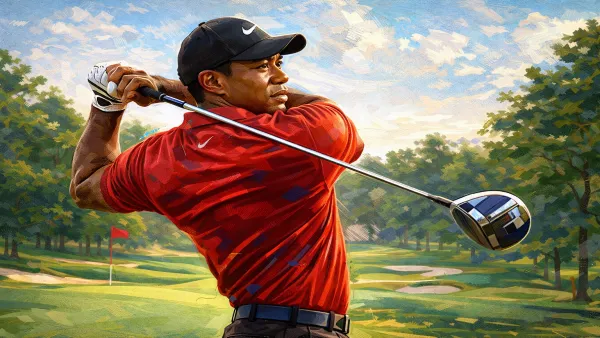
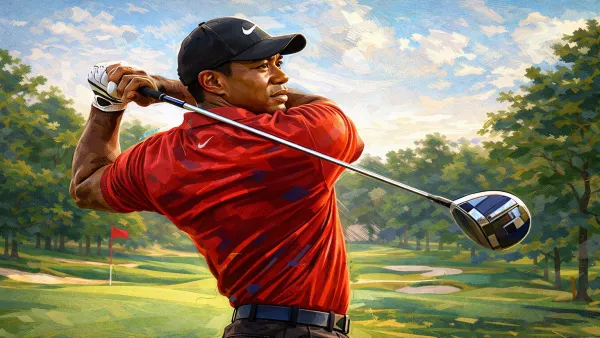
The next time someone tops their drive and blames it on Tiger's gravitational influence on nearby fairways, know that somewhere in the collective imagination of golf, the man in the red shirt and black hat is almost certainly, quietly, smiling.
FAQ: Tiger Woods Golf Humor
1. Why is Tiger Woods such a popular subject for golf jokes?
Tiger's unmatched career statistics, dramatic comeback storylines, and outsized cultural presence make him instantly recognizable worldwide — the perfect combination for humor that requires minimal setup and lands with everyone from casual fans to PGA Tour insiders.
2. Are Tiger Woods jokes mostly about his golf game or his personal life?
The most durable and widely shared Tiger jokes focus almost exclusively on his golf game — his impossible accuracy, his intimidating presence on the course, and the absurd gap between his skill level and that of the average recreational golfer. These jokes age well because they're rooted in athletic achievement.
3. What makes a golf joke "clean"?
Clean golf humor relies on wordplay, irony, and observations about the sport itself — its rules, its culture, its inherent absurdity — rather than personal attacks or inappropriate subject matter. The best clean golf jokes could be told at a family barbecue or a corporate golf day without anyone wincing.
4. How many major championships has Tiger Woods won?
Tiger has won 15 major championships, placing him second on the all-time list behind Jack Nicklaus's record of 18. That three-major gap has been the subject of golf humor for years, with fans and comedians noting the near-mythological quality of the pursuit.
5. What is the "Tiger Effect" and why does it appear in golf jokes?
The Tiger Effect refers to the documented phenomenon where television ratings, ticket sales, and fan engagement spike dramatically whenever Tiger Woods is in contention at a golf tournament. It became comedic shorthand for his disproportionate gravitational pull on the sport.
6. Is golf humor popular in mainstream entertainment news?
Yes — golf has experienced a significant cultural renaissance over the past several years, driven by streaming content, tech-infused formats like TGL, and the enduring fascination with Tiger's career. Golf humor now appears regularly across social media, podcasts, and mainstream entertainment platforms.
7. What is TGL and how has it generated new golf humor?
TGL (Tomorrow's Golf League) is a technology-driven indoor golf league co-founded by Tiger Woods and Rory McIlroy, featuring simulator-based team play in an arena setting. Its novel format — PGA Tour professionals competing in what is essentially a very expensive video game setup — generated its own wave of affectionate jokes when it launched.
8. Why do Tiger Woods comeback jokes keep resonating with golf fans?
Tiger's career has featured multiple extraordinary comebacks from injury, culminating in his 2019 Masters victory at 43. Each comeback defied medical and sporting logic so dramatically that humor became a natural response — laughter being, as comedy writers note, the way humans process the genuinely unbelievable.
9. Which professional golfers have joked about Tiger's dominance?
Many PGA Tour professionals have acknowledged Tiger's overwhelming influence with good humor over the years. His former caddie Steve Williams, longtime rival Phil Mickelson, and numerous broadcast commentators have all contributed to the genre of affectionate, golf-savvy Tiger humor.
10. What is "Tiger-proofing" a golf course?
Tiger-proofing refers to the practice of lengthening golf holes and adding difficulty to try to neutralize Tiger's advantage — most notably implemented at Augusta National. It became a joke because the strategy failed spectacularly: Tiger won anyway. The term is now widely used in golf humor to describe any futile attempt to stop an unstoppable force.
11. What is Charlie Woods' connection to golf humor trends?
Charlie Woods, Tiger's son, has become a rising golf figure in his own right, recently committing to play collegiate golf at Florida State. The prospect of another generation of Woods humor has not escaped golf fans — with jokes already circulating about whether competing against Charlie will feel just like competing against his father.
12. Are Tiger Woods jokes popular outside the United States?
Absolutely. Tiger's global recognition — he is one of the most recognizable athletes on the planet — means his jokes translate across cultures. Golf clubs from Edinburgh to Singapore, Tokyo to Cape Town, share variations of the same Tiger Woods comedy. His name functions as universal shorthand for athletic perfection.
13. How has streaming and social media changed golf humor trends?
Social platforms and golf-focused streaming content have supercharged the spread of golf humor, allowing jokes to go viral within hours of Tiger making news. Meme formats, short-form video commentary, and podcast golf culture have all created new vehicles for Tiger-themed comedy to reach wider audiences than ever before.
14. What's the funniest thing about Tiger's putting game, from a humor perspective?
Tiger's putting, especially his mid-career struggles on the greens compared to his prime, became a genuinely rich vein of golf humor. The joke being that Tiger's "off" putting would still rank among the best in the world — which says everything about the absurdity of measuring his game against normal human standards.
15. Can Tiger Woods jokes be used in corporate or family golf events?
Clean Tiger Woods jokes are ideal for corporate golf days, charity events, and family outings — they're universally recognizable, require no explanation for anyone who's ever watched a golf broadcast, and land with both avid golfers and casual fans. They serve as excellent social lubricant between holes.
16. Why do Tiger jokes often involve his red Sunday shirt?
Tiger's iconic red shirt and black hat on tournament Sundays became so closely associated with winning that the outfit itself entered sporting mythology. The joke is simply this: when Tiger walks to the first tee on Sunday in red, the leaderboard already looks slightly different. The outfit became shorthand for the inevitability of his excellence.
17. What does the longevity of Tiger Woods jokes tell us about his cultural status?
Jokes that endure across decades are attached to figures of genuine, lasting cultural significance. The fact that Tiger Woods jokes remain in active circulation more than thirty years after his professional debut speaks to something remarkable: he is not merely a sports star but a permanent fixture of the cultural imagination, the kind of figure whose story resists conclusion.
Disclaimer - All celebrity-related content, information, and images on this website are based on publicly available online sources and AI-generated insights/data. Information such as biography, age, career, personal details, and images may change without notice over time. While we strive for accuracy, we do not guarantee the accuracy, completeness, reliability, or timeliness of any information or imagery displayed on this website. This content is provided for general informational purposes only.









Details
Send Us an Enquiry
We'll get back to you as soon as possible.
Thank You!
Your enquiry has been submitted. We'll be in touch shortly.