

 Previous

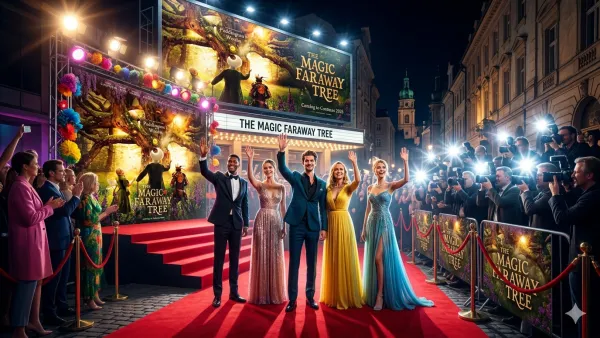
There is something quietly radical—almost subversive—about a film released in 2026 that dares to suggest a simple idea: put your phone down and go climb a tree.
Not as satire. Not as a moral lecture wrapped in glossy CGI. But as a sincere, open-hearted invitation.
The Magic Faraway Tree, the first live-action adaptation of Enid Blyton’s cherished children’s books, arrives at a time when attention is fragmented, childhood is increasingly structured, and imagination is often mediated through screens. And yet, this film chooses a different path—one rooted in stillness, wonder, and the quiet magic of discovery.
Set against a sprawling English countryside and populated by a delightfully eccentric ensemble of fantastical characters, the film feels like a throwback in the best possible way. It is whimsical without being shallow, nostalgic without being indulgent, and sincere without tipping into sentimentality. Most importantly, it knows exactly what it is—and commits to it completely.
At the center of this world are performances by Andrew Garfield and Claire Foy, two actors who bring emotional authenticity to a genre that often prioritizes spectacle over substance. Their presence grounds the film, giving it a sense of emotional truth that allows even its most fantastical elements to feel believable.
The result is a film that is warm, occasionally messy, deeply charming—and, in a strange way, exactly what audiences need right now.
A Story That Feels Unexpectedly Timely
To understand why The Magic Faraway Tree resonates so strongly, it helps to consider the cultural moment into which it arrives.
We are living in a decade defined by conversations around technology—particularly its impact on children. From classrooms to households, from policy debates to parenting philosophies, questions about screen time, digital dependency, and the erosion of unstructured play have become central concerns.
Meanwhile, the entertainment landscape has evolved in parallel. Streaming platforms dominate, delivering an endless stream of content optimized for engagement: fast-paced narratives, high-stakes drama, algorithm-driven recommendations. Even children’s entertainment has become louder, brighter, and more relentless.
Against this backdrop, a quiet British fantasy about three children who lose access to Wi-Fi and discover a magical tree feels almost like an anomaly.
And yet, that is precisely why it works.
Rather than competing with the noise, the film steps away from it. It does not attempt to outpace modern attention spans. Instead, it slows down. It lingers. It trusts its audience—both young and old—to meet it on its own terms.
This choice is not just stylistic; it is philosophical.
The film does not argue against technology explicitly. There are no speeches about digital addiction, no heavy-handed messaging. Instead, it offers an alternative: a world in which imagination is not mediated by screens, but discovered through curiosity and presence.
That subtle shift—from critique to invitation—is what gives the film its emotional power.
The Story: From Disconnection to Discovery
At its core, The Magic Faraway Tree tells a familiar story—one that has been reinterpreted across generations, but rarely with such gentle conviction.
The Thompson family begins in a world defined by modern convenience. Tim (Andrew Garfield) is a well-meaning but slightly overwhelmed father, a dreamer trying to navigate a world that increasingly rewards cynicism over sincerity. Polly (Claire Foy), his partner, is grounded, pragmatic, and deeply invested in providing stability for their family.
Their lives are disrupted when Polly loses her job, forcing the family to relocate from their urban environment to a dilapidated countryside home. The transition is abrupt and unwelcome. There is no Wi-Fi. No heating. No familiar routines.
For their children—Beth, Fran, and Joe—this feels less like an adventure and more like a catastrophe.
It is Fran, the quiet and observant middle child, who becomes the emotional anchor of the story. Played with remarkable subtlety by newcomer Billie Gadsdon, Fran embodies a kind of curiosity that the film treats as both rare and essential.
While her siblings resist the change, Fran explores.
And in doing so, she discovers the Enchanted Wood—and within it, the Faraway Tree.
The Magic of the Tree
The Faraway Tree is not just a setting; it is the film’s central metaphor.
Unlike the grand, universe-spanning portals of modern fantasy franchises, this tree is intimate. It is rooted in the physical world, yet connected to something beyond it. Its magic is not overwhelming, but inviting.
Inside the tree live a cast of characters who feel both whimsical and strangely familiar:
- Silky the Fairy, brought to life with warmth and eccentricity by Nicola Coughlan
- Dame Washalot, a delightfully absurd figure played with full commitment by Jessica Gunning
- Grandma Thompson, portrayed with sharp wit and emotional depth by Jennifer Saunders
Each character contributes to the film’s delicate tonal balance—hovering between the magical and the mundane, the humorous and the heartfelt.
What makes these performances particularly effective is their physicality. In an era where visual effects often dominate, the film relies on character-driven storytelling. The inhabitants of the tree feel lived-in, not rendered. They are not just spectacles; they are personalities.
This choice reinforces the film’s central idea: that magic is not something distant or unattainable. It is something that exists just beyond the edges of everyday life.
The Creative Vision Behind the Film
The success of The Magic Faraway Tree owes much to its creative team—particularly screenwriter Simon Farnaby.
Farnaby has established a reputation for crafting family films that operate on multiple levels. His work on Paddington 2 and Wonka demonstrates a rare ability to balance humor, emotional depth, and narrative clarity without condescension.
In The Magic Faraway Tree, he employs a similar approach.
The film functions on two registers:
- For children, it offers adventure, humor, and accessible emotional stakes
- For adults, it explores themes of loss, identity, and the passage of time
Tim’s quiet anxiety about failing his family, Polly’s struggle with professional displacement, and the generational tension embodied by Grandma Thompson are not secondary elements. They are integral to the story’s emotional architecture.
Director Ben Gregor brings this vision to life with a steady, confident hand. Though primarily known for television work, Gregor’s transition to feature filmmaking feels assured rather than tentative.
The film’s pacing—often cited as slower than typical family fare—is a deliberate choice. It allows moments to breathe, giving the audience space to engage with the story on a deeper level.
Nostalgia Without Dependency
One of the greatest risks in adapting beloved children’s literature is the temptation to rely too heavily on nostalgia.
Many adaptations function as little more than visual recreations of familiar material, offering comfort without substance. They remind audiences of how they once felt, but do not explore why those feelings mattered.
The Magic Faraway Tree largely avoids this trap.
While it draws on the imagery and spirit of Enid Blyton’s original works, it reinterprets them for a contemporary audience. The inclusion of modern elements—such as technology dependency and urban displacement—grounds the story in present-day realities.
At the same time, the film retains the essence of Blyton’s vision: a world in which adventure is always just beyond reach, waiting to be discovered by those willing to look.
This balance between old and new is what gives the film its unique identity.
A Quiet Commentary on Modern Life
Perhaps the most striking aspect of The Magic Faraway Tree is its ability to function as social commentary without becoming didactic.
The film does not criticize modern life directly. Instead, it presents an alternative.
Through Fran’s journey, we see what happens when a child is given space—space to explore, to imagine, to be bored. These moments, often overlooked in contemporary storytelling, become the foundation of something larger.
They remind us that creativity is not something that can be scheduled or optimized. It emerges from stillness, from curiosity, from the willingness to engage with the world in an unstructured way.
In this sense, the film is not just about childhood. It is about something more universal: the human capacity for wonder.
Box Office Performance & Reception
Despite its understated approach, The Magic Faraway Tree has performed impressively at the box office:
- Opening Weekend: £2.8 million (UK & Ireland)
- Cinemas: 700+ screens
- Runtime: 1 hour 50 minutes (PG rating)
Early reviews have been largely positive, with critics praising its sincerity, performances, and emotional depth. Some have noted that the film’s pacing may feel slow to audiences accustomed to faster, more action-driven narratives.
However, this critique is also a reflection of the film’s strengths. Its willingness to move at its own pace is what sets it apart.
The Streaming Question
In an era dominated by streaming, the decision to release The Magic Faraway Tree theatrically is significant.
It signals confidence—not just in the film’s quality, but in its ability to create a shared experience.
Watching this film in a cinema is different. It is collective. It allows for moments of shared laughter, quiet reflection, and emotional connection.
While the film will inevitably find a wider audience on platforms like Netflix or Prime Video, its theatrical release reinforces its identity as a story meant to be experienced together.
Why This Film Matters
Ultimately, The Magic Faraway Tree succeeds because it understands something fundamental about storytelling.
The best children’s stories are never just for children.
They are bridges—connecting generations, perspectives, and emotional experiences. They allow adults to revisit parts of themselves that have been shaped by time and responsibility, while offering children a framework for understanding the world.
In 2026, this kind of storytelling feels increasingly rare.
We live in a culture that prioritizes speed, efficiency, and constant engagement. Even leisure has become structured, optimized, and commodified.
Against this backdrop, a film that encourages stillness, curiosity, and imagination is not just nostalgic—it is quietly revolutionary.
Frequently Asked Questions (FAQ)
1. What exactly is the "Far Away Tree" effect in streaming? It's a metaphor for how audiences are currently discovering hit shows—stumbling upon them organically and sharing them through word-of-mouth, much like finding a hidden, magical place, rather than being directed there by heavy corporate marketing.
2. What does "anti-promotional language" mean? Anti-promotional language refers to communication that actively avoids traditional sales jargon, hype, and over-the-top promises. It favors authenticity, understatement, and plainspoken facts over "hard sell" tactics.
3. Why is this becoming a major Netflix trend? Audiences are experiencing acute marketing fatigue. Traditional ad campaigns often trigger immediate skepticism, whereas a quiet release that relies on user-generated buzz feels more trustworthy and exciting.
4. Can you give an example of anti-promotional language? Instead of saying, "The most terrifying, mind-bending thriller of the decade that you MUST see," anti-promotional language might simply say, "A story about a stalker. Based on real events."
5. How does a show become a viral series without marketing? It relies heavily on the "discovery" element. When a few early adopters find a high-quality show, they share their genuine, unprompted reactions on social media. This organic word-of-mouth snowballs much faster than manufactured hype.
6. Does the "un-sell" actually work for every new Netflix release? No. This approach generally only works if the underlying content is exceptional or highly provocative. If the show is mediocre, a lack of marketing will simply result in it being ignored completely.
7. Is anti-promotional language just reverse psychology? In many ways, yes. By showing restraint and not begging for the viewer's attention, the creator projects immense confidence in the art, which naturally draws the viewer in out of sheer curiosity.
8. How is entertainment news reacting to this shift? Journalists and critics are having to adapt. Instead of writing previews based on press releases, entertainment news is increasingly reacting to sudden, organic surges in viewership, acting as cultural anthropologists tracking sudden online movements.
9. Why do modern audiences crave "discovery"? In an era where algorithms curate almost every aspect of our digital lives, finding a piece of art on your own—or through a trusted friend—feels deeply personal and rebellious.
10. What role does social media play in the Far Away Tree effect? Social media is the engine. It replaces the traditional billboard. Platforms like TikTok and X (formerly Twitter) serve as the digital "woods" where these quiet releases are found and amplified by real human voices.
11. Are traditional trailers dead? Not dead, but evolving. Trailers are becoming more atmospheric and less likely to give away the entire plot. The goal is now to establish a mood rather than deliver a three-minute summary of the story.
12. How does anti-promotional marketing impact budget? It drastically reduces upfront P&A (Prints and Advertising) costs. Studios can reallocate those millions into production quality, trusting that the community will handle the marketing if the show is good enough.
13. Does this trend favor indie creators over major studios? Absolutely. It levels the playing field. A low-budget indie series with a compelling narrative can generate just as much streaming buzz as a massive franchise if it captures the cultural zeitgeist organically.
14. What are the risks of using anti-promotional language? The biggest risk is getting lost in the void. Without a built-in audience or a spark of viral luck, a quiet drop can result in zero viewership, making the project a total financial loss.
15. How do algorithms interact with organic streaming buzz? Once organic word-of-mouth pushes a show past a certain threshold of engagement, the platform's algorithm recognizes the momentum and begins suggesting it to similar users, pouring gasoline on the fire.
16. How long will this anti-marketing trend last? Like all trends, it will eventually evolve. As more studios attempt to artificially manufacture "quiet" releases, audiences will likely catch on, forcing marketing strategies to shift toward whatever feels most authentic next.
17. What is the key takeaway for future creators? Focus entirely on the quality and the hook of the story. Trust the audience's intelligence, speak to them like equals, and allow them the space to champion your work on their own terms.
Disclaimer - All celebrity-related content, information, and images on this website are based on publicly available online sources and AI-generated insights/data. Information such as biography, age, career, personal details, and images may change without notice over time. While we strive for accuracy, we do not guarantee the accuracy, completeness, reliability, or timeliness of any information or imagery displayed on this website. This content is provided for general informational purposes only.
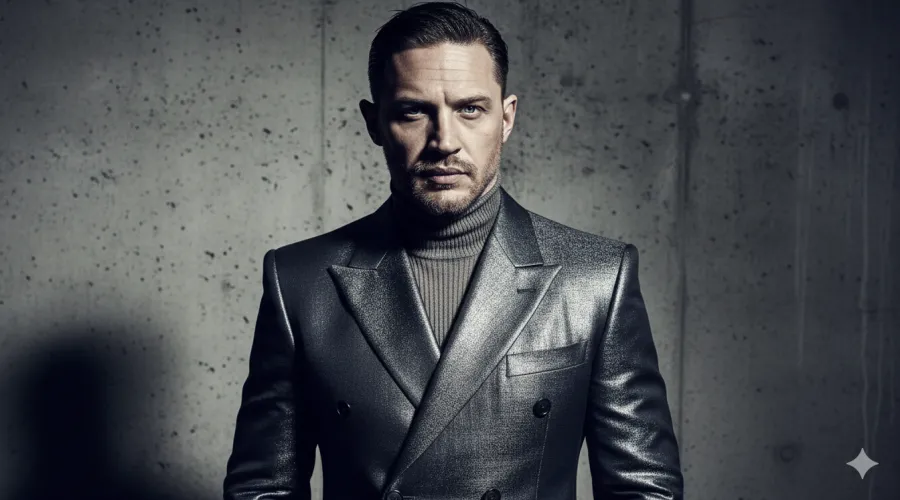
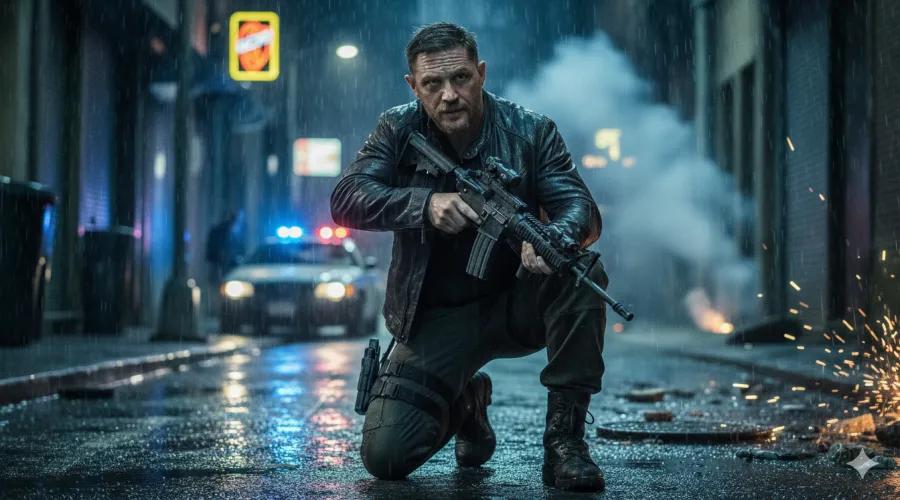
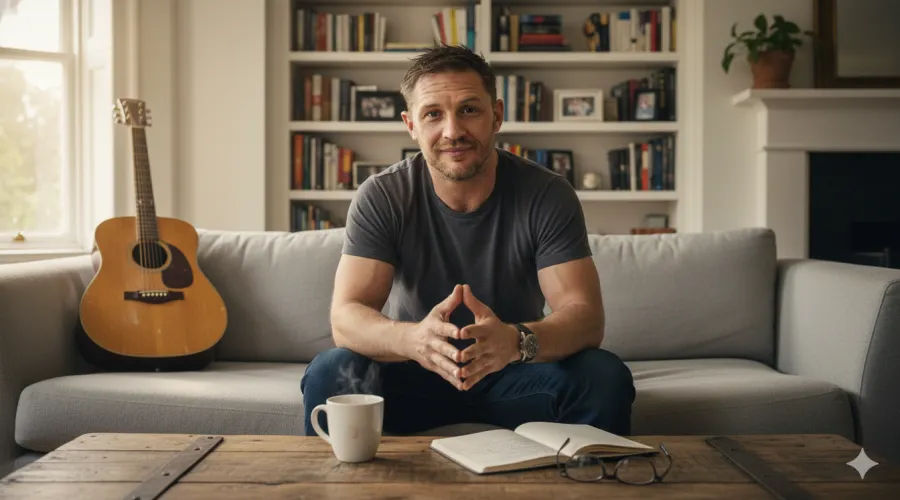
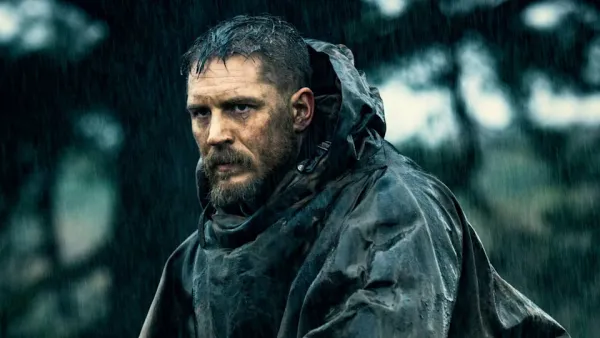
Iconic Photos of Tom Hardy

Top Trending News of Tom Hardy
 👁️ 213 views
🔥 Tom Hardy’s BBC Drama Taboo May Return After 10 Years
Tom Hardy’s acclaimed BBC period drama Taboo, once called a “work of genius,” could finally return nearly a decade after its debut.
 👁️ 190 views
🔥 Tom Hardy’s Taboo Gets Promising Season 2 Update
Nearly nine years after its debut, Tom Hardy’s cult crime drama Taboo has received an encouraging update on the long-awaited second season.


Details
Send Us an Enquiry
We'll get back to you as soon as possible.
Thank You!
Your enquiry has been submitted. We'll be in touch shortly.