
Events by European Diabetes Epidemiology Group
Explore 1 premium experiences by European Diabetes Epidemiology Group
Promoted
List Your Next Big Event
Reach millions of attendees by showcasing your conferences, workshops, or exhibitions on the world's most trusted event platform.
Create Your Event Now
FEATURED

The Compleat Angler Wedding Fair
Planning a wedding is one of life's most exciting experiences, and attending a quality wedding fair is one of the smartest ways to begin. The Compleat Angler Wedding Fair, organized by Berkshire Wedding Fairs, offers engaged couples the opportunity to explore one of the UK's most beautiful riverside wedding venues while meeting experienced local wedding professionals.
Hosted at the elegant Macdonald Compleat Angler in Marlow, this event is designed to help couples discover everything needed to create a memorable wedding day. Whether you're searching for your perfect venue, photographer, florist, entertainment, or bridal fashion inspiration, this exhibition brings together trusted suppliers under one roof.
Why Attend This Wedding Fair?
Unlike browsing countless websites, attending a wedding fair allows couples to meet suppliers face-to-face, compare services, ask questions, and gather inspiration in a single visit.
Visitors can:
Explore the venue's ceremony and reception spaces.
Meet professional wedding suppliers.
Compare wedding packages.
Discover current wedding trends.
Receive expert planning advice.
This makes planning significantly easier while helping couples make informed decisions.
Beautiful Riverside Venue
The Macdonald Compleat Angler is one of the most picturesque wedding venues in Buckinghamshire. Situated beside the River Thames with spectacular views of Marlow Bridge and Marlow Weir, the venue provides a romantic atmosphere ideal for weddings.
Guests attending the fair can explore the venue's elegant interiors and outdoor spaces while imagining how their own wedding celebration could look.
Meet Leading Wedding Suppliers
The exhibition brings together a carefully selected collection of experienced wedding professionals covering every aspect of wedding planning.
Visitors can expect suppliers from areas including:
Bridalwear
Photography
Videography
Floristry
Cakes
Venue styling
Entertainment
DJs
Live musicians
Jewellery
Wedding stationery
Hair and beauty
Transport
Honeymoon services
Wedding décor
Meeting suppliers in person helps couples build confidence before making important booking decisions.
Wedding Inspiration
Every wedding fair offers fresh ideas for creating a memorable celebration.
Visitors can discover:
Elegant table decorations
Modern floral arrangements
Luxury wedding styling
Contemporary bridal fashion
Groom styling ideas
Reception entertainment
Wedding cake designs
Photography styles
Seasonal colour palettes
Guest experience ideas
These ideas help couples personalise their wedding according to their own tastes and budget.
Perfect for Newly Engaged Couples
If you've recently become engaged, this event provides an excellent starting point.
Instead of spending months researching individual suppliers, visitors can meet numerous professionals in one location and compare services efficiently.
Many exhibitors also provide exclusive offers or promotional packages available only to visitors attending the fair.
Expert Advice
Planning a wedding often involves numerous questions regarding budgets, timelines, suppliers, and venue requirements.
Wedding professionals attending the event can provide practical guidance on:
Budget planning
Wedding timelines
Venue selection
Supplier coordination
Photography planning
Entertainment choices
Guest management
Ceremony arrangements
Receiving advice directly from industry experts helps simplify the planning process.
Free Admission
One of the biggest attractions of the event is that admission is completely free with pre-registration.
This makes it accessible for couples planning weddings of every size and budget.
Guests are encouraged to register before attending, making entry smooth and ensuring event organisers can prepare for visitor numbers.
Networking Opportunities
The wedding fair creates valuable networking opportunities for both couples and wedding businesses.
Couples can establish relationships with trusted local suppliers while exhibitors can showcase their services directly to prospective clients.
This face-to-face interaction often leads to stronger partnerships than online enquiries alone.
Benefits of Visiting Early
Many couples begin planning their weddings more than a year in advance.
Attending an early wedding fair allows visitors to:
Secure preferred suppliers.
Compare pricing.
Reserve popular wedding dates.
Understand current industry trends.
Build a realistic planning timeline.
Early planning also reduces stress closer to the wedding day.
Event Experience
Visitors typically spend several hours exploring the venue, speaking with exhibitors, collecting brochures, and gathering inspiration.
The relaxed atmosphere encourages conversations without pressure, allowing couples to make decisions at their own pace.
Many attendees also bring parents, family members, or friends to help evaluate suppliers and gather ideas.
Why Berkshire Wedding Fairs?
Berkshire Wedding Fairs has established a reputation for organising professional bridal events across beautiful venues throughout Berkshire and surrounding counties.
Their events focus on:
High-quality venues
Carefully selected exhibitors
Friendly atmosphere
Free visitor entry
Wedding planning inspiration
Excellent visitor experience
These qualities make their events popular among both engaged couples and wedding businesses.
Final Thoughts
The Compleat Angler Wedding Fair is more than simply an exhibition—it is a comprehensive wedding planning experience. Visitors can explore an exceptional riverside venue, connect with trusted wedding suppliers, gather inspiration, and move one step closer to creating their perfect wedding day.
Whether you're just beginning your planning journey or finalising the last details of your celebration, this event offers valuable opportunities to save time, compare services, and make confident decisions.
For couples seeking inspiration, expert advice, and access to some of the region's leading wedding professionals, this wedding fair is an excellent addition to the wedding planning calendar.
Macdonald Compleat Angler,
Reading
19
0
FEATURED
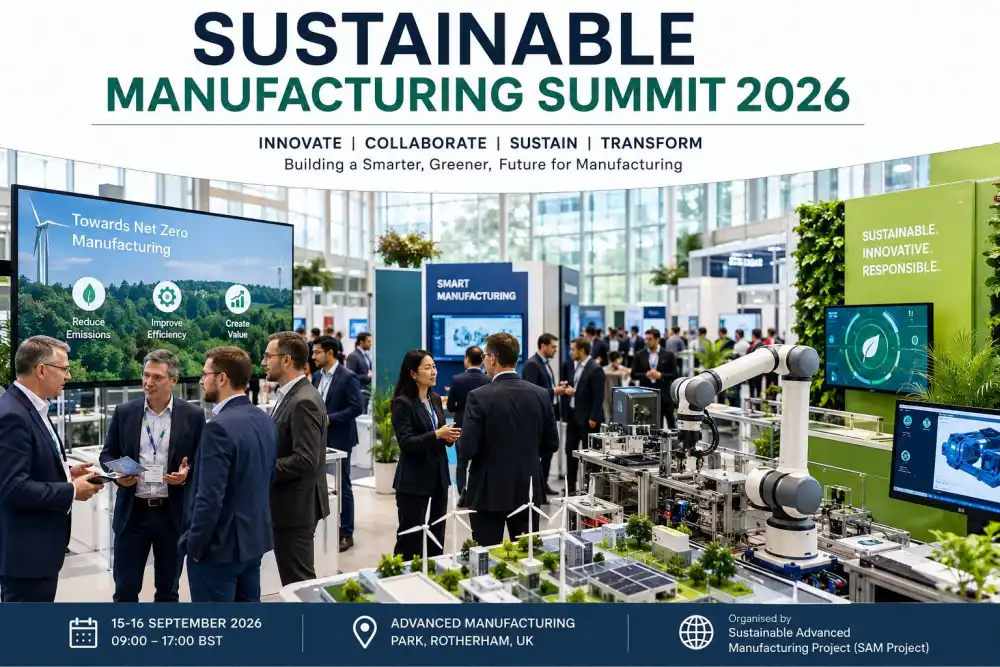
Sep 15 - 16, 2026
Sustainable Manufacturing Summit 2026
The Sustainable Manufacturing Summit 2026 is a leading UK conference dedicated to transforming the manufacturing sector through innovation, sustainability, and advanced engineering. Organized by the Sustainable Advanced Manufacturing (SAM) Project, this two-day event brings together manufacturers, technology providers, researchers, policymakers, educators, and industry leaders who share a common vision of building a smarter, greener, and more resilient manufacturing industry.
Manufacturing continues to evolve rapidly as businesses seek solutions that improve productivity while reducing environmental impact. Digital transformation, automation, artificial intelligence, robotics, renewable energy integration, and circular economy principles are reshaping industrial operations worldwide. The Sustainable Manufacturing Summit 2026 provides an exceptional opportunity to explore these developments and understand how organizations can remain competitive while achieving sustainability goals.
Whether you represent a large manufacturing organization, a growing SME, a research institution, or a technology company, this conference offers practical knowledge, strategic insights, and valuable networking opportunities that will help prepare your business for the future.
Why Attend Sustainable Manufacturing Summit 2026?
The manufacturing industry faces unprecedented challenges including rising energy costs, supply chain disruptions, workforce shortages, environmental regulations, and increasing customer expectations for sustainable production. This conference has been carefully designed to address these challenges by showcasing practical solutions and innovative technologies.
Attendees will gain valuable knowledge through keynote presentations, technical sessions, expert panel discussions, live demonstrations, and collaborative workshops. Industry experts will discuss emerging manufacturing trends, smart factory technologies, digital engineering, industrial automation, additive manufacturing, and low-carbon production methods.
Participants will also learn how businesses can improve operational efficiency, reduce waste, lower emissions, and embrace circular manufacturing strategies while maintaining profitability.
Conference Highlights
Throughout the event, visitors can participate in numerous activities designed to support professional growth and business development.
Inspiring Keynote Speakers
Industry leaders, academic researchers, and manufacturing innovators will present the latest developments in sustainable production, digital transformation, and industrial engineering.
Advanced Manufacturing Technologies
Discover innovative equipment and software solutions that improve productivity while supporting environmental sustainability.
Sustainability Best Practices
Experts will explain practical methods for reducing energy consumption, improving resource efficiency, and implementing circular economy principles within manufacturing operations.
Live Technology Demonstrations
Experience real-world demonstrations of robotics, automation systems, digital twins, AI-powered manufacturing, industrial IoT solutions, and predictive maintenance technologies.
Professional Networking
Meet manufacturing executives, engineers, suppliers, technology companies, policymakers, educators, and investors during structured networking sessions.
Conference Topics
The conference covers a wide range of subjects relevant to modern manufacturing.
Smart Manufacturing
Explore Industry 4.0 technologies including connected factories, cloud manufacturing, industrial data analytics, and machine learning applications.
Artificial Intelligence
Learn how AI improves production planning, quality control, predictive maintenance, inventory optimization, and supply chain management.
Robotics and Automation
Discover collaborative robots, automated production lines, autonomous logistics systems, and flexible manufacturing technologies.
Digital Engineering
Understand how simulation, digital twins, virtual commissioning, and digital design improve manufacturing efficiency.
Sustainable Production
Gain practical strategies for reducing carbon emissions, minimizing waste, conserving resources, and improving energy efficiency.
Circular Economy
Learn how manufacturers can reuse materials, recycle resources, extend product lifecycles, and create sustainable supply chains.
Renewable Energy
Discover how renewable energy integration supports long-term manufacturing sustainability.
Workforce Development
Understand the skills required for future manufacturing careers and how organizations can prepare employees for digital transformation.
Who Should Attend?
This conference welcomes professionals from across the manufacturing ecosystem.
Ideal attendees include:
Manufacturing managers
Production engineers
Mechanical engineers
Industrial engineers
Sustainability professionals
Factory managers
Research scientists
University academics
Government representatives
Innovation specialists
Technology providers
Automation experts
SME owners
Business executives
Students pursuing engineering careers
Benefits of Attending
Visitors will leave with practical knowledge that can immediately benefit their organizations.
Benefits include:
Learning about cutting-edge manufacturing technologies
Discovering sustainable production techniques
Building valuable business partnerships
Meeting industry experts
Understanding future manufacturing trends
Improving operational efficiency
Finding innovation funding opportunities
Exploring collaborative research projects
Expanding professional networks
Enhancing career development
Industry Collaboration
Collaboration remains essential for accelerating manufacturing innovation. The Sustainable Manufacturing Summit encourages partnerships between industry, universities, government agencies, and technology providers.
Participants can explore collaborative research initiatives, innovation funding programs, technology transfer opportunities, and regional manufacturing support networks. These collaborations help businesses adopt advanced manufacturing practices more quickly while reducing implementation risks.
Innovation Exhibition
Alongside the conference sessions, attendees can visit an exhibition featuring innovative manufacturing technologies.
Exhibitors will showcase:
Smart factory software
Industrial automation
Robotics
AI solutions
Industrial IoT platforms
Sustainable materials
Additive manufacturing equipment
Digital engineering tools
Energy management systems
Environmental monitoring technologies
Visitors can interact directly with solution providers, compare technologies, and identify practical solutions for their manufacturing operations.
Networking Opportunities
Professional networking is one of the event's greatest strengths.
Delegates will have opportunities to connect during:
Welcome reception
Business networking sessions
Exhibition visits
Panel discussions
Coffee breaks
Lunch networking
Roundtable discussions
Innovation showcases
These interactions frequently lead to business partnerships, research collaborations, recruitment opportunities, and long-term professional relationships.
Sustainability at the Core
Environmental sustainability remains central to the conference mission.
Sessions will explore:
Carbon reduction strategies
Green manufacturing
Energy-efficient production
Waste reduction
Resource optimization
Sustainable product design
Circular supply chains
Climate resilience
ESG reporting
Environmental compliance
Organizations will gain actionable guidance for integrating sustainability into everyday manufacturing operations.
Why This Event Matters
Manufacturing continues to play a critical role in the UK's economy. As global industries move toward cleaner production methods and digital transformation, businesses must innovate to remain competitive.
The Sustainable Manufacturing Summit 2026 serves as an important platform for sharing knowledge, encouraging collaboration, and accelerating the adoption of advanced manufacturing technologies that support long-term economic growth and environmental responsibility.
Whether your goal is improving productivity, reducing emissions, implementing smart factory technologies, or expanding your professional network, this conference delivers valuable insights and meaningful opportunities.
Attendees will leave inspired by the latest innovations, equipped with practical knowledge, and connected with professionals who are shaping the future of sustainable manufacturing across the United Kingdom and beyond.
Final Thoughts
The Sustainable Manufacturing Summit 2026 represents an outstanding opportunity for professionals committed to advancing manufacturing through innovation, collaboration, and sustainability. By bringing together experts from industry, academia, government, and technology sectors, the conference creates an environment where ideas become practical solutions.
Participants will gain access to expert knowledge, emerging technologies, valuable partnerships, and actionable strategies that support both business growth and environmental stewardship. As manufacturing continues to evolve, events like this provide the essential connections and learning experiences needed to drive future success.
Organizations looking to embrace sustainable manufacturing, improve operational excellence, and prepare for Industry 4.0 will find this conference an invaluable investment in their future.
Advanced Manufacturing Research Centre (AMRC),
Sunderland
27
0
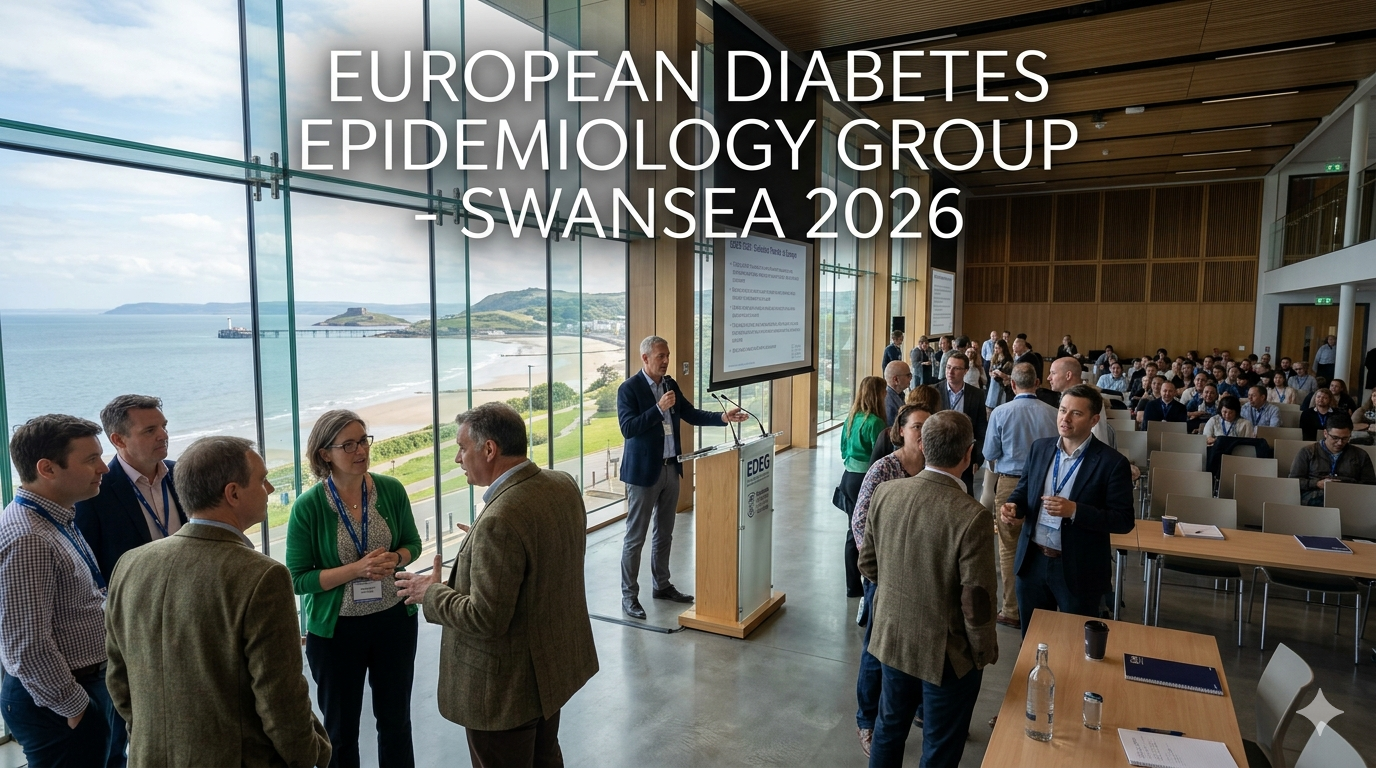
May 10 - 13, 2026
59th EDEG Annual Meeting 2026
The 59th Annual Meeting of the European Diabetes Epidemiology Group (EDEG) represents a premier gathering of the world’s leading researchers, clinicians, and public health experts dedicated to understanding the distribution and determinants of diabetes across populations. Set against the backdrop of Swansea, UK, this conference serves as a critical nexus for sharing high-quality epidemiological data that informs global health policy and clinical practice. As the prevalence of Type 2 diabetes continues to rise globally, the focus of this year’s meeting is heavily centered on "Precision Epidemiology"—moving beyond broad population statistics to understand how individual genetic, environmental, and lifestyle factors interact to influence disease progression and complications.
The program is meticulously curated to include a blend of plenary lectures from internationally renowned speakers, oral abstract sessions, and interactive poster presentations. A significant portion of the agenda is dedicated to the social determinants of health, exploring how socio-economic status, urban planning, and food systems impact diabetes risk in diverse European populations. Attendees will engage with the latest findings from large-scale longitudinal cohorts and electronic health record analyses, providing a comprehensive look at the "real-world" state of diabetes management. Furthermore, the 2026 meeting places a strong emphasis on the intersection of technology and epidemiology, showcasing how wearable devices and digital health interventions are providing new streams of data for public health surveillance.
Beyond the formal scientific sessions, the EDEG meeting is famous for its collaborative atmosphere. The "Swansea 2026" iteration is designed to foster networking between early-career researchers and established veterans in the field. Specific workshops will focus on advanced statistical modeling techniques, such as Mendelian randomization and machine learning in health data science, ensuring that the next generation of epidemiologists is equipped with the tools necessary to tackle the complexities of metabolic disease. The goal is not just to report numbers, but to translate those numbers into actionable strategies that can reduce the global burden of diabetes, improve patient outcomes, and ultimately move closer to primary prevention. By attending, participants contribute to a collective effort to harmonize epidemiological methods across borders, ensuring that data from various European regions is comparable and robust. This event is more than a conference; it is a collaborative engine driving the future of metabolic health research.
Great Hall, Bay Campus, Swansea University,
Mumbles
263
0
- Prev
- 1
- Next
Share This Page
My Page
Scan QR to open
Barcode