
Events by Gender & Medieval Studies GMS Group
Explore 1 premium experiences by Gender & Medieval Studies GMS Group
Promoted
List Your Next Big Event
Reach millions of attendees by showcasing your conferences, workshops, or exhibitions on the world's most trusted event platform.
Create Your Event Now
FEATURED
Aug 13, 2026
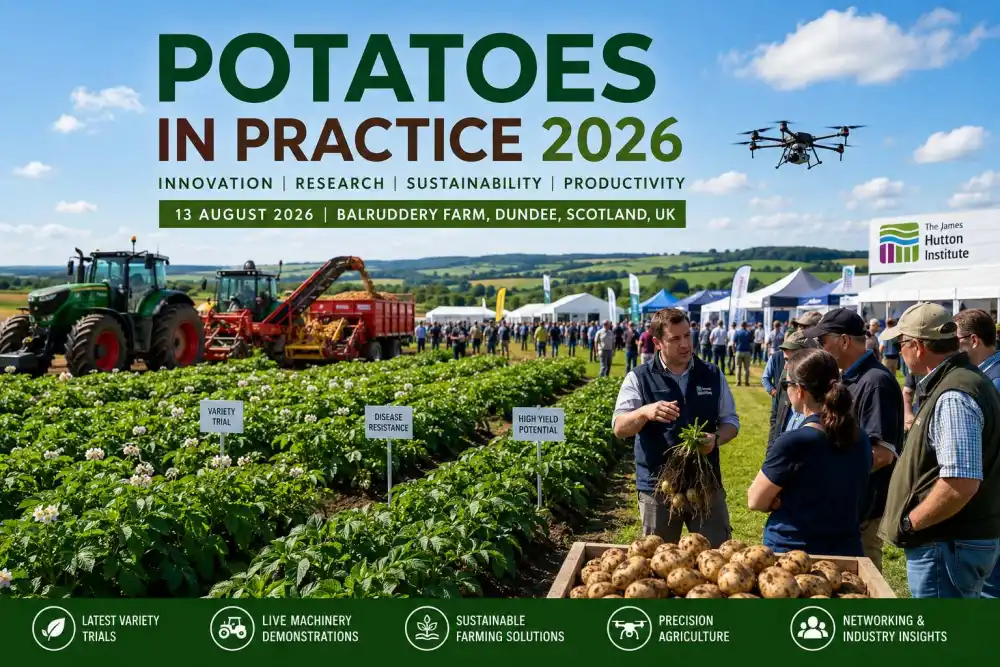
Potatoes in Practice 2026
Potatoes in Practice 2026 is one of the United Kingdom's premier agricultural events dedicated exclusively to the potato industry. Hosted by the James Hutton Institute at Balruddery Farm in Dundee, Scotland, this annual event brings together growers, researchers, agronomists, students, technology providers, policymakers, and industry professionals to explore the latest developments in potato production and agricultural innovation.
Unlike traditional indoor conferences, Potatoes in Practice offers visitors a unique field-based experience where scientific research meets practical farming. Through live demonstrations, expert presentations, machinery displays, and networking opportunities, attendees gain valuable knowledge that can be applied directly to modern agricultural practices.
Potatoes in Practice 2026
Potatoes in Practice 2026 serves as a leading platform for showcasing the latest advancements in potato cultivation, crop management, precision agriculture, and sustainable farming techniques. The event is designed to help farmers improve productivity while addressing environmental challenges and changing market demands.
Researchers from the James Hutton Institute collaborate with industry partners to present practical solutions for improving crop quality, increasing yields, enhancing soil health, and reducing environmental impact. Every aspect of the event focuses on helping visitors make informed decisions based on scientific evidence and real-world experience.
Why Attend Potatoes in Practice 2026?
Attending Potatoes in Practice 2026 offers numerous benefits for professionals across the agricultural sector. Visitors have the opportunity to learn from internationally recognised experts, experience innovative farming technologies, and discover practical solutions that improve farm efficiency.
The event provides an excellent opportunity to compare new potato varieties, evaluate the latest agricultural machinery, explore precision farming technologies, and gain insights into sustainable crop production. Whether you are a commercial grower, researcher, student, or supplier, the event delivers valuable information for every participant.
Live Field Demonstrations
One of the most distinctive features of Potatoes in Practice is its live field demonstrations. Instead of simply viewing displays, visitors witness agricultural innovations operating in real farming conditions.
Demonstration plots showcase a wide range of potato varieties with different characteristics including disease resistance, yield performance, storage quality, and climate resilience. Experts explain the strengths of each variety and provide guidance on selecting the most suitable options for different farming systems.
Latest Potato Variety Trials
The event highlights extensive potato variety trials developed through years of scientific research. These trials help growers understand how different varieties perform under varying environmental conditions.
Researchers discuss important characteristics such as:
Disease resistance
Yield potential
Tuber quality
Storage performance
Market suitability
Visitors gain first-hand knowledge that supports better planting decisions for future growing seasons.
Agricultural Machinery and Technology
Modern farming depends heavily on efficient equipment, and Potatoes in Practice 2026 features demonstrations of cutting-edge agricultural machinery.
Leading manufacturers display:
Potato planters
Harvesters
Precision sprayers
Irrigation equipment
Soil preparation machinery
Grading systems
Storage technologies
Live demonstrations allow attendees to evaluate machinery performance before making investment decisions.
Precision Agriculture Innovations
Digital agriculture continues to transform modern farming practices. Potatoes in Practice introduces visitors to precision agriculture technologies that improve productivity while reducing operational costs.
Featured innovations include:
GPS-guided machinery
Drone crop monitoring
Satellite imagery
Farm management software
Soil mapping
Variable rate application systems
Crop health monitoring tools
These technologies help farmers make data-driven decisions that optimise production and resource management.
Sustainable Farming Practices
Environmental sustainability remains one of the central themes of Potatoes in Practice 2026.
Experts discuss strategies for:
Improving soil health
Conserving water resources
Reducing carbon emissions
Increasing biodiversity
Minimising chemical usage
Enhancing long-term farm sustainability
Visitors learn practical methods that balance productivity with environmental responsibility.
Crop Protection and Plant Health
Healthy crops are essential for profitable farming. The conference includes sessions focusing on modern crop protection strategies and integrated pest management.
Industry specialists explain:
Disease identification
Pest monitoring
Biological control methods
Integrated pest management
Fungicide resistance management
Early disease forecasting
These presentations help growers protect crops while reducing unnecessary pesticide applications.
Research and Scientific Innovation
The James Hutton Institute is internationally recognised for agricultural research. During the event, scientists present the latest findings from ongoing research programmes covering crop genetics, soil science, environmental sustainability, and food security.
Attendees gain direct access to researchers who explain how scientific discoveries are improving commercial agriculture throughout the UK and beyond.
Networking Opportunities
Potatoes in Practice 2026 attracts professionals from across the agricultural industry.
Visitors can network with:
Farmers
Agronomists
Researchers
Equipment manufacturers
Seed suppliers
Government representatives
Agricultural consultants
Technology companies
These connections encourage collaboration, knowledge sharing, and future business partnerships.
Educational Sessions
Education is a major focus of the event. Throughout the day, experts deliver technical presentations covering a wide range of agricultural topics.
Sessions include:
Potato breeding
Soil management
Precision farming
Irrigation techniques
Climate adaptation
Sustainable agriculture
Crop nutrition
Farm business management
These presentations help participants stay informed about current research and industry trends.
Supporting the Future of Agriculture
Climate change, rising production costs, and increasing food demand continue to reshape modern agriculture. Potatoes in Practice demonstrates how research and innovation can help farmers overcome these challenges.
By combining practical demonstrations with scientific expertise, the event supports the development of more productive, resilient, and environmentally responsible farming systems.
Who Should Attend?
Potatoes in Practice 2026 is suitable for a wide range of agricultural professionals, including:
Potato growers
Farmers
Agricultural researchers
Agronomists
Crop consultants
Agricultural students
Equipment manufacturers
Seed producers
Government agencies
Food industry professionals
The event provides valuable knowledge regardless of experience level.
Benefits of Participating
Participants can expect to:
Discover the latest potato varieties.
Learn sustainable farming techniques.
Experience live machinery demonstrations.
Explore precision agriculture technologies.
Meet leading agricultural experts.
Expand professional networks.
Gain practical crop management knowledge.
Learn about future farming innovations.
Compare products from industry suppliers.
Improve farm productivity through research-based solutions.
Potatoes in Practice 2026 continues to be one of the UK's most respected agricultural field events, offering a unique combination of scientific research, practical demonstrations, technology showcases, and professional networking. Hosted by the James Hutton Institute, the event provides growers and agricultural professionals with valuable opportunities to learn about sustainable farming, precision agriculture, and the future of potato production.
Whether your goal is to improve crop performance, explore innovative technologies, strengthen industry connections, or stay informed about emerging agricultural research, Potatoes in Practice 2026 offers an informative and engaging experience that supports the continued advancement of the UK's agricultural sector.
Balruddery Farm, The James Hutton Institute,
Aberdeen
62
0
FEATURED
Sep 17, 2026
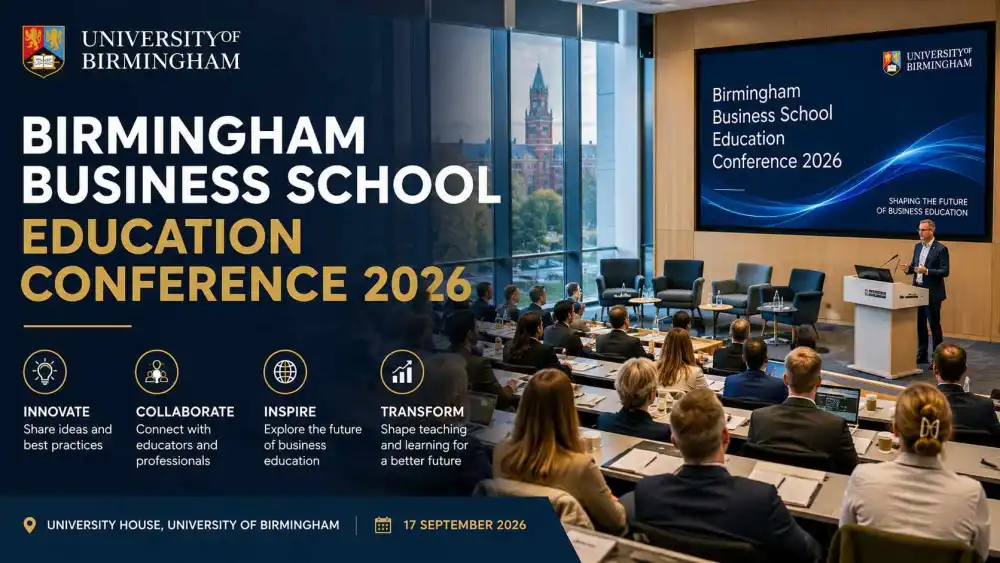
Birmingham Business School Education Conference 2026
The Birmingham Business School Education Conference 2026 is an upcoming academic and professional conference designed to bring together educators, academics and higher education professionals to explore the changing landscape of business education. Hosted by Birmingham Business School at the University of Birmingham, the conference provides a forum for discussing emerging challenges, sharing innovative practices and developing ideas that can influence the future direction of teaching and learning.
Higher education is experiencing significant transformation. Technological developments, changing student expectations, sustainability priorities and evolving workplace requirements are all influencing how universities design and deliver educational programmes. Business schools, in particular, must respond to these developments while continuing to provide students with relevant knowledge, practical skills and meaningful opportunities for professional development.
This conference provides a valuable opportunity for participants to consider these changes from a range of perspectives. Attendees can engage with colleagues, exchange experiences and explore approaches that may help institutions improve educational quality and student outcomes. The event is expected to encourage open discussion about how business education can remain responsive, innovative and relevant in a rapidly changing environment.
Innovation in Business Education
One of the central themes of the conference is likely to be innovation in business education. As technology continues to transform professional environments, universities are increasingly exploring new approaches to teaching, assessment and student engagement.
Participants can use the conference as a platform to discuss how innovative educational methods can support students in developing the knowledge and capabilities required for modern careers. Discussions may include new teaching approaches, digital learning environments, experiential learning and ways to connect academic theory with practical business challenges.
The event also offers an opportunity to consider how educators can introduce innovation while maintaining academic standards and creating inclusive learning experiences. By sharing successful examples and discussing challenges, delegates can gain ideas that may be applicable to their own institutions and programmes.
Responding to Technological Change
Technology is rapidly changing both higher education and the business world. Artificial intelligence, digital platforms, data analytics and other emerging technologies are influencing the skills employers expect from graduates.
For business schools, this creates both opportunities and challenges. Students need to understand how technology affects organisations and industries, while educators must consider how technology can be integrated effectively into teaching and learning.
The conference provides an appropriate setting for professionals to examine these developments and consider their implications for business education. Attendees may explore how universities can prepare graduates for workplaces where technology and digital transformation are increasingly important.
Understanding Changing Student Expectations
Students today have increasingly diverse expectations about their university experience. They may seek flexible learning opportunities, practical experiences, stronger links with employers and greater support in preparing for their future careers.
Understanding these expectations is essential for universities seeking to deliver high-quality education. The conference provides a space for educators and professional services teams to reflect on how institutions can respond effectively to changing student needs.
By sharing experiences and discussing effective approaches, participants can consider ways to enhance student engagement and create educational environments that support academic achievement and professional development.
Sustainability and the Future of Education
Sustainability is another important consideration for modern universities and business schools. Organisations are increasingly expected to address environmental and social challenges, and graduates need to understand how sustainability influences business decision-making.
The conference offers an opportunity to explore how sustainability can be reflected in business education and curriculum design. Participants may discuss ways to equip students with the knowledge and critical thinking skills required to address complex global challenges.
Integrating sustainability into education can also help students understand the broader responsibilities of businesses and organisations. This can contribute to developing graduates who are better prepared to make informed decisions in a changing economic and social environment.
Collaboration and Knowledge Exchange
A key benefit of attending the Birmingham Business School Education Conference 2026 is the opportunity for collaboration. Academic conferences provide valuable environments for professionals to meet colleagues from different backgrounds, exchange ideas and develop new connections.
The conference is intended to welcome colleagues from Birmingham Business School, the University of Birmingham and neighbouring institutions. This creates opportunities for participants to learn from different perspectives and explore common challenges facing the higher education sector.
Knowledge exchange can be particularly valuable when institutions face similar challenges but have developed different solutions. By sharing experiences, participants can identify effective practices and consider how these approaches might be adapted to their own educational contexts.
Supporting Professional Development
The conference can also contribute to professional development for those working in education and business-related academic environments. Attendees can gain exposure to new ideas, research-informed approaches and practical examples that may support their ongoing work.
For academic staff, the event may provide inspiration for curriculum development, teaching strategies and student engagement. For professional services teams, discussions about changing educational needs can offer useful insights into institutional support and student experience.
The conference may also be relevant to education researchers who are interested in the relationship between business education, technological change and the future of higher education.
Preparing Students for the Future of Work
The relationship between education and employment is becoming increasingly important. Employers are looking for graduates who can combine subject knowledge with communication, problem-solving, digital literacy, adaptability and other transferable skills.
Business schools play a significant role in helping students develop these capabilities. The conference creates an opportunity to consider how educational programmes can respond to changing workplace requirements.
Discussions around the future of work can help educators think about how curricula should evolve and how universities can strengthen connections between academic learning and professional practice. This is particularly important as industries continue to change through automation, artificial intelligence, globalisation and new business models.
Who Should Attend?
The Birmingham Business School Education Conference 2026 is particularly suitable for academics, lecturers, researchers and professional services professionals working in higher education. It may also appeal to those involved in business education, curriculum development, teaching innovation and student experience.
Business educators can benefit from exchanging ideas about teaching and learning. Higher education professionals can gain insights into broader developments affecting universities. Researchers can use the event to connect with colleagues and identify areas for future collaboration.
The conference may also be valuable for professionals interested in the future of business education and the ways universities can prepare students for a rapidly changing world.
Why Attend the Birmingham Business School Education Conference 2026?
Attending this conference can provide participants with a combination of professional learning, knowledge exchange and networking opportunities. Rather than focusing solely on theoretical discussion, the event is positioned around practical challenges and emerging developments affecting business education.
Delegates can gain new perspectives on technology, sustainability, student expectations and the future of work. They can also engage with colleagues who are navigating similar challenges and discover ideas that could inform their own teaching, research or institutional activities.
For professionals committed to improving higher education, the conference represents an opportunity to participate in discussions about the future of business education. It can provide a platform for sharing experiences, celebrating innovation and considering new approaches to supporting students.
Final Thoughts
The Birmingham Business School Education Conference 2026 offers an opportunity for education professionals and academics to come together and examine the future of business education. Taking place at the University of Birmingham on 17 September 2026, the conference focuses on the need for higher education to respond to technological change, evolving student expectations, sustainability challenges and the changing world of work.
Through knowledge exchange, professional discussion and collaboration, attendees can explore innovative ideas and consider how these can contribute to stronger educational experiences. The conference is therefore well suited to educators, researchers and higher education professionals seeking to understand current developments and contribute to the future of business education.
University House, University of Birmingham,
Birmingham
16
0

May 22 - 24, 2026
GMS 2026 Medieval Masculinities and Power
The Gender & Medieval Studies (GMS) Group is proud to announce its upcoming specialized symposium hosted at the historic grounds of Swansea University. This event represents a significant gathering of minds dedicated to unearthing the nuanced complexities of gender roles during the medieval period. This year’s theme focuses heavily on the intersection of masculinity and power dynamics within Western European societies between 500 and 1500 CE.
Attendees will dive deep into a series of curated lectures and panel discussions that challenge traditional Victorian interpretations of "knighthood" and "manhood." The conference aims to explore how medieval individuals navigated the rigid hierarchies of the church, the court, and the battlefield, often finding fluid or subversive ways to express gender identity. Scholars from across the UK will present groundbreaking research on Hagiography, Old Norse sagas, and Welsh legal codes (the Laws of Hywel Dda), providing a localized context to the broader European gender landscape.
The program includes a keynote address focused on the "Gender of Authority," examining how female regents and religious leaders often adopted masculine-coded behaviors to maintain political stability. Furthermore, the event will feature a dedicated workshop on archival research, teaching participants how to spot "gendered silence" in medieval manuscripts where traditional historical narratives may have erased marginalized voices.
Swansea’s unique position as a coastal gateway to Welsh history provides the perfect backdrop for this exploration. Beyond the academic rigor, the symposium offers an invaluable opportunity for interdisciplinary collaboration. Historians, literary critics, and art historians will find common ground in discussing how visual culture—from illuminated manuscripts to stone carvings—perpetuated or challenged the gender binary of the Middle Ages. This event is not merely a look back at the past, but a critical examination of how medieval gender structures have influenced modern societal norms and legal frameworks. By attending, you contribute to a growing body of work that seeks to make the Middle Ages more inclusive and accurately represented in the 21st century.
Singleton Park Campus, Swansea University,
Mumbles
231
0
- Prev
- 1
- Next
Share This Page
My Page
Scan QR to open
Barcode