Events by Jobg8 Ltd
Explore 1 premium experiences by Jobg8 Ltd
Promoted
List Your Next Big Event
Reach millions of attendees by showcasing your conferences, workshops, or exhibitions on the world's most trusted event platform.
Create Your Event Now
FEATURED
Jul 28, 2026
Editorial AI Reality Check 2026
Artificial intelligence is transforming every stage of scholarly publishing, from manuscript submission and peer review to production, dissemination, and long-term preservation. As publishers adapt to new technologies, understanding the practical applications of AI has become essential. The Editorial AI Reality Check 2026 seminar, organized by the Association of Learned and Professional Society Publishers (ALPSP), provides publishing professionals with the knowledge and skills needed to navigate this rapidly evolving landscape.
This educational seminar focuses on practical AI implementation rather than theoretical concepts. Attendees will discover how publishers are successfully integrating AI into editorial workflows while maintaining high standards of quality, research integrity, and ethical publishing. Through expert-led presentations, live demonstrations, and interactive discussions, participants will gain valuable insights into the future of scholarly communication.
Event
Editorial AI Reality Check 2026 is a professional seminar designed for individuals working across the scholarly publishing industry. The event explores the opportunities and challenges presented by artificial intelligence and examines how AI can improve efficiency, accuracy, and collaboration within publishing organizations.
The seminar brings together experienced editors, publishing executives, technology specialists, and research communication experts to discuss practical strategies for adopting AI responsibly. Sessions will include case studies, demonstrations of AI-powered publishing tools, and guidance on implementing AI while ensuring transparency and editorial oversight.
Why Attend This Seminar?
Artificial intelligence is becoming an integral part of scholarly publishing, but many organizations are still determining how to adopt these technologies effectively. This seminar provides practical advice that attendees can apply immediately within their organizations.
Participants will learn how AI supports manuscript screening, peer review, metadata creation, language editing, plagiarism detection, accessibility improvements, and content discovery. The seminar also addresses common concerns related to copyright, ethics, data security, and maintaining trust in scholarly publishing.
Attendees will leave with actionable insights that help improve workflows while preserving editorial excellence and research integrity.
Key Learning Objectives
During the seminar, participants will:
Understand the latest AI developments in scholarly publishing.
Explore AI-powered editorial workflow solutions.
Learn best practices for responsible AI adoption.
Discover methods for improving operational efficiency.
Examine ethical considerations surrounding AI use.
Understand AI governance and policy development.
Learn strategies for maintaining editorial quality.
Explore future publishing trends and innovations.
Topics Covered
The seminar features presentations and discussions on a wide range of important topics, including:
Artificial Intelligence in scholarly publishing
Editorial workflow automation
AI-assisted manuscript evaluation
Peer review innovations
Metadata generation and enhancement
Research integrity and quality assurance
Copyright and licensing considerations
Responsible AI governance
Accessibility improvements
Digital publishing technologies
Content discoverability
Publishing analytics
Editorial decision support
AI ethics and transparency
Future publishing strategies
Expert Speakers
Leading professionals from the publishing industry will share their expertise throughout the seminar. Speakers include experienced editors, publishing directors, technology consultants, research integrity specialists, and AI implementation experts.
Each session focuses on practical experiences, real-world examples, and lessons learned from successfully integrating AI into scholarly publishing operations.
Live Demonstrations
One of the highlights of the seminar is the series of live demonstrations showcasing AI-powered publishing tools.
Participants will see how artificial intelligence can assist with:
Manuscript screening
Reviewer recommendations
Language enhancement
Metadata generation
Research discovery
Content classification
Editorial workflow management
Automated reporting
These demonstrations provide valuable insights into how technology can enhance productivity while maintaining editorial standards.
Interactive Panel Discussions
The seminar includes panel discussions featuring industry leaders who will explore current challenges and opportunities facing scholarly publishers.
Topics include:
Balancing AI and human expertise
Building trust in AI-generated recommendations
Managing organizational change
Future regulatory developments
Ethical publishing practices
Sustainable technology adoption
Attendees are encouraged to participate by asking questions and sharing their experiences.
Networking Opportunities
Networking is an important aspect of the seminar. Participants will have opportunities to connect with professionals from across the publishing ecosystem, including:
Academic publishers
Society publishers
University press representatives
Journal editors
Editorial managers
Production specialists
Technology providers
Research institutions
Libraries
Publishing consultants
These connections often lead to future collaborations and knowledge sharing.
Benefits of Attending
Attendees will gain numerous professional benefits, including:
Improved understanding of AI technologies.
Practical implementation strategies.
Enhanced editorial workflow knowledge.
Better awareness of industry trends.
Increased confidence in evaluating AI solutions.
Access to expert advice and guidance.
Opportunities to expand professional networks.
Professional development and continuing education.
Responsible AI Adoption
The seminar places significant emphasis on responsible AI implementation. Speakers will discuss governance frameworks that ensure AI supports rather than replaces human editorial expertise.
Topics include:
Human oversight
Transparency requirements
Bias reduction
Data privacy
Ethical decision-making
Quality assurance
Compliance with publishing standards
Risk management
Responsible AI adoption helps maintain confidence among authors, reviewers, readers, and research institutions.
The Future of Scholarly Publishing
Artificial intelligence is expected to continue reshaping scholarly communication over the coming years. The seminar explores emerging trends that publishers should prepare for, including:
Advanced editorial automation
Intelligent content discovery
Personalized research recommendations
AI-assisted peer review
Enhanced accessibility
Predictive publishing analytics
Semantic publishing technologies
Automated compliance monitoring
Understanding these developments helps organizations remain competitive in an increasingly digital environment.
Who Should Attend?
This seminar is suitable for professionals across the scholarly publishing community, including:
Academic publishers
Journal editors
Editorial assistants
Managing editors
Publishing directors
Production managers
Digital publishing specialists
Research integrity officers
Technology managers
Library professionals
Society publishers
University press staff
Publishing consultants
Content strategists
Innovation managers
Professional Development Opportunities
Attending Editorial AI Reality Check 2026 contributes to ongoing professional development by providing participants with current industry knowledge, practical skills, and exposure to innovative technologies.
Participants will gain confidence in evaluating AI solutions, developing implementation strategies, and supporting organizational digital transformation initiatives.
Why This Seminar Matters
As scholarly publishing becomes increasingly technology-driven, organizations must balance innovation with responsibility. Editorial AI Reality Check 2026 provides practical guidance that helps publishing professionals make informed decisions about adopting AI while maintaining editorial excellence, research integrity, and author trust.
The seminar offers a balanced perspective, combining technical expertise with practical publishing experience to ensure attendees understand both the opportunities and challenges presented by artificial intelligence.
Wrapping UP
Editorial AI Reality Check 2026 is an essential educational seminar for anyone involved in scholarly and professional publishing. Through expert presentations, interactive discussions, live demonstrations, and valuable networking opportunities, participants will gain the knowledge needed to navigate the future of AI-powered publishing with confidence.
Whether you are beginning your AI journey or expanding existing initiatives, this seminar provides actionable insights that support innovation, efficiency, and responsible publishing practices. Attendees will leave better prepared to implement AI solutions that enhanc
Online Webinar,
Peterborough
34
0
FEATURED
Demystifying the JLDHE Publication Journey
The Demystifying the JLDHE Publication Journey webinar is an upcoming professional learning event designed for individuals working in learning development and higher education who want to better understand the process of academic publication. Scheduled for 29 July 2026 from 11:00 to 12:00 BST, the online event offers an accessible opportunity to explore how ideas, professional experiences, research findings and learning development practices can be shaped into scholarly publications.
Academic writing and publishing can sometimes appear complicated, particularly for professionals who have extensive practical experience but limited experience with journal submissions. The publication process can involve developing an idea, understanding a journal’s scope, preparing a manuscript, responding to feedback and navigating revisions. This event is intended to help make that journey clearer and more approachable for members of the learning development community.
Organised by the Association for Learning Development in Higher Education, the webinar reflects the organisation’s wider role in supporting professional development, research, collaboration and knowledge exchange across the higher education sector. ALDinHE provides opportunities for learning developers to share ideas, access resources, engage with communities and contribute to the development of the profession.
Understanding the Purpose of the JLDHE Publication Journey
The Journal of Learning Development in Higher Education, commonly associated with the JLDHE, provides an important scholarly platform for conversations connected to learning development and higher education practice. For many professionals, publishing can provide a way to share insights beyond their own institution and contribute to wider discussions about teaching, academic skills, student learning and professional practice.
The webinar is particularly relevant to those who have an idea for an article but are uncertain about the next step. A professional may have developed an innovative teaching approach, completed a research project, evaluated a learning intervention or reflected on a significant development in their practice. However, transforming that experience into a structured scholarly contribution can require guidance.
This event can help participants understand how to move from an initial idea towards a potential publication. Rather than viewing academic publishing as a process reserved only for experienced researchers, the session can encourage learning development professionals to recognise the scholarly value of their own work and experiences.
Supporting Learning Developers Through Scholarly Writing
Learning developers work across a wide range of areas, including academic literacy, study skills, assessment support, student transition, digital learning, inclusive education and academic development. Their day-to-day practice often produces valuable observations and insights that can contribute to wider professional knowledge.
However, busy workloads can make it difficult to find time for academic writing. Many professionals may also be unsure whether their ideas are suitable for publication or how to position a practical experience within an academic discussion. A focused webinar can help address these concerns by explaining the publication journey in a clear and accessible way.
The session may be especially useful for early-career learning developers, practitioners beginning to explore research and colleagues who are considering submitting their first article. It can also benefit experienced professionals who want to refine their approach to publication or better understand current expectations in scholarly communication.
From Professional Experience to a Publishable Academic Contribution
One of the most important aspects of academic publishing is recognising that valuable research and scholarship can begin with a question arising from professional practice. A learning developer might notice a recurring challenge among students, evaluate a new teaching method or identify an emerging issue affecting academic skills provision.
The next step is to explore how that observation can be developed into a focused argument. A strong publication generally requires clarity about the central issue, the evidence supporting the discussion and the contribution the article intends to make. Understanding this progression can help writers move from a broad idea to a manageable and meaningful article.
The JLDHE publication journey may therefore be useful for professionals who have accumulated notes, project findings, teaching reflections or research material but have not yet converted those materials into a submission. By understanding the stages involved, participants can approach writing with greater confidence and direction.
Why Publication Matters Across Higher Education
Academic publishing contributes to the sharing of knowledge across institutions and professional communities. When learning development professionals publish their findings and experiences, their work can help colleagues understand new approaches, identify effective practices and reflect on challenges affecting students and universities.
Publication can also contribute to professional recognition. Sharing scholarly work demonstrates a commitment to inquiry, reflection and the development of the profession. For learning developers, this can be particularly valuable because the field continues to evolve in response to changing student needs, new technologies, evolving approaches to assessment and broader developments in higher education.
ALDinHE’s wider activities include supporting research, professional development, communities of practice and the Journal of Learning Development in Higher Education, making scholarly communication an important part of its professional community.
A Useful Opportunity for New and Experienced Writers
The webinar can appeal to a broad audience. New writers may benefit from understanding what happens before and after a manuscript is submitted. Those with previous publication experience may gain useful perspectives on improving their approach or developing future ideas.
For participants who have never submitted an article, the event can help remove some of the uncertainty surrounding academic publishing. Questions about journal suitability, article structure, peer review and revision are common, and learning more about the overall process can make future writing projects feel more manageable.
The online format also makes the event accessible to participants across the United Kingdom and beyond. Attendees can take part without travelling to a physical venue, making it convenient for university staff and professionals with demanding schedules.
Connecting Publication With Professional Development
Scholarly writing can be an important part of continuing professional development. It encourages professionals to examine their practice, engage with evidence and communicate ideas to a wider audience. The process can also encourage collaboration between colleagues from different institutions.
An event focused on the JLDHE publication journey may help participants consider how their professional interests connect with broader conversations in learning development. A single idea can potentially develop into a research question, a collaborative project, a reflective article or a contribution to a wider scholarly discussion.
The event may also encourage attendees to think about the role of publication in their own professional journey. Whether their goal is to share practice, contribute to research or develop a stronger academic profile, understanding the publishing process can be a valuable first step.
Building Confidence Through Knowledge Sharing
One of the most important benefits of professional events is the opportunity to learn from the experiences of others. Publishing can sometimes feel like an individual activity, but the wider academic community provides opportunities for collaboration, feedback and support.
Webinars such as this can help create a more supportive environment by encouraging participants to discuss questions about writing and publishing. Learning developers can gain confidence by understanding that publication is often a process of development rather than a single perfect submission.
The event is also consistent with ALDinHE’s broader aim of encouraging knowledge sharing and professional connections across learning development communities. Its events programme includes webinars, communities of practice, professional development sessions and other opportunities for colleagues to exchange ideas.
Who Should Attend This ALDinHE Webinar?
The event is particularly relevant to learning developers and higher education professionals who are interested in academic writing and scholarly publication. It may also be valuable for academic skills tutors, educational researchers, teaching and learning professionals and university staff who are developing research ideas.
Professionals who have recently completed a project or evaluation may find the session useful when considering how to share their findings. Similarly, colleagues who have written conference papers, internal reports or reflective pieces may be able to explore how those materials could be developed further.
The event can also be relevant to individuals who want to understand more about the role of the JLDHE and the contribution it makes to learning development scholarship. By attending, participants can gain a clearer understanding of how publication can support both individual professional development and the wider higher education community.
Preparing for the Event
Participants may benefit from thinking about their own writing or publication questions before attending. For example, they might consider whether they have a research idea, a teaching innovation, a project evaluation or a professional experience that could be developed into a scholarly contribution.
Having a specific idea in mind can make the webinar more practical. Participants can compare their own situation with the publication journey discussed during the session and identify the next steps they may need to take.
It may also be useful to prepare questions about article development, journal publishing, peer review and scholarly writing. A focused approach can help attendees make the most of the one-hour online session.
A Valuable Event for the Learning Development Community
The Demystifying the JLDHE Publication Journey webinar provides a timely opportunity for professionals to explore academic publishing in a supportive higher education context. By focusing on the journey from an initial idea to a potential publication, the event can help make scholarly writing more understandable and accessible.
For learning developers, publication offers a way to contribute to professional conversations, share evidence-informed practice and help shape the future of learning development. The webinar can therefore serve as a useful starting point for individuals who want to develop their writing, explore research opportunities or understand more about publishing within their field.
Taking place online on 29 July 2026, the event offers an accessible opportunity for professionals to connect with current discussions around learning development scholarship. Those interested in academic writing, professional inquiry and higher education research should consider checking the official ALDinHE event information and registration requirements before attending.
Online Webinar – ALDinHE Virtual Event,
Plymouth
50
0
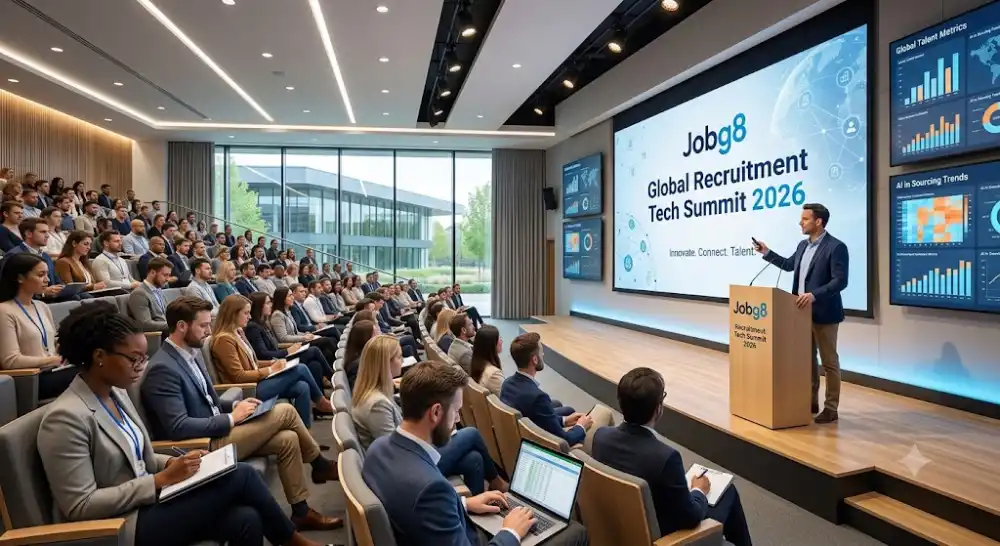
Jobg8 Recruitment Tech and Strategy Workshop 2026
The Jobg8 Recruitment Tech & Strategy Workshop 2026 is a premier intensive gathering designed for the modern recruitment professional, job board owner, and HR technology enthusiast. Hosted in the historic yet vibrant city of Colchester, this event serves as a deep dive into the mechanics of the global job ecosystem. As the recruitment landscape shifts toward hyper-automation and programmatic advertising, staying ahead requires more than just high-level knowledge—it requires actionable data and a mastery of the tools that drive candidate acquisition.
The workshop kicks off with a comprehensive analysis of the 2026 labor market trends, specifically focusing on the United Kingdom and European regions. Attendees will explore how Jobg8's advanced programmatic syndication platform is currently reshaping how jobs are distributed across a vast network of global job boards. We will break down the complexities of Cost per Click (CPC) and Cost per Qualified Applicant (CPQA) models, providing participants with the mathematical frameworks needed to optimize their recruitment spend and maximize ROI.
In the afternoon, the focus shifts to technical integration and revenue generation. For job board owners and traffic providers, the session will detail how to unlock new revenue streams by connecting high-quality candidate traffic with in-demand roles. We will discuss the nuances of job alerts and the importance of maintaining a superior user experience while monetizing candidate data. This is not just a lecture; it is a collaborative environment where industry leaders share their success stories and their failures, ensuring every attendee leaves with a clear roadmap for their business growth.
The day concludes with a networking session where participants can interact directly with the Jobg8 senior management team. With over 60 years of combined experience, our experts are available to provide bespoke advice on scaling your job network and navigating the challenges of international recruitment. Whether you are looking to buy high-intent traffic or sell qualified applications, this workshop provides the direct connections and the technical "know-how" to thrive in 2026 and beyond. Secure your spot to be part of the leading job network in the world.
Jobg8 Headquarters,
Colchester
71
0
- Prev
- 1
- Next
Share This Page
My Page
Scan QR to open
Barcode