
Discover All Events
Explore 1 premium experiences in all locations
Promoted
List Your Next Big Event
Reach millions of attendees by showcasing your conferences, workshops, or exhibitions on the world's most trusted event platform.
Create Your Event Now
FEATURED

Jun 29, 2026 - Jul 29, 2058
Resolve Display Issues in QuickBooks Desktop Quickly
Introduction
QuickBooks Desktop has become a preferred accounting software solution for thousands of businesses across the United States because of its comprehensive financial management capabilities. From managing invoices and payroll to tracking inventory, recording expenses, and preparing financial reports, the software simplifies daily accounting tasks for businesses of every size. Since accounting professionals spend long hours working within QuickBooks, a responsive and properly functioning interface plays a significant role in maintaining efficiency.
Despite its reliability, users occasionally experience graphical problems that affect the software's usability. One such issue is the QuickBooks Black and White Screen Issue, where the entire application unexpectedly changes from its standard colorful interface to a grayscale display. Menus, toolbar icons, navigation panels, reports, and transaction windows lose their normal colors, making it difficult to distinguish different options. Although this issue rarely affects company data, it can interrupt accounting workflows and reduce overall productivity until the display is restored.
What Is the QuickBooks Black and White Screen Issue?
The QuickBooks Black and White Screen Issue is a display-related problem that causes the QuickBooks Desktop interface to appear entirely in black, white, and gray shades. Instead of displaying colorful menus and highlighted buttons, the software loads without its normal color palette.
Unlike company file corruption or database errors, this issue affects only the visual appearance of QuickBooks Desktop. Users can often continue working with their company file, but navigating through the software becomes slower because visual indicators are no longer easy to recognize.
How QuickBooks Desktop Generates Its Display
QuickBooks Desktop relies on Windows graphics services to render its interface. Several system components work together, including graphics drivers, display adapters, monitor resolution, Windows themes, display scaling, DirectX support, graphics memory, and hardware acceleration.
Whenever one or more of these components become outdated or improperly configured, users may experience various display issues in QuickBooks Desktop. These problems may include blurry fonts, distorted windows, missing icons, screen flickering, color distortion, or a completely black-and-white interface.
Symptoms of the QuickBooks Black and White Screen Issue
The problem may appear differently depending on the system configuration, but common symptoms include:
QuickBooks opens with a black-and-white interface.
Toolbar icons lose their original colors.
Navigation panels appear completely gray.
Reports become difficult to read.
Buttons no longer display highlighted colors.
Transaction windows appear faded.
Screen flickering occurs before colors disappear.
Colors vanish after Windows updates.
Certain QuickBooks windows display correctly while others remain grayscale.
Other display issues in QuickBooks Desktop appear simultaneously.
These symptoms usually indicate a graphical rendering problem rather than an issue with the company file itself.
Common Causes of the QuickBooks Black and White Screen Issue
Several technical issues may trigger this display problem.
Outdated Graphics Drivers
Graphics drivers allow Windows to communicate with the computer's graphics hardware. If the installed driver becomes outdated or incompatible, QuickBooks may display graphical abnormalities, including grayscale screens.
Windows Color Filters
Windows Accessibility includes Color Filters that can convert the display into grayscale. Accidentally enabling this feature is one of the most common reasons for the QuickBooks turned black and white issue.
High Contrast Settings
High Contrast Mode changes the Windows color scheme to improve accessibility. These changes may also affect how QuickBooks Desktop displays its interface.
Corrupted QuickBooks Installation Files
Damaged program files caused by interrupted updates or incomplete installations may prevent QuickBooks from loading graphical components correctly.
Incorrect Display Scaling
Display scaling values that exceed recommended levels may interfere with QuickBooks rendering, particularly on high-resolution monitors.
Graphics Hardware Compatibility
Some graphics cards experience compatibility issues with Windows rendering technologies, causing QuickBooks Desktop to display unusual colors or grayscale interfaces.
Windows Update Conflicts
Major Windows updates occasionally install new graphics drivers or modify display settings, resulting in temporary compatibility problems with QuickBooks Desktop.
Corrupted Windows User Profile
A damaged Windows user profile may contain incorrect graphics settings that affect QuickBooks while leaving other applications unaffected.
Why This Display Issue Can Reduce Productivity
Although the QuickBooks Black and White Screen Issue usually does not damage accounting records, it can significantly impact productivity. Employees may spend additional time locating toolbar icons, identifying highlighted fields, reviewing reports, and navigating transaction windows.
For businesses that rely heavily on QuickBooks Desktop throughout the day, even a display-only problem can delay bookkeeping, payroll processing, invoicing, and financial reporting.
qbookassist,
Frodsham
64
0
FEATURED
Oct 20, 2026
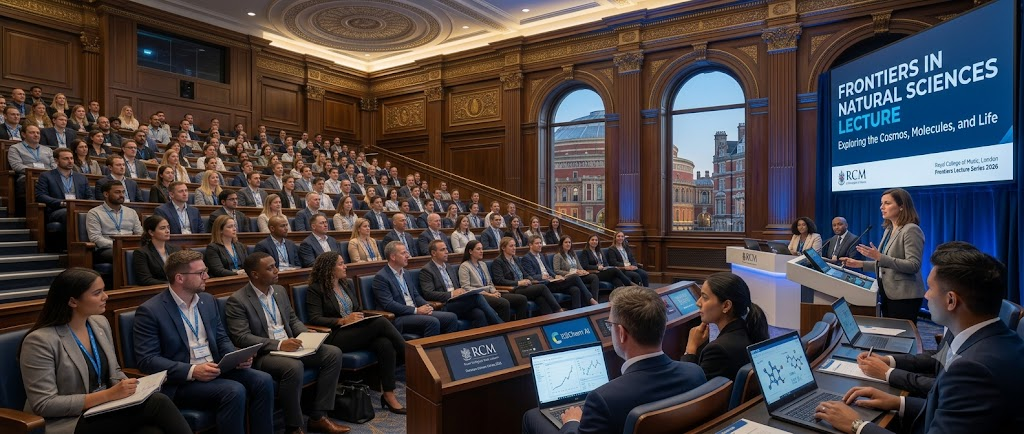
Frontiers in Natural Sciences Lecture
The Frontiers in Natural Sciences Dean's Annual Lecture stands as a premier academic gathering hosted by Imperial College London. Situated in the heart of the capital, this distinguished event brings together leading scientific minds, researchers, and students to explore groundbreaking developments at the intersection of core sciences and advanced technology. By fostering high-level intellectual exchange, the lecture series provides a dynamic platform for examining the profound conceptual shifts transforming modern scientific research and discovery.
Artificial Intelligence and Mathematical Reasoning
As artificial intelligence advances at an unprecedented pace, its relationship with theoretical mathematics and human reasoning is evolving rapidly. This year’s lecture investigates the deep interplay between algorithmic intelligence and mathematical formulation. Attendees will gain fascinating insights into how machine learning models assist in proving theorems, uncovering complex structural patterns, and expanding the limits of automated logical deduction, bridging traditional academic boundaries.
The Long Conversation of Mathematics
Mathematics has historically been described as a continuous, cumulative dialogue spanning centuries of human thought. This central theme explores how contemporary technological tools augment, rather than replace, this ongoing historical conversation. Experts will examine the philosophical and practical implications of introducing autonomous computational agents into abstract problem-solving environments, offering a balanced perspective on the future of intellectual inquiry.
Interdisciplinary Collaboration and Discovery
Addressing today's most complex scientific questions requires seamless collaboration across traditional disciplines. The lecture highlights the vital importance of uniting computer scientists, mathematicians, and natural scientists to tackle multi-faceted challenges. Participants will explore case studies demonstrating how cross-disciplinary methodologies accelerate innovation, open novel avenues of academic exploration, and strengthen institutional research ecosystems.
Engagement and Academic Community
Beyond the keynote presentation, the event offers a vibrant environment for scholarly networking and community engagement. Attendees can connect with peers, exchange ideas with prominent faculty members, and discuss emerging research trajectories during post-lecture discussions. This gathering reinforces Imperial's commitment to open scientific debate, inspiring the next generation of researchers to push the frontiers of knowledge.
Royal College of Music,
London
6
0
Oct 09, 2026
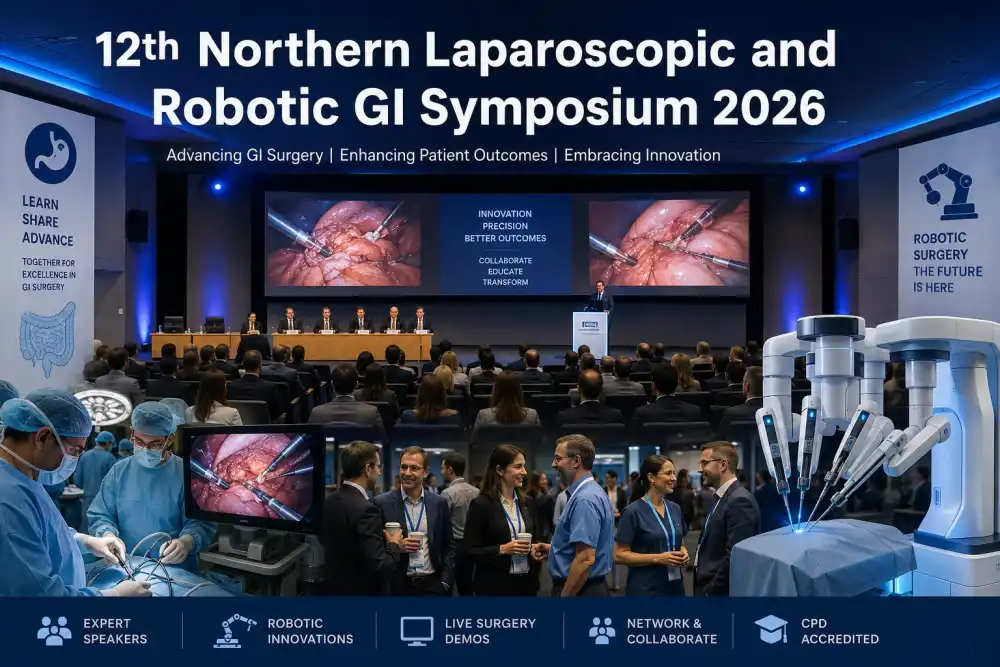
12th Northern Laparoscopic and Robotic GI Symposium
The 12th Northern Laparoscopic and Robotic GI Symposium is one of the leading educational surgical conferences organised through South Tees Conferences at the prestigious STRIVE Academic Centre, The James Cook University Hospital, Middlesbrough. Bringing together surgeons, consultants, trainees, researchers and healthcare professionals from across the United Kingdom, the symposium focuses on the latest developments in minimally invasive gastrointestinal surgery and robotic-assisted procedures.
Healthcare technology is evolving rapidly, making continuous education essential for clinicians involved in gastrointestinal care. This conference provides delegates with access to evidence-based practice, expert keynote presentations, live demonstrations, clinical discussions and opportunities to exchange knowledge with nationally recognised specialists.
Participants will gain valuable insight into emerging surgical technologies, patient safety, enhanced recovery protocols, robotic innovations and multidisciplinary approaches that continue to improve outcomes for gastrointestinal patients.
Why Attend?
Medical conferences remain one of the most effective ways to stay informed about advances in clinical practice. This symposium has been designed to deliver practical knowledge that healthcare professionals can immediately apply in their own hospitals and surgical departments.
Delegates will benefit from presentations delivered by experienced consultants who regularly perform advanced laparoscopic and robotic procedures. Sessions will explore current clinical guidelines, innovative treatment pathways and complex surgical cases while encouraging discussion among participants.
Networking opportunities throughout the day also allow attendees to build professional relationships with surgeons, trainees, researchers and industry representatives working in gastrointestinal healthcare.
Conference Objectives
The symposium has several educational objectives, including improving participants' understanding of modern minimally invasive surgical techniques, enhancing patient safety through evidence-based practice and encouraging collaboration between different healthcare disciplines.
Attendees will explore how robotic surgery continues to transform gastrointestinal procedures by improving precision, reducing recovery times and supporting better patient outcomes.
The programme also encourages participants to critically evaluate new research findings before implementing them into everyday clinical practice.
Key Learning Areas
Throughout the conference, delegates can expect educational sessions covering:
Advanced laparoscopic gastrointestinal procedures
Robotic-assisted colorectal surgery
Upper GI surgical innovations
Surgical simulation and training
Enhanced recovery after surgery (ERAS)
Patient safety strategies
Clinical decision making
Complication management
Future developments in robotic technology
Evidence-based gastrointestinal surgery
Each session combines practical experience with the latest research to create a comprehensive educational programme suitable for both experienced consultants and surgical trainees.
Expert Speakers
The symposium welcomes respected surgeons and specialists who possess extensive experience in gastrointestinal surgery and medical education. Speakers share practical case studies, discuss challenging procedures and review current clinical evidence.
Panel discussions encourage delegates to ask questions directly to experts, helping attendees better understand how emerging technologies can be integrated into routine clinical practice.
The conference also supports multidisciplinary collaboration by including perspectives from anaesthetists, specialist nurses and allied healthcare professionals involved in perioperative care.
Benefits of Robotic Surgery
Robotic-assisted surgery continues to reshape gastrointestinal healthcare throughout the UK.
During the symposium, attendees will discover how robotic platforms provide surgeons with enhanced visualisation, greater precision and improved dexterity during complex procedures.
Sessions examine patient selection, equipment requirements, training pathways and future innovations expected to influence gastrointestinal surgery over the coming years.
Clinical evidence demonstrating reduced hospital stays, improved recovery times and lower complication rates will also be reviewed.
Hands-on Learning Experience
Although primarily an educational conference, delegates will also have opportunities to observe demonstrations, review surgical videos and participate in interactive discussions.
These practical learning experiences enable participants to better understand modern operative techniques while comparing different surgical approaches used across NHS hospitals.
The interactive format encourages engagement rather than passive learning, making the educational experience significantly more valuable.
Networking Opportunities
Professional networking remains one of the strongest reasons healthcare professionals attend medical conferences.
Throughout the symposium, attendees can exchange experiences with surgeons from different NHS Trusts, discuss ongoing research projects and identify opportunities for future collaboration.
These conversations frequently lead to new research partnerships, training opportunities and improvements in patient care through shared knowledge.
Who Should Attend?
The conference has been developed for professionals working in gastrointestinal healthcare, including consultant surgeons, colorectal surgeons, upper GI surgeons, specialist registrars, junior doctors, theatre practitioners, surgical nurses, physician associates, medical educators and clinical researchers.
Medical students interested in gastrointestinal surgery may also find the conference valuable for understanding current innovations and career pathways.
Professional Development
Continuous Professional Development (CPD) remains an important aspect of modern healthcare practice.
Attendance at educational conferences enables healthcare professionals to maintain clinical competence while learning about evolving technologies and updated national guidance.
Participants can also use knowledge gained during the symposium to improve patient pathways within their own organisations.
Innovation in Healthcare
Innovation continues to drive improvements in patient outcomes across gastrointestinal surgery.
Topics explored throughout the conference include artificial intelligence, digital imaging, robotic platforms, surgical planning software and advances in minimally invasive instrumentation.
Understanding these innovations prepares healthcare professionals for the future of surgical care.
Venue
The STRIVE Academic Centre at The James Cook University Hospital offers modern conference facilities specifically designed for healthcare education.
The venue provides excellent lecture theatres, audiovisual technology, comfortable delegate facilities and convenient access for attendees travelling from across the United Kingdom.
Its location within a major teaching hospital also creates an ideal environment for clinical education and professional networking.
The 12th Northern Laparoscopic and Robotic GI Symposium represents an outstanding opportunity for healthcare professionals seeking to remain at the forefront of gastrointestinal surgery.
With expert speakers, evidence-based presentations, practical discussions and valuable networking opportunities, the conference provides delegates with knowledge that can directly improve patient care and professional development.
Whether you are an experienced consultant, surgical trainee or healthcare researcher, this symposium offers a comprehensive educational experience focused on the future of minimally invasive gastrointestinal surgery and robotic innovation.
STRIVE Academic Centre, The James Cook University Hospital,
Middlesbrough
29
0
- Prev
- 1
- Next
Share This Page
My Page
Scan QR to open
Barcode