The retail landscape is undergoing a silent but massive structural shift. As we cross the first quarter of 2026, the way consumers discover, evaluate, and purchase products has moved beyond the traditional search bar. We have entered the era of Agentic Commerce, where the primary "shopper" is often an AI assistant—such as Gemini, ChatGPT, or specialized retail bots—acting on behalf of a human user.
For brands, the challenge is no longer just appearing in a list of blue links; it is becoming the trusted data source that feeds these AI shopping assistants. This is where the modern press release has found its second life. Far from being a relic of old media, the press release has evolved into a high-octane "data fuel" for the next generation of AI-driven commerce.
The Rise of Agentic Commerce in 2026
In 2026, personal AI assistants have evolved from simple voice-activated timers to sophisticated procurement agents. A user might simply say, "Find me the best sustainable running shoes available in the UK for under £150 with a focus on arch support," and the AI will scan the web to make a definitive recommendation.
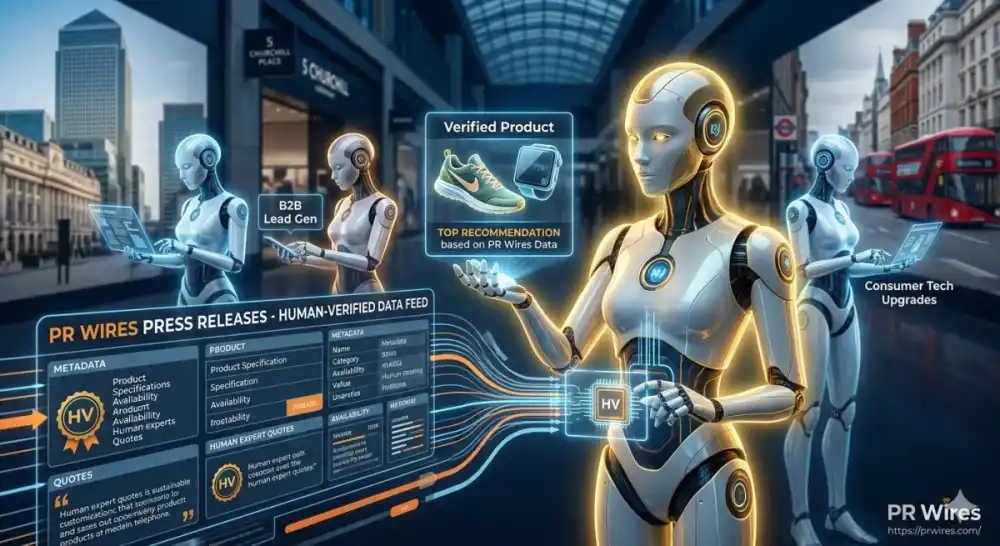
To make this recommendation, the AI requires structured, verified, and timely data. Traditional website content is often too fragmented or sales-oriented for an AI to parse effectively. However, a professionally distributed press release through a network like PR Wires provides a concentrated burst of factual data that AI models prioritize as a "Primary Source."
Why AI Shopping Assistants Prioritize Newswire Content
AI models are trained to value authority and recency. When a brand issues a press release distribution via a London-based hub like Canary Wharf, it enters the global news ecosystem with a timestamp and a "Human-Verified" editorial trail.
The "Fact-First" Hierarchy
AI shopping assistants use a hierarchy of truth. At the top of this hierarchy are:
-
Regulatory Disclosures: (e.g., London Stock Exchange filings).
-
Official Newswires: (e.g., PR Wires / PR Newswire).
-
Journalistic Reporting: Verified media coverage.
-
On-Page SEO Content: Brand-owned blogs and product pages.
By utilizing a press release to announce product launches, price adjustments, or sustainability milestones, a digital marketing strategist ensures that the AI assistant receives "clean" data directly from the source, bypassing the "noise" of third-party review sites that may contain outdated information.
Generative Engine Optimization (GEO) for Retail
To feed these assistants effectively, brands are now employing Generative Engine Optimization (GEO). This goes beyond traditional keyword visibility and focuses on Entity Intelligence.
Structured Data and Schema Markup
In 2026, a press release is no longer just text; it is a container for JSON-LD Schema. When PR Newswire distributes a release, it includes deep-level metadata that tells the AI:
-
Availability: Current stock levels in specific UK regions.
-
Price Points: Real-time MSRP and promotional offers.
-
Specifications: Technical data points that an AI can compare against competitors.
When an AI assistant looks for "B2B lead generation" tools or "consumer tech" upgrades, it looks for these schema-backed news releases to verify that the information is current and manufacturer-approved.
The "Expertise" Factor: E-E-A-T in AI Shopping
Google’s recent updates have placed a premium on Experience and Expertise. AI shopping assistants are programmed to avoid "hallucinating" product features. They prefer sources that show a "Human-Verified" trail.
For a Senior UK Strategist, this means every press release must contain:
-
Expert Quotes: Direct statements from the product designers or CEOs.
-
Technical Whitepapers: Links to the "Human-Verified" research behind the product.
-
Multimedia Proof: 4K video demonstrations and high-detail textures in photography that the AI can "analyze" to confirm product quality.
Case Study: UK Retail’s Shift to News-Led Discovery
Consider a luxury fashion brand based in London. Traditionally, they would rely on Instagram ads for B2C engagement. However, in 2026, 40% of their high-value sales come from AI assistant recommendations.
By shifting their budget toward a strategic PR and distribution model, they ensured that every time a new collection launched, a formal press release was issued. This release was optimized with the long-tail keyword: "sustainable luxury accessories London 2026." Within 24 hours, the AI assistants of thousands of potential buyers had indexed the release. When those users asked their bots for "sustainable fashion ideas," the AI cited the press release as the "Official Launch Data," leading to a 25% increase in conversion compared to traditional social ads.
The 24/7 News Cycle and AI "Freshness"
One of the most significant advantages of using press releases to feed AI is the Freshness Factor. AI models frequently update their "knowledge graphs." A blog post might take weeks to be crawled and fully understood in context. A press release, however, is pushed via "Direct Feed" to major data aggregators.
For brands in volatile sectors—like the online gaming and sports betting industry—where odds and registration offers change daily, the "Freshness" of a press release ensures the AI assistant isn't recommending an expired offer. This maintains brand authority and prevents user frustration.
How to Write Press Releases for AI Assistants
To ensure your news is "machine-readable" and high-performing, follow these 2026 guidelines:
-
Declarative Headlines: Use clear, factual titles. Instead of "A New Era of Style," use "Brand X Launches 100% Recycled Running Shoe Collection in UK."
-
Bullet-Pointed Specs: AI assistants love lists. They can easily extract data from bullet points to fill "Comparison Tables" for the user.
-
Localized Data: Include city-specific information (e.g., "Available at our City Road office or online").
-
CTA for Agents: Include a "Data Summary" at the bottom of the release specifically designed for AI scrapers to ingest.
The Future: From Searching to Sensing
As we look toward the latter half of 2026, we expect AI shopping assistants to move into "Predictive Procurement." They will not just wait for a user to ask; they will monitor the news for "offers" or "events" that match the user's profile.
If a brand issues a press release about an April 2026 Post-Summit Strategy Intensive, the AI assistant of a relevant marketing professional will "sense" this event and suggest, "There is a high-authority strategy event in London next month that aligns with your Q2 goals. Should I book a seat?"
The New Pipeline of Commerce
The "Next Generation of AI Shopping Assistants" is hungry for data, but they are discerning eaters. They reject the "empty calories" of AI-generated spam and crave the "nutritional value" of human-verified, authoritative news.
By leveraging a professional distribution network like PR Wires and focusing on Content Architecture, brands can ensure they are the ones feeding the AI. In 2026, the most successful companies won't just be those with the best products—they will be the ones with the best-distributed data.
The wire is no longer just for journalists. The wire is now for the bots.

Top Categories
Trending News
-
 AI Agents & The CMA: A Strategic Guide to Compliance and ROI
2 months ago
AI Agents & The CMA: A Strategic Guide to Compliance and ROI
2 months ago -
Navigating the UK Market Strategy and Resilience PR Business Wires
2 months ago
-
New CMA Guidance: Are Your AI Agents Violating UK Consumer Law
2 months ago
-
Press Release Power Launches Exclusive UK Premium Media Network
2 months ago
-
Navigating the UK Business Landscape Strategy and Compliance PR Business Wires
2 months ago




Share this Insight
Spread the knowledge with your community!