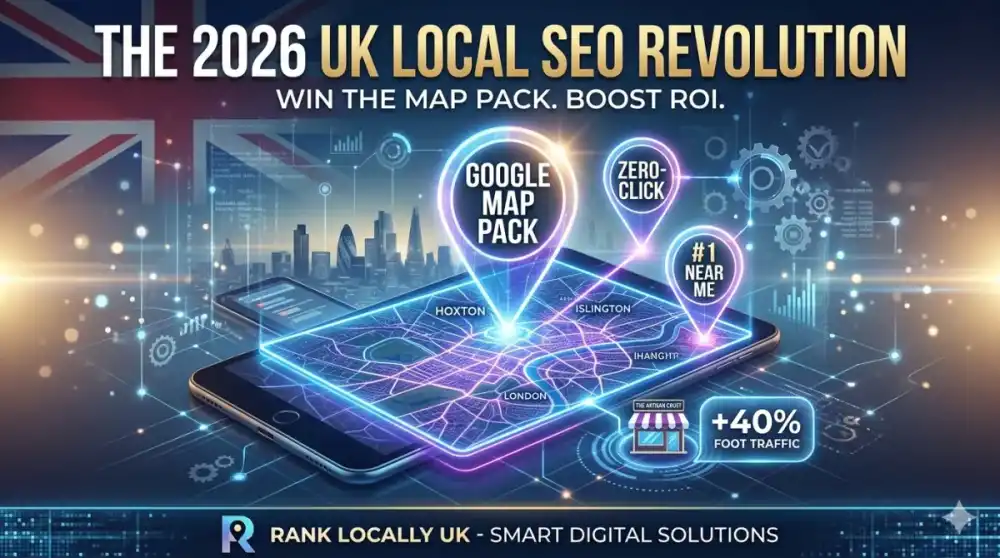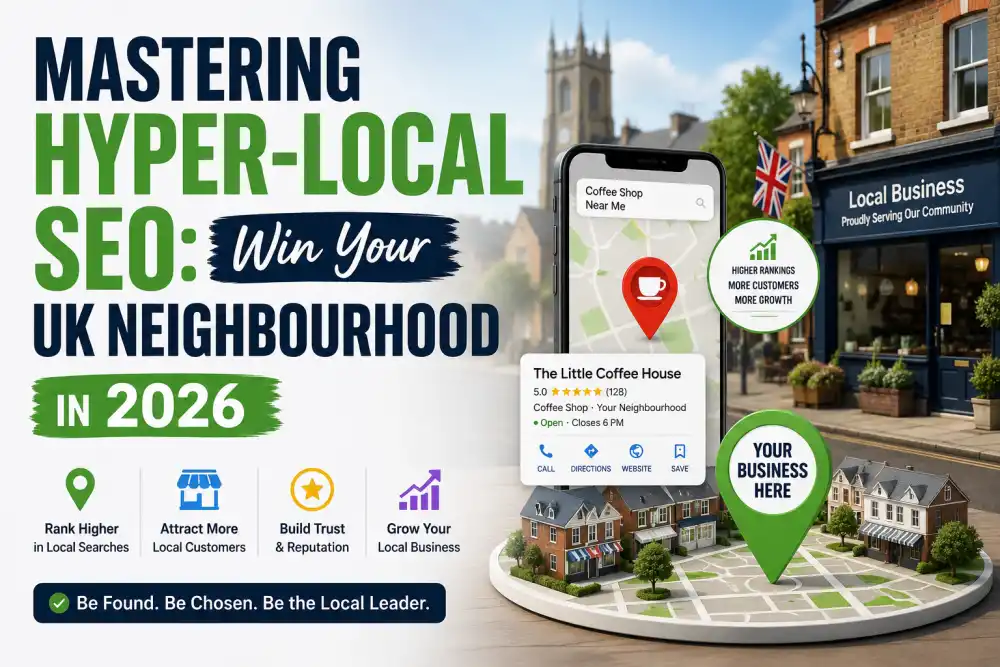
The search engine landscape is constantly shifting, but for the average UK small-to-medium enterprise (SME), the most critical battleground isn't national or even city-wide—it is the neighbourhood. In 2026, Google’s search algorithms have become incredibly granular. A customer searching for a "plumber" or a "cafe" is no longer looking for the best in the UK; they are looking for the best within a 5-minute walk or a short drive.
At Rank Locally UK, we have seen a definitive trend: businesses that focus their digital efforts on hyper-local authority are outperforming national competitors who cast too wide a net. This guide explores why hyper-local dominance is the new gold standard for UK SMEs and how you can claim your patch.
The Shift to Hyper-Local Search
In the past, SEO was often about broad keywords. You would target "SEO services London" or "Hairdresser Birmingham." While these are still relevant, they are now secondary to the "near me" intent. Modern search engines use a combination of GPS data, local search history, and proximity signals to decide which business gets the top spot.
If you are a business operating in a specific town or borough, your digital footprint must reflect that specific geography. If you are not visible to the people in your own postcode, your digital strategy is failing.
1. Neighbourhood-Specific Landing Pages
The days of a single "Contact Us" page are over. To rank for hyper-local queries, you need dedicated content that speaks to the specific neighbourhoods you serve. If you are a service provider, create pages like "Boiler Repair in [Neighbourhood Name]" rather than just a general city-wide page.
This allows you to weave in local landmarks, community news, and hyper-relevant content that Google's crawlers associate with that specific location. We often advise clients to use our Bespoke content strategies to build these geographically clustered hubs of information.
2. The Role of Hyper-Local Citations
Google needs to trust that you are where you say you are. While major UK directories are important, hyper-local citations are the "trust signals" that confirm your presence in a community. This includes being listed on local chamber of commerce sites, community noticeboards, and local business alliance websites. These links tell Google, "This business is a recognised part of this local ecosystem."
Building Your Hyper-Local Authority
Authority is not just about rankings; it is about trust. How do you prove to Google—and your future customers—that you are the go-to business in your area?
A. Leverage Reviews for Local Sentiment
Your Review Management strategy is your biggest asset. It is not just about the star rating; it is about the content of the reviews. When customers mention your location or a local landmark, it reinforces your local relevance. We encourage our clients to proactively ask customers to mention their specific location in their reviews, which helps build a "local semantic map" around your business.
B. Technical Accuracy: The Foundation of Local
You cannot be a neighbourhood leader if your website is broken or slow. Our Technical SEO Audit reveals that most local businesses fail because of basic technical flaws—unoptimized images, broken mobile navigation, or non-secure pages. If a customer on a mobile phone can't find your phone number or directions within three seconds, they will go to the shop down the road.
C. Strategic Engagement
Search engines look for signs of a "real" business. This means your website should showcase your involvement in the local community. Do you sponsor the local football team? Do you host events at the community centre? These aren't just PR efforts; they are digital signals. Linking to these community activities and having them link back to you creates a powerful local web of authority.
Bridging the Gap: Where Strategy Meets Execution
Most SMEs know they need to be local, but they struggle with the "how." How do you scale this? How do you keep your NAP (Name, Address, Phone) consistent across 50 different directories? How do you know if your content is actually hitting the right neighbourhood?
This is where Strategic SEO Consulting becomes vital. We act as the bridge between your operational business goals and the technical requirements of the search algorithms. We help you map your customer journey—from the moment they search for a "local plumber" to the moment they call you—and ensure every touchpoint is optimised for local conversion.
The Future of the High Street
The future of the UK high street is a hybrid one. Digital prominence is what leads to physical footfall. If you are not "digitally present," you are missing out on the majority of your potential local market.
As we progress through 2026, we expect Google to continue refining its "Local Pack" algorithms. The businesses that will survive and thrive are those that have built deep, authentic roots in their communities and translated those roots into a structured, reliable, and user-first digital experience.
Frequently Asked Questions
1. Is "Hyper-Local SEO" different from standard Local SEO?
Yes. Local SEO is city-wide; Hyper-Local SEO targets specific districts, neighbourhoods, or even single streets to capture highly qualified traffic.
2. Why isn't my business showing up in the "Map Pack" for my area?
There could be several reasons, including inconsistent NAP data, a lack of local reviews, or a weak technical foundation on your website.
3. Does social media help with hyper-local rankings?
Yes. Engaging in local community Facebook groups or Instagram local hashtags signals to Google that you are a relevant participant in that community.
4. Should I create a separate website for every neighbourhood I serve?
No. This can lead to "cannibalisation" where your sites compete with each other. It is better to have one strong, authoritative domain with dedicated landing pages for each neighbourhood.
5. How important are local directory listings in 2026?
Still very important. Google uses them to verify your business address and legitimacy. Ensure your profiles are consistent and updated.
6. Can I use local landmarks in my content to rank better?
Absolutely. Mentioning your proximity to a local park, train station, or landmark helps the AI understand exactly where you are located.
7. How do I get more reviews from my local customers?
Make it a part of your process. Send follow-up emails, place QR codes on your receipt, and simply ask for their feedback in person.
8. Will a technical audit really increase my local ranking?
Yes. If your site takes too long to load on mobile, Google will deprioritize your listing, even if your local content is excellent.
9. What if my competitors are bigger than me?
Hyper-local SEO is your equalizer. A national chain often struggles to be "authentic" at the neighbourhood level. You have the advantage of being a local, community-focused business.
10. How can Rank Locally UK help me dominate my neighbourhood?
We help you audit your current footprint, build localized content strategies, and ensure your technical SEO is perfectly aligned with your local business goals.
Top Categories
Trending News
-
 AI Agents & The CMA: A Strategic Guide to Compliance and ROI
2 months ago
AI Agents & The CMA: A Strategic Guide to Compliance and ROI
2 months ago -
Navigating the UK Market Strategy and Resilience PR Business Wires
2 months ago
-
New CMA Guidance: Are Your AI Agents Violating UK Consumer Law
2 months ago
-
Press Release Power Launches Exclusive UK Premium Media Network
2 months ago
-
Navigating the UK Business Landscape Strategy and Compliance PR Business Wires
2 months ago





Share this Insight
Spread the knowledge with your community!