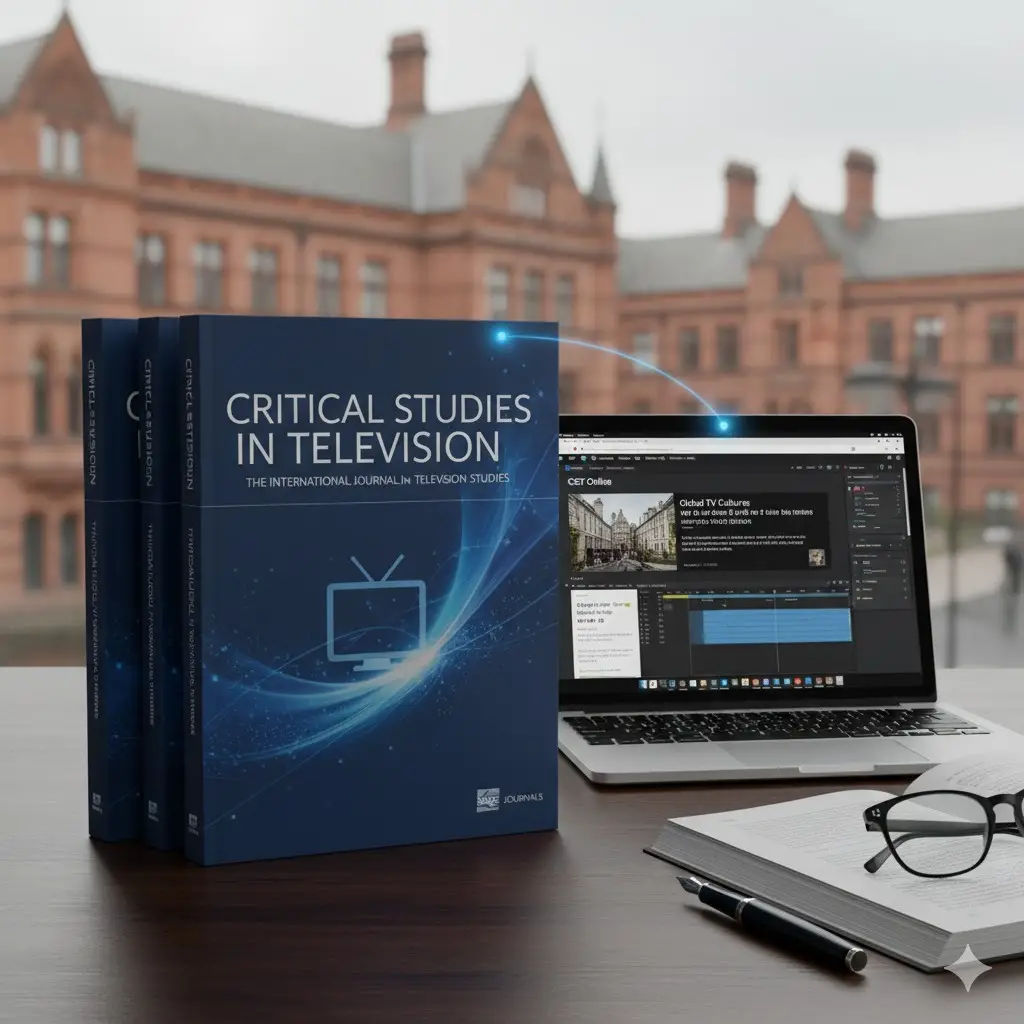
Critical Studies in Television
Critical Studies in Television: The International Journal of Television Studies stands as a beacon of academic rigor in a rapidly shifting media landscape. Established on March 1, 2006, by pioneering scholars Kim Akass and Janet McCabe, the journal was born from a necessity to treat television not merely as a subset of film or cultural studies, but as a primary medium of profound social, historical, and aesthetic significance. Headquartered at Manchester Metropolitan University in the United Kingdom, CST has grown from a niche publication into a global authority, published in association with the prestigious Sage Journals.
In an era defined by "Peak TV" and the transition from traditional broadcasting to digital streaming, the need for deep, critical analysis has never been greater. CST provides the essential intellectual framework required to navigate these changes, bridging the gap between high-level media theory and the practical realities of the industry.
The Mission and Vision of Critical Studies in Television
The core mission of Critical Studies in Television is to provide an international forum for innovative research. Television is an inherently interdisciplinary medium, and as such, the journal welcomes diverse perspectives that intersect at the crossroads of history, aesthetics, and production.
Fostering International Scholarly Exchange
While rooted in the vibrant media hub of Manchester, UK, the journal’s reach is truly global. It serves as a vital platform for researchers from across the world to share insights into national television cultures, transnational exchanges, and the global circulation of television formats. By maintaining high editorial standards and a robust peer-review process, CST ensures that the research it publishes is both impactful and authoritative.
A Multidisciplinary Approach
The journal is unique in its commitment to a "triple-threat" approach to television analysis:
-
History: Documenting the evolution of the medium, from institutional histories to forgotten archives.
-
Aesthetics: Analyzing the visual language, narrative structures, and compositional principles of television texts.
-
Production: Investigating the "behind-the-scenes" economic, political, and technical factors that shape what we see on screen.
CST Online: Rapid Response to a Digital World
A distinguishing feature of the brand is its digital extension, CST Online. Recognizing that academic publishing cycles can sometimes lag behind the lightning-fast world of television trends, the CST Online blog was created to provide rapid-response analysis.
Edited by a dedicated team, this platform features weekly blogs where scholars and industry practitioners reflect on current television programming, policy shifts, and emerging digital formats. It serves as a "vibrant community hub" where the latest series can be critiqued in real-time, long before they become the subject of formal journal articles.
Key Specializations and Research Areas
Critical Studies in Television specializes in several key pillars that define the contemporary field of television studies:
-
Television History: Unearthing neglected aspects of television's past and utilizing archival research to redefine our understanding of the medium’s trajectory.
-
Media Aesthetics: Exploring how television creates meaning through style, sound, and performance.
-
Production Studies: examining the labour, technology, and industrial strategies that drive the global media market.
-
Global Television Cultures: Analyzing how television functions in different socio-political contexts, from the BBC in the UK to emerging markets in Asia and South America.
Why Critical Studies in Television Matters Today
Television is no longer just "the box in the corner." It is a ubiquitous digital presence that shapes our politics, our identities, and our daily lives. CST provides the tools to deconstruct this influence.
By offering Open Access Publishing Options and maintaining a high impact factor, the journal ensures that its research is accessible to both the academic community and the general public. Whether it is a deep dive into disability representation in crime drama or a dossier on the cultural value of television, CST remains at the forefront of contemporary media discourse.
Academic Integrity and Professional Associations
Integrity is the cornerstone of CST. The journal is a proud member of the Committee on Publication Ethics (COPE), ensuring that every article meets the highest ethical standards of scholarly publishing. Furthermore, its association with Manchester Metropolitan University and the British Association of Film, Television and Screen Studies (BAFTSS) solidifies its position within the UK’s academic hierarchy.
As television continues to evolve, so too does the scholarship surrounding it. Critical Studies in Television remains committed to being the definitive record of this evolution. For students, researchers, and media professionals, it is not just a journal; it is a vital resource for understanding the past, present, and future of the world’s most influential medium.
Frequently Asked Questions
1. What is the primary focus of Critical Studies in Television?
The journal focuses on the rigorous analysis of television's history, aesthetics, and production. It aims to bridge the gap between media theory and industry practice through multidisciplinary research.
2. Who are the founders of Critical Studies in Television?
The journal was established in 2006 by Kim Akass and Janet McCabe.
3. Is Critical Studies in Television a peer-reviewed journal?
Yes, Critical Studies in Television: The International Journal of Television Studies is a premier peer-reviewed academic journal published in association with Sage Journals.
4. Where is the head office of Critical Studies in Television located?
The editorial office is based at Manchester Metropolitan University, All Saints, Manchester, M15 6BH, United Kingdom.
5. What is the difference between the CST Journal and CST Online?
The journal publishes quarterly, peer-reviewed academic articles, while CST Online is a vibrant blog platform that offers weekly, rapid-response analysis of current television trends and news.
6. Does the journal offer Open Access publishing?
Yes, through Sage Publishing, CST offers Open Access options to ensure high-impact research is available to a global audience.
7. How can I contact the Editorial Office?
You can reach the editorial office at +44 (0) 161 247 1732 or via email at cstonline@hotmail.co.uk.
8. What language is the journal published in?
The journal and its associated digital platforms currently support the English language.
9. What payment methods are accepted for subscriptions?
Institutional subscriptions and individual access can be paid via bank transfer or credit/debit cards through the Sage Publishing portal.
10. Is the journal affiliated with any professional bodies?
Yes, the journal is a member of the Committee on Publication Ethics (COPE) and is associated with the British Association of Film, Television and Screen Studies (BAFTSS).

Top Categories
- Business Services 137
- Educational Services 93
- Event Organiser 45
- Health and Wellbeing 17
- Advertising Agencies 16
- Home and Garden 13
- Automotive 13
- Manufacturing Services 8
- Engineering 8
- Entertainment Services 5
- Legal Services 4
- Financial Services 4
- Gardening Services 4
- Accountants 2
- Cleaning Services 2
Top Viewed Articles
-
 Top Rated and Most Reliable Dentists in London
Jul 20 61
Top Rated and Most Reliable Dentists in London
Jul 20 61 -
Top Rated and Most Reliable Parking in London
Jul 09 54
-
Top Rated and Most Reliable Doctors in London
Jul 20 41
-
Top Rated and Most Reliable Junkyards in London
Jul 20 34
-
University of Sheffield: A Global Leader in Research & Student Excellence
Apr 04 30



Spread the Word
Know someone who would love this? Share it with them!