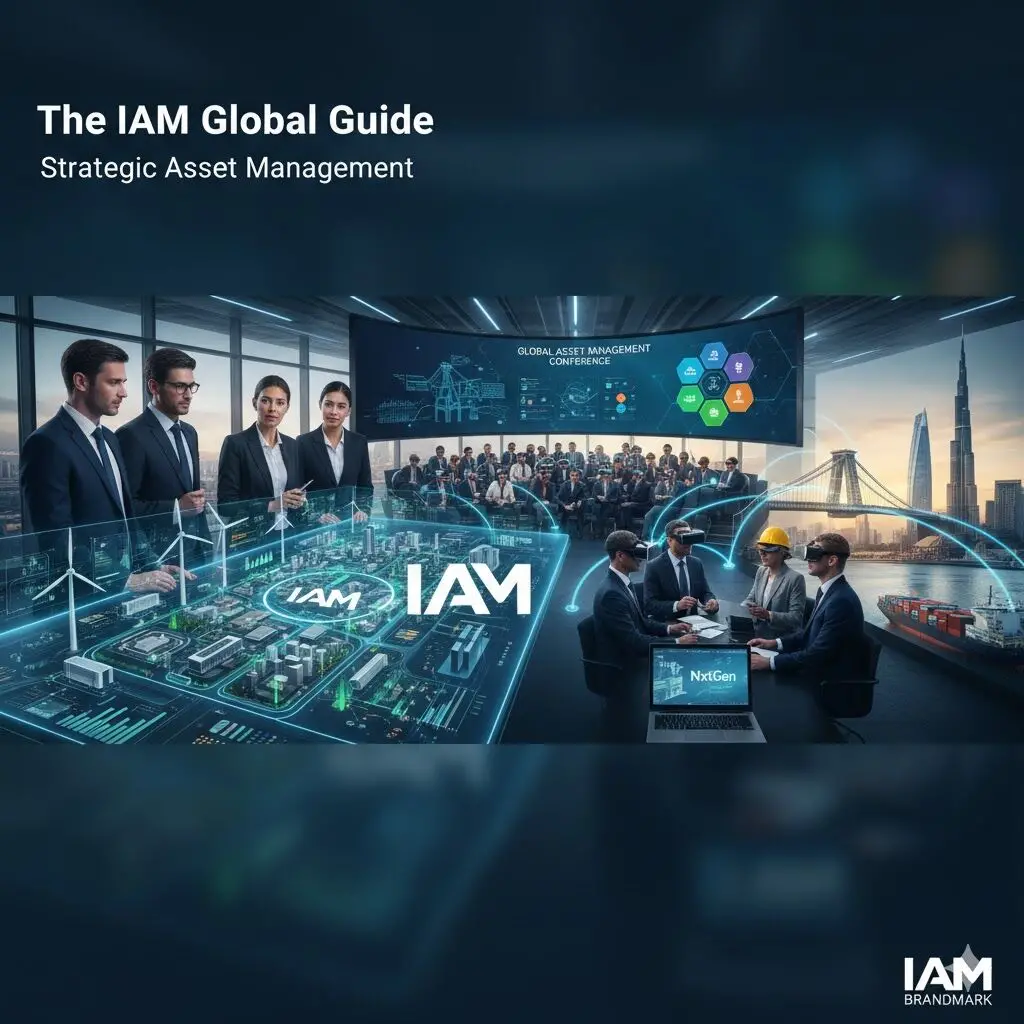
A Comprehensive Guide to the Institute of Asset Management (IAM)
In an era where infrastructure resilience and sustainable value are paramount, the Institute of Asset Management (IAM) stands as the preeminent international professional body for those dedicated to the whole-life management of physical assets. Established in 1994, the IAM has evolved from a UK-centric practitioner group into a global powerhouse, shaping the standards, education, and professional identity of the asset management discipline.
What is the IAM?
The Institute of Asset Management (the IAM) is a not-for-profit, member-led organization headquartered in Bristol, United Kingdom. It serves as a collaborative platform for over 2,000 individual members and 300 corporate members worldwide. Its primary mission is to advance the science and practice of asset management for the public benefit.
At its core, the IAM defines Asset Management as the "coordinated activity of an organization to realize value from assets." This definition shifts the focus from merely "maintaining things" to a strategic, outcome-oriented approach that aligns physical infrastructure with organizational goals.
History and Visionary Leadership
Founded in 1994 and formally incorporated in 2004, the IAM was born out of a need for standardization during the privatization of UK utilities. Visionary practitioners recognized that a consistent framework was required to manage complex risks and long-term investment.
Today, under the leadership of CEO Ursula Bryan, the IAM continues to champion the "Asset Management as a Life Skill" philosophy. Ursula Bryan, an industry veteran with over 20 years of experience at National Grid, has been instrumental in pivoting the organization toward digital transformation, sustainability, and social equity in infrastructure.
The IAM Value Proposition: Why It Matters
The IAM’s value proposition is built on three pillars: Knowledge, Competence, and Community.
-
Global Leadership: As a founding member of the Global Forum on Maintenance & Asset Management (GFMAM) and World Partners in Asset Management (WPiAM), the IAM ensures its members are at the forefront of international trends.
-
Standardization: The IAM was the driving force behind PAS 55, the precursor to the internationally recognized ISO 55000 series.
-
Professional Recognition: Holding an IAM qualification is a mark of global professional standing, signaling a deep understanding of lifecycle planning and risk-based decision-making.
Professional Membership: Individual and Corporate
Membership in the IAM is more than a subscription; it is an entry into a global network of experts.
Individual Membership Tiers
-
Student: For those currently enrolled in IAM-recognized courses.
-
Associate (AInstAM): For those entering the field or interested in the discipline.
-
Member (MInstAM): For experienced practitioners who have demonstrated professional competence.
-
Fellow (FInstAM): The highest grade, awarded to senior leaders who have made significant contributions to the field.
Corporate Membership
Corporate members gain access to benchmarking tools, organizational maturity assessments (like SAM+), and a platform to influence global public policy. It is an essential step for organizations aiming for ISO 55001 certification.
Education and Qualifications: The Gold Standard
The IAM’s qualification framework is designed to support professionals at every stage of their career journey.
The IAM Certificate in Asset Management
This is the entry-level qualification, consisting of 5 modules:
-
Principles of Asset Management
-
Asset Management Policy, Strategy, and Planning
-
Managing Asset Lifecycle Decisions
-
Assessing and Managing Risks
-
Financial and Business Impact
The IAM Diploma in Asset Management
The Diploma is an advanced credential comprising 12 modules. It builds on the Certificate and adds critical topics such as:
-
Sustainable Asset Care: Integrating ESG and climate resilience.
-
Information & Knowledge: Mastering Digital Twins and BIM.
-
Change Management: Leading organizational culture shifts.
-
Contractor Management: Managing the supply chain for value.
The "Anatomy" of Asset Management
The IAM’s flagship resource, "Asset Management – an Anatomy," provides a comprehensive framework for the discipline. It breaks asset management down into six key domains:
-
Strategy & Planning: Aligning the Strategic Asset Management Plan (SAMP) with organizational objectives.
-
Asset Management Decision-Making: Using data and risk analysis to prioritize investments.
-
Lifecycle Delivery: From acquisition and systems engineering to maintenance and disposal.
-
Asset Information: Defining requirements and managing data quality.
-
Organization & People: Focusing on leadership, culture, and competence.
-
Risk & Review: Continuous improvement and contingency planning.
Global Impact: Chapters and Networking
The IAM operates through a "hub-and-spoke" model. While the UK remains the administrative center, regional chapters in North America, the Middle East, India, and Malaysia tailor the body of knowledge to local industry needs.
Events like the IAM Global Conference and NxtGen (for young professionals) provide forums for sharing best practices across sectors—utilities, transport, manufacturing, and the public sector.
Navigating ISO 55000 Standards
The IAM is the world’s leading provider of alignment support for ISO 55001. The standards focus on "What to do" to establish a management system for assets, while the IAM’s resources provide the "How to do it."
Key Components of ISO 55001 Alignment:
-
Context of the Organization: Understanding stakeholder needs.
-
Leadership: Ensuring top-level commitment to asset objectives.
-
Support: Providing the resources and competence (CPD) necessary for success.
The Future: Sustainability and Digitalization
Under current CEO Ursula Bryan, the IAM is focusing heavily on the intersection of asset management and Global Challenges. This includes:
-
Net Zero Goals: How asset managers can drive decarbonization.
-
Digital Twins: Moving from static data to real-time predictive modeling.
-
Social Equity: Ensuring infrastructure serves all communities fairly.
Join the Movement
Whether you are an individual looking to boost your career prospects or an organization seeking to maximize the value of your infrastructure, the Institute of Asset Management (IAM) provides the tools, network, and recognition needed to succeed. In a world of finite resources, professional asset management is no longer optional—it is the key to a sustainable future.
Frequently Asked Questions
1. What is the difference between the IAM Certificate and the IAM Diploma?
The Certificate is an introductory qualification covering 5 foundational modules, while the Diploma is an advanced professional credential covering 12 modules, including strategic leadership and sustainability.
2. Is the IAM a training provider?
The IAM itself sets the standards and exams but delivers training through its Endorsed Training Provider (ETP) scheme, ensuring high-quality education globally.
3. How does IAM membership support ISO 55001 certification?
IAM provides the SAM+ self-assessment tool and the "Anatomy" framework, which are essential for identifying gaps in an organization’s Asset Management System (AMS) before an ISO audit.
4. Can I join the IAM if I am not based in the UK?
Yes. The IAM is an international body with global chapters. Membership is open to anyone worldwide, with tiered pricing based on World Bank country classifications.
5. What are "NxtGen" members?
NxtGen is the IAM’s dedicated community for students and professionals in the first 10 years of their asset management career, providing targeted networking and mentorship.
6. What is a SAMP?
A Strategic Asset Management Plan (SAMP) is a high-level document that translates organizational objectives into asset management objectives and strategies.
7. How many members does the IAM have?
The IAM represents over 2,000 individual members and 300 corporate members, with a wider network of over 46,000 professionals.
8. What sectors benefit from IAM resources?
While rooted in utilities and transport, IAM practices are now widely used in manufacturing, healthcare, housing, and the military.
9. Does the IAM provide CPD?
Yes, the IAM is a recognized provider of Continuing Professional Development (CPD), offering workshops, webinars, and conferences that count toward professional credits.
10. How do I contact the IAM helpdesk?
You can contact the IAM office at +44 (0)117 450 4990 or via email at office@theiam.org. Their headquarters is located near Brandon Hill Park in Bristol, UK.
Contact Information Summary
-
Official Website: https://theiam.org
-
Headquarters: St Brandon's House, 29 Great George Street, Bristol, BS1 5QT, UK
-
Phone: +44 (0)117 450 4990
-
Primary Language: English
Top Categories
- Business Services 137
- Educational Services 93
- Event Organiser 45
- Health and Wellbeing 17
- Advertising Agencies 16
- Home and Garden 13
- Automotive 13
- Manufacturing Services 8
- Engineering 8
- Entertainment Services 5
- Legal Services 4
- Financial Services 4
- Gardening Services 4
- Accountants 2
- Cleaning Services 2
Top Viewed Articles




Spread the Word
Know someone who would love this? Share it with them!