
Articles in Aberdeen
Explore 10 business insights in Aberdeen
Insider
Share Your Business Story
Reach our community by sharing your business insights, expert guides, or success stories on the world's most trusted local platform.
Write Your Article Now
Educational Services
Apr 10, 2026
The Scots Philosophical Association Guide
The Scots Philosophical Association (SPA) stands as the definitive professional body for philosophers in Scotland. Founded in 1929 by representatives of the ancient Scottish universities, the SPA was established with a singular, profound mission: to promote the study and teaching of philosophy across the nation. In the decades since its inception, the association has evolved from a local gathering of scholars into a globally recognized institution that bridges the gap between the historic Scottish Enlightenment and the cutting-edge analytical philosophy of the 21st century.
Headquartered in the historic town of St Andrews, specifically at Edgecliffe on The Scores—a location overlooking the North Sea and near the iconic St Andrews Castle—the SPA serves as a unifying force. It connects academics, researchers, and post-graduate students from institutions such as the University of St Andrews, the University of Glasgow, the University of Aberdeen, and the University of Edinburgh.
A Century of Intellectual Excellence
The origins of the SPA are deeply rooted in the unique educational landscape of Scotland. Unlike many other nations where philosophy became a niche specialty, Scotland has historically treated philosophy as a foundational pillar of a liberal education. The association was born out of a collective need for Scottish philosophy departments to discuss matters of common interest and to ensure that the "Science of the Mind," as it was often called during the Enlightenment, remained relevant in a rapidly changing academic world.
In 1929, when representatives from the Scottish universities came together to form the association, they were not just creating a club; they were safeguarding a tradition. Figures like David Hume, Adam Smith, and Thomas Reid had already put Scotland on the global intellectual map. The SPA was designed to ensure that this legacy did not become a relic of the past but continued to drive modern inquiry into ethics, epistemology, logic, and metaphysics.
The Philosophical Quarterly: A Global Standard
One of the SPA's most significant contributions to the world of higher education is its management and joint ownership of The Philosophical Quarterly. Established in 1950, this journal has risen to become one of the top ten most highly regarded venues for general philosophy in the world.
The Philosophical Quarterly is known for its rigorous peer-review process and its commitment to publishing high-quality research from leading international scholars. While many journals have moved toward hyper-specialization, the Quarterly remains a broad-interest publication. It prioritizes innovative contributions that offer significant value to the discipline as a whole.
For the SPA, the journal is more than just a publication; it is the financial and intellectual engine of the association. The income generated from the journal is reinvested directly into the Scottish philosophical community, funding research grants, conference sponsorships, and fellowships that support the next generation of thinkers.
Empowering the Next Generation: Research and Grants
The SPA provides a unique value proposition through its robust financial support system. The association understands that for philosophy to thrive, it requires physical spaces for dialogue—conferences, workshops, and reading parties.
Conference Sponsorship and Workshops
The SPA offers substantial grants to support philosophical events held within Scotland. These events are often the birthplace of groundbreaking ideas. By providing up to £2,500 for exceptional cases, the SPA enables Scottish departments to host international speakers and facilitate high-level academic networking events.
Early-Career Researcher Support
A primary focus of the SPA is the development of early-career researchers (ECRs). The transition from a PhD candidate to a professional academic is notoriously difficult. The SPA mitigates this by welcoming applications for funding specifically from those who have received their PhD within the last five years. Furthermore, the association provides "dependent care" grants, ensuring that researchers with family responsibilities are not excluded from participating in the academic community.
Specializations: From Metaphysics to Logic
The Scots Philosophical Association is a bastion for analytical philosophy. Its members and the research it supports span the full spectrum of the discipline:
Analytical Philosophy: The core methodology of the association, focusing on clarity, logic, and the analysis of language.
Scottish Philosophy: Preserving the specific history and methods of the Scottish Enlightenment and its subsequent developments.
Ethics and Epistemology: Investigating the nature of morality and the limits of human knowledge.
Logic and Metaphysics: Exploring the fundamental nature of reality and the rules of valid reasoning.
Through specialized workshops and the prestigious "Centenary Fellowship," the SPA ensures that these fields remain vibrant and competitive on the global stage.
Advocacy and the Scottish Educational System
Beyond the walls of the lecture hall, the SPA acts as a primary advocate for philosophy within the Scottish educational system. In an era where STEM (Science, Technology, Engineering, and Mathematics) often dominates funding discussions, the SPA makes a compelling case for the value of the humanities.
The association works closely with the British Philosophical Association (BPA) to influence policy and ensure that philosophy remains a core component of university curricula. They provide a forum for philosophy departments to address common challenges, such as changes in government funding, student recruitment, and the integration of digital research access.
Membership and Community
Membership in the SPA is often automatic for academic staff in philosophy departments at Scottish universities, creating a seamless and inclusive professional community. However, the association also offers categories for honorary and associate membership, ensuring that the dialogue remains open to those teaching philosophy in other departments or those who have retired from active service.
The SPA's "Member Newsletters" and regular "Annual General Meetings" (rotating between cities like Edinburgh, Aberdeen, Stirling, and Glasgow) serve as the social and professional heartbeat of the organization. These events are not just about business; they are about fostering a "vibrant philosophical community" through after-meeting drinks, academic networking, and the exchange of ideas.
Contact and Institutional Information
For institutions and individuals looking to collaborate or seek support, the SPA maintains a transparent and accessible operation:
Physical Address: Edgecliffe, The Scores, St Andrews, Scotland, KY16 9AR.
Phone: +44 (0) 1334 462473.
Email: spa@st-andrews.ac.uk.
Official Website: www.scotsphil.org.uk.
Charity Status: Registered Scottish Charity (SC028603).
The association operates Monday through Friday, 9 AM to 5 PM, and accepts institutional payments via bank transfer or invoice for its various services and publication-related fees.
The Future of Scottish Philosophy
As the Scots Philosophical Association approaches its centennial, its role is more vital than ever. By managing The Philosophical Quarterly, providing critical research grants, and acting as a steadfast advocate for the discipline, the SPA ensures that the Scottish philosophical tradition remains a living, breathing influence on the global intellectual landscape. Whether you are an established professor or an early-career researcher, the SPA provides the infrastructure and support needed to turn abstract thoughts into impactful, world-class research.
Frequently Asked Questions
1. What is the primary mission of the Scots Philosophical Association?
The SPA's mission is to promote the study and teaching of philosophy in Scotland, foster a vibrant philosophical community, and support high-quality research through grants, workshops, and publications.
2. Does the SPA own The Philosophical Quarterly?
Yes, the SPA is the joint owner of The Philosophical Quarterly, which is one of the world's most prestigious academic journals in the field of philosophy.
3. Who can apply for SPA research and conference grants?
Grants are primarily available for philosophical events (conferences, workshops, reading parties) held in Scotland. The SPA particularly welcomes applications from early-career researchers (within 5 years of their PhD).
4. How can I become a member of the SPA?
Academic staff in philosophy departments at Scottish universities are generally members automatically. Other scholars, including those in related departments or those who have retired, may be eligible for associate or honorary membership.
5. What kind of financial support does the SPA provide for conferences?
The SPA typically offers grants of up to £1,000 for one-day events and up to £1,500 for multi-day events. In exceptional circumstances, funding can reach up to £2,500.
6. Is there support for researchers with children or dependents?
Yes, the SPA provides additional support (up to £500) to help offset the costs of dependent care incurred while attending SPA-sponsored conferences.
7. Where is the SPA headquartered?
The association is based at the University of St Andrews, located at Edgecliffe, The Scores, St Andrews, Scotland.
8. Is the Scots Philosophical Association a registered charity?
Yes, the SPA is a Registered Scottish Charity, with the registration number SC028603.
9. What philosophical specializations does the SPA focus on?
The SPA focuses on a wide range of analytical philosophy, including Ethics, Epistemology, Logic, Metaphysics, and the specific history of Scottish Philosophy.
10. How does the SPA support early-career researchers (ECRs)?
Beyond grants, the SPA facilitates fellowships (such as the Centenary Fellowship) and provides a forum for ECRs to present their work, network with senior academics, and gain publication support.
Aberdeen
0 Views

Business Services
Apr 10, 2026
ODN Europe Elevating OD Practice Today
In an era of unprecedented volatility, organizations across the globe are searching for more than just survival; they are seeking resilience, agility, and a "human-centric" approach to change. At the heart of this transformation in the European landscape lies ODN Europe (Organization Development Network Europe). Headquartered in the historic vibrant hub of Glasgow, Scotland, ODN Europe stands as the premier professional association for Organizational Development (OD) practitioners, consultants, and researchers.
Who is ODN Europe?
Founded on September 21, 2012, and governed by a dedicated Board of Directors, ODN Europe is a volunteer-led, non-profit organization. It serves as a vital bridge between global OD standards and the nuanced, diverse regional practices found across Europe. From its base at Clyde Offices, 48 West George Street, Glasgow, near the bustling Queen Street Station, the network orchestrates a pan-European community dedicated to the science and practice of OD.
Our Mission and Vision
The mission of ODN Europe is simple yet profound: to advance the science and practice of Organizational Development by connecting a diverse community of professionals. The network is built on the belief that healthy, effective, and sustainable organizations are the bedrock of a thriving society. By fostering meaningful connections, advancing research, and elevating humanity within the workplace, ODN Europe ensures that the "human" element is never lost in the shuffle of digital transformation and corporate restructuring.
The Pillars of Organizational Excellence
ODN Europe focuses on several key specializations that define modern management consultancy and coaching:
Organizational Development (OD): Applying behavioral science to planned interventions in organizational processes.
Change Management: Navigating the complexities of shifts in strategy, structure, or technology.
Leadership Development: Equipping leaders with the emotional intelligence and systems thinking required for 21st-century challenges.
Workplace Culture Transformation: Shaping environments where employees feel valued, heard, and empowered.
Systems Thinking: Understanding the interconnectedness of organizational parts to solve "wicked" problems.
Group Dynamics: Analyzing how people interact within teams to optimize collective performance.
Unique Value Proposition: The Blue Pages Advantage
Through its presence on professional platforms like Blue Pages, ODN Europe offers a unique value proposition. It doesn't just provide a membership; it provides an ecosystem. Members gain exclusive access to:
Peer-Learning Groups: Where practitioners share "in-the-trenches" experiences.
International Webinars: Featuring thought leaders from the Global Organization Development Network (ODN).
Annual ODN Europe Conference: The flagship event for networking and professional growth in the region.
Membership and Services
Whether you are an independent consultant, a corporate HR professional, or an academic researcher, ODN Europe offers a suite of products designed to elevate your practice:
OD Workshops & Webinars: Continuous professional development (CPD) tailored to emerging trends.
Mentorship Programs: Pairing emerging practitioners with seasoned experts to ensure the longevity of the field.
Digital Research Archive: A treasure trove of OD practice research and case studies.
Certification Pathway Guidance: Helping members navigate the global standards of OD excellence.
Practical Information
Business Registration Number: SC433171
Accepted Payment Methods: Bank Transfer, PayPal, and Credit/Debit Cards via Stripe.
Working Hours: Monday to Friday, 9 AM – 5 PM.
Languages: While English is the primary language, the network provides regional support in various European languages to reflect its diverse membership.
Connecting with the Community
ODN Europe is more than just a consultancy or an association; it is a movement. Affiliated with the Global Organization Development Network and the European Mentoring and Coaching Council (EMCC), it ensures its members are part of a global conversation.
To get involved, you can reach out via:
Phone/Helpdesk: 441412219200
Email: info@odneurope.org
Website: https://odneurope.org
LinkedIn: linkedin.com/company/odn-europe
Frequently Asked Questions
1. What exactly is Organizational Development (OD)?
OD is a field of research and practice dedicated to expanding the knowledge and effectiveness of people to accomplish more successful organizational change and performance. It is a data-driven, behavioral science-based approach to improving organizations.
2. Where is ODN Europe headquartered?
Our physical headquarters are located in Glasgow, Scotland, at Clyde Offices, 2nd Floor, 48 West George Street, G2 1BP. We are conveniently located near Queen Street Station.
3. Who can join ODN Europe?
Membership is open to anyone practicing, teaching, or researching in the field of OD, Change Management, HR, or Leadership Development. This includes internal practitioners, external consultants, and students.
4. Is ODN Europe a for-profit company?
No, ODN Europe is a volunteer-led, non-profit organization. All resources and fees are reinvested into the community to provide better services, research, and events for our members.
5. Does ODN Europe offer certifications?
We provide guidance on certification pathways and are closely affiliated with the Global OD Network, ensuring our members meet recognized international standards of practice.
6. What are the benefits of the annual conference?
The annual conference is the premier gathering for OD professionals in Europe. It offers high-level networking, exposure to cutting-edge research, and interactive workshops that provide practical tools for immediate use in your practice.
7. How can I pay for my membership?
We accept a variety of payment methods for your convenience, including Bank Transfer, PayPal, and major Credit/Debit cards processed through Stripe.
8. Do you support languages other than English?
Yes. While English is our primary language of communication for international events, we offer regional support and networking in various European languages through our localized member groups.
9. What is the "Meaningful Connections" pillar?
It is one of our core values focused on fostering deep, authentic relationships between members. We believe that professional growth happens best in a supportive, collaborative community rather than in isolation.
10. How do I contact the helpdesk?
You can call our Glasgow-based helpdesk at +44 141 221 9200 during our working hours (Monday–Friday, 9 AM – 5 PM) or email us at info@odneurope.org.
Aberdeen
0 Views

Educational Services
Apr 10, 2026
SICSA Powering Scotland’s Global Digital Leadership
In the rapidly evolving landscape of the 21st century, technology is the primary engine of economic growth and societal transformation. At the center of this revolution in Northern Europe stands the Scottish Informatics and Computer Science Alliance (SICSA). Established in 2008 through the visionary support of the Scottish Funding Council (SFC), SICSA is not merely an organization; it is a strategic collaboration of 14 Scottish Universities and three Scottish Innovation Centres.
Headquartered at the University of Glasgow, within the iconic Sir Alwyn Williams Building, SICSA serves as a unified voice for Scotland’s academic computing community. By fostering a culture of cooperation over competition, the alliance has successfully positioned Scotland as a global powerhouse in informatics research, education, and knowledge exchange.
The Mission: International Excellence through Collaboration
The core mission of SICSA is to promote international excellence in University-led research. While many academic ecosystems are fragmented, SICSA’s strength lies in its "research pool" model. This approach aggregates the expertise of over 500 academics and 750 PhD students, creating a critical mass of talent that rivals major global tech hubs.
Key Pillars of SICSA:
Research Excellence: Driving breakthroughs in Artificial Intelligence, Data Science, and beyond.
The Graduate Academy: Training the next generation of world-class researchers.
Knowledge Exchange: Bridging the gap between the lab and the marketplace.
Education Advocacy: Ensuring computing education meets the needs of a digital future.
A Detailed Look at SICSA Research Themes
SICSA operates through several strategic research themes, each designed to address the most pressing challenges in the digital age. These themes facilitate cross-institutional collaboration and provide funding for workshops, masterclasses, and international speaker visits.
1. Artificial Intelligence and Data Science
With the rise of generative AI and big data, this theme is more critical than ever. SICSA researchers explore everything from machine learning algorithms to ethical AI frameworks. They work closely with the Scottish AI Alliance and The Data Lab to ensure that Scotland’s AI strategy is both innovative and inclusive.
2. Cyber Security and Resilience
As digital threats grow in complexity, SICSA’s Cyber Security theme focuses on protecting critical infrastructure and personal data. Through the SICSA Cyber Nexus, the alliance links academia with the Scottish Government and industry to build a robust defense posture for the nation.
3. Human-Computer Interaction (HCI)
Technology is only as good as its usability. The HCI theme focuses on how humans interact with digital systems, ensuring that technology remains accessible, intuitive, and beneficial to society. This includes pioneering work in augmented reality (AR) and virtual reality (VR).
4. Theory, Modelling, and Computation
The "hard science" of computing. This theme delves into the mathematical foundations of informatics, software engineering principles, and the development of new programming languages.
The SICSA Graduate Academy: Cultivating Future Leaders
One of SICSA's most impactful initiatives is the SICSA Graduate Academy (SGA). The SGA is an international graduate school that provides a comprehensive support system for PhD students across Scotland.
PhD Scholarships: SICSA has historically funded prize studentships to attract top-tier global talent to Scottish universities.
Annual PhD Conference: This flagship event allows students to showcase their research, network with peers, and receive training in professional skills.
Travel Funding: PhD students can access grants to present their work at major international conferences, ensuring Scottish research is heard on the global stage.
Distinguished Visitor Scheme: Bringing world-renowned computer scientists to Scotland for seminars and collaborative sessions.
Bridging Academia and Industry: Knowledge Exchange
SICSA is a vital partner on the "Blue Pages" of Scotland’s economic landscape. It serves as a bridge, ensuring that the groundbreaking research happening in universities finds its way into the hands of industry leaders and policymakers.
SICSA Demofest
The annual Demofest is the largest event of its kind in Scotland. It allows researchers to demonstrate "live" prototypes to business owners, investors, and public sector representatives. This event has been the catalyst for numerous Knowledge Transfer Partnerships (KTPs) and spin-out companies, directly contributing to the Scottish economy.
Working with Innovation Centres
By partnering with centres like CENSIS (Sensors and IoT) and The Data Lab, SICSA ensures that academic research is aligned with industry needs, fostering a "triple helix" of cooperation between government, academia, and the private sector.
Impact on the Scottish Economy and Society
Since its founding in 2008, SICSA has transformed the research landscape. Research pools like SICSA have been proven to:
Attract More Funding: Collaborative bids are often more successful in securing grants from UKRI and international bodies.
Retain Talent: By creating a vibrant community, SICSA helps keep world-class academics in Scotland.
Drive Innovation: From healthcare analytics to secure banking systems, the technologies developed through SICSA themes touch every part of modern Scottish life.
How to Engage with SICSA
Whether you are a prospective PhD student, a technology company, or an academic researcher, SICSA offers multiple pathways for engagement.
For Academics: Apply for theme funding to host events or invite international collaborators.
For Industry: Attend Demofest to discover new technologies or partner on research projects.
For Students: Join the Graduate Academy to access world-class training and networking opportunities.
Contact Information:
Address: Sir Alwyn Williams Building, University of Glasgow, G12 8QQ.
Email: admin@sicsa.ac.uk
Website: www.sicsa.ac.uk
Frequently Asked Questions
1. What exactly is SICSA?
SICSA is the Scottish Informatics and Computer Science Alliance, a collaboration of 14 Scottish universities aimed at promoting excellence in computing research and education.
2. Which universities are members of SICSA?
Members include the University of Glasgow, Edinburgh, St Andrews, Strathclyde, Aberdeen, Dundee, Heriot-Watt, Stirling, and several others across Scotland.
3. Is SICSA only for researchers?
While research is a primary focus, SICSA also supports computer science education, PhD students (through the Graduate Academy), and industry professionals (through Knowledge Exchange).
4. How is SICSA funded?
It was founded and significantly funded by the Scottish Funding Council (SFC). It also operates through contributions from its member institutions.
5. What is SICSA Demofest?
Demofest is an annual showcase event where researchers demonstrate their latest technology prototypes to industry and the public sector.
6. Can I apply for a PhD through SICSA?
You apply to the individual member universities. However, once enrolled at a member institution, you automatically become part of the SICSA Graduate Academy.
7. Does SICSA provide funding for events?
Yes, researchers at member institutions can apply for SICSA Research Theme funding to organize workshops, seminars, and networking events.
8. Where is the SICSA headquarters located?
The executive office is based at the School of Computing Science, University of Glasgow.
9. What are the main research themes of SICSA?
The core themes include AI & Data Science, Cyber Security, Human-Computer Interaction, and Theory & Software Engineering.
10. How do I stay updated on SICSA activities?
You can visit their website at sicsa.ac.uk or follow their LinkedIn page for the latest news, events, and funding calls.
The Scottish Informatics and Computer Science Alliance stands as a testament to what can be achieved when institutions work together toward a common goal. By unifying Scotland’s expertise in informatics and computer science, SICSA has not only enhanced the country’s academic reputation but has also built the foundation for a resilient, innovative, and world-leading digital economy. For anyone involved in the future of technology, SICSA is the gateway to Scotland’s brightest minds.
Aberdeen
0 Views

Business Services
Apr 10, 2026
First Rail Support UK Managed Transport
In an era where the United Kingdom’s infrastructure is under constant pressure from both planned modernization and unpredictable climate events, the continuity of passenger travel is more critical than ever. First Rail Support Limited, operating under the renowned brand First Travel Solutions, stands as the UK’s premier specialist in managed transport and rail replacement services.
Founded on December 14, 2001, and headquartered in the historic city of Aberdeen, Scotland, the company has spent over two decades perfecting the art of "keeping passengers moving." As a subsidiary of FirstGroup plc, First Rail Support Limited leverages the immense resources of a global transport giant while maintaining the agility required to respond to emergencies within minutes.
The Core Mission: Reliability in Motion
The primary mission of First Rail Support Limited is simple yet profound: to ensure that no passenger is left stranded when the rail network faces disruption. Whether it is a multi-million-pound planned engineering project by Network Rail or an unforeseen signal failure on a Friday evening, the company’s infrastructure is designed to provide a seamless transition from rail to road.
A 24/7/365 Commitment
Unlike standard transport providers, First Rail Support operates a 24-hour Control Centre. This operational hub is staffed every single day of the year, providing a constant watch over the UK’s transport arteries. This "always-on" capability is what makes them the trusted partner for the UK’s major Train Operating Companies (TOCs).
Comprehensive Service Portfolio
First Rail Support Limited does not merely provide buses; they provide managed logistics. Their service suite is comprehensive, covering every niche of the managed transport sector.
1. Planned Rail Replacement
Major infrastructure upgrades are essential for the future of British Rail. These "planned blockades" require thousands of vehicles and intricate scheduling. First Rail Support manages the end-to-end logistics, ensuring that the alternative transport is as efficient as the train service it replaces.
2. Emergency Rail Support (Rapid Response)
When the unexpected happens—be it a fallen tree, extreme weather, or infrastructure failure—TOCs need a partner who can mobilize a fleet in real-time. First Rail Support’s extensive network of verified coach and taxi operators ensures that emergency transport can be on-site faster than any other provider in the country.
3. Event Transport Management
From the Glastonbury Festival to major sporting events at Wembley, the movement of tens of thousands of people requires military-grade precision. First Rail Support provides the strategy and the boots on the ground to manage these massive surges in demand.
4. Crew Movement Services
It isn't just passengers who need to move. When trains are displaced, drivers and conductors often find themselves out of position. First Rail Support provides dedicated crew movement services to ensure staff are where they need to be to restart the rail service as quickly as possible.
The First Rail Support Value Proposition
What sets First Rail Support Limited apart in a competitive market? It is their integration of safety, technology, and human expertise.
Industry-Leading Safety Standards
Operating under the certifications of ISO 9001, ISO 14001, and ISO 45001, the company adheres to the highest global standards for quality, environmental impact, and occupational health and safety. Every subcontractor in their network undergoes a rigorous auditing process to ensure passenger safety and welfare are never compromised.
Real-Time Technology and Tracking
Through a secure booking portal and real-time GPS tracking, clients can see exactly where their "replacement" fleet is at any given moment. This transparency allows for better station management and more accurate passenger information.
On-Site Coordination
One of the most significant stressors for a passenger during a rail disruption is the lack of information. First Rail Support deploys On-site Passenger Assistants and coordinators. These uniformed professionals act as the face of the service, guiding passengers from platforms to vehicles and providing clear, empathetic communication.
A Network Built on Trust
With a physical address at 395 King Street, Aberdeen, and a legacy tied to FirstGroup plc, the company manages a direct team of 50-100 transport specialists. However, their true reach is national. Their "Blue Pages" presence signifies a commitment to an extensive network of verified local operators across every county in the UK.
Strategic Partnerships
As active members of the Confederation of Passenger Transport (CPT) and the Rail Delivery Group (RDG), First Rail Support Limited is at the heart of industry policy and innovation. They aren't just reacting to the industry; they are helping to shape it.
Specialization: Crisis Management and Logistical Planning
In the world of transport, "Crisis Management" is not just a buzzword; it is a daily reality. First Rail Support excels at:
Logistical Planning: Creating "Plan B" scenarios for every major rail route in the UK.
Subcontractor Auditing: Ensuring that even the smallest taxi firm meets the safety requirements of a national rail operator.
Passenger Welfare: Prioritizing accessibility and the needs of vulnerable travelers during times of stress.
Sustainability and the Future
As part of the FirstGroup family, First Rail Support is committed to the transition toward a greener future. By optimizing routes and choosing environmental leaders within their subcontractor network, they contribute to the broader goal of a net-zero transport industry.
The Trusted Partner in Passenger Mobility
First Rail Support Limited (First Travel Solutions) remains the gold standard for rail replacement in the UK. Their combination of a 24/7 control centre, ISO-certified safety protocols, and a deep-rooted history in the Scottish and British transport landscape makes them more than just a service provider—they are a vital component of the UK’s national infrastructure.
Frequently Asked Questions
1. What exactly does First Rail Support Limited do?
We specialize in managed transport solutions, primarily providing alternative transport (buses, coaches, and taxis) when the rail network is disrupted due to planned maintenance or emergencies.
2. Is First Rail Support the same as First Travel Solutions?
Yes, First Rail Support Limited is the registered name (Company No. 04340740) and it operates under the brand name First Travel Solutions.
3. How can I contact the Helpdesk for emergency support?
Our dedicated business helpdesk number is +44 844 854 2560, and it operates 24 hours a day, 365 days a year.
4. Where is the company headquartered?
Our headquarters are located at 395 King Street, Aberdeen, Scotland, AB24 5RP, near the University of Aberdeen.
5. What areas of the UK do you cover?
We provide 24/7 national coverage across the entire United Kingdom, including all major rail hubs and remote stations.
6. What safety certifications do you hold?
We are proud to hold ISO 9001 (Quality), ISO 14001 (Environmental), and ISO 45001 (Health and Safety) certifications.
7. Can you handle large-scale events?
Absolutely. We specialize in Event Transport Management, moving thousands of people for sporting events, festivals, and corporate gatherings.
8. Do you provide real-time tracking for vehicles?
Yes, we use advanced GPS technology to provide real-time tracking and performance reporting for our clients (Train Operating Companies).
9. Who are your typical clients?
We primarily work with major UK Train Operating Companies (TOCs), airlines for crew movements, and large corporations requiring managed shuttle services.
10. How do you ensure the quality of your subcontractors?
We perform rigorous subcontractor auditing to ensure every coach and taxi operator in our network meets our strict safety and professionalism standards.
Business Quick Reference
Founder: FirstGroup plc
Founded: 2001
Email: enquiries@firsttravelsolutions.com
Website: www.firsttravelsolutions.com
Accepted Payments: Bank Transfer, Invoice, Corporate Credit Cards.
Languages: English
Aberdeen
0 Views
Article Posting
Get Started Today to Publish an Article

Shopping
Apr 10, 2026
The James Hutton Institute Global Science
The James Hutton Institute stands as a beacon of interdisciplinary scientific excellence in an era defined by environmental urgency. Headquartered in Dundee, Scotland, this world-renowned research organization is dedicated to solving the most pressing challenges of the 21st century: food security, biodiversity loss, and climate change. Named after James Hutton, the 18th-century "Father of Modern Geology," the Institute carries forward a legacy of deep inquiry and practical application that spans over a century of soil, crop, and environmental science.
A Legacy of Innovation and Integration
Formed on 1 April 2011 through the strategic merger of the Macaulay Land Use Research Institute and the Scottish Crop Research Institute, "Hutton" (as it is affectionately known in the scientific community) represents a unified force in natural resource management. Under the leadership of Chief Executive Officer Professor Colin Campbell, the institute has grown to employ over 550 specialists who operate from two primary campuses in Dundee and Aberdeen.
The Institute’s unique value proposition lies in its holistic approach. While many organizations focus on isolated aspects of biology or ecology, Hutton integrates the study of soil, plants, and people. This "land-use" perspective is critical for developing evidence-based science that supports thriving communities while safeguarding the environment for future generations.
Core Specializations: Where Science Meets the Soil
The James Hutton Institute is globally recognized for its specialization in several key areas:
1. Soil Science and the National Soils Archive
Soil is the foundation of terrestrial life, and Hutton is its foremost guardian. The Institute manages the National Soils Archive, a vital resource that provides historical and contemporary data on soil composition and health. This data is essential for understanding carbon sequestration, nutrient cycling, and the long-term impacts of land management on agricultural productivity.
2. Agritech and Crop Breeding
At the Dundee site, the International Barley Hub and the Advanced Plant Growth Centre represent the cutting edge of agritech. Hutton’s expertise in crop breeding—particularly in potatoes, barley, and soft fruits—has led to the development of climate-resilient varieties that are grown globally. Their work ensures that the global food supply chain can withstand the unpredictable stressors of a changing climate.
3. Climate Change Mitigation and Environmental Consultancy
Beyond the lab, the Institute serves as a high-level policy advisor. By providing data-driven insights into climate change mitigation and sustainable land management, Hutton helps governments and international bodies formulate strategies that balance economic growth with ecological resilience.
World-Class Facilities and Services
The James Hutton Institute is not merely a research center; it is a hub for commercial and collaborative development. Its offerings include:
Laboratory Space Hire: State-of-the-art facilities available for agritech and biotech startups.
Soil Analysis Services: Comprehensive testing for commercial and environmental clients.
Market Intelligence: Insights into the global food and drink innovation sectors.
Conference & Meeting Facilities: A premier venue for international scientific exchange.
Economic and Ecological Resilience
Hutton science is a driver of economic growth. Through its commercial arm, James Hutton Limited, and associations like SEFARI, the institute translates pioneering research into practical interventions. For example, their work in the "International Barley Hub" supports the multi-billion pound whisky and brewing industries by ensuring the sustainability of barley supplies.
Brand Values and Commitment
As a Registered Scottish Charity (SC041796) and ISO 9001 certified organization, quality and transparency are at the heart of Hutton’s operations. The institute fosters a collaborative ecosystem where researchers, policymakers, and industry leaders work side-by-side to ensure that science doesn't stay in a vacuum but makes a tangible difference in the world.
Frequently Asked Questions
1. What is the primary mission of The James Hutton Institute?
The Institute is dedicated to delivering evidence-based science that supports sustainable land use, natural resource management, and global food security while mitigating climate change.
2. When was The James Hutton Institute founded?
It was officially formed on 1 April 2011, following the merger of two long-standing Scottish research institutes.
3. Where are the main headquarters located?
The Institute has two primary sites: Invergowrie in Dundee and Craigiebuckler in Aberdeen, Scotland.
4. Who is the current leader of the organization?
Professor Colin Campbell serves as the Chief Executive Officer.
5. What are the key facilities available at the Dundee site?
The Dundee campus hosts the International Barley Hub, the Advanced Plant Growth Centre, and extensive laboratory and research archives.
6. Does the Institute provide commercial services?
Yes, it offers environmental consultancy, soil analysis, crop improvement services, and laboratory space hire through its commercial subsidiary, James Hutton Limited.
7. How many people are employed by the Institute?
The organization employs over 550 staff members across its various scientific and support departments.
8. What certifications does the Institute hold?
The Institute is ISO 9001 certified and is a Registered Scottish Charity.
9. Can external organizations hire space at the Institute?
Yes, the Institute provides laboratory spaces, conference facilities, and meeting rooms for hire to foster industry collaboration.
10. How can I contact the Institute for general inquiries?
You can reach them via email at info@hutton.ac.uk or by calling their helpdesk at +44 (0)344 928 5428.
Business Contact Summary
Website: www.hutton.ac.uk
Address: Invergowrie, Dundee, DD2 5DA, Scotland
Social Media: LinkedIn | Facebook
Working Hours: Monday to Friday, 9 AM – 5 PM
Aberdeen
0 Views
Event Organiser
Apr 10, 2026
P and J Live Aberdeen Sustainable Events Venue UK Guide
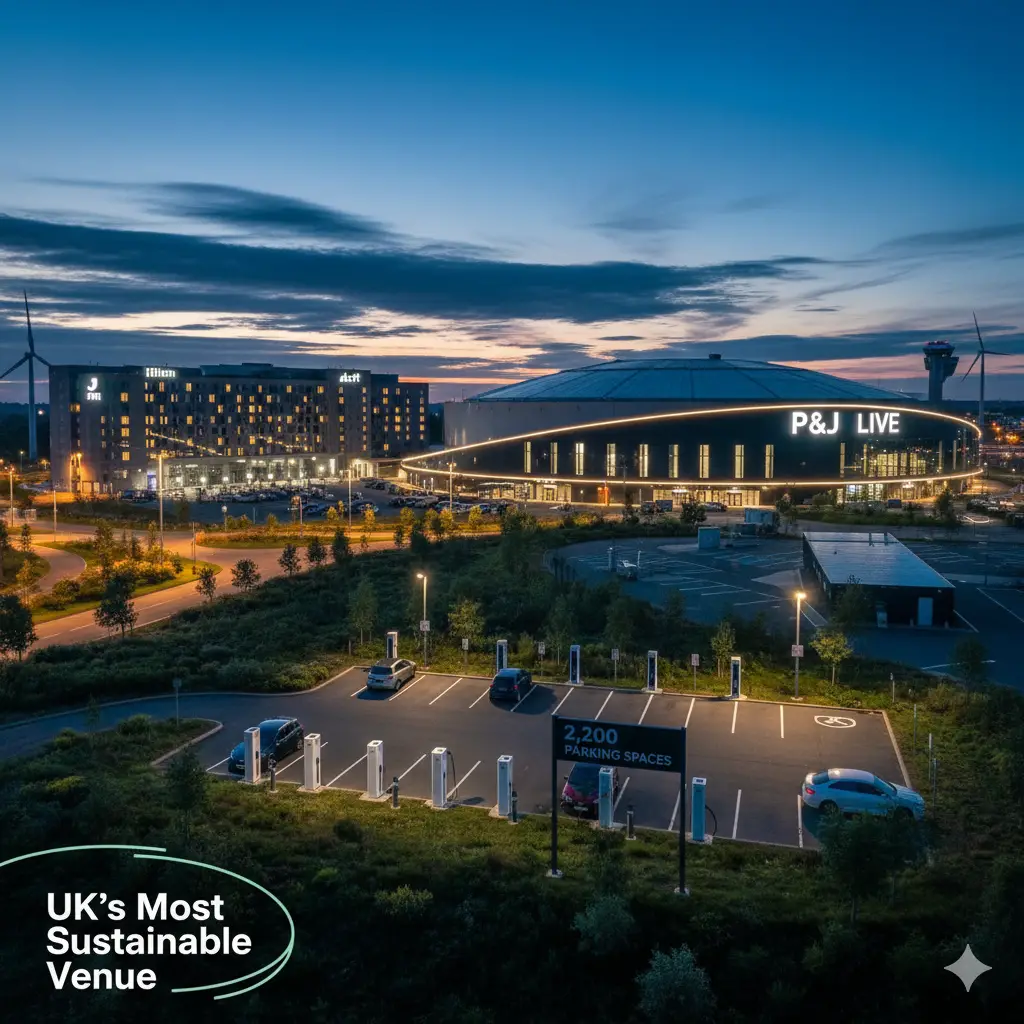
Located in the heart of Aberdeen, Scotland, P&J Live stands as a beacon of modern architecture, innovation, and environmental responsibility. Formerly known during its development as The Event Complex Aberdeen (TECA), it replaced the aging Aberdeen Exhibition and Conference Centre (AECC) in 2019. Today, it is recognized as the UK’s most sustainable absolute-zero venue and the largest events complex in the North of Scotland.
Whether you are an international delegate attending a major energy conference, a music fan catching a global superstar in the 15,000-capacity arena, or a local business owner hosting a corporate banquet, P&J Live offers a seamless, high-end experience that is unrivaled in the region.
The Evolution: From AECC to P&J Live
The journey of P&J Live began as a vision by Aberdeen City Council to future-proof the region’s events industry. The original AECC, founded in 1985, served the city well for decades but eventually lacked the capacity to attract the world's biggest tours and conventions.
In 2019, the £333 million P&J Live facility opened its doors near Aberdeen International Airport. This state-of-the-art complex provides four times the exhibition space of its predecessor, ensuring that Aberdeen remains a competitive global stage for industries ranging from technology and life sciences to arts and culture.
Unmatched Event Spaces and Capacity
P&J Live is designed with versatility at its core. With over 48,000 square meters of flexible space, the venue can be tailored to almost any requirement.
1. The P&J Live Arena
The crown jewel of the complex is the main arena. It features a maximum standing/seated capacity of 15,000, making it one of the largest indoor arenas in the United Kingdom.
Capacity: 10,000 all-seated; 15,000 mixed standing/seated.
Features: Automated retractable seating for rapid turnaround and a walkable rigging grid for complex production setups.
Notable Acts: The venue has already hosted legends like Michael Bublé, Elton John, and Lewis Capaldi.
2. Exhibition Halls
The venue houses three massive, multipurpose exhibition halls (Halls A, B, and C), each offering approximately 2,000 square meters of floor space. These halls are acoustically treated and feature drive-in access for large-scale trade shows and vehicle launches.
3. Conference and Meeting Suites
For corporate clients, the Baker Hughes Conference Hub provides a professional environment for knowledge sharing.
7 Conference Spaces: Ideal for plenaries and large seminars.
11 Meeting Rooms: Equipped with the latest smart room control systems and floor-to-ceiling windows.
Banqueting: Capacity to host up to 1,280 guests for prestigious black-tie awards and gala dinners.
Sustainability: The UK’s Greenest Venue
What truly sets P&J Live apart is its commitment to the planet. Holding a BREEAM Excellent Rating, the venue operates on a circular economy model.
The Innovative Energy Center
The site features its own dedicated energy center that powers the venue and its on-site hotels. Using an Anaerobic Digestion Plant, the facility processes local food and garden waste to generate biogas. This gas is then used to produce heating, cooling, and electricity.
Hydrogen Power: The center includes one of the UK’s largest hydrogen fuel cell installations.
Net Zero Pledge: P&J Live has signed the Net Zero Carbon Events pledge, aiming to halve emissions by 2030 and reach absolute zero by 2050.
World-Class Amenities and On-Site Hotels
P&J Live offers a "stay and play" experience with two integrated hotels directly on the campus:
Hilton Aberdeen TECA: A 4-star luxury hotel with 200 rooms, a full-service spa, and the Quarter House Grill.
Aloft Aberdeen TECA: A trendy, tech-forward 3-star hotel with 150 rooms, the WXYZ bar, and a vibrant social atmosphere.
Additional amenities include:
2,200 Parking Spaces: Including dedicated Electric Vehicle (EV) charging hubs.
Free High-Speed Wi-Fi: Available throughout the entire complex.
Accessibility: The venue is fully accessible, featuring level access, "Changing Places" facilities, and hearing assistance systems.
Economic Impact on the North of Scotland
P&J Live is more than just a building; it is a significant economic driver. Since its opening, it has contributed millions to the Scottish economy. Major international events like Offshore Europe bring tens of thousands of delegates to the city, filling hotels and supporting local supply chains. The venue is projected to generate over £63 million in net GVA for the Scottish economy over its first decade of operation.
Frequently Asked Questions
1. Where is P&J Live located?
P&J Live is located on East Burnside Road, Bucksburn, Aberdeen (AB21 9FX), conveniently situated near Aberdeen International Airport.
2. What is the total capacity of the P&J Live Arena?
The arena has a maximum capacity of 15,000 for standing/seated events and approximately 10,000 for all-seated configurations.
3. Is there parking available at the venue?
Yes, there are 2,200 on-site parking spaces, including disabled parking and electric vehicle charging points.
4. Can I stay overnight at the venue?
Yes, there are two on-site hotels: the 4-star Hilton Aberdeen TECA and the trendy 3-star Aloft Aberdeen TECA.
5. How does the venue support sustainability?
P&J Live uses an on-site energy center that converts food and garden waste into renewable energy (biogas) to power the facility.
6. Is the venue accessible for people with disabilities?
Absolutely. The venue features level access, accessible toilets on every floor, a Changing Places facility, and hearing loop systems.
7. How do I get to P&J Live via public transport?
The Stagecoach Jet 727 bus runs 24/7 from Aberdeen city center to the airport, stopping right at P&J Live. Dyce Train Station is also just 1.5 miles away.
8. Does the venue have on-site dining?
Yes, the venue features the 195 Bar & Grill, as well as various kiosks and the restaurants located within the Hilton and Aloft hotels.
9. Can I host a small meeting at P&J Live?
Yes, in addition to the large arena and halls, there are 11 flexible meeting rooms perfect for small board meetings or interviews.
10. What certifications does P&J Live hold?
The venue holds a BREEAM Excellent rating for sustainability and ISO 20121 certification for sustainable event management.
Contact Information
Address: East Burnside Road, Bucksburn, Aberdeen, Scotland, AB21 9FX
Phone: +44 01224 824824
Email: info@pandjlive.com
Website: www.pandjlive.com
Aberdeen
0 Views

Business Services
Apr 10, 2026
NSAC Leading North Sea Fishery Advice
The North Sea is more than just a body of water; it is a complex, high-stakes theater of economic activity, biological diversity, and international governance. As one of the world's most productive fishing grounds, it supports thousands of livelihoods from Aberdeen to Amsterdam. However, managing these shared resources requires a delicate balance between commercial viability and ecological preservation. At the heart of this balancing act is the North Sea Advisory Council (NSAC).
Established in 2004 and headquartered in the maritime hub of Aberdeen, Scotland, the NSAC serves as a critical bridge. It is the platform where the fishing industry, environmental NGOs, and scientific experts converge to shape the future of European maritime policy. This article provides an in-depth exploration of how the NSAC operates, its impact on the Common Fisheries Policy (CFP), and its role in securing the long-term health of our oceans.
The Genesis and Mission of NSAC
The North Sea Advisory Council was born out of a fundamental shift in European governance—the realization that top-down regulation often fails without local, practical input. Following the 2002 reform of the Common Fisheries Policy, Advisory Councils (ACs) were created to provide a regionalized approach to management.
A Mission of Consensus
The mission of the NSAC is clear: to ensure the sustainable management of marine resources. Unlike purely academic or industrial bodies, the NSAC operates through consensus-building. By bringing together diverse stakeholders—ranging from small-scale coastal fishers to international conservation groups—the council synthesizes conflicting viewpoints into actionable policy advice for the European Commission and relevant Member States.
Navigating the Common Fisheries Policy (CFP)
The Common Fisheries Policy is the legislative framework for managing European fishing fleets and conserving fish stocks. For the NSAC, the CFP is the primary "rulebook," but the council’s job is to ensure that these rules are workable on the deck of a fishing vessel and effective beneath the waves.
Key Pillars of Influence:
Maximum Sustainable Yield (MSY): The NSAC provides expert advice on setting Total Allowable Catches (TACs) that align with MSY targets, ensuring fish populations can regenerate.
The Landing Obligation: Often referred to as the "discard ban," this policy requires all catches of regulated species to be kept on board and counted against quotas. The NSAC works tirelessly to address the technical and socio-economic challenges of this transition.
Technical Measures: From mesh sizes in nets to acoustic deterrents for porpoises, the NSAC reviews the gear and methods used in the North Sea to minimize bycatch and habitat damage.
The Science-Policy Interface
One of the NSAC's greatest strengths is its relationship with scientific bodies like the International Council for the Exploration of the Sea (ICES). Policy advice is only as good as the data it sits on.
The NSAC acts as a translator. It takes complex ecological data—such as shifts in spawning grounds due to climate change—and merges it with the "on-the-water" knowledge of the fishing industry. This dual-stream evidence base ensures that recommendations are both scientifically robust and practically feasible.
Addressing Modern Challenges: Climate Change and Beyond
The North Sea is warming faster than many other parts of the global ocean. This environmental shift is causing species like Cod and Plaice to migrate further north, disrupting traditional fishing patterns.
Climate Adaptation Strategies
The NSAC is at the forefront of developing climate-resilient management strategies. This includes:
Dynamic Spatial Planning: Moving away from static "closed areas" to more flexible management that follows the fish.
Decarbonization: Helping the fishing fleet transition to low-carbon fuels and more energy-efficient gear.
Ecosystem-Based Management: Recognizing that fisheries cannot be managed in isolation from the broader marine environment, including the impact of offshore wind farms and carbon capture projects.
Stakeholder Engagement: The Secret to Stability
In the past, the "Fishing Wars" between industry and environmentalists were common. The NSAC has transformed this dynamic. By providing a professional, neutral forum, the council ensures that even the most contentious issues—such as Marine Protected Areas (MPAs)—are discussed with mutual respect and a focus on shared goals.
Representation Matters
The NSAC represents a broad spectrum of interests:
Fishing Industry: Shipowners, small-scale fishers, and trade unions.
Other Interest Groups (OIGs): Environmental NGOs (e.g., WWF, Greenpeace), consumer groups, and recreational anglers.
Member State Observers: Ensuring that the governments of the UK, Denmark, Germany, the Netherlands, France, and Belgium are aligned with the council's direction.
Socio-Economic Stability of Coastal Communities
Sustainability is not just about fish; it is about people. The NSAC recognizes that the North Sea supports a vital socio-economic fabric. From the processing plants in Peterhead to the markets in Esbjerg, the council’s advice directly impacts the economic stability of coastal regions.
By advocating for "Blue Foods"—sustainable, low-carbon protein from the sea—the NSAC helps maintain the cultural heritage and economic viability of fishing towns, ensuring they are not left behind in the green transition.
Operational Excellence: The Secretariat and Expert Panels
Operating from Aberdeen, the NSAC Secretariat manages a complex web of Working Groups and Focus Groups. These groups are where the "heavy lifting" happens:
Demersal Working Group: Focused on bottom-dwelling species like cod, haddock, and whiting.
Ecosystem Working Group: Integrating environmental protection and biodiversity goals.
Focus Groups: Rapid-response units that tackle specific issues like Brexit-related management or specific gear innovations.
Looking Ahead: The Future of North Sea Governance
As the world moves toward the 2030 Biodiversity targets, the NSAC’s role will only grow in importance. The emergence of the "Blue Economy"—which includes tourism, renewable energy, and aquaculture—means the North Sea is becoming a crowded space.
The NSAC will continue to advocate for the fishing industry’s right to operate within a healthy, protected ecosystem. Through continued collaboration with the European Commission and international partners, the council remains the "Vital Link" in the maritime governance chain.
Frequently Asked Questions
1. What exactly is the North Sea Advisory Council (NSAC)?
The NSAC is a non-profit organization that provides the European Commission and Member States with stakeholder-led advice on managing North Sea fisheries. It ensures that those directly affected by policies have a voice in their creation.
2. Where is the NSAC located?
The secretariat is based in Aberdeen, Scotland, specifically at the Marine Scotland Science building on Victoria Road.
3. Who can become a member of the NSAC?
Membership is divided into two categories: 60% represents the fishing industry (including owners and workers) and 40% represents other interest groups (including environmental NGOs and consumer groups).
4. How does the NSAC influence EU policy?
The council produces "Advice Papers" based on consensus. These reports are submitted to the European Commission, which is legally required to take this advice into account when drafting fisheries regulations.
5. Does the NSAC conduct its own scientific research?
While the NSAC does not conduct primary laboratory research, it synthesizes existing scientific data from bodies like ICES and combines it with practical industry experience to create policy recommendations.
6. What is the "Common Fisheries Policy" (CFP)?
The CFP is the set of rules for managing European fishing fleets and for conserving fish stocks. It aims to give all European fishing fleets equal access to EU waters and fishing grounds and allow fishermen to compete fairly.
7. How does the NSAC address climate change?
The NSAC monitors stock migrations and shifts in marine biodiversity caused by warming waters. It advises on adaptive management strategies that allow the industry to adjust to these changes while protecting vulnerable species.
8. Is the NSAC involved in Brexit-related issues?
Yes. Since the North Sea is shared between the EU, the UK, and Norway, the NSAC plays a key role in fostering international cooperation and providing advice on shared stock management post-Brexit.
9. What languages does the NSAC support?
To ensure inclusive dialogue across the North Sea region, the council supports English, French, German, Dutch, and Danish.
10. How can I access NSAC's advice reports?
All approved advice papers and meeting minutes are available to the public via the NSAC’s digital document archive on their official website: www.nsrac.org.
Aberdeen
0 Views

Business Services
Apr 10, 2026
Global Underwater Hub Leading the Blue Economy
The ocean remains one of the final frontiers for human innovation and economic expansion. As the world pivots toward sustainable energy and enhanced marine security, the role of subsea technology has never been more critical. At the heart of this transformation is the Global Underwater Hub (GUH), the UK’s leading trade and industry development body. Representing a sector valued at over £8 billion, GUH is the strategic catalyst connecting technical expertise, government policy, and global market opportunities.
The Evolution of Excellence: From Subsea UK to GUH
Founded in 2021, the Global Underwater Hub was born from the legacy of Subsea UK, an organization that championed the British subsea industry for nearly two decades. Under the leadership of Chief Executive Neil Gordon, GUH was established to broaden the scope of its predecessor. While the roots of the industry were firmly planted in the North Sea’s oil and gas sector, the future demanded a multi-sector approach.
Today, GUH serves as a "hub and spoke" model, with its headquarters in Aberdeen, Scotland, and regional presences across the UK. This structure ensures that small-to-medium enterprises (SMEs) in Newcastle, Bristol, and beyond have direct access to the same high-level market intelligence and networking opportunities as global tier-one contractors.
The Five Pillars of the Underwater Sector
The Global Underwater Hub operates at the intersection of five critical industries, collectively known as the Blue Economy:
Offshore Energy Transition: As the UK strives for net-zero, GUH facilitates the shift from traditional hydrocarbons to offshore wind, wave, and tidal energy.
Marine Defense Technology: Ensuring national security through advanced sonar, stealth systems, and subsea surveillance.
Underwater Robotics and AI: Pioneering the use of Autonomous Underwater Vehicles (AUVs) and Remotely Operated Vehicles (ROVs) for hazardous environment exploration.
Subsea Cables & Telecommunications: Supporting the infrastructure that powers the global internet and interconnector grids.
Aquaculture Infrastructure: Developing technology for sustainable fish farming and marine science.
Driving Innovation Through Market Intelligence
One of the primary value propositions for GUH members is access to exclusive Market Intelligence Reports. In an industry where environmental conditions are volatile and capital expenditure is high, data-driven decision-making is essential. GUH’s team of analysts provides deep-dive insights into global project pipelines, helping UK firms identify where the next multi-million-pound contracts will emerge.
International Trade Support
The UK's subsea expertise is a world-class export. GUH works closely with the Department for Business and Trade (DBT) to lead international trade missions. By lowering the barriers to entry for SMEs, GUH ensures that British engineering is utilized in the Gulf of Mexico, the West African coast, and the emerging offshore wind markets in Asia-Pacific.
Subsea Expo: The Global Stage for Underwater Engineering
Every year, Aberdeen transforms into the world’s subsea capital for Subsea Expo. Managed by GUH, this event is Europe’s largest subsea exhibition and conference. It serves as a vital platform for:
Technology Showcasing: From 3D seabed mapping to hydrogen storage prototypes.
Networking: Connecting investors with innovators.
Policy Debate: Hosting government officials to discuss the regulatory frameworks required for the energy transition.
Accelerating the Transition to Net-Zero
The climate crisis has placed the underwater industry at the forefront of the solution. The Global Underwater Hub is dedicated to accelerating the transition to net-zero. By repurposing decades of offshore oil and gas expertise, the UK supply chain is now building the foundations for massive floating offshore wind farms.
Technologies such as dynamic cabling, subsea substations, and carbon capture and storage (CCS) are all being driven by GUH member companies. The Hub acts as a bridge, ensuring that the skills learned in the 20th-century energy era are applied to the 21st-century green revolution.
Business Growth and Consultancy: A Lifeline for SMEs
Growth in the subsea sector requires more than just technical brilliance; it requires strategic positioning. GUH offers Business Growth Consultancy to help companies diversify their portfolios. A firm that specialized in oil-well maintenance might, with GUH’s guidance, pivot to inspecting offshore wind foundations using the same robotic platforms.
Member Benefits and Amenities
Members of the Global Underwater Hub gain access to:
Professional Meeting Rooms: High-spec facilities in Aberdeen for hosting international clients.
Member Lounge: A collaborative space for spontaneous networking.
Digital Industry Database: A comprehensive directory of the UK subsea supply chain.
Leadership and Vision
Under Neil Gordon’s leadership, the Hub has grown to employ a dedicated team of 25-50 specialists. The organization holds ISO 9001 certification, reflecting its commitment to quality management and operational excellence. By collaborating with associations like RenewableUK and Scottish Renewables, GUH ensures a unified voice for the industry when engaging with policymakers.
Technical Specialization: Underwater Robotics and AI
A significant focus for GUH in 2024 and beyond is the integration of Artificial Intelligence in subsea operations. Managing underwater assets is notoriously expensive and dangerous for human divers. GUH is fostering a cluster of excellence in Underwater Robotics, where AI-driven sensors can predict equipment failure before it happens, saving operators billions in maintenance costs and reducing the carbon footprint of repair vessels.
The Future of the Blue Economy
The global blue economy is projected to be worth $3 trillion by 2030. For the UK to capture its share, a coordinated effort is required. The Global Underwater Hub provides that coordination. Whether it is through pioneering aquaculture technology to feed a growing population or securing the subsea cables that facilitate global finance, GUH is the engine room of the UK’s maritime future.
Frequently Asked Questions
1. What is the Global Underwater Hub (GUH)?
GUH is the leading trade body and industry development organization representing the UK’s £8 billion underwater sectors, providing market intelligence, networking, and trade support.
2. How did GUH originate?
GUH evolved in 2021 from Subsea UK, expanding its remit from primarily oil and gas to include offshore wind, defense, aquaculture, and marine science.
3. Where is the Global Underwater Hub headquartered?
The main office is located at 1 Berry Street, Aberdeen, Scotland, AB25 1HF, near the Aberdeen Arts Centre.
4. Who is the Chief Executive of GUH?
Neil Gordon is the Founder and Chief Executive, having previously led Subsea UK for many years.
5. What sectors does the Global Underwater Hub represent?
GUH represents offshore renewables, oil and gas, defense, subsea cables, aquaculture, and marine science.
6. What is Subsea Expo?
Subsea Expo is the UK's premier subsea exhibition and conference, organized annually by GUH in Aberdeen to showcase the latest industry innovations.
7. How does GUH support small businesses (SMEs)?
GUH provides SMEs with market intelligence reports, access to tier-one contractors, business growth consultancy, and international trade opportunities.
8. Does GUH help with the energy transition?
Yes, a core part of GUH’s mission is to help companies pivot their technology and skills from oil and gas to renewable energy sources like offshore wind and tidal power.
9. How can I become a member of GUH?
Businesses can apply for membership via the official website (www.globalunderwaterhub.com) to gain access to exclusive reports, meeting rooms, and networking events.
10. What are the working hours for the GUH helpdesk?
The GUH helpdesk operates Monday to Friday, from 9 AM to 5 PM. You can contact them at +44 (0)1224 535555.
Business Quick Reference
Business Name: Global Underwater Hub (GUH)
Address: 1 Berry Street, Aberdeen, AB25 1HF, UK
Phone: 01224 535555
Email: info@globalunderwaterhub.com
Website: www.globalunderwaterhub.com
Specialization: Subsea Engineering, Energy Transition, Marine Robotics.
Social Media: LinkedIn
Aberdeen
0 Views
Article Posting
Sign In to Submit Your Content
Educational Services
Apr 10, 2026
Robert Gordon University A Gateway to Professional Success
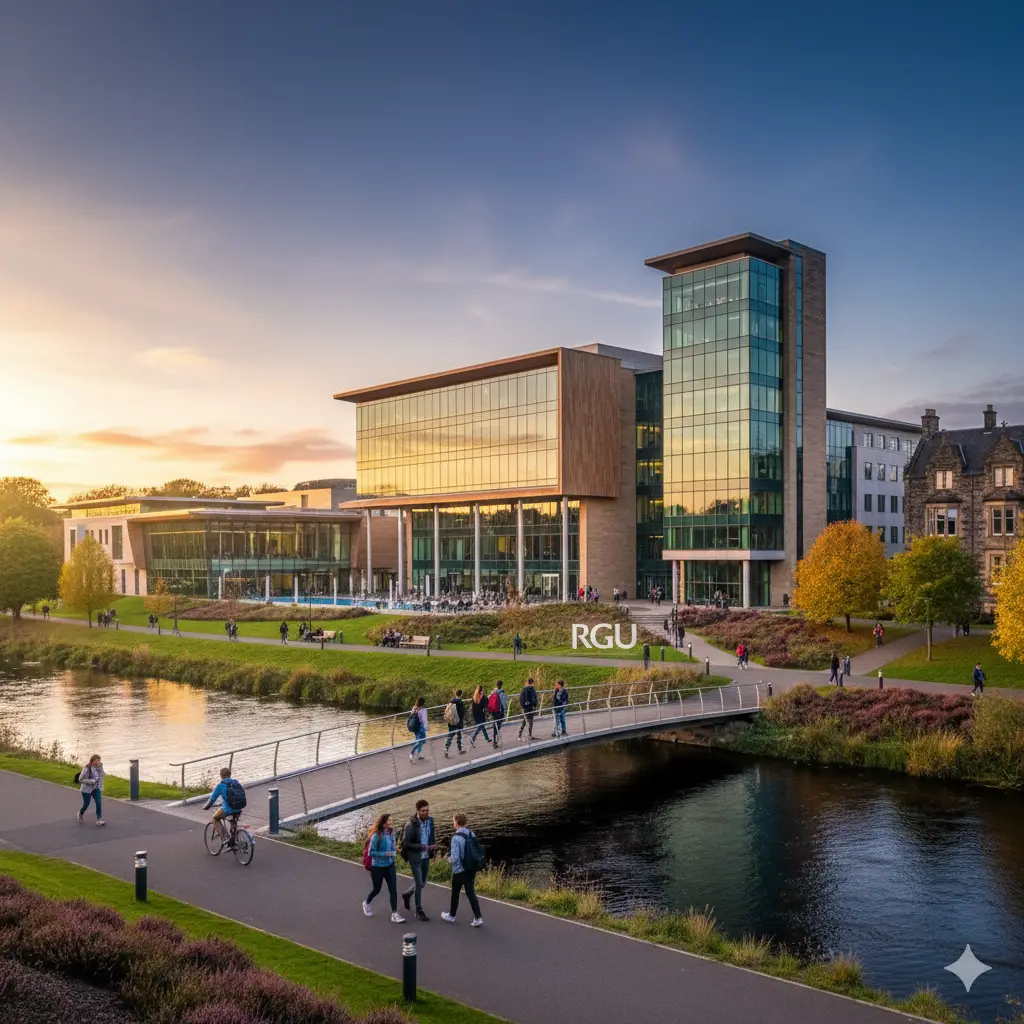
Robert Gordon University (RGU) stands as a titan of modern higher education in the United Kingdom. Nestled in the historic yet vibrant city of Aberdeen, Scotland, RGU has evolved from a 18th-century educational trust into a globally recognized institution. With a primary mission to transform people and communities through high-quality education and research, the university serves as a vital contributor to the economic and social fabric of Scotland and beyond.
Whether you are a prospective undergraduate student looking for your first step into the professional world, or a seasoned professional seeking an executive MBA, RGU provides a diverse range of disciplines including Business, Engineering, Health, Design, and Computing.
Historical Roots: From 1750 to University Status
The story of RGU begins in 1750 with the founding of Robert Gordon’s Hospital. Established through a bequest from Robert Gordon, a wealthy merchant and graduate of Marischal College, the institution originally served as a residential school for boys. Over the centuries, the institution adapted to the Industrial Revolution’s demands for technical and scientific training.
By 1881, it merged with the Aberdeen Mechanics’ Institution to become Robert Gordon’s College. The transition to a modern higher education provider accelerated in 1965 when it became the Robert Gordon’s Institute of Technology (RGIT). Finally, in 1992, full university status was granted, marking the birth of Robert Gordon University as we know it today. This heritage of practical, merchant-led pragmatism remains at the heart of RGU’s DNA.
The Garthdee Campus: Innovation by the River Dee
RGU’s physical presence is defined by its stunning Garthdee Campus. Widely regarded as one of the most beautiful riverside campuses in the UK, it represents an investment of over £120 million. The campus is a masterclass in modern architecture, featuring buildings designed by world-renowned architects like Sir Norman Foster (who designed the Aberdeen Business School).
Key Campus Highlights:
The Sir Ian Wood Building: A hub for engineering, computing, and pharmacy, featuring high-tech labs that simulate industrial environments.
The Scott Sutherland School of Architecture: One of the oldest of its kind in the UK, fostering creative excellence in the built environment.
Gray’s School of Art: An inspirational space for fine art, design, and contemporary media.
The Library Tower: A striking green-glass landmark that houses four floors of academic resources and quiet study zones.
Industry Links and Graduate Employability
If there is one metric that defines RGU, it is employability. For several years, RGU has been ranked as the top university in Scotland and among the top in the UK for graduate prospects.
The "Placement Power" Unlike many traditional universities, RGU embeds professional placements into the vast majority of its degree programs. Whether it is a year-long internship in the energy sector or clinical rotations in the NHS, students gain "real-world" experience before they even graduate. The university maintains strategic partnerships with global giants such as Shell, BP, Deloitte, KPMG, and the NHS, ensuring that the curriculum is co-created with industry leaders.
Academic Excellence: Schools and Specializations
RGU is organized into several high-performing academic schools, each with specific accreditations:
Aberdeen Business School (ABS): Proudly holding AACSB accreditation, a distinction held by only the top 5% of business schools globally. It offers specialized courses in Business Analytics, Finance, and Sustainability.
School of Engineering: Located in the energy capital of Europe, this school is a leader in Oil & Gas, Renewables, and Drilling Engineering.
School of Nursing, Midwifery and Paramedic Practice: Consistently high-ranked for student satisfaction and clinical training quality.
The School of Computing: Focused on the future, with specializations in Artificial Intelligence, Cyber Security, and Data Science.
Research and Innovation
RGU is not just a teaching institution; it is a center for impactful research. The university focuses on "Research with Purpose," targeting areas like renewable energy transition, digital health, and social inclusion. Through the RGU Business Innovation Centre, the university also supports student startups, providing funding, coaching, and incubation space for the next generation of entrepreneurs.
Student Life and Amenities
Beyond the classroom, life at RGU is balanced by a strong community spirit.
RGU Sport: A world-class facility featuring a 25m swimming pool, climbing walls, and three extensive gyms. All students receive free membership.
The Student Union (RGU:Union): A vibrant hub for over 40 sports clubs and numerous societies ranging from gaming to debating.
Student Support Services: From "AskRGU" for administrative queries to dedicated counseling and disability support, the university ensures no student is left behind.
Global Reach and Inclusion
With over 16,000 students from more than 150 countries, RGU is a truly international community. The university supports global recruitment and offers various international scholarships to ensure talented students from all backgrounds can access Scottish higher education.
Sustainability and Future Vision
RGU is committed to becoming a "Nature Positive" campus. From its commitment to the UN Sustainable Development Goals to its research into the North Sea's energy transition, the university is actively shaping a greener future.
Frequently Asked Questions
1. What is RGU best known for?
RGU is best known for its exceptional graduate employability rates and its strong ties to global industries, particularly in the Energy, Health, and Business sectors. Its Aberdeen Business School is AACSB accredited.
2. Where is Robert Gordon University located?
The university is located on the Garthdee Campus in Aberdeen, Scotland, situated alongside the picturesque River Dee.
3. When did RGU receive university status?
While its origins date back to 1750, Robert Gordon University was officially granted university status in 1992.
4. Does RGU offer scholarships for international students?
Yes, RGU offers several scholarships, including the International Merit Scholarship, which can provide up to £3,000 toward tuition fees for eligible students.
5. What are the standard working hours for RGU administration?
Standard administrative hours are Monday to Friday, 9 AM – 5 PM. However, campus facilities like the library and certain labs are accessible 24/7 for students.
6. How do I apply for a course at RGU?
Undergraduate applications are typically made through UCAS. Postgraduate and international students can often apply directly via the RGU website or through authorized agents.
7. What facilities are available at RGU Sport?
RGU Sport includes a 25-meter swimming pool, a climbing wall, bouldering room, three gyms, and a variety of fitness classes.
8. Is Robert Gordon University a private or public university?
RGU is a public research university. It is also a registered charity (SC013781).
9. What payment methods does RGU accept for tuition?
RGU accepts bank transfers, credit/debit cards, and payments through its secure online portal, Flywire.
10. How does RGU support student careers?
The RGU Careers and Employability Service offers one-to-one appointments, CV workshops, interview prep, and access to an exclusive vacancy database called eHub.
Contact Information
Address: Garthdee House, Garthdee Road, Aberdeen, AB10 7QB, Scotland, UK.
Admissions Phone: +44 (0)1224 262728
Website: www.rgu.ac.uk
Email: admissions@rgu.ac.uk
Aberdeen
0 Views

Educational Services
Apr 10, 2026
University of Aberdeen A Global Hub of Academic Excellence
Founded in 1495 by William Elphinstone, the University of Aberdeen stands as the fifth oldest university in the United Kingdom and a cornerstone of academic heritage in Scotland. For over 525 years, this institution has evolved from a medieval center of learning into a world-renowned research university that consistently ranks among the top 20 in the UK.
Located in the historic King's College area of Old Aberdeen, the university offers a unique juxtaposition of ancient architecture and 21st-century cutting-edge facilities. Whether you are an aspiring doctor, a future lawyer, or an engineer looking to lead the global energy transition, Aberdeen provides a transformative educational experience rooted in "The Aberdeen Family" spirit.
Academic Excellence and Global Rankings
The University of Aberdeen is not just a place of history; it is a high-performing powerhouse in modern education.
National and International Standing
In recent years, the university has seen a meteoric rise in league tables:
Guardian University Guide 2025: Ranked #12 in the UK.
Times/Sunday Times Good University Guide 2025: Ranked #15 in the UK.
QS World University Rankings 2025: Positioned at #236 globally, placing it in the top 1.6% of universities worldwide.
Student Satisfaction: Consistently ranked in the top 10 in the UK for student satisfaction (National Student Survey).
Subject-Specific Strengths
The university excels across diverse disciplines. Notably, its Medicine program has recently been ranked 1st in the UK by The Guardian, while Theology and Religious Studies holds the top spot for research power. Other leading subjects include:
Anatomy and Physiology: #2 in the UK.
Anthropology: #4 in the UK.
English and Law: Consistently within the UK top 15.
World-Leading Research with Global Impact
Research at Aberdeen is defined by its commitment to solving real-world challenges. With 77% of its research classified as "world-leading" or "internationally excellent" (REF 2021), the university focuses on five interdisciplinary challenges:
Energy Transition: Leveraging its location in the "Energy Capital of Europe," Aberdeen leads research into renewable energy, carbon capture, and the transition away from fossil fuels.
Health, Nutrition, and Wellbeing: Home to one of the largest health campuses in Europe (Foresterhill), the university conducts life-saving research in diabetes, heart disease, and medical imaging (the MRI was co-invented here).
Data and Artificial Intelligence: Exploring how AI can improve healthcare diagnostics and social infrastructure.
Environment and Biodiversity: Protecting marine life and terrestrial ecosystems through the School of Biological Sciences.
Social Inclusion and Cultural Diversity: Addressing global inequalities and preserving cultural heritage, including significant work in Archaeology and Sociology.
The Student Experience: Life in the Granite City
Choosing Aberdeen means joining a vibrant international community of students from over 130 countries.
Campus Facilities and Amenities
The university offers a range of modern amenities designed for student success:
The Sir Duncan Rice Library: An architectural marvel housing seven floors of resources and 1,200 study spaces with panoramic views of the North Sea.
Science Teaching Hub: A state-of-the-art facility opened in 2022 for chemistry, medical, and biological sciences.
Aberdeen Sports Village: Olympic-standard facilities including a 50m pool, indoor athletics water, and a premier gym.
Student Support: Comprehensive services including a 24/7 Infohub, career mentoring, and mental health counseling.
Living in Aberdeen
Aberdeen is a city that offers the perfect blend of cosmopolitan life and natural beauty. From the golden sands of Aberdeen Beach to the nearby Cairngorms National Park, students have endless opportunities for exploration. The campus itself is a "landmark" near Seaton Park, providing lush green spaces for relaxation.
Employability and Industry Partnerships
A degree from the University of Aberdeen is a gateway to a successful career.
Graduate Outcomes: 97.9% of graduates enter employment or further study within 15 months of graduation.
Highest Starting Salaries: Aberdeen graduates consistently earn among the highest starting salaries in Scotland and the UK.
Professional Accreditations: Many programs are accredited by global bodies such as AACSB, ICAS, and the Energy Institute, ensuring students are industry-ready.
Specialized Programs and Online Learning
The university has adapted to the digital age by offering a vast array of Online Learning and Executive Education programs. This allows professionals worldwide to benefit from Aberdeen’s expertise in:
Renewable Energy Engineering
International Commercial Law
Data Science and AI
MBA and Business Management
Practical Information for Applicants
Business Name: University of Aberdeen
Headquarters: Aberdeen, Scotland, United Kingdom
Founder: William Elphinstone (1495)
Contact: +44 (0)1224 272000 | admissions@abdn.ac.uk
Website: www.abdn.ac.uk
Physical Address: King's College, Aberdeen, Scotland, AB24 3FX
Supported Languages: English, Gaelic
Payment Methods: Bank Transfer, Credit/Debit Cards
Frequently Asked Questions
1. Is the University of Aberdeen a good university?
Yes, it is consistently ranked among the top 20 universities in the UK and the top 250 in the world. It holds a TEF Gold award for teaching excellence and is a member of the prestigious group of ancient universities.
2. What are the most popular courses at the University of Aberdeen?
The university is world-renowned for Medicine, Law, Engineering (particularly Petroleum and Renewable Energy), Business, and Marine Biology.
3. What are the entry requirements for international students?
Entry requirements vary by program, but typically include a strong academic record (e.g., a UK 2:1 equivalent) and English language proficiency (IELTS 6.5 or equivalent).
4. Are there scholarships available for international students?
Yes, the university offers various funding opportunities, including the Aberdeen Global Scholarship, which provides tuition fee discounts for eligible self-funded international students.
5. How old is the University of Aberdeen?
It was founded in 1495, making it the fifth oldest university in the English-speaking world and the third oldest in Scotland.
6. What is the campus like?
The main campus in Old Aberdeen is famous for its historic King's College Chapel and the modern Sir Duncan Rice Library. It is a compact, walkable campus with excellent amenities like the Aberdeen Sports Village.
7. Does the university help with job placements?
Absolutely. The Careers and Employability Service provides lifelong support, including career coaching, internship opportunities, and networking events with global industry partners.
8. Can I study online at the University of Aberdeen?
Yes, the university offers over 100 online postgraduate programs and short courses designed for flexible, remote learning.
9. What is the cost of living in Aberdeen for a student?
Aberdeen is generally more affordable than major UK cities like London or Edinburgh. Students should budget for accommodation, food, and personal expenses, with many university-owned halls offering competitive rates.
10. How do I apply to the University of Aberdeen?
Undergraduate applications are typically made through UCAS. Postgraduate applications are submitted directly via the university’s online application portal on their official website.
The University of Aberdeen continues to be a beacon of "open to all" education. By merging its 500-year history with a forward-looking approach to global challenges like the energy transition and health inequality, it offers a world-class environment for students to grow, innovate, and lead. If you are looking for an institution that values both tradition and transformation, Aberdeen is your "True North."
Aberdeen
0 Views
- Prev
- 1
- Next
Share This Page
My Page
Scan QR to open
Barcode