
Articles for Rank Locally UK
Explore 3 business insights in all locations
Insider
Share Your Business Story
Reach our community by sharing your business insights, expert guides, or success stories on the world's most trusted local platform.
Write Your Article Now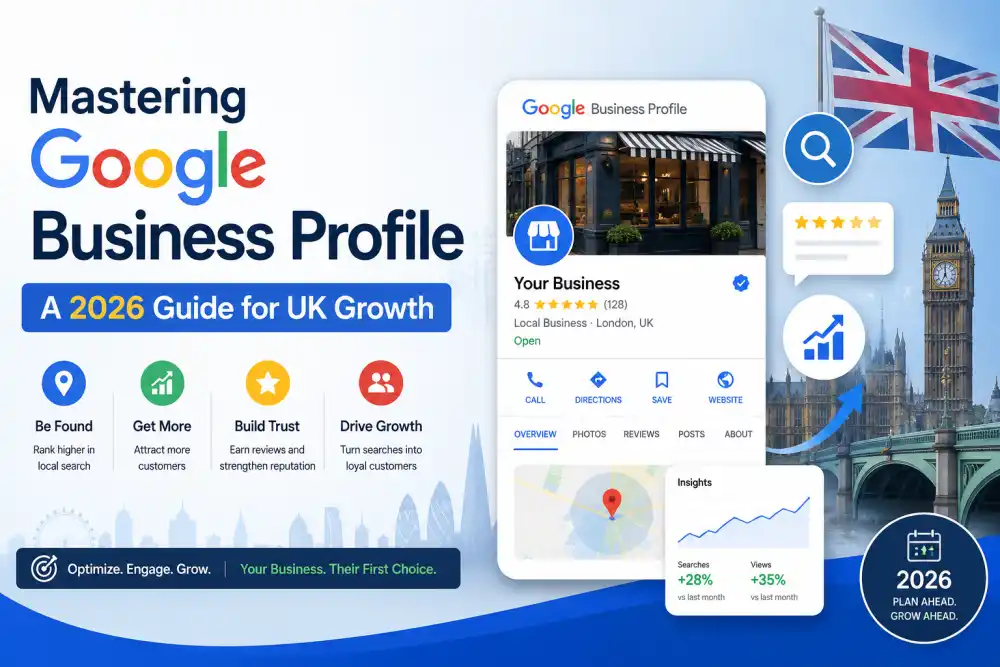
Advertising Agencies
Jun 27, 2026
Mastering Google Business Profile: A 2026 Guide for UK Growth
If the Google Map Pack is the most valuable real estate in the digital world, your Google Business Profile (GBP) is the deed to that land. In 2026, for the average UK small business, your website is no longer the first point of contact—your GBP is.
At Rank Locally UK, we see businesses every day that have excellent websites but remain invisible in the Map Pack. Why? Because they treat their GBP as an afterthought. This guide will show you how to treat your profile as your primary storefront, optimized for the AI-driven, Zero-Click economy.
The Evolution of the "Business Profile" in 2026
We are living in the age of "Discovery Search." Consumers aren't just searching for brand names; they are searching for solutions ("Emergency Plumber," "Vegan Cafe," "Dentist Open Now"). Google’s AI acts as a concierge, matching these needs with the most relevant, proximate, and trustworthy business.
To compete in 2026, you must stop thinking of your GBP as a "listing" and start thinking of it as a live, interactive ecosystem.
Core Pillars of GBP Optimization
To rank consistently, you must address the three core pillars that AI algorithms prioritize:
Relevance: How well does your profile match the user's intent?
Distance: Are you physically close to the user?
Prominence: Do you have the trust signals (reviews, website, mentions) to back up your claim?
Perfecting Your Business NAP and Categories
"NAP" stands for Name, Address, and Phone Number. In 2026, even a minor discrepancy between your GBP and your Technical SEO implementation can trigger a trust deficit with Google’s AI.
Category Precision: Your primary category is the single biggest factor for relevance. If you are a "Dentist," do not just choose "Healthcare." Use the most specific category available. Utilize secondary categories to capture related searches (e.g., "Cosmetic Dentist," "Emergency Dental Service").
Service Area Management: If you are a mobile business (like a locksmith or gardener), define your service areas by specific London boroughs or postcode districts, not just "London." This helps you appear for hyper-local queries.
Review Velocity and "Keyword-Rich" Responses
Reviews are no longer just for social proof; they are a major ranking factor for "Prominence." However, the strategy has changed. In 2026, the content of the review matters as much as the rating.
The Art of the Solicitation
Don't just ask for a 5-star review. Ask for a descriptive one. "Would you mind mentioning the specific service we helped you with today?"
When a customer writes, "The artisan sourdough from The Bakery in Hoxton was fantastic," you have just gained a powerful keyword signal for your local area.
Response Strategy
Reply Promptly: AI models track the latency between a review and your response.
Include Keywords Naturally: If a customer praises your "boiler leak repair," your response should be: "Thank you! We pride ourselves on being the go-to team for boiler leak repairs in Islington." This reinforces the connection between your brand and the specific service keyword.
The Power of "GBP Updates" and "Products"
Many businesses fail to use the "Updates" and "Products" features, which are free real estate to signal your activity to Google.
Product Posts as Content: If you sell physical items, use the "Products" tab to showcase your inventory. Each product card is a mini-landing page for the AI to crawl.
The "Update" Cycle: Treat your GBP like a social media feed. Post 2-3 times a week. Share photos of your team, a completed project in a specific borough, or a link to a new service page on your website. This signals "Recency," a key metric in the 2026 search algorithm.
Advanced GBP Features: Q&A and Messaging
Pre-populating the Q&A
The "Questions & Answers" section is often neglected. Use it to your advantage. Log in as the business owner and ask yourself the questions customers typically have: "Do you offer emergency call-outs in N1?" then provide the answer. This is gold for the AI when it’s trying to generate a "Featured Answer" for a user's voice search.
Enabling Booking and Messaging
If you aren't using Google's direct booking integration or the chat feature, you are losing conversions. In the Zero-Click era, if a user has to leave the search result page to call or book, they might just click the competitor who made it easier. Contact us to discuss seamless booking integration.
Case Study: The 30% Growth of "London Heights Property Maintenance"
"London Heights," a property maintenance firm, was stuck on Page 2 for "General Contractor." They had a professional website, but their Map Pack presence was stagnant.
The Rank Locally Strategy:
Category Audit: We found they had misidentified their primary category. We shifted them to "Property Maintenance Service" and added specific sub-categories.
Review Campaign: We launched a SMS-based review strategy, specifically prompting satisfied clients to mention their borough (e.g., "Great service in Hackney").
GBP Updates: We started posting weekly before/after photos of their renovations, explicitly tagging the project location.
The Result: Within four months, they moved into the top 3 of the Map Pack for three key boroughs. Their "Discovery" search volume grew by 30%, and they stopped needing to pay for expensive "General Contractor London" ads.
FAQ
1. Is it better to have one big website or multiple location pages for my GBP?
You need one main website, but you should create distinct location-specific landing pages that link to your GBP for each of your key service areas.
2. Can I delete a negative review?
No, you cannot delete them, but you can flag them if they violate Google’s policies. If the review is legitimate, the best strategy is a professional, polite, and constructive response.
3. Does adding more photos actually help my ranking?
Yes. Google’s AI performs image recognition. High-quality photos of your shop, your team, or your finished work help the algorithm confirm your location, your services, and your industry.
4. How long does it take for GBP changes to reflect in rankings?
Small changes can reflect within 24-48 hours. Major changes, such as category shifts or significant review surges, may take 2-4 weeks to stabilize in the Map Pack.
5. What is the most common mistake UK businesses make on GBP?
Inconsistency. Having a different address or phone number on your website, your GBP, and your social media accounts destroys trust with Google.
6. Does my social media activity affect my GBP ranking?
Directly? No. Indirectly? Yes. Active social media drives traffic and brand awareness, which creates the "Prominence" signals that improve your Map Pack authority.
7. Should I use emojis in my GBP posts?
Use them sparingly. They can draw the eye, but ensure your text remains professional and keyword-focused.
8. Is it worth paying for Google Ads if I have a strong GBP?
They serve different purposes. A strong GBP captures organic local demand. Google Ads can help you "leapfrog" into visibility while you are still building your organic authority.
9. Can I manage multiple business locations from one account?
Yes, use the "Business Groups" feature in your Google Business Profile dashboard to manage multiple locations efficiently.
10. How can Rank Locally UK help me specifically with my GBP?
We offer full GBP audits, ongoing optimization, review management strategies, and technical integration to ensure your profile is the strongest in your local market.
Future-Proofing Your Profile
The goal is to provide the AI with so much data—reviews, photos, Q&A, and service descriptions—that it can answer any question about your business without the user ever leaving the interface. When you become the immediate answer, you become the only choice.
Rank Locally UK is here to ensure that when your neighbors search, they find you.
London
10 Views
Advertising Agencies
Jun 27, 2026
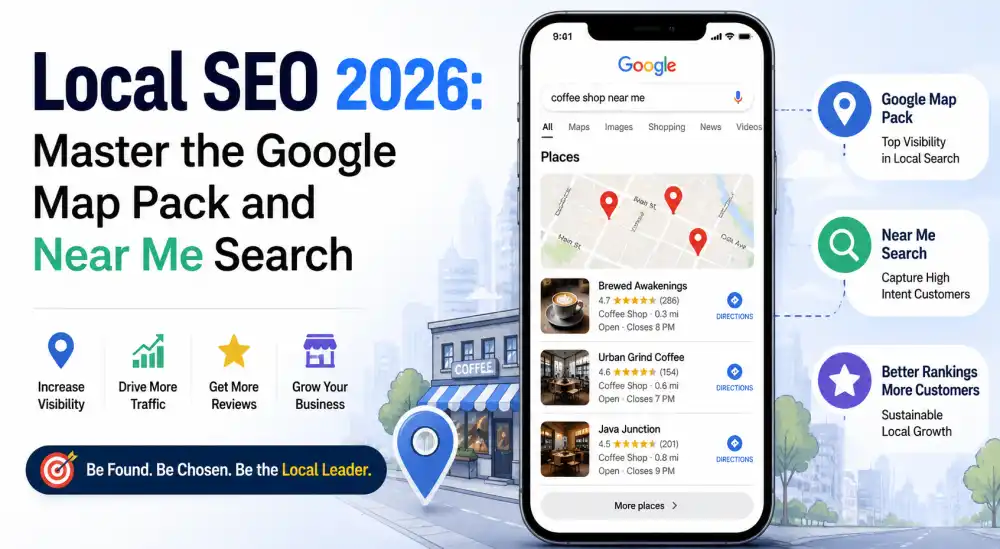
Local SEO 2026: Master the Google Map Pack and Near Me Search
In the rapidly evolving digital landscape of 2026, the traditional "Search Engine Results Page" (SERP) as we once knew it has transformed. For UK small businesses—from boutique bakeries in Shoreditch to independent plumbers in Islington—the game has moved beyond simply "having a website." We are now living in the era of the "Near Me" Revolution, powered by conversational AI, hyper-local precision, and the dominance of the Google Map Pack.
At Rank Locally UK, we’ve analyzed the data: 2026 is the year of the Zero-Click Search. If your business isn't the immediate answer to an AI’s query, you're invisible. This guide breaks down exactly how to navigate this new frontier.
The "Near Me" Revolution: How AI-powered Search is Changing the Game
Gone are the days when a customer would type "plumber London" into a search bar and scroll through ten blue links. In 2026, the UK consumer uses "Ask Maps" or conversational AI interfaces on their smartphones and smart home devices.
The Rise of "Ask Maps" and Conversational Search
Google’s AI-integrated "Ask Maps" has turned search into a dialogue. A user now says: "Hey Google, find me a Gas Safe registered plumber near City Road that is open now and has fixed a boiler leak in the last week."
This shift means your Local SEO strategies must be more than just keywords; it must be Contextual Data. AI models prioritize:
Recency of Activity: Are you posting updates to your Google Business Profile?
Specific Service Verification: Does your profile explicitly mention "boiler leak repair" in recent reviews or service lists?
Trust Signals: Are your credentials (like Gas Safe or Checkatrade) digitally linked and verifiable?
Why Tradespeople Must Pivot
For local tradespeople, AI-powered search is a double-edged sword. It filters out the "jacks-of-all-trades" and highlights the specialists. To win in this environment, your digital footprint must provide "Schema Markup" that tells the AI exactly what you do, where you do it, and what your customers think of that specific service. Learn more about our Schema implementation services here.
Hyper-Local Keyword Strategy: Why "SEO London" is a Waste of Money
If you are a local business, trying to rank for a keyword like "SEO London" or "Plumber London" is like trying to shout in a crowded stadium. It is expensive, highly competitive, and—most importantly—it’s inefficient.
The Fall of the "Broad Keyword"
London is not one market; it is a collection of hundreds of micro-markets. A person in Hoxton looking for a coffee shop is highly unlikely to travel to Richmond. Search engines know this. In 2026, "Geofencing" in search is so precise that the results shown to someone on one end of Old Street are different from those shown to someone at the other end.
The Power of the Borough: SEO Hoxton vs. SEO Islington
By narrowing your focus to Hyper-Local Keywords, you achieve three things:
Lower Cost Per Acquisition (CPA): It is significantly cheaper to rank for "Emergency Plumber Islington" than "Plumber London."
Higher Intent: A user searching for a specific borough is usually ready to book or buy now.
Authority in the "Local Cluster": When you dominate a specific area like Hoxton, Google views you as the "Local Hero," making it easier to expand your "radius of dominance" into neighboring areas like Shoreditch or Clerkenwell.
Rank Locally UK Tip: Don't just list your city. Create dedicated landing pages for every postcode district you serve (e.g., EC1V, N1, SE1).
Zero-Click Searches: Winning the Map Pack Without the Click
A "Zero-Click Search" occurs when the user finds exactly what they need on the search results page—address, phone number, reviews, or even a booking button—without ever clicking through to your actual website.
The Google Map Pack: Your New Storefront
In 2026, the Google Map Pack (the "3-Pack") is the most valuable real estate on the internet. It is the first thing users see, and often the only thing. To win here, your Google Business Profile (GBP) must be treated as your primary website.
Key Strategies for Zero-Click Dominance:
Direct Bookings: Integrate your scheduling software directly into your Google profile. If a customer can book a table or a consultation without leaving the search page, they will choose you over a competitor who requires a website visit.
Inventory Integration: For retail businesses, your live stock should be visible on your profile via "Pointy" or local inventory feeds.
Q&A Optimization: Pre-populate your "Questions & Answers" section with common inquiries. This provides the AI with the data it needs to answer user queries instantly.
Winning the "Featured Snippet"
When a user asks a question, Google often pulls a "Snippet" of text from a website to answer it. By structuring your content in a Q&A format—using clear, concise language—you can become the "Featured Answer," even if you aren't the #1 ranked organic site.
Case Study: The 40% Increase – How a London Bakery Cracked the Code
Let’s look at a real-world application of these strategies. "The Artisan Crust," a small bakery near Old Street, was struggling with foot traffic despite having a high-quality product.
The Challenge: They were invisible to the thousands of office workers commuting through Old Street Station daily. They had a website, but it was buried under national chains like Greggs or Pret A Manger.
The Rank Locally Strategy:
Hyper-Local Focus: We stopped targeting "Bakery London" and started targeting "Sourdough Hoxton" and "Best Coffee Old Street."
Visual GMB Updates: We implemented a strategy of daily "Product Posts" on their Google Business Profile—high-resolution photos of fresh pastries coming out of the oven at 8:00 AM daily.
Local "Near Me" Signal Boosting: We optimized their profile for "Breakfast near Old Street Station," specifically targeting the "commuter intent" keyword cluster.
Review Velocity: We set up a system to encourage customers to leave reviews mentioning specific products (e.g., "The almond croissant is the best in Shoreditch").
The Result: Within three months, "The Artisan Crust" saw a 40% increase in verified foot traffic. Their Google Business Profile insights showed that 70% of their new customers found them through "Discovery" searches (searching for a category, not the brand name) and never clicked on their website—they simply clicked "Directions."
FAQ
1. What is the most important ranking factor for local businesses in 2026?
Proximity and relevance are king. Google prioritizes businesses that are physically closest to the searcher and have the most verifiable "local signals" (reviews, accurate NAP data, and active GMB updates).
2. Does my website still matter if I focus on my Google Business Profile?
Absolutely. Your website acts as the "source of truth" for the AI. If your GBP says you are a plumber, but your website doesn't mention plumbing services, Google will be less likely to trust your profile.
3. What is "Zero-Click" search, and is it bad for my traffic?
It means the user gets their answer without visiting your site. While website traffic might dip, conversion usually rises because the user has already received the information they needed to make a decision.
4. How often should I post to my Google Business Profile?
Consistency is better than frequency. We recommend at least 2-3 updates per week. These can be offers, news, photos of completed work, or answers to customer questions.
5. Should I reply to every review, even the bad ones?
Yes. Responding to negative reviews professionally shows potential customers that you care about service and resolution. It also provides an opportunity to include keywords naturally in your reply.
6. What is Schema Markup, and do I need it?
Schema is "behind-the-scenes" code that helps search engines understand your content better. For local businesses, it tells Google your address, opening hours, and service areas, which is vital for appearing in the Map Pack.
7. Can I rank in a different town or borough than where my business is based?
It is extremely difficult to rank in a location where you do not have a physical presence. Focus on your immediate service area first. If you have multiple branches, we can help you set up location-specific pages to target those areas.
8. Why are my competitors ranking higher if I have a better website?
They are likely winning on "local signals"—they may have more consistent reviews, a more active Google Business Profile, or better local citations (mentions of their business on other websites).
9. How do I track success if people aren't clicking through to my website?
Focus on "Direction Requests," "Call Button" clicks, and "Booking" conversions within the Google Business Profile dashboard. These are your most important KPIs in 2026.
10. Is Rank Locally UK available to help me manage this?
Yes. We specialize in helping UK businesses dominate the Map Pack and navigate the complex AI-driven search landscape.
Future-Proofing Your UK Business
The digital landscape of 2026 demands a shift in mindset. You are no longer just managing a website; you are managing a Digital Ecosystem. By embracing the "Near Me" revolution, focusing on hyper-local borough keywords, and optimizing for the Zero-Click economy, your business can out-maneuver even the largest national competitors.
Rank Locally UK is here to ensure that when your neighbors search, they find you.
London
10 Views
Advertising Agencies
Mar 21, 2026
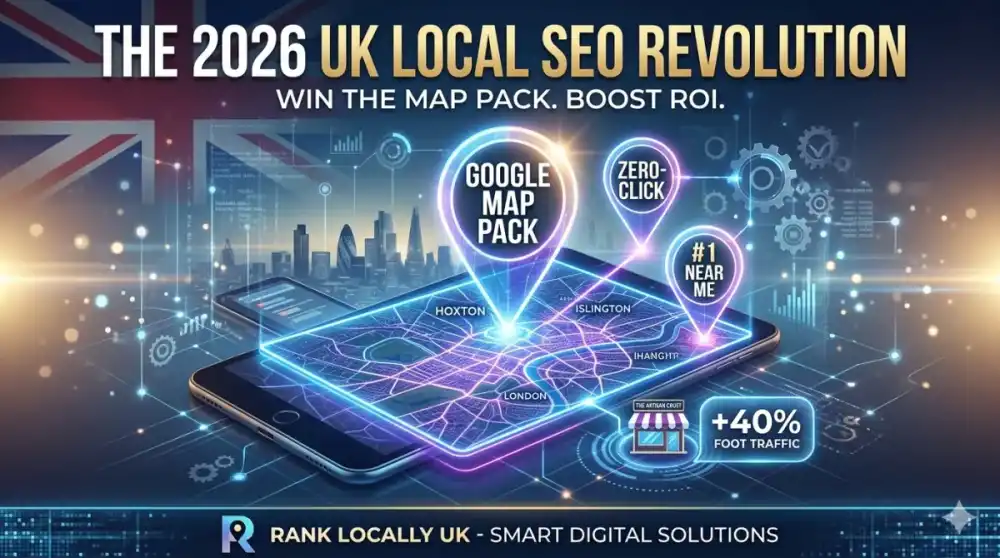
Local SEO Guide To Dominate UK Search & Google Map Pack
In the rapidly evolving digital landscape of 2026, the traditional "Search Engine Results Page" (SERP) as we once knew it has transformed. For UK small businesses—from boutique bakeries in Shoreditch to independent plumbers in Islington—the game has moved beyond simply "having a website." We are now living in the era of the "Near Me" Revolution, powered by conversational AI, hyper-local precision, and the dominance of the Google Map Pack.
At Rank Locally UK, we’ve analyzed the data: 2026 is the year of the Zero-Click Search. If your business isn't the immediate answer to an AI’s query, you're invisible. This guide breaks down exactly how to navigate this new frontier.
The "Near Me" Revolution: How AI-powered Search is Changing the Game
Gone are the days when a customer would type "plumber London" into a search bar and scroll through ten blue links. In 2026, the UK consumer uses "Ask Maps" or conversational AI interfaces on their smartphones and smart home devices.
The Rise of "Ask Maps" and Conversational Search
Google’s AI-integrated "Ask Maps" has turned search into a dialogue. A user now says: "Hey Google, find me a Gas Safe registered plumber near City Road that is open now and has fixed a boiler leak in the last week."
This shift means your Local SEO strategies must be more than just keywords; it must be Contextual Data. AI models prioritize:
Recency of Activity: Are you posting updates to your profile?
Specific Service Verification: Does your profile explicitly mention "boiler leak repair" in recent reviews or service lists?
Trust Signals: Are your credentials (like Gas Safe or Checkatrade) digitally linked and verifiable?
Why Tradespeople Must Pivot
For local tradespeople, AI-powered search is a double-edged sword. It filters out the "jacks-of-all-trades" and highlights the specialists. To win in this environment, your digital footprint must provide "Schema Markup" that tells the AI exactly what you do, where you do it, and what your customers think of that specific service.
Hyper-Local Keyword Strategy: Why "SEO London" is a Waste of Money
If you are a local business, trying to rank for a keyword like "SEO London" or "Plumber London" is like trying to shout in a crowded stadium. It is expensive, highly competitive, and—most importantly—it’s inefficient.
The Fall of the "Broad Keyword"
London is not one market; it is a collection of hundreds of micro-markets. A person in Hoxton looking for a coffee shop is highly unlikely to travel to Richmond. Search engines know this. In 2026, "Geofencing" in search is so precise that the results shown to someone on one end of Old Street are different from those shown to someone at the other end.
The Power of the Borough: SEO Hoxton vs. SEO Islington
By narrowing your focus to Hyper-Local Keywords, you achieve three things:
Lower Cost Per Acquisition (CPA): It is significantly cheaper to rank for "Emergency Plumber Islington" than "Plumber London."
Higher Intent: A user searching for a specific borough is usually ready to book or buy now.
Authority in the "Local Cluster": When you dominate a specific area like Hoxton, Google views you as the "Local Hero," making it easier to expand your "radius of dominance" into neighboring areas like Shoreditch or Clerkenwell.
Rank Locally UK Tip: Don't just list your city. Create dedicated landing pages for every postcode district you serve (e.g., EC1V, N1, SE1).
Zero-Click Searches: Winning the Map Pack Without the Click
A "Zero-Click Search" occurs when the user finds exactly what they need on the search results page—address, phone number, reviews, or even a booking button—without ever clicking through to your actual website.
The Google Map Pack: Your New Storefront
In 2026, the Google Map Pack (the "3-Pack") is the most valuable real estate on the internet. It is the first thing users see, and often the only thing. To win here, your Google Business Profile (GBP) must be treated as your primary website.
Key Strategies for Zero-Click Dominance:
Direct Bookings: Integrate your scheduling software directly into your Google profile. If a customer can book a table or a consultation without leaving the search page, they will choose you over a competitor who requires a website visit.
Inventory Integration: For retail businesses, your live stock should be visible on your profile via "Pointy" or local inventory feeds.
Q&A Optimization: Pre-populate your "Questions & Answers" section with common inquiries. This provides the AI with the data it needs to answer user queries instantly.
Winning the "Featured Snippet"
When a user asks a question, Google often pulls a "Snippet" of text from a website to answer it.By structuring your content in a Q&A format—using clear, concise language—you can become the "Featured Answer," even if you aren't the #1 ranked organic site.
Case Study: The 40% Increase – How a London Bakery Cracked the Code
Let’s look at a real-world application of these strategies. "The Artisan Crust," a small bakery near Old Street, was struggling with foot traffic despite having a high-quality product.
The Challenge
They were invisible to the thousands of office workers commuting through Old Street Station daily. They had a website, but it was buried under national chains like Greggs or Pret A Manger.
The Rank Locally Strategy
Hyper-Local Focus: We stopped targeting "Bakery London" and started targeting "Sourdough Hoxton" and "Best Coffee Old Street."
Visual GMB Updates: We implemented a strategy of daily "Product Posts" on their Google Business Profile—high-resolution photos of fresh pastries coming out of the oven at 8:00 AM daily.
Local "Near Me" Signal Boosting: We optimized their profile for "Breakfast near Old Street Station," specifically targeting the "commuter intent" keyword cluster.
Review Velocity: We set up a system to encourage customers to leave reviews mentioning specific products (e.g., "The almond croissant is the best in Shoreditch").
The Result
Within three months, "The Artisan Crust" saw a 40% increase in verified foot traffic. Their Google Business Profile insights showed that 70% of their new customers found them through "Discovery" searches (searching for a category, not the brand name) and never clicked on their website—they simply clicked "Directions."
Future-Proofing Your UK Business
The digital landscape of 2026 demands a shift in mindset. You are no longer just managing a website; you are managing a Digital Ecosystem. By embracing the "Near Me" revolution, focusing on hyper-local borough keywords, and optimizing for the Zero-Click economy, your business can out-maneuver even the largest national competitors.
Rank Locally UK is here to ensure that when your neighbors search, they find you.
London
6 Views
- Prev
- 1
- Next
Share This Page
My Page
Scan QR to open
Barcode