
Articles in York
Explore 11 business insights in York
Insider
Share Your Business Story
Reach our community by sharing your business insights, expert guides, or success stories on the world's most trusted local platform.
Write Your Article Now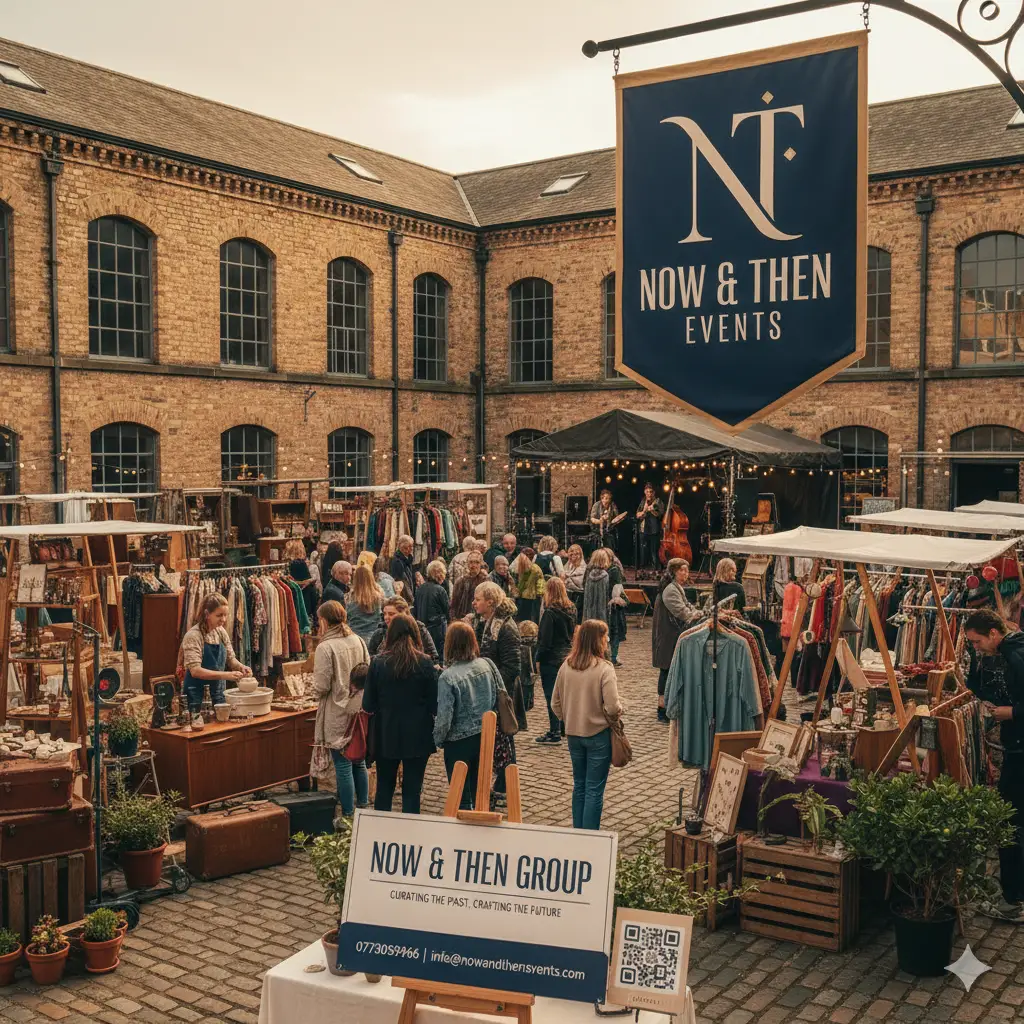
Event Organiser
Apr 08, 2026
Now & Then Group: Curating Premium Vintage Events
In the heart of South Yorkshire, where the echoes of the industrial revolution still resonate through cobblestone streets and vaulted civic halls, a modern movement is taking root. Now & Then Ltd, trading as the Now and Then Group, has become the definitive architect of the Northern vintage revival. Founded by Jackie Cook in early 2020, the group has transitioned from a local passion project into a powerhouse of event management and vintage lifestyle services, redefining how we interact with history, craftsmanship, and community.
A Vision Rooted in Heritage
The mission of the Now and Then Group is as simple as it is profound: to breathe new life into historic spaces. While many see an old museum or a quiet civic hall as a relic of the "then," Jackie Cook and her team see a vibrant stage for the "now." By transforming iconic venues like Sheffield’s Kelham Island Museum into bustling hubs of commerce and creativity, the group ensures that heritage remains a living, breathing part of the community.
This is not merely about hosting a market; it is about heritage site event consultancy. The group works closely with site managers to increase footfall and engagement, proving that historical relevance and commercial viability can go hand-in-hand.
The Flagship: Now & Then Events
Under their premier brand, Now & Then Events, the group has set a gold standard for artisan and maker fairs. What sets these events apart is a "rigorous selection" process. Unlike generic car boot sales or mass-produced craft fairs, every trader at a Now & Then event is hand-picked.
What to Expect:
20th Century Antiques: From Mid-Century Modern furniture to Victorian curiosities.
Sustainable Fashion: A curated selection of pre-loved and vintage apparel that fights the "fast fashion" tide.
Artisan Craftsmanship: Modern makers who use traditional techniques to create contemporary goods.
Themed Entertainment: Immersive experiences that often include retro-themed pop-ups and live music.
Empowering the Circular Economy
At its core, Now & Then Ltd is a champion of the sustainable circular economy. In an age of disposable goods, the group promotes the value of longevity. By connecting consumers with vintage collectors and independent makers, they facilitate a retail experience where items are saved, restored, and cherished once more.
Their independent retail support extends beyond the event day. By providing marketing support for traders and networking opportunities through the Sheffield Chamber of Commerce, the group helps small businesses scale in a competitive Northern market.
A Geographical Focus: The Northern Powerhouse
Operating within a 50-mile radius of Sheffield, the group focuses its energy on South Yorkshire, East Riding, and North Yorkshire. With headquarters in Sheffield and a strong presence in York (near the Pocklington Arts Centre), they have become the go-to partner for Northern heritage events.
Why Heritage Sites Choose Now and Then Group
Increasingly, heritage sites face the challenge of attracting younger demographics. The Now and Then Group solves this through Event Logistics and Consultancy. They provide:
Accessible Venue Selection: Ensuring events are inclusive and easy to navigate.
Marketing & PR: Leveraging a strong social media presence to drive thousands of visitors to unique locations.
Economic Impact: Directly fueling the local creative economy by providing a platform for over a hundred independent businesses annually.
Meet the Founder: Jackie Cook
The driving force behind this success is Jackie Cook. Launching a business just weeks before the 2020 global lockdowns was a trial by fire, but it solidified the company’s resilience. Today, leading a team of five dedicated experts, Jackie continues to bridge the gap between "Then" and "Now," ensuring that the charm of the past is never lost to the noise of the future.
Frequently Asked Questions
1. What services does Now & Then Ltd provide?
We specialize in organizing high-quality vintage markets, artisan fairs, and retro-themed pop-ups. We also provide professional event consultancy and logistics for heritage sites and independent retail support for makers.
2. Where are Now & Then Events typically held?
Our flagship events are held in iconic Northern venues, such as the Kelham Island Museum in Sheffield and various civic halls across South Yorkshire and East Riding.
3. How can I become a trader at one of your fairs?
We hand-pick our traders to ensure a premium mix of quality and authenticity. Prospective traders can contact us at info@nowandthenevents.com or visit our website to apply for upcoming markets.
4. Is the Now and Then Group involved in sustainability?
Yes. We are dedicated to the circular economy, focusing on the resale of vintage goods and supporting sustainable artisan makers to reduce waste and promote high-quality craftsmanship.
5. Do your events offer entertainment beyond shopping?
Absolutely. We often source themed entertainment, live music, and retro pop-ups to create an immersive, family-friendly experience.
6. What are the standard opening hours for your events?
While our office hours are Monday–Friday (09:00–17:00), our weekend events typically run from 10:00 to 16:00 on Saturdays and Sundays.
7. Is there an entry fee for your markets?
Entry requirements vary by venue. Some of our museum-based events may require a small admission fee or museum ticket, while others are free to the public. Please check our social media for specific event details.
8. What payment methods are accepted at the markets?
Most of our individual traders accept Contactless Payments, Credit/Debit Cards, and Cash. We recommend bringing both for the best experience.
9. Does the group help heritage sites with marketing?
Yes, our consultancy services include marketing support, footfall strategy, and community engagement planning specifically tailored for historic locations.
10. How can I contact the Now and Then Group for an inquiry?
You can reach our helpdesk at 07730592966 or email us at info@nowandthenevents.com. Our physical office is located at 47 Southfield Road, Pocklington, York.
York
0 Views

Business Services
Apr 08, 2026
Social Policy Association : Advancing UK Social Justice
In an era defined by rapid economic shifts, evolving welfare needs, and complex public health challenges, the role of rigorous academic inquiry has never been more critical. At the heart of this intellectual ecosystem stands the Social Policy Association (SPA). Established on November 11, 1967, as the Social Administration Association, the SPA has spent over half a century serving as the United Kingdom’s primary professional body for teachers, researchers, students, and practitioners of social policy.
Headquartered in the vibrant academic and technological hub near London’s Old Street Roundabout, the SPA acts as a vital collective voice. It represents the interests of its members to public bodies, higher education institutions, and research councils, ensuring that the discipline of social policy remains robust, influential, and deeply integrated into the fabric of governance.
A Legacy of Excellence: Founded on Principles of Progress
The SPA was born during a period of significant expansion for the British welfare state. Founded as the Social Administration Association, its initial mission was to professionalize the study of welfare and administration. Since then, it has evolved alongside the discipline itself, changing its name in 1987 to the Social Policy Association to reflect a broader, more inclusive approach to social welfare, inequality, and administrative ethics.
Today, the SPA is a registered charity (No. 528347) and a prominent member of the Academy of Social Sciences. It continues to be managed by an elected Executive Committee, preserving the democratic and collaborative spirit of its founders.
Academic Authority: The Prestigious Journal Portfolio
One of the primary pillars of the SPA’s value proposition is its "Academic Authority." This is most visible through its world-class portfolio of academic journals, published in partnership with Cambridge University Press and Policy Press.
Journal of Social Policy: A leading international journal that carries high-quality articles on all aspects of social policy. It is essential reading for those looking to understand the theoretical and empirical underpinnings of the welfare state.
Social Policy and Society: This journal bridges the gap between purely academic research and its practical application, offering a unique "Theme" section in each issue that deep-dives into specific contemporary challenges.
Policy & Politics: Known for its focus on the relationship between institutional change and policy outcomes, this brand association ensures that SPA members stay at the cutting edge of global political science and administration.
For researchers, these publications are not just sources of information; they are prestigious venues for the dissemination of knowledge that influences the next generation of social scientists.
Policy Impact: Bridging Research and Reality
The SPA’s second core value is "Policy Impact." Academic research is most powerful when it moves beyond the lecture hall and into the corridors of power. The SPA facilitates this transition by:
Representing the Discipline: Acting as a liaison with the Economic and Social Research Council (ESRC) to ensure social policy remains a priority for national funding.
Advocacy: Providing a platform for social policy analysis that addresses pressing issues like welfare reform, economic inequality, and housing shortages.
Social Policy Matters: The SPA’s digital blog archive serves as a modern forum where researchers translate complex data into accessible insights for the public and policymakers.
The Annual Conference: A Global Stage for Local Debate
Every year, the SPA organizes an internationally recognized conference. This event is more than just a gathering; it is a crucible for debate where global scholars, practitioners, and activists interrogate structures of inequality. Whether the theme is "Social Policy Futures" or "Hope in Dark Times," the conference provides a unique space for interdisciplinary dialogue.
Attendees benefit from:
Keynote Addresses: Insights from world-renowned thinkers and policymakers.
Networking: Opportunities to form partnerships with international academic networks.
Professional Development: Specialized tracks for PhD students and early-career researchers.
Empowering the Next Generation: Grants and Mentorship
The SPA is deeply committed to the sustainability of the social science discipline. This is evident in its robust support for "Emerging Researchers" and students.
Specialized Grants & Awards:
Opportunity Grants: Funding designed to facilitate events, workshops, and research projects that promote social policy.
Travel Bursaries: Ensuring that financial constraints do not prevent students from participating in the global academic community.
Lifetime Achievement Honors: Recognizing those who have dedicated their careers to the advancement of social justice and welfare scholarship.
Mentorship and Networking: Through its member-only online portal, the SPA offers mentorship schemes that pair seasoned academics with early-career researchers. This culture of "paying it forward" ensures that the skills of social policy analysis and public administration are passed down with rigor and care.
Specializations: Deep Expertise in Modern Challenges
Members of the SPA specialize in diverse areas that are critical to the functioning of a modern, equitable society:
Welfare State Research: Analyzing the effectiveness and future of safety nets in the UK and abroad.
Social Justice: Investigating the root causes of systemic inequality and proposing evidence-based solutions.
Public Administration: Studying the efficiency and ethics of government service delivery.
Higher Education Policy: Shaping the future of social science teaching and learning within universities.
Membership and Amenities: Why Join the SPA?
Membership is open to anyone with an interest in social policy—from undergraduate students and lecturers to practitioners in the third sector and local government.
Member Benefits Include:
Access to the prestigious journal portfolio.
Discounted registration for the annual conference.
Exclusive access to the member portal and digital archives.
Eligibility for research grants and travel bursaries.
Participation in specialized policy groups and ECR networks.
A Critical Bridge for a Fairer Future
The Social Policy Association (SPA) is more than a professional body; it is a community of dedicated individuals working toward a more resilient and equitable future. By acting as a critical bridge between academic inquiry and real-world policy application, the SPA ensures that rigorous research remains at the heart of effective governance.
Whether you are a student just beginning your journey in social science or a seasoned researcher looking to maximize your policy impact, the SPA provides the authority, network, and resources to help you influence the public debates that matter most.
Frequently Asked Questions
1. What is the main goal of the Social Policy Association (SPA)?
The SPA aims to advance the teaching, research, and dissemination of knowledge in social policy and administration. It serves as a collective voice for the discipline, representing its members to research councils and public bodies.
2. When was the SPA founded?
The association was founded on November 11, 1967, originally under the name the Social Administration Association.
3. Who can join the Social Policy Association?
Membership is open to teachers, researchers, practitioners, and students of social policy, as well as anyone with a professional or academic interest in social welfare and administration.
4. What journals does the SPA publish?
The SPA's portfolio includes the Journal of Social Policy, Social Policy and Society, and Policy & Politics, published in collaboration with Cambridge University Press and Policy Press.
5. Does the SPA offer financial support for researchers?
Yes. The SPA provides various specialized grants, including Opportunity Grants, Career Launch Grants, and travel bursaries for students and early-career researchers.
6. Where is the SPA headquartered?
The SPA is based in London at Office 605, Albert House, 256-260 Old Street, United Kingdom, near the Old Street Roundabout.
7. How can I contact the SPA helpdesk?
You can reach the SPA helpdesk at 03332224445 or via email at admin@social-policy.org.uk.
8. Is the SPA a registered charity?
Yes, it is a registered charity in the UK with the registration number 528347.
9. What are the "Emerging Researchers" activities?
The SPA supports a dedicated network for PhD students and Early Career Researchers (ECRs), offering specialized events, feedback on presentations, and mentorship opportunities.
10. How does the SPA influence government policy?
The SPA acts as a bridge between academia and governance by advocating for social science research impact, responding to consultations from research councils, and publishing policy-relevant analysis through its journals and the Social Policy Matters blog.
Business Details Summary:
Phone: 03332224445
Email: admin@social-policy.org.uk
Website: https://social-policy.org.uk
Address: Office 605, Albert House, 256-260 Old Street, London, EC1V 9DD
Working Hours: Mon–Fri, 09:00 – 17:00
York
0 Views
Educational Services
Apr 08, 2026
The British Society of Gerontology: Leading Ageing Research
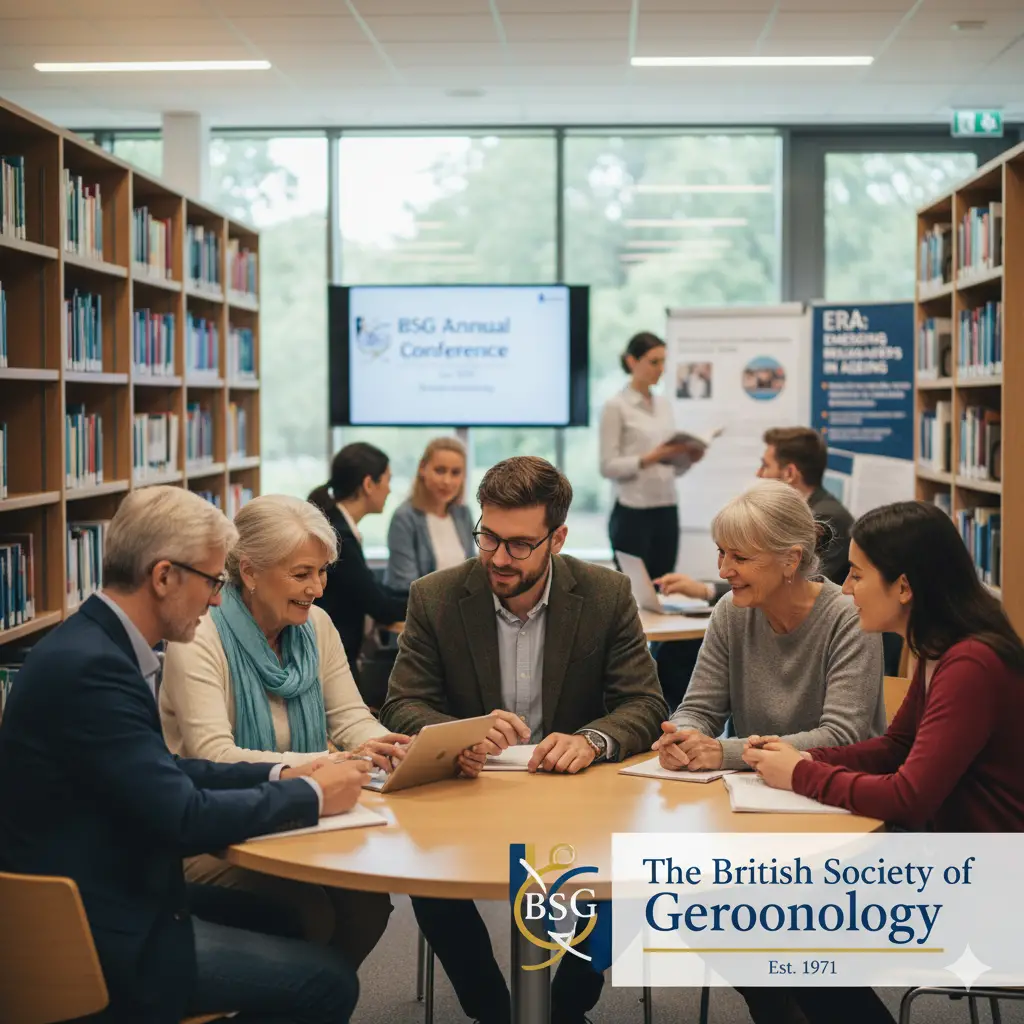
The study of ageing is no longer a niche academic pursuit; it is a critical societal imperative. As global populations shift and the "centenarian bounty" becomes a reality, organizations like The British Society of Gerontology (BSG) serve as the backbone of our collective understanding of later life. Founded in 1971, the BSG has spent over half a century transforming the landscape of social gerontology, moving beyond the biological mechanics of ageing to address the sociological, psychological, and environmental complexities of growing older.
A Legacy of Multidisciplinary Excellence
The British Society of Gerontology was established on October 1, 1971, by a pioneering collective of UK researchers, including visionaries like Professor Sheila Peace. From its inception, the society recognized that ageing cannot be understood through a single lens. Whether it is the impact of urban transport on elderly mobility or the role of the arts in cognitive health, the BSG provides a "big tent" for experts across all fields.
Registered as an educational charity (Charity No. 264385), the BSG acts as the United Kingdom’s premier forum for anyone interested in the study of ageing. It is a diverse community where a PhD student in environmental gerontology can debate policy with a veteran sociologist or a frontline health practitioner.
Core Pillars of the BSG
The society’s mission is built upon three fundamental pillars: Research, Policy Influence, and Professional Development.
1. Advancing Gerontological Research
Research is the lifeblood of the BSG. Through its various Special Interest Groups (SIGs), the society dives deep into specific sub-sectors of ageing. These groups include:
Creative Ageing: Exploring how participation in the arts improves wellbeing.
Transport and Mobility: Investigating how infrastructure affects independence in later life.
Environmental Gerontology: Studying the relationship between people and their physical-social environments.
The BSG also manages the Ageing Issues Blog, a high-impact digital publication where researchers share accessible summaries of complex studies, ensuring that knowledge doesn't stay trapped behind academic paywalls.
2. Influencing Policy and Practice
The BSG does not operate in an ivory tower. Headquartered in Denmead, Hampshire, the society maintains a global reach by working closely with the International Association of Gerontology and Geriatrics (IAGG) and the Academy of Social Sciences. By translating raw data into meaningful policy recommendations, the BSG helps government bodies create more inclusive environments for older people.
3. Nurturing the Next Generation: The ERA Network
The Emerging Researchers in Ageing (ERA) network is perhaps the BSG’s most vital investment. Understanding that the future of the field depends on new blood, the ERA provides mentorship, travel bursaries, and dedicated pre-conference events for students and early-career academics. This ensures that the legacy of profs like Sheila Peace continues through a modern, innovative cohort of researchers.
The Annual Scientific Conference
Each year, the BSG hosts its Annual Scientific Conference, a landmark event in the global academic calendar. This gathering serves as a melting pot for the latest findings in health and social care research, social policy, and the biology of ageing. It is also where the prestigious Outstanding Achievement Award is presented, honoring those who have made significant contributions to the field.
Why Membership Matters
Joining the BSG is more than just a professional credential; it is an entry into a support system. Members receive:
Grants and Bursaries: Financial support for research projects and international travel.
Mentorship: Direct access to some of the world’s leading gerontologists.
Networking: Connections to a global community dedicated to improving the quality of life for older adults.
A Vision for an Age-Friendly Future
The British Society of Gerontology continues to champion an inclusive and anti-discriminatory approach to ageing. By centering the voices of older people in their research and advocacy, they are not just studying the future—they are actively shaping a society where ageing is valued, supported, and understood in all its forms.
Frequently Asked Questions
1. What is the primary mission of the BSG?
The BSG aims to promote the advancement of gerontological research and influence policy and practice to improve the quality of life for older people.
2. When was the British Society of Gerontology founded?
The society was officially formed on October 1, 1971.
3. Who can join the BSG?
Membership is open to researchers, practitioners, students, and anyone with a professional or academic interest in the study of ageing.
4. What is the ERA network?
The Emerging Researchers in Ageing (ERA) is a sub-section of the BSG dedicated to supporting students and early-career researchers through mentorship and networking.
5. Does the BSG provide research funding?
Yes, the BSG offers various research grants, travel bursaries for conferences, and awards for outstanding academic achievements.
6. What are Special Interest Groups (SIGs)?
SIGs are specialized forums within the BSG focusing on specific areas like Creative Ageing, Transport and Mobility, and Rural Ageing.
7. How can I read BSG research findings?
The BSG publishes the "Ageing Issues" blog and frequently contributes to major academic journals and international conferences.
8. Is the BSG a registered charity?
Yes, it is a registered educational charity in the UK, Charity Number 264385.
9. Where is the BSG headquarters located?
The administrative base is located at Wren Cottage, Hambledon Road, Denmead, Hampshire, PO7 6ER, UK.
10. How do I contact the BSG for membership inquiries?
You can reach the BSG helpdesk at 01798875653 or email them at info@britishgerontology.org.
York
0 Views

Educational Services
Apr 08, 2026
International Society for the Systems Sciences: A Global Hub
In an increasingly fragmented world where specialized knowledge often exists in silos, the International Society for the Systems Sciences (ISSS) stands as a beacon of integration. As one of the world's oldest and most prestigious scientific societies, the ISSS is dedicated to the interdisciplinary study of complex systems. From the biological cells that sustain life to the economic networks that drive global trade, the ISSS provides a unified framework to understand the underlying patterns—the "isomorphy"—that govern our reality.
Founded on the principle that the challenges of the 21st century cannot be solved by a single discipline alone, the ISSS bridges the gap between theoretical research and practical application. This article explores the rich history, core specializations, and the profound global impact of the society.
The Genesis of a Movement: History and Founders
The roots of the ISSS trace back to 1954 at the Stanford Center for Advanced Study in the Behavioral Sciences. It was here that four visionary scholars—Ludwig von Bertalanffy, Kenneth Boulding, Ralph Gerard, and Anatol Rapoport—conceived of an organization that would move beyond "reductionist" science.
The Founding Visionaries
Ludwig von Bertalanffy: A biologist who pioneered General Systems Theory (GST), arguing that systems possess properties that cannot be understood by merely looking at their individual parts.
Kenneth Boulding: An economist and poet who sought to apply systems thinking to social and economic stability.
Ralph Gerard: A neurophysiologist who brought a biological perspective to complex organizational structures.
Anatol Rapoport: A mathematical psychologist and game theorist who focused on the logic of conflict and cooperation.
Formally established in 1956 as the Society for the Advancement of General Systems Theory, the organization eventually became the ISSS in 1988, reflecting its broad scope across all "Systems Sciences."
Core Specializations: Navigating the Interconnected World
The ISSS is not just a society; it is a laboratory for ideas. Its research and educational programs focus on several key pillars of modern science:
General Systems Theory (GST)
GST is the foundation of the ISSS. It seeks to identify universal laws applicable to any system, whether biological, mechanical, or social. By studying how systems maintain boundaries, process information, and reach "equifinality," researchers can apply lessons from biology to manage corporate organizations or urban environments.
Cybernetics and Sociocybernetics
Cybernetics focuses on the concepts of control and communication in both living and non-living systems. Sociocybernetics extends these principles to social systems, examining how feedback loops influence governance, social movements, and cultural evolution.
Complexity Science and Systems Engineering
How do simple interactions lead to complex, unpredictable behaviors? Complexity science investigates emergent phenomena like the flocking of birds or the volatility of stock markets. Meanwhile, Systems Engineering applies these insights to design robust technical infrastructures, from aerospace to smart cities.
The ISSS Ecosystem: Products and Services
As a premier academic organization, the ISSS offers a suite of services designed to empower researchers and practitioners.
Scientific Conference Management: The annual international ISSS conference is a landmark event, bringing together Nobel laureates and young scholars to discuss themes ranging from "The Unity of Science" to "Sustainability in Complex Systems."
Academic Publications: The General Systems Yearbook is a legendary publication that has archived the most significant papers in the field since 1956.
Systems Education Programs: Through webinars, workshops, and mentorship, the ISSS fosters the next generation of "systems literates."
Special Integration Groups (SIGs): These are the engines of the society. SIGs focus on specific niches such as:
Systemic Approaches to Conflict and Crises
Health and Systems Thinking
Socio-Ecological Systems
Living Systems Analysis
Bridging Theory and Practice: Real-World Applications
The ISSS mission transcends the ivory tower. By applying systems methodologies, the society addresses pressing global challenges:
Environmental Sustainability
Using socio-ecological modeling, ISSS members work on strategies for climate resilience, recognizing that the environment is not a separate entity but a deeply integrated system involving human policy, technology, and natural cycles.
Organizational Dynamics
Modern corporations are complex adaptive systems. The ISSS provides frameworks for "Systemic Management," helping leaders navigate organizational transformation, improve communication, and ensure long-term viability in a volatile market.
Membership and Global Community
Headquartered administratively in the United Kingdom, the ISSS remains a global entity. With members in over 50 countries, the society offers:
International Mentorship: Connecting students with world-class experts.
Digital Research Archives: Access to decades of systems research.
Student Paper Awards: Recognizing excellence in the early stages of a scientific career.
Business Operations and Governance
The ISSS is supported by an elected international board and a dedicated administrative office in East Sussex.
Business Category: Scientific Society and Educational Research.
Headquarters: Pocklington, York, United Kingdom.
Accepted Payment Methods: Bank Transfer (BACS/Swift), Credit/Debit Cards, and PayPal.
Working Hours: Monday–Friday, 09:00 – 17:00 (GMT).
The Future of Systems Science
As we face "wicked problems"—challenges like global pandemics, wealth inequality, and AI ethics—the need for a systems approach has never been greater. The ISSS continues to evolve, integrating new fields like data science and quantum biology into its systemic framework.
By promoting the "unity of science," the ISSS ensures that humanity has the conceptual tools necessary to manage the complexity of our future.
Frequently Asked Questions
1. What is the main goal of the ISSS?
The mission of the International Society for the Systems Sciences is to encourage the development of theoretical systems applicable across multiple fields, promoting communication among specialists to foster the unity of science.
2. Who founded the ISSS?
The society was founded by Ludwig von Bertalanffy, Kenneth Boulding, Ralph Gerard, and Anatol Rapoport in 1954.
3. What is "Isomorphy" in systems science?
Isomorphy refers to the existence of similar structures, patterns, or laws across different disciplines. For example, a growth curve in biology might look identical to a growth curve in economics.
4. How can I join the ISSS?
Individuals can join through the official website (isss.org). Membership is open to scholars, students, and practitioners interested in systems thinking.
5. What is the General Systems Yearbook?
It is the society's flagship publication, featuring groundbreaking research and classic papers in the field of systems theory since 1956.
6. Does the ISSS offer awards for students?
Yes, the ISSS provides Student Paper Awards and international mentorship programs to support emerging researchers.
7. Where is the ISSS administrative office located?
The administrative office is located at 47 Southfield Road, Pocklington, York, YO42 2XE, United Kingdom.
8. What are Special Integration Groups (SIGs)?
SIGs are collaborative research groups within the ISSS that focus on specific areas like health, education, or conflict resolution using systems methodologies.
9. Is the ISSS affiliated with other organizations?
Yes, the ISSS is a member of the International Federation for Systems Research (IFSR) and an affiliate of the American Association for the Advancement of Science (AAAS).
10. What payment methods does the ISSS accept for membership or conference fees?
The society accepts Bank Transfers (BACS/Swift), Credit/Debit Cards, and PayPal.
A Legacy of Synthesis
The International Society for the Systems Sciences (ISSS) remains the primary global forum for those who seek to understand the "big picture." Through its commitment to interdisciplinary excellence, historical depth, and practical problem-solving, the ISSS continues to shape the way we perceive and interact with the complex world around us. Whether you are an academic, a policymaker, or a curious thinker, the ISSS offers the community and the tools to turn complexity into clarity.
Contact Information:
Phone: 01759302718
Email: isssoffice@dsl.pipex.com
Website: https://www.isss.org
York
0 Views
Article Posting
Get Started Today to Publish an Article
Educational Services
Apr 08, 2026
International Society for Artificial Life: Global ALife Hub
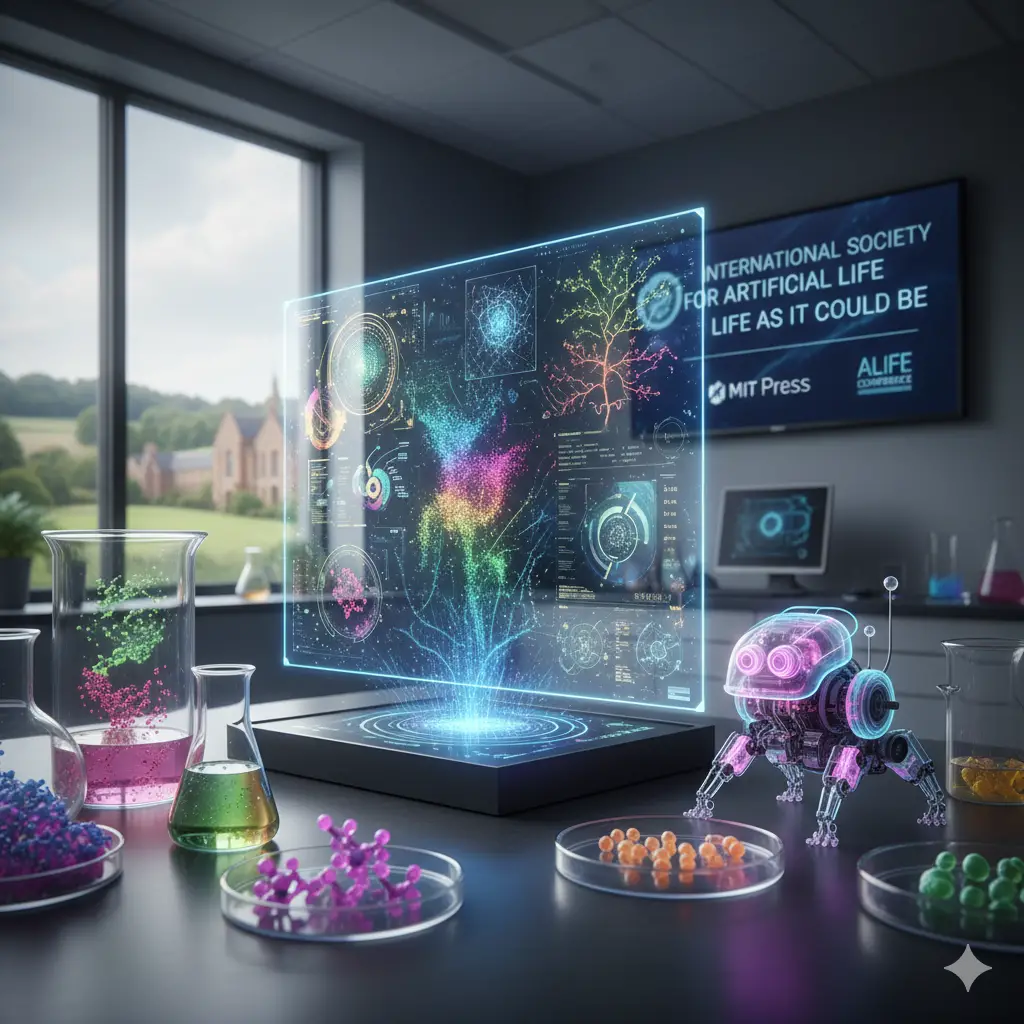
The quest to define "life" has historically been the domain of biology, confined to the carbon-based organisms found on Earth. However, the International Society for Artificial Life (ISAL) has spent decades expanding this definition, shifting the focus from "life as we know it" to "life as it could be." As the premier global professional organization for the interdisciplinary field of Artificial Life (ALife), ISAL serves as the foundational pillar for scientists, engineers, and philosophers who seek to replicate the fundamental properties of living systems through synthetic means.
Headquartered in Brighton, United Kingdom, at the University of Sussex, ISAL is not merely a scientific society; it is the administrative and intellectual heart of a movement that bridges the gap between biological theory and digital synthesis.
The Origins of Artificial Life: From Santa Fe to the Global Stage
The formalization of Artificial Life as a rigorous academic discipline is largely credited to Christopher Langton, the founding president of ISAL. While the roots of the field reach back to the cybernetics of the 1940s and the cellular automata of John von Neumann, it was Langton’s inaugural workshop at the Los Alamos National Laboratory in 1987 that unified these disparate threads.
By 1991, the International Society for Artificial Life was officially established to provide a permanent home for this growing community. Today, ISAL oversees the flagship ALife Conference series and the prestigious Artificial Life journal, published by MIT Press. These platforms ensure that research into self-replication, open-ended evolution, and emergent complexity remains peer-reviewed, accessible, and cutting-edge.
The Three Pillars of ALife: Soft, Hard, and Wet
ISAL promotes research across three distinct but overlapping methodologies, often referred to as the "Soft, Hard, and Wet" branches of Artificial Life:
Soft ALife (Computational Modeling): This involves software-based simulations where digital "organisms" evolve and interact. It is the birthplace of evolutionary computation and swarm intelligence, providing insights into how complex global behaviors emerge from simple local rules.
Hard ALife (Evolutionary Robotics): In this domain, researchers build physical machines—robots—that exhibit life-like behaviors such as adaptation, autonomous navigation, and collective coordination.
Wet ALife (Synthetic Biology): Perhaps the most challenging frontier, Wet ALife involves the biochemical synthesis of life-like systems in a laboratory. This includes research into protocells and the origins of life on a molecular level.
Why Join ISAL? Global Membership and Programs
For researchers and students, ISAL membership offers more than just professional affiliation. It provides a gateway to the "last grand challenges" of science. Members gain access to:
Global Networking: Connection with a worldwide community of experts in synthetic biology, computational modeling, and the philosophy of life.
Academic Support: Digital access to conference proceedings and professional networking forums.
Student Travel Fellowships: Ensuring the next generation of researchers can present their work at international summits.
Annual Excellence Awards: Recognition for groundbreaking contributions to the field, fostering a culture of innovation and scientific rigor.
Bridging Technology and Philosophy
Artificial Life is as much a philosophical endeavor as it is a technical one. ISAL members frequently tackle questions regarding the nature of consciousness, the ethics of creating synthetic entities, and the "Strong ALife" hypothesis—the idea that a computer simulation could, in principle, be literally alive.
By hosting discussions on emergent behavior and the transition from non-living to living matter, ISAL ensures that the development of synthetic intelligence is grounded in a deep understanding of natural biological principles.
Contact and Administrative Information
Headquarters: Department of Informatics, University of Sussex, Falmer, Brighton, BN1 9RH, UK.
Website: https://alife.org
Email: secretary@alife.org
Helpdesk: 01273606755
Frequently Asked Questions
1. What is the main mission of the International Society for Artificial Life (ISAL)?
ISAL is dedicated to promoting research and education in the field of Artificial Life. Its mission is to support the study of "life as it could be" through computational, robotic, and synthetic biological methods, fostering a global community of interdisciplinary researchers.
2. Who founded ISAL and when?
The society was founded in 1991, following the momentum generated by the first Artificial Life workshop organized by Christopher Langton in 1987. Christopher Langton is recognized as the founding president.
3. What is the difference between Artificial Intelligence (AI) and Artificial Life (ALife)?
While AI focuses on replicating human-like intelligence and cognitive tasks, ALife focuses on replicating the processes of living systems, such as evolution, self-organization, metabolism, and reproduction. ALife often uses a "bottom-up" approach to see how intelligence emerges from life-like interactions.
4. Where is the ISAL headquarters located?
The administrative hub is located at the Department of Informatics, University of Sussex, in Brighton, United Kingdom.
5. How can I publish research with ISAL?
ISAL supports researchers through its official publication, the Artificial Life journal (MIT Press), and the annual ALife Conference proceedings. Researchers can submit their work during the annual call for papers.
6. Does ISAL offer memberships for students?
Yes, ISAL has a robust global membership program that includes specific support for students, such as travel fellowships and access to the ERA (Emerging Researchers in Alife) group.
7. What are the "Soft, Hard, and Wet" categories of ALife?
Soft: Computer simulations and digital evolution.
Hard: Robotics and physical hardware.
Wet: Synthetic biology and biochemical life-like systems.
8. Is ISAL a non-profit organization?
Yes, ISAL is a registered 501(c)(3) non-profit scientific organization with an international board of directors.
9. What payment methods are accepted for ISAL membership?
ISAL accepts Credit/Debit cards, PayPal, and Bank Transfers (BACS/Swift).
10. How can I stay updated on ALife research?
You can subscribe to the ALife Newsletter via the official website or follow ISAL’s social media channels, including their active LinkedIn group.
York
0 Views
Event Organiser
Apr 08, 2026
Britain Does Vintage: Guide to Retro & Sustainable Style UK
In an era dominated by fast fashion and mass-produced goods, a growing movement of enthusiasts is looking backward to move forward. Leading this cultural renaissance is Britain Does Vintage, the United Kingdom’s premier organizer of authentic retro-themed events and high-quality vintage fairs. Based in the historic city of York, North Yorkshire, this award-winning organization has spent over a decade transforming local high streets into vibrant hubs of nostalgia, craftsmanship, and community.
Founded on 01 February 2012 by Lisa Patricia Hogg, Britain Does Vintage has grown from a local passion project into a national powerhouse in the specialist event sector. Operating as a dedicated division of The Wedding Affair (UK) Ltd, the business leverages deep expertise in high-end curation to deliver shopping experiences that are as professional as they are enchanting.
A Mission of Preservation and Celebration
The core mission of Britain Does Vintage is simple yet profound: to preserve and celebrate the heritage of 20th-century style. By providing a platform for independent traders and small businesses, they ensure that the "charm of the past" remains a viable part of "modern retail."
Whether you are hunting for a 1920s flapper dress, a sleek piece of mid-century modern furniture, or rare 1970s vinyl, Britain Does Vintage guarantees authenticity. Their rigorous vetting process ensures that every item on sale is genuinely vintage, offering a high-quality alternative to the disposable culture of today.
More Than Just a Market: An Immersive Experience
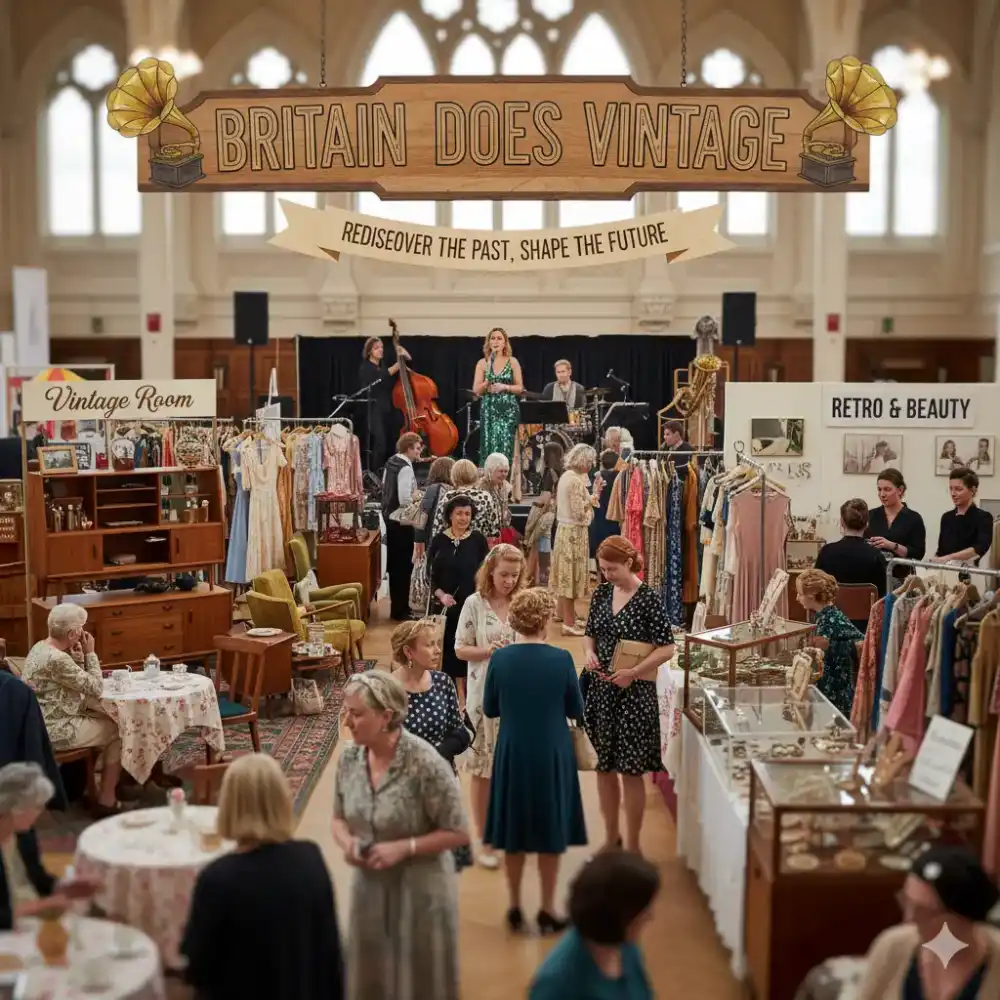
What sets Britain Does Vintage apart from standard flea markets is the immersive atmosphere. A visit to one of their fairs is a journey through time. Attendees can expect:
Vintage Tea Rooms: Relax with traditional cakes and tea served in delicate bone china.
Retro Hair & Beauty Styling: Professional beauty parlors offering victory rolls, beehives, and classic makeup looks.
Live Period Music: From jazz and swing to rockabilly, the soundtrack of the 20th century brings the venues to life.
Expert Valuations: Select events offer visitors the chance to have their own heirlooms appraised by specialists.
Championing Sustainable Fashion and the Circular Economy
Sustainability is at the heart of the Britain Does Vintage ethos. By promoting "pre-loved" goods, the business directly supports the circular economy. Shopping vintage reduces textile waste, lowers the carbon footprint associated with new manufacturing, and keeps historical craftsmanship in circulation. For the eco-conscious consumer, these fairs provide a way to build a unique wardrobe without the ethical baggage of modern fast-fashion supply chains.
Supporting Independent Traders
With a team of 12 dedicated employees and a network of hundreds of specialist traders, Britain Does Vintage acts as a vital support system for the independent retail sector. They provide the logistics, marketing, and footfall necessary for small vintage businesses to thrive in major UK cities. Their mobile event unit operates within a 50-mile radius of their York HQ, bringing the vintage experience to town halls and historic venues across the North and beyond.
Business Information at a Glance
Business Name: Britain Does Vintage
Headquarters: York, North Yorkshire, United Kingdom
Founder: Lisa Patricia Hogg
Founded: 2012
Specialization: 20th Century Fashion (1920s–1980s) & Mid-Century Homeware
Parent Company: The Wedding Affair (UK) Ltd (Reg: 08920851)
Website: www.britaindoesvintage.co.uk
Contact: 01904 593452 | hello@britaindoesvintage.co.uk
How to Attend or Trade
Britain Does Vintage events typically run on Saturdays and Sundays from 10:00 to 16:30. For those interested in joining their community of traders, the organization offers extensive support and a professional platform to showcase high-quality retro goods.
Venues are selected for their character and accessibility, ensuring that everyone—from serious collectors to families—can enjoy a day of nostalgia. Most venues feature full disabled access and accept various payment methods, including Credit/Debit Cards and Contactless Payments.
Frequently Asked Questions
1. What exactly counts as "vintage" at your events?
We focus on items from the 1920s through to the 1980s. This includes fashion, accessories, homeware, and collectibles that represent the design and craftsmanship of those specific eras.
2. Are all items for sale authentic?
Yes. We rigorously vet our traders to ensure that the goods offered are genuinely vintage and of high quality. We do not permit modern reproductions unless clearly labeled for specific styling purposes.
3. Do I need to book tickets in advance?
While we often have tickets available at the door, we recommend checking our website or Facebook page for specific event details, as some popular venues may offer early-bird discounts or timed entry.
4. Is there food and drink available at the fairs?
Absolutely! Most of our events feature an on-site Vintage Tea Room serving traditional refreshments, often accompanied by live music.
5. Can I get my hair styled in a retro look at the event?
Yes, many of our fairs host classic beauty parlors where professional stylists can transform your look with authentic period hairstyles.
6. Do you accept card payments?
Most of our traders accept credit/debit cards and contactless payments. However, we recommend bringing some cash as well, as a small number of independent traders may be cash-only.
7. Is Britain Does Vintage part of another company?
We are a specialist division of The Wedding Affair (UK) Ltd, which allows us to bring a high level of professional event management expertise to the vintage market scene.
8. Where are your headquarters located?
Our main office is located at 8 Marsden Park, James Nicolson Link, York, YO30 4WX, near the Clifton Moor Retail Park.
9. How can I become a trader at one of your events?
We are always looking for high-quality vintage traders. Please contact us at hello@britaindoesvintage.co.uk or visit our website to apply for a stall.
10. Are your venues accessible for disabled visitors?
Yes, we prioritize venues with disabled access to ensure our events are inclusive and accessible to all members of the community.
Visit Britain Does Vintage today and rediscover the quality, style, and soul of the 20th century.
York
1 Views
Business Services
Apr 08, 2026
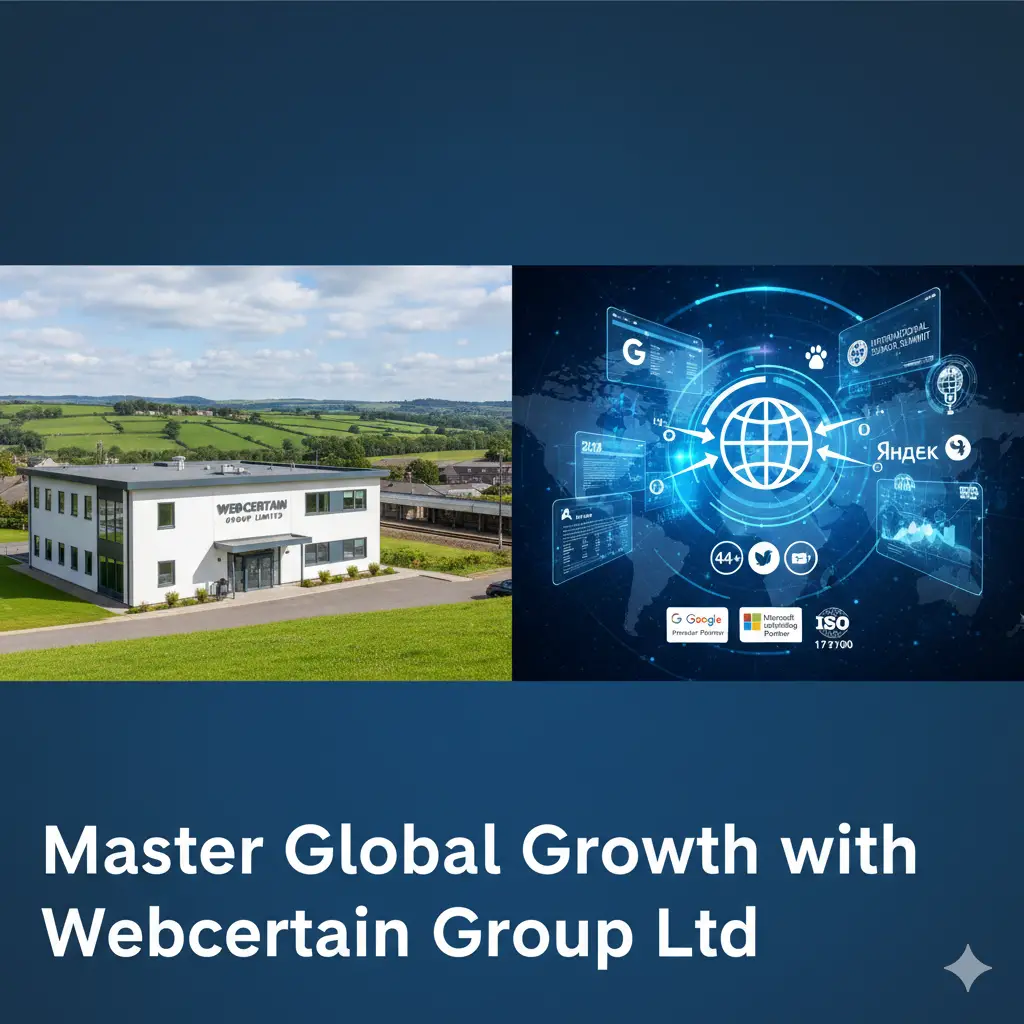
Master Global Growth with Webcertain Group Ltd
In an era where the digital landscape knows no borders, the ability for a business to speak the local language—both linguistically and culturally—is the ultimate competitive advantage. For over two decades, Webcertain Group Limited has stood at the epicenter of this global shift, serving as a specialized hub for brands that refuse to be limited by geography.
Established in 1997 and headquartered in the historic tech corridor of York, United Kingdom, Webcertain has evolved from a pioneering search agency into a premier global digital marketing powerhouse. This article explores how Webcertain’s unique model, deep technical expertise, and linguistic mastery empower organizations to dominate global search engines and marketplaces.
The Genesis of International Search: Webcertain’s Legacy
When Andy Atkins-Krüger founded Webcertain Group Limited on September 1, 1997, the internet was a fragmented landscape. Google was in its infancy, and most businesses viewed "international" as a secondary concern. Webcertain saw the future differently. They recognized that true global success required more than just translation; it required transcreation—the blending of marketing intent with cultural nuance.
Today, operating from their Northminster Business Park headquarters near the Poppleton Railway Station, the agency manages complex multi-country strategies for some of the world’s largest Fortune 500 companies and ambitious SMEs alike.
The Centralized Hub Model: Why It Works
One of the primary challenges of international marketing is fragmentation. Companies often hire local agencies in every country, leading to inconsistent branding, siloed data, and skyrocketing management costs.
Webcertain Group Limited solves this through a "Centralized Hub" model.
Native Speakers Under One Roof: Unlike agencies that outsource to freelancers, Webcertain utilizes a robust network of native speakers who understand the subtle nuances of their local markets.
Single Point of Contact: Clients benefit from a dedicated account manager who coordinates global efforts, ensuring that a campaign in Mandarin for Baidu aligns perfectly with a German campaign for Google.de.
Technical Excellence: Every campaign is optimized for local search engine algorithms, whether it’s Yandex in Russia, Naver in South Korea, or Bing in the US.
Core Services: A 360-Degree Global Suite
Webcertain’s service portfolio is meticulously designed to cover every touchpoint of a customer’s international journey.
Multilingual SEO (Search Engine Optimization)
SEO is not a "one-size-fits-all" game. What works for Google in the UK will fail on Baidu in China. Webcertain’s SEO specialists conduct deep keyword research in over 44 languages, identifying the search terms that local users actually use, rather than literal translations of English keywords.
Global PPC Management
Paid search offers the fastest route to market entry. Webcertain manages high-scale international PPC budgets, focusing on ROI and conversion. Their status as a Google Premier Partner and Microsoft Advertising Partner gives them early access to tools and data that keep their clients ahead of the curve.
Content Transcreation & Localization
Literal translation often kills marketing impact. Webcertain’s transcreation service ensures that your brand’s "voice" remains consistent while your message is adapted to trigger the right emotional response in every target culture.
International Social Media
From WeChat and Weibo to LinkedIn and Instagram, Webcertain helps brands navigate the complex world of global social platforms. They focus on community management and social listening to protect and grow brand reputation across borders.
Thought Leadership: The International Search Summit & Webcertain TV
Webcertain isn't just an agency; it’s an educator. Through the International Search Summit, they host global events that bring together the brightest minds in digital marketing. This summit is the only event of its kind dedicated exclusively to international search challenges.
Furthermore, Webcertain TV provides a wealth of video insights, keeping the marketing community informed on the latest trends in global e-commerce, algorithm updates, and cultural shifts.
Quality Assurance: Certifications That Matter
In a world of "digital gurus," Webcertain backs its claims with rigorous standards:
ISO 9001: Proof of world-class quality management systems.
ISO 17100: The gold standard for translation services, ensuring accuracy and professional workflow.
UN Global Compact: A commitment to sustainable and socially responsible policies.
Case Study Approach: Driving Cross-Border E-commerce
Imagine a luxury retailer wanting to expand into the Middle East. Webcertain doesn't just translate the website; they analyze the local payment methods (like STC Pay or Mada), investigate the most popular social influencers on Snapchat in Riyadh, and optimize the technical structure for right-to-left (RTL) language display. This holistic approach is why Webcertain has a service area that, while headquartered in York, spans the entire globe.
Strategic Market Expansion Consultancy
For businesses unsure of where to go next, Webcertain’s Market Expansion Consultancy provides data-backed reports. These reports analyze market saturation, competitor presence, and search volume in specific regions, allowing CEOs to make informed decisions before investing millions in a new territory.
Working with Webcertain: Operational Details
Languages: Over 44 languages supported natively.
Payment: Flexible options including BACS/Swift, Credit Cards, and Corporate Invoicing.
Hours: Monday to Friday, 09:00 – 17:30 (UK Time).
Communication: A dedicated helpdesk at 01904780030 or hello@webcertain.com.
The Future of Global Marketing
As AI and machine learning continue to reshape the industry, Webcertain remains at the forefront, integrating advanced technology with the indispensable "human touch" of native linguists. Their goal remains the same: to remove the linguistic and cultural barriers to global trade.
Frequently Asked Questions
1. What makes Webcertain Group Limited different from a standard translation agency?
Standard translation agencies focus on words; Webcertain focuses on performance. We combine professional translation (ISO 17100 certified) with deep technical SEO and digital marketing expertise to ensure your content actually ranks and converts in foreign markets.
2. How many languages does Webcertain support?
We currently support over 44 languages, including all major European, Asian, and Middle Eastern languages such as Mandarin, Arabic, Japanese, German, French, and Spanish.
3. Where is the company headquartered?
Webcertain is headquartered in York, North Yorkshire, United Kingdom, specifically at Northminster Business Park in Upper Poppleton.
4. Does Webcertain offer training for in-house teams?
Yes. Through our "Webcertain Know-How" platform and the International Search Summit, we provide extensive digital marketing training and bespoke corporate workshops for international teams.
5. Is Webcertain a Google Partner?
Yes, we are a Google Premier Partner, which represents the top tier of Google's agency partnership program, as well as a Microsoft Advertising Partner.
6. Can Webcertain help with social media in China?
Absolutely. We have specialists who handle platforms like WeChat, Weibo, and Little Red Book (Xiaohongshu), navigating both the linguistic and regulatory complexities of the Chinese digital landscape.
7. How do I start an international strategy with Webcertain?
You can reach out via our website (https://webcertain.com) or contact our York helpdesk at 01904780030. We typically begin with a market expansion consultation to identify your best growth opportunities.
8. What is the International Search Summit?
The International Search Summit is a flagship event series organized by Webcertain. It is the only conference dedicated entirely to the challenges of international search marketing.
9. Do you handle B2B or B2C clients?
We work with both. Our clients range from global manufacturing B2B giants to cross-border e-commerce B2C retailers.
10. What payment methods do you accept for international projects?
We accept Bank Transfers (BACS/Swift) for international corporate clients, as well as credit/debit cards and standard corporate invoicing.
Business Contact Summary:
Founder: Andy Atkins-Krüger (CEO)
Phone: 01904780030
Email: hello@webcertain.com
Address: Northminster Business Park, Upper Poppleton, York, YO26 6QU, UK.
Reg No: 03413346
York
0 Views
Educational Services
Apr 08, 2026
The Society for Renaissance Studies: Leading the Field Since 1967
The Society for Renaissance Studies (SRS) stands as the preeminent United Kingdom-based organization dedicated to the rigorous, interdisciplinary exploration of the Renaissance. Since its founding in 1967, the Society has bridged the gap between diverse academic fields—from the history of science and philosophy to the fine arts—fostering a cohesive scholarly dialogue that resonates across the global academic community.
As a registered educational charity (No. 1025890), the SRS is more than just a membership group; it is a vital engine for research. Headquartered at the prestigious Warburg Institute in London, the Society provides a vibrant forum for researchers, students, and enthusiasts to examine the transformative period of the 14th to 17th centuries.
The Foundation and Legacy of SRS
The roots of the SRS are deeply embedded in the "Golden Age" of British historiography. Formed during a founding meeting at the Institute of Historical Research (IHR) on July 12, 1967, the Society was established to provide a formal structure for the burgeoning field of Renaissance studies.
The founders envisioned an organization that would not be confined to a single university but would serve as a national and international network. Today, it operates under the patronage of the University of London and maintains close ties with the Warburg Institute, located in the heart of Bloomsbury near the British Museum.
Renaissance Studies: The Flagship Journal
Central to the Society’s mission is the publication of its world-renowned journal, Renaissance Studies. Published by Wiley-Blackwell, this peer-reviewed journal is a staple in university libraries worldwide. It is celebrated for its commitment to interdisciplinary research, publishing articles that draw connections between:
Art History and political theory.
Early Modern Literature and the history of medicine.
Religious Reformation and scientific discovery.
Members of the SRS enjoy digital access to the journal's extensive archives, providing a treasure trove of scholarly insight spanning decades.
Empowering the Next Generation: Grants and Fellowships
The Society for Renaissance Studies is a champion for early-career researchers (ECRs). Recognizing the financial hurdles inherent in high-level humanities research, the SRS offers several prestigious funding opportunities:
Postdoctoral Fellowships: Providing essential financial support for scholars to transition from their PhD to permanent academic roles.
Doctoral Travel Grants: Assisting students in accessing archives, libraries, and galleries globally—crucial for primary source research.
Conference Subsidies: Funding local study days and national conferences to ensure that breakthrough research is shared and critiqued.
The SRS Book Prize: Awarded biennially to recognize outstanding first monographs, celebrating the best new voices in the field.
A Vibrant Calendar of Scholarly Exchange
The SRS is perhaps most famous for its Biennial National Conference. This event draws hundreds of delegates from across the globe, serving as a clearinghouse for the latest findings in Renaissance culture. Beyond the major conferences, the Society supports:
Interdisciplinary Study Days: Smaller, focused workshops that tackle specific themes or methodologies.
Public Lectures: Bridging the gap between the academy and the public to ensure the lessons of the Renaissance remain accessible.
Networking Forums: Digital and physical spaces where mentors and mentees can connect.
Why Join the SRS?
Membership in the Society for Renaissance Studies is open to anyone with an interest in the period. For a modest subscription fee, members receive:
Hard copies and digital access to Renaissance Studies.
Eligibility for all research and travel grants.
Priority booking and discounted rates for SRS conferences.
Access to a global network of leading scholars.
The Renaissance in the 21st Century
The legacy of the Renaissance—its innovations in art, its challenges to authority, and its expansion of human knowledge—remains deeply relevant. The Society for Renaissance Studies ensures that this legacy is not merely preserved but actively interrogated. By fostering collaborative exchange and supporting rigorous scholarship, the SRS empowers today’s researchers to inform and inspire contemporary thought.
Frequently Asked Questions
1. What is the primary focus of the Society for Renaissance Studies?
The SRS focuses on the interdisciplinary study of the Renaissance period (roughly 1300–1700), encompassing history, art, literature, music, science, and philosophy.
2. How do I apply for an SRS Postdoctoral Fellowship?
Fellowship calls are typically announced annually on the official SRS website. Applicants must usually be members of the Society and have completed their PhD within a specific timeframe.
3. Is the SRS only for UK-based scholars?
While the SRS is based in the UK, its membership and journal contributors are global. Anyone worldwide with an interest in Renaissance studies is encouraged to join.
4. Where is the Society for Renaissance Studies located?
The administrative headquarters are located at the Warburg Institute, Woburn Square, London, WC1H 0AB, United Kingdom.
5. How often is the journal "Renaissance Studies" published?
The journal is published five times a year, featuring peer-reviewed articles, book reviews, and exhibition reviews.
6. Can students receive travel grants from the SRS?
Yes, the SRS offers dedicated travel grants specifically for doctoral students to help cover the costs of visiting archives and attending relevant conferences.
7. Who founded the Society for Renaissance Studies?
The Society was formed by a group of eminent scholars, including art historian Ernst Gombrich and historian Denys Hay, during a meeting at the Institute of Historical Research in 1967.
8. What payment methods does the SRS accept for membership?
The Society accepts Bank Transfers (BACS), Credit/Debit Cards, and online payments through their membership portal.
9. Does the SRS offer mentorship for early-career researchers?
Yes, the Society facilitates mentorship through its networking forums and dedicated support programs for ECRs (Early Career Researchers).
10. Is the Society for Renaissance Studies a charity?
Yes, it is a registered educational charity in the UK (Charity No. 1025890), dedicated to the public benefit of advancing education in the Renaissance.
York
0 Views
Article Posting
Sign In to Submit Your Content
Educational Services
Apr 08, 2026
University of York: A Global Leader in Research & Excellence
The University of York, established in 1963, stands as a beacon of academic brilliance and social progression in the heart of North Yorkshire, United Kingdom. As a proud member of the prestigious Russell Group, the university has cemented its reputation as a premier research-intensive institution. Founded with a visionary commitment to academic excellence and social equity, York has transitioned from a mid-century "plate glass university" into a global leader in higher education.
Operating through a distinctive collegiate system, the University of York provides much more than just a classroom experience; it offers a supportive, interdisciplinary community for its diverse student body. Guided by its mission to be a "university for public good," the institution drives cultural, social, and economic value through bold, creative thinking and world-class research.
Historical Foundations and Royal Charter
The university’s journey began on 09 July 1963, the date its Royal Charter (Registration Number: RC000679) was granted. The primary driving force behind its inception was John Bowes Morrell, whose dedication to expanding educational access in the North of England paved the way for the institution we see today.
Over the decades, the university has remained true to its founding principles while adapting to the needs of the 21st century. Today, it stands as a testament to how traditional scholarship can integrate with modern professional development to empower the next generation of global leaders.
Academic Prowess and Specializations
The University of York offers an extensive array of undergraduate degrees, postgraduate research opportunities, and online Masters courses. The institution is globally renowned for its high-impact research output, specifically within the following specializations:
Social Policy: Ranked consistently among the top departments in the UK for its influence on government policy and social welfare.
English Literature: A hub for literary criticism and creative writing, fostering a deep appreciation for the written word.
Archaeology: Utilizing state-of-the-art facilities like the YEAR (York Experimental Archaeology Research) Centre.
Health Economics: A world leader in evaluating healthcare systems and pharmaceutical efficiency.
Atmospheric Chemistry: Home to the Wolfson Atmospheric Chemistry Laboratories (WACL), tackling global climate and pollution challenges.
Through executive education and business consultancy, the university also bridges the gap between academia and the corporate sector, ensuring that its research translates into real-world solutions for global industries.
The Collegiate System: A Home Away from Home
One of York’s most defining features is its Collegiate Support System. Unlike many other universities, every student at York—whether living on or off-campus—is a member of one of its eleven colleges. This system fosters a sense of belonging, provides localized pastoral care, and encourages interdisciplinary collaboration.
The colleges act as the heartbeat of the campus, hosting social events, sports competitions, and academic workshops. This structure ensures that in a university of over 20,000 students, no one is ever just a number.
Campus Innovation and Facilities
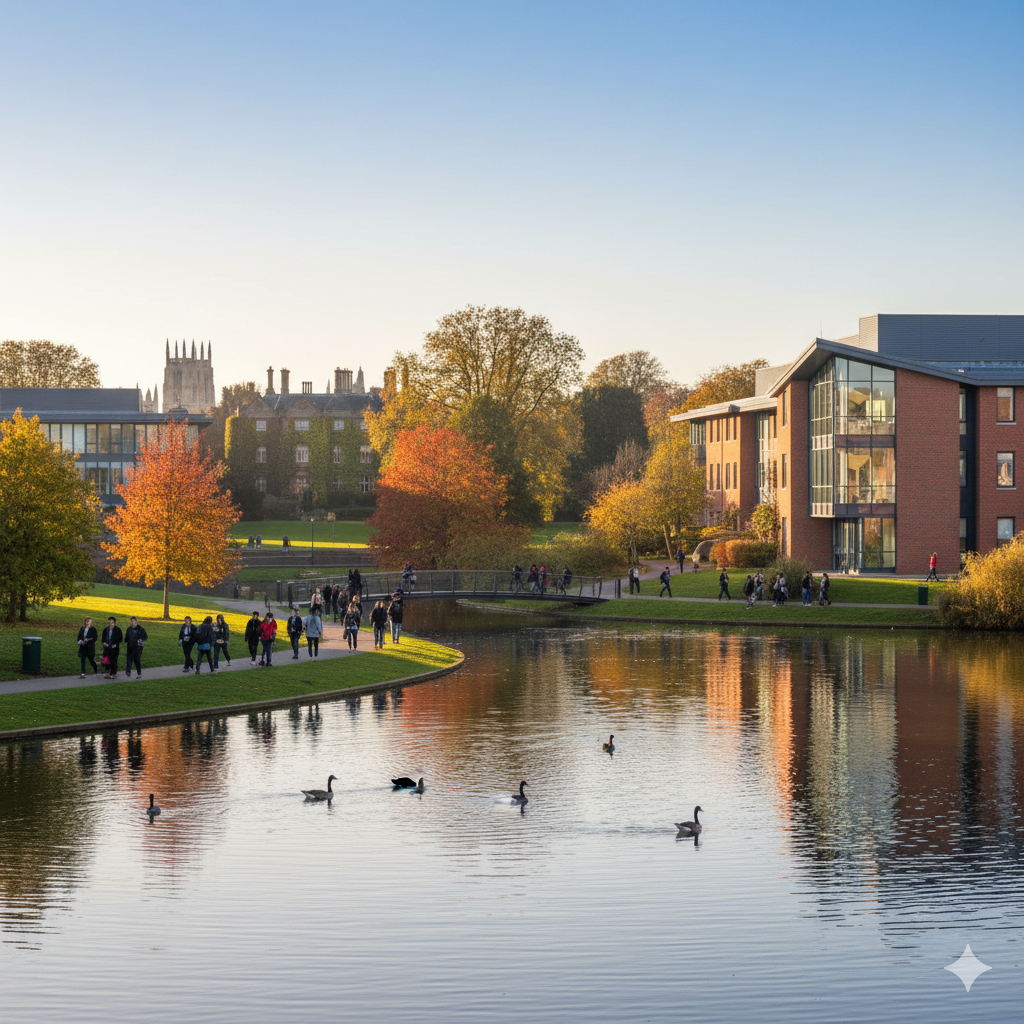
The University of York is physically situated in Heslington, York, YO10 5DD, centered around a beautifully landscaped 500-acre parkland. The campus is famous for its large plastic-bottomed lake, one of the largest in Europe, which serves as a unique landmark near Heslington Hall.
Amenities and Infrastructure:
24/7 Library Access: The JB Morrell Library and its extensions provide round-the-clock resources for rigorous scholarship.
Specialized Research Facilities: From the Hull York Medical School to the York Science Park, the infrastructure supports cutting-edge discovery.
York Sport Village: A multi-million-pound facility offering Olympic-sized swimming, high-tech fitness suites, and floodlit pitches.
High-Speed Wi-Fi: University-wide connectivity ensuring seamless access to digital resources and online learning platforms.
Economic Impact and Brand Association
The university is not just an educational hub; it is an economic powerhouse. With approximately 5,000 employees, it is one of the region's largest employers. Its brand associations, including York Conferences and York Science Park, contribute significantly to the local economy within a 50-mile service area radius.
The university fosters deep-rooted partnerships with local businesses and international organizations, facilitating knowledge exchange that drives regional growth. The York Science Park, in particular, provides a launchpad for high-tech startups and spin-off companies, reinforcing York’s status as an innovation hub.
Admissions and Practical Information
For prospective students and partners, the University of York maintains a transparent and accessible administrative structure.
Working Hours: Monday–Friday, 09:00 – 17:30 (Admin Hours).
Accepted Payment Methods: To facilitate ease of transactions for international and domestic students, the university accepts Bank Transfer, Online Student Portal Payments, and Credit/Debit Cards.
Language Supported: The primary medium of instruction and administration is English.
Contact Details:
Helpdesk/Phone: 01904320000
Email: enquiries@york.ac.uk
Website: https://www.york.ac.uk
LinkedIn: linkedin.com/school/university-of-york
Certifications and Affiliations
The University of York’s commitment to quality is validated by various prestigious affiliations and awards:
Russell Group Membership: Signifying its status among the UK's top 24 research-intensive universities.
Athena SWAN Awards: Recognition for its commitment to gender equality in higher education (holding various Bronze and Silver departmental awards).
Worldwide Universities Network (WUN): A global partnership facilitating international research collaboration.
Frequently Asked Questions
1. When was the University of York founded?
The university was established on 09 July 1963, when it received its Royal Charter.
2. Is the University of York part of the Russell Group?
Yes, the University of York is a prominent member of the Russell Group, representing the UK's leading research-intensive universities.
3. What is the "Collegiate System" at York?
The collegiate system divides the university into eleven distinct colleges. Every student belongs to a college, which provides a smaller, supportive community for socializing, support, and accommodation.
4. Where is the University of York located?
The main campus is located in Heslington, York, North Yorkshire, YO10 5DD, United Kingdom, near the historic Heslington Hall.
5. What are the university's strongest subjects?
York is particularly renowned for Social Policy, English Literature, Archaeology, Health Economics, and Atmospheric Chemistry.
6. Does the university offer 24/7 facilities?
Yes, the university provides 24/7 library access and high-speed Wi-Fi across the entire campus to support students' academic needs at any time.
7. How can I contact the University of York admissions team?
You can reach the helpdesk at 01904320000 or via email at enquiries@york.ac.uk.
8. What payment methods are accepted for tuition fees?
The university accepts Bank Transfers, Credit/Debit Cards, and payments through the Online Student Portal.
9. What kind of sports facilities are available?
The York Sport Village offers a wide range of amenities, including a 25m swimming pool, a 120-station gym, and various outdoor pitches and courts.
10. What is the university's mission?
The University of York defines itself as a "university for public good," focusing on research and education that creates positive social, cultural, and economic impact.
Shaping the Future
As the University of York moves forward, it continues to blend its rich heritage with a forward-thinking approach to global challenges. Whether you are a prospective student looking for an elite academic environment, a business seeking expert consultancy, or a researcher aiming to change the world, York offers the resources, community, and prestige to help you succeed. Its dedication to the "public good" ensures that every breakthrough made within its walls resonates far beyond the borders of North Yorkshire.
York
0 Views
Event Organiser
Apr 08, 2026
The Wedding Affair: Curating Luxury Weddings in Yorkshire
Planning a wedding is often described as one of life’s most beautiful journeys, but for many couples, the logistics can quickly become overwhelming. Enter The Wedding Affair (UK) Ltd, a premier event management company that has spent over a decade transforming the wedding planning landscape across Yorkshire and the North of England. Established in 2014 by Directors Lisa Patricia Hogg and Christopher Peter Hogg, this York-based powerhouse has become synonymous with "quality over quantity," connecting discerning couples with the region’s most elite wedding professionals.
In this comprehensive guide, we explore how The Wedding Affair (UK) Ltd empowers couples to build their dream weddings through prestigious showcase events, rigorous supplier vetting, and a commitment to elegance that is unmatched in the industry.
A Legacy of Excellence: The Story of The Wedding Affair (UK) Ltd
Founded on March 4, 2014, The Wedding Affair was born from a vision to elevate the traditional "wedding fayre" into a high-end "Showcase" experience. Headquartered in York, North Yorkshire—near the iconic James Nicolson Link and Clifton Moor Retail Park—the company has grown from a local startup into a multi-award-winning regional leader.
With a dedicated team of ten experts, the company operates with a mission that is simple yet profound: to make wedding planning an enjoyable, stress-free experience. By focusing on a 50-mile service radius that covers the heart of Yorkshire and surrounding northern counties, they have cultivated an intimate knowledge of the region's finest hidden gems and grand estates.
The "Showcase" Difference: Beyond the Traditional Wedding Fair
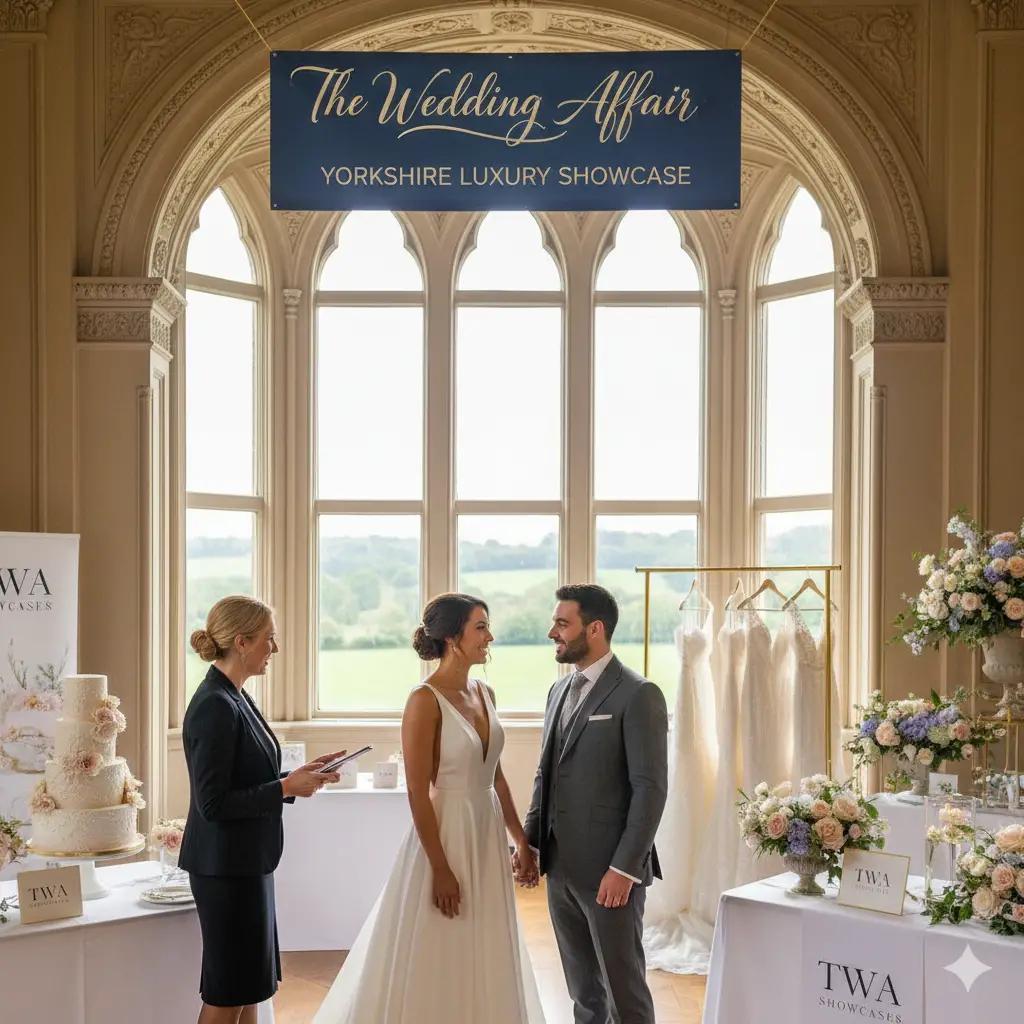
Most couples are familiar with the crowded, impersonal nature of standard wedding exhibitions. The Wedding Affair (UK) Ltd breaks this mold with their signature TWA Showcases. These are not mere trade shows; they are curated experiences held at some of the most prestigious locations in the UK, including:
Historic Castles: Providing a fairytale backdrop for couples seeking grandeur.
Stately Homes: Offering a glimpse into aristocratic elegance and timeless tradition.
Luxury Hotels: Showcasing modern sophistication and high-end amenities.
At a TWA event, the atmosphere is one of inspiration rather than high-pressure sales. Couples are invited to wander through beautifully styled rooms, attend professional venue tours, and engage in meaningful conversations with hand-picked exhibitors.
The Vetting Process: Why "Hand-Picked" Matters
One of the strongest value propositions offered by The Wedding Affair is their rigorous supplier referral service. In an industry saturated with "weekend hobbyists," Lisa and Christopher Hogg have implemented a strict vetting system. Every photographer, florist, cake designer, and bridal boutique associated with the brand must meet rigorous standards of:
Professionalism: Proven track records and reliable business practices.
Creativity: A portfolio that demonstrates innovation and high-quality craftsmanship.
Reliability: Positive testimonials and a history of excellence in the Yorkshire wedding circuit.
By acting as a filter, The Wedding Affair saves couples hundreds of hours of research, ensuring that every recommendation is a "safe bet" for their big day.
Services That Bridge the Digital and Physical Gap
While their physical events are the cornerstone of the business, The Wedding Affair (UK) Ltd has embraced the digital age to provide 365-day support to couples.
1. Wedding Fair Organization
The core of the business involves planning and executing large-scale events that attract thousands of visitors annually. These events often include free goody bags for brides and VIP access options, making the day feel like a special outing rather than a chore.
2. Venue Showcase Events
For venues, TWA serves as a strategic marketing partner. They help luxury locations showcase their potential to the right demographic, ensuring that the venue's unique character is highlighted through professional styling and event management.
3. Wedding Planning Consultation
For those who require a more hands-on approach, the company offers bespoke planning services. Leveraging their vast network of "Boutique Supplier Networking," they can manage every detail from the initial venue search to the final send-off.
4. Digital Wedding Marketing
Through their website and social media platforms (primarily Facebook), The Wedding Affair acts as a trendsetter. They provide a constant stream of inspiration regarding bridal fashion, photography styles, and floral designs, keeping northern couples at the forefront of global wedding trends.
Why Yorkshire is the Ultimate Wedding Destination
Yorkshire, often referred to as "God’s Own County," offers a diverse range of landscapes that are perfect for any wedding style. The Wedding Affair specializes in:
York City Weddings: Combining medieval charm with modern luxury.
North York Moors & Dales: Ideal for couples seeking rustic elegance or dramatic, sweeping views.
The Golden Triangle (York, Harrogate, Leeds): Home to some of the most opulent stately homes and luxury hotels in the country.
By focusing on this specific geographical area, The Wedding Affair ensures that their supplier network is truly local, reducing carbon footprints and supporting the regional economy.
Amenities and Accessibility: The Guest Experience
The Wedding Affair prides itself on hospitality. Recognizing that the planning process should be inclusive and welcoming, they offer:
Free Entry (Select Events): Ensuring that inspiration is accessible to all.
On-site Wedding Experts: Professionals are available at every event to answer niche questions about legalities, timelines, and budgets.
Professional Venue Tours: Allowing couples to see a location through the eyes of an event planner.
Flexible Payments: Supporting modern business practices with Bank Transfers (BACS), Credit/Debit cards, and cash options.
A Legacy Built on Community
The Wedding Affair is more than just a company; it is the hub of a Regional Wedding Supplier Network. By fostering collaboration rather than cut-throat competition, they have built a community where professionals support one another to deliver the best possible results for the couple. This collaborative spirit is what has earned them multiple awards and a reputation as the "go-to" organizer for luxury events in the North.
Planning with Confidence
In a world where digital noise can make decision-making difficult, The Wedding Affair (UK) Ltd provides a clear, elegant, and trusted path to the altar. Whether you are at the very beginning of your journey—looking for that perfect castle venue—or searching for a final "wow factor" supplier, Lisa and Christopher Hogg’s team offers the expertise and heart required to bring your vision to life.
For those in Yorkshire and beyond, The Wedding Affair isn't just an event organizer; it's the architect of your most cherished memories.
Frequently Asked Questions
1. What makes The Wedding Affair different from other wedding fairs?
Unlike standard fairs, TWA focuses on "Showcases" in luxury venues like stately homes and castles. We prioritize a curated selection of vetted, high-quality suppliers over a large volume of unverified businesses.
2. Is there an entry fee for your wedding showcases?
Many of our events offer free entry with pre-registration, though some premium events or VIP experiences may have a nominal ticket price.
3. Do I need to book an appointment to speak with a wedding expert at an event?
No, our on-site experts are available throughout the event to offer advice and answer questions on a first-come, first-served basis.
4. How do you choose the suppliers that exhibit at your shows?
We have a rigorous vetting process. We look for local and national suppliers who demonstrate a high level of professionalism, creativity, and a proven track record of excellence.
5. Does The Wedding Affair only operate in York?
While we are based in York, our service area covers a 50-mile radius, including North Yorkshire, West Yorkshire, and surrounding northern counties.
6. Can I get help with wedding planning if I can't attend a show?
Yes! We offer wedding planning consultations and have a robust digital platform with supplier referrals and inspiration available online.
7. Are the goody bags really free?
Yes, we provide free goody bags for brides (or grooms) at most of our events, often filled with samples, vouchers, and the latest wedding magazines.
8. What payment methods are accepted for booking services?
We accept Bank Transfers (BACS) and Credit/Debit cards. For event entry where applicable, cash may also be accepted.
9. How long has The Wedding Affair been in business?
The company was officially founded on March 4, 2014, and has been a leader in the Yorkshire wedding industry ever since.
10. How can I stay updated on upcoming events?
The best way to stay informed is to visit our website at theweddingaffair.co.uk or follow our official Facebook page.
Business Snapshot
Name: The Wedding Affair (UK) Ltd
Directors: Lisa Patricia Hogg & Christopher Peter Hogg
Phone: 01904593452
Email: enquiries@theweddingaffair.co.uk
Address: 8 Marsden Park, James Nicolson Link, York, YO30 4WX
Registration No: 08920851
York
0 Views
Educational Services
Apr 08, 2026
Advance HE: Driving Excellence in Higher Education
The landscape of higher education is undergoing a profound transformation. As institutions navigate shifting student demographics, digital disruption, and increasing calls for social accountability, the need for a unified, expert-led support system has never been greater. Enter Advance HE, a member-led, sector-owned charity headquartered in York, United Kingdom, dedicated to improving higher education for staff, students, and society at large.
Formed in 2018 through a strategic merger of three powerhouse organizations—the Higher Education Academy (HEA), the Equality Challenge Unit (ECU), and the Leadership Foundation for Higher Education (LFHE)—Advance HE serves as the ultimate professional body for the academic community. This article provides an in-depth exploration of its services, impact, and the frameworks that define modern teaching excellence.
The Genesis: A Merger for the Future of Learning
The birth of Advance HE on March 21, 2018, was not merely a change in name but a consolidation of specialized expertise. By bringing together teaching and learning (HEA), equality and diversity (ECU), and leadership and governance (LFHE), the organization created a holistic approach to institutional development.
Today, Advance HE operates as a global consultancy and professional body, supported by major UK stakeholders like Universities UK and GuildHE. With over 210 employees and a reach that spans from its base at the York Science Park to institutions in over 80 countries, it has become the "gold standard" for professional recognition in the sector.
The Professional Standards Framework (PSF 2023)
At the heart of Advance HE’s teaching and learning mission is the Professional Standards Framework (PSF). Recently updated in 2023 to reflect the evolving needs of the global HE community, the PSF provides a comprehensive set of standards for those who teach or support learning.
The Dimensions of Practice
The PSF is built upon three core sets of "Dimensions":
Professional Values: Including a commitment to inclusivity, equity, and evidence-informed practice.
Core Knowledge: The subject material and the methods of teaching it effectively.
Areas of Activity: The actual practice of designing curricula, teaching, and assessment.
The 2023 update placed a renewed emphasis on inclusive practice and the effectiveness and impact of teaching, ensuring that educators are not just performing tasks but are actively improving student outcomes.
Advance HE Fellowships: A Global Mark of Professionalism
The Advance HE Fellowship (formerly HEA Fellowship) is perhaps the most recognized credential in the academic world. It serves as an international "passport to teach," signifying a practitioner's commitment to professionalism and student success.
There are four distinct categories of Fellowship, tailored to different career stages:
Associate Fellow (AFHEA): Designed for early-career researchers, PhD students with teaching duties, or professional staff with limited teaching responsibilities.
Fellow (FHEA): The standard for established academics with a substantive teaching role.
Senior Fellow (SFHEA): Awarded to those who demonstrate a sustained record of effectiveness in strategic leadership of teaching and learning.
Principal Fellow (PFHEA): The highest level of recognition, reserved for senior leaders who have a significant, institution-wide (or even national/international) impact on the student learning experience.
With over 165,000 Fellows worldwide, this network forms a global community of practice dedicated to pedagogical innovation.
Driving Social Change: Athena Swan and Race Equality Charters
Advance HE is a world leader in promoting Equality, Diversity, and Inclusion (EDI) through its celebrated charter marks. These frameworks provide a roadmap for institutions to address systemic inequalities.
Athena Swan Charter
Originally launched in 2005 to support women in STEMM (Science, Technology, Engineering, Maths, and Medicine), the Athena Swan Charter has expanded to cover all disciplines and genders. It focuses on removing barriers to progression and transforming institutional culture to ensure that talent is nurtured regardless of gender.
Race Equality Charter (REC)
The REC aims to improve the representation, progression, and success of minority ethnic staff and students. It requires institutions to undergo a rigorous self-reflection process, identifying racial inequalities and committing to action-oriented solutions.
Leadership and Governance in Modern Higher Education
Effective leadership is the bedrock of a successful university. Advance HE provides a suite of programs designed to equip current and future leaders with the skills to manage complex academic environments.
Aurora: A unique leadership development initiative for women, which has seen thousands of participants gain the confidence and skills to move into senior roles.
Top Management Programme (TMP): The flagship program for those entering executive-level leadership.
Governance Effectiveness Reviews: Advance HE works directly with University Boards and Governing Bodies to ensure they are meeting regulatory standards and providing effective strategic oversight.
Global Reach and Consultancy Services
While headquartered in York, Advance HE’s influence is truly international. From supporting the development of national teaching standards in Thailand and Bahrain to facilitating leadership training in Ukraine, the organization leverages its UK expertise to benefit the global sector.
Member institutions gain access to:
Virtual Learning Environments (VLE) for professional development.
Research Data Dashboards that provide insights into student experience and staff demographics.
Peer-Review Networks that foster collaborative scholarship.
The Value of Membership
Advance HE is a member-led charity. Institutional membership provides universities with discounted access to accreditation, fellowships, and consultancy. It also allows staff to join a vast network of HE professionals, sharing best practices through webinars, conferences, and the Advance HE Connect platform.
Frequently Asked Questions
1. What is the difference between HEA and Advance HE?
HEA (Higher Education Academy) was one of the three organizations that merged to form Advance HE in 2018. While the name of the organization is now Advance HE, the professional recognition is still commonly referred to as "HEA Fellowship."
2. How do I apply for an Advance HE Fellowship?
Applications can be made through your institution if they have an accredited internal scheme, or directly to Advance HE via their online portal. You will need to provide an "Account of Professional Practice" (APP) mapped against the PSF 2023 dimensions.
3. What are the benefits of becoming a Fellow?
Fellowship provides professional recognition of your teaching expertise, enhances your CV for promotion and recruitment, and entitles you to use post-nominal letters (e.g., FHEA). It also demonstrates your commitment to student success.
4. How much does a Fellowship application cost?
Fees vary depending on whether you are applying through a member institution or as an individual. Current prices can be found on the Advance HE website, with significant discounts available for staff at member universities.
5. What is the Athena Swan Charter?
It is a framework used globally to support and transform gender equality within higher education and research. Achieving a Bronze, Silver, or Gold award demonstrates an institution's commitment to gender equity.
6. Can I apply for Fellowship if I work outside the UK?
Yes. Advance HE is a global body, and Fellowships are recognized and held by practitioners in over 80 countries.
7. What is the "Aurora" program?
Aurora is Advance HE’s leadership development initiative specifically for women in higher education. it combines training, mentoring, and networking to support career progression.
8. Is the PSF only for academic lecturers?
No. The Professional Standards Framework is designed for anyone who supports learning, including technicians, librarians, learning technologists, and student support staff.
9. How does Advance HE support university governance?
They offer Governance Effectiveness Reviews, training for new governors, and the "Governor Development Programme" (GDP) to ensure university boards operate efficiently and ethically.
10. Where is Advance HE located?
The global headquarters is located at York Science Park, Heslington, York (YO10 5BR), United Kingdom, near the University of York campus.
A Partner in Academic Transformation
Advance HE stands as a pillar of the global academic community. By integrating pedagogical excellence with social equity and strategic leadership, they ensure that higher education institutions are not just places of learning, but beacons of professional and social progress. Whether you are an early-career researcher seeking an Associate Fellowship or a Vice-Chancellor aiming for a Race Equality Charter award, Advance HE provides the tools, frameworks, and community to help you succeed.
For more information, visit their website at https://www.advance-he.ac.uk or contact their York-based helpdesk at 01904 917108.
York
0 Views
- Prev
- 1
- Next
Share This Page
My Page
Scan QR to open
Barcode