
Agricultural Contractors UK: Services Scope, Seasonal Trends & Regional Map
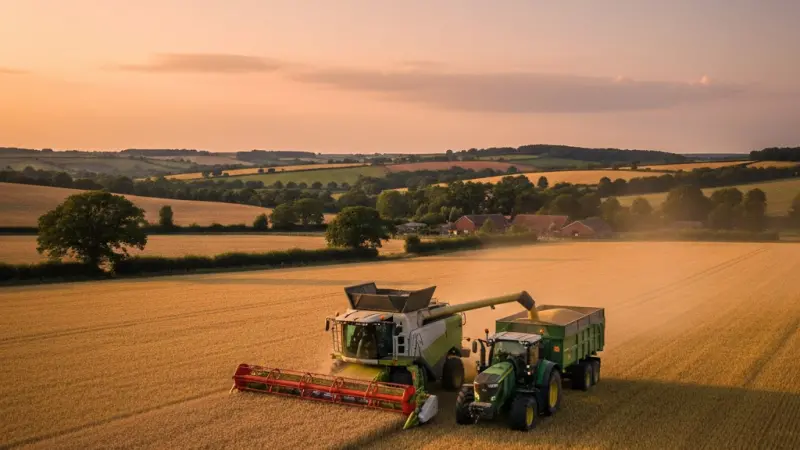
The United Kingdom’s agricultural sector is undergoing a period of profound structural change. Central to this transformation is the agricultural contractor—a specialist workforce that provides the machinery, expertise, and labour required to keep the nation’s 17 million hectares of farmed land productive. Far from being a mere "helping hand," the modern contractor is a sophisticated business partner, often managing multi-million-pound fleets of GPS-guided machinery and employing highly skilled operators.

The economic importance of this sector cannot be overstated. Agricultural contracting allows farmers to access the latest technology without the prohibitive capital expenditure associated with purchasing equipment. In an era where a single combine harvester can cost upwards of £500,000, the "pay-as-you-go" model offered by contractors is vital for cash flow management. This sector ensures that British agriculture remains competitive on a global stage, providing the agility needed to respond to volatile weather patterns and shifting market demands.
For those looking to navigate this complex industry, utilising a uk online business directory is the most efficient way to source verified professionals who understand the specific requirements of the British countryside.
The Landscape of Agricultural Contractors in the UK
The UK agricultural contracting market is currently valued at approximately £2.25 billion, with a projected compound annual growth rate (CAGR) of over 5% through 2030. This growth is driven by a critical shortage of on-farm labour and the rapid acceleration of mechanisation. Post-pandemic, the industry has seen a significant shift; while COVID-19 initially disrupted supply chains, it ultimately highlighted the resilience of contractors who stepped in when farm-based staff were isolated or unavailable.
Key Regions of Activity
The "Regional Map" of UK contracting is dictated largely by land use:
East Anglia & The East Midlands: The "breadbasket" of England. This region sees the highest concentration of arable contractors specialising in large-scale cereal, sugar beet, and potato harvesting.
The South West: Dominated by livestock and dairy. Contractors here focus on forage harvesting, slurry injection, and grassland management.
Scotland & The North: Rugged terrain requires specialists in hill farming support, drainage, and lime spreading.
Post-Brexit, the transition from the Common Agricultural Policy (CAP) to the Sustainable Farming Incentive (SFI) has forced many farmers to diversify. Consequently, contractors are now pivoting towards environmental services, such as hedge laying, wildflower meadow establishment, and carbon-sequestration projects. To find these specialists, farmers frequently turn to a uk business directory to identify who has the specific kit for new environmental schemes.
Comprehensive Services Breakdown
The scope of services offered by UK contractors has expanded far beyond traditional plowing and harvesting. Today’s service providers offer a "cradle-to-grave" approach to crop and livestock management.
Arable Services
Precision Drilling: Utilising Variable Rate Technology (VRT) to ensure seed is placed at the optimum density based on soil maps.
Crop Protection: High-clearance sprayers equipped with pulse-width modulation to reduce chemical drift and ensure compliance with UK REACH regulations.
Combining & Carting: High-capacity harvesting services often including grain drying and storage solutions.
Livestock & Grassland Support
Silage & Forage: The "Big Three" (Mowing, Raking, Chopping) are the bread and butter of Western UK contractors.
Nutrient Management: Precision slurry spreading using umbilical systems or tankers with trailing shoes to minimise ammonia emissions.
Mobile Feed Milling: Processing home-grown cereals into high-quality livestock feed directly on the farm.
Estate & Environmental Management
With the rise of "Green" farming, many contractors now offer:
Soil Health Auditing: Using sensors to map compaction and nutrient levels.
Drainage & Excavation: Maintaining the Victorian-era clay tile systems common across the UK.
Bioenergy Support: Harvesting maize and grass for Anaerobic Digestion (AD) plants.
Finding these niche providers is simplified by using a uk local business directory, which categorises services by specific agricultural sub-sectors.
How to Choose the Right Service Provider
Selecting a contractor is one of the most significant financial decisions a farm manager will make. Reliability and reputation are paramount.
Key Selection Criteria
Accreditations: Look for members of the National Association of Agricultural Contractors (NAAC). Membership often includes the "Assured Land-Based Contractor" (ALBC) status, which is recognised by Red Tractor.
Insurance: Ensure the provider has comprehensive public liability and environmental impairment insurance. Agricultural work is high-risk; a lack of cover can lead to devastating legal consequences for the landowner.
Technology Stack: Ask about their telematics and data-sharing capabilities. Can they provide a digital map of where they sprayed? Can they share yield data directly to your farm management software?
Local Reputation: Agriculture remains a "word of mouth" industry. However, digital verification is becoming standard. Checking local business listings uk for reviews and verified contact details helps mitigate the risk of hiring "cowboy" operators.
Industry Challenges & Future Outlook
The "Next Gen" of agricultural contracting faces a trifecta of challenges: technology, sustainability, and regulation.
The Technology Shift
We are entering the era of the "Autonomous Contractor." Small-scale robotics and autonomous tractors are beginning to move from trial plots to commercial fields.
While the "driverless" future is still maturing, the integration of AI for weed identification and targeted spraying is already here.
Sustainability & Green Initiatives
Contractors are under pressure to reduce their carbon footprint. This includes the adoption of HVO (Hydrotreated Vegetable Oil) fuel and investing in low-compaction tyres to protect soil structure. The UK government’s Net Zero targets mean that "Carbon-neutral contracting" will likely be a marketable service within the next decade.
Regulatory Changes
Post-Brexit regulations, such as the Clean Air Strategy, have placed strict limits on how urea and slurry are applied. Contractors who invest in the technology to meet these rules first will capture the most market share. For business owners, ensuring your firm is visible on a uk service listings platform is essential as farmers search for "compliant" providers.
Business Tips for Agricultural Contractors Professionals
Running a contracting business is as much about logistics and marketing as it is about machinery.
Marketing & Digital Visibility
Many old-school contractors still rely on a sign at the end of the driveway. However, the modern farm manager belongs to a younger, more tech-savvy demographic.
Claim Your Digital Space: You should claim your business listing uk to ensure that when a farmer searches for "Maize harvesting near me," your business appears.
Visual Proof: Use social media to showcase the quality of your work—clean lines, well-maintained machinery, and efficient operations.
Diversify Income: Consider offering winter services like snow plowing or salt spreading to keep staff employed year-round.
The importance of a business listing uk cannot be overstated; it provides a low-cost, high-impact way to build a digital footprint that complements traditional networking at livestock markets or trade shows like LAMMA.
Wrapping Up & Local Page Integration
The UK agricultural contracting sector is the engine room of British food production. As farming moves toward a more data-driven, environmentally conscious future, the relationship between farmer and contractor will only deepen. Whether you are a farmer looking for the most advanced precision drilling service or a contractor looking to expand your client base, the digital bridge is more important than ever.
Local Page UK stands as the premier solution for this sector. By providing a platform where expertise meets demand, it ensures that rural businesses aren't left behind in the digital age.
From specialist trade listings to comprehensive regional categories, it is the ultimate tool for finding and being found.
Boost Your Visibility with Local Page UK
In the competitive world of agricultural services, being invisible online is a risk you cannot afford. Most farmers now begin their search for new suppliers on their smartphones while in the cab. To ensure your business is at the top of their list, you should secure a business listing uk today. Reach more customers, build your local reputation, and join the most trusted uk verified business listings network in the country.
Frequently Asked Questions
What are the primary benefits of hiring an agricultural contractor in the UK? The primary benefits include access to high-specification machinery without the capital outlay, the inclusion of skilled operators who are experts in specific tasks, and the ability to complete large-scale work within tight weather windows. This improves farm efficiency and allows the farmer to focus on core management tasks.
How do I verify the credentials of a UK agricultural contractor? You should check if they are members of the National Association of Agricultural Contractors (NAAC). You can also look for "Assured Land-Based Contractor" (ALBC) status. Additionally, checking for verified reviews on a reputable uk online business directory can provide insight into their reliability and past performance.
What insurance should an agricultural contractor have? At a minimum, they must have Public Liability insurance (ideally up to £5m or £10m depending on the contract size), Employers' Liability (if they have staff), and increasingly, Environmental Impairment Liability to cover accidental pollution incidents during chemical or slurry application.
Is it cheaper to own machinery or use a contractor? This depends on the "utilization rate." If you only use a machine for 50 hours a year, it is almost always cheaper to use a contractor. For tasks requiring highly specialized, expensive kit like self-propelled forage harvesters, contracting is the standard choice for most UK farms.
How have UK agricultural contracting trends changed post-Brexit? There is a significant shift toward "Environmental Contracting." With the introduction of the Sustainable Farming Incentive (SFI), contractors are now providing more services related to soil health, cover cropping, and habitat creation rather than just traditional intensive food production.
What is 'Precision Agriculture' in the context of contracting? It involves using GPS, satellite imagery, and soil sensors to apply inputs (seed, fertilizer, spray) at variable rates across a field. Contractors with this technology can help farmers reduce waste and increase yields by treating every square meter of a field according to its specific needs.
Are agricultural contractors in the UK seasonal? While the work is highly seasonal (harvesting in summer, drilling in autumn), many contractors diversify into winter work such as hedge cutting, drainage, machinery maintenance, and commercial gritting/snow clearing to ensure year-round income.
How can a contractor improve their online visibility? The most effective way is to list the business on a high-traffic uk business directory. Including detailed service descriptions, high-quality photos of equipment, and maintaining a verified status helps build trust with potential clients who are searching online.
What geographical areas are busiest for arable contractors? East Anglia (Norfolk, Suffolk, Cambridgeshire) and the East Midlands (Lincolnshire) are the primary hubs for arable contracting due to the large, flat fields and high-quality soil suited for cereal and root crop production.
Do contractors provide their own fuel and labour? In most "full-service" contracts, the contractor provides the machine, the operator, and the fuel. However, "labour only" or "tractor and man" hire is also common, where the farmer provides the implement and the fuel while the contractor provides the power and expertise.
What is the NAAC? The National Association of Agricultural Contractors (NAAC) is the representative body for contractors in the UK. They provide health and safety advice, standard contract templates, and lobby the government on behalf of the sector.
Can contractors help with UK farming subsidies? Yes, many contractors now provide the data and maps required for farmers to claim SFI or Countryside Stewardship payments. Their precision equipment provides the digital "proof of work" often required by DEFRA during inspections.
What impact does the weather have on UK contracting? The UK’s unpredictable weather is the biggest risk factor. A wet summer can compress a month’s worth of harvesting into a single week. This is why contractors invest in high-capacity machinery—to ensure they can maximize productivity during "dry windows."
Is there a shortage of agricultural contractors in the UK? There is currently a shortage of skilled operators. This has led to increased wage
costs and a higher demand for automated features in machinery that make the equipment easier to operate for less experienced staff.
How can a new contracting business get its first clients? Networking at local markets is key, but building a digital presence is equally vital. Claiming a business listing uk allows a new business to appear alongside established names, giving them an equal footing in the local search market.

Disclaimer: The information provided in this article is for general informational and research purposes only. Company details, features, services, and market positions may change over time. Readers are advised to visit official company websites and conduct independent research before making any business decisions or purchasing services.
Most Searchable Keywords

Recent Blogs



Related Listings


Categories
- Accountants (295)
- Advertising Agencies (559)
- Architects (149)
- Automobiles (377)
- Beauty (300)
- Carpenters (146)
- Cleaning Services (386)
- Dentists (189)
- Driving (62)
- Electricians (215)
- Energy (8)
- Event Organiser (685)
- Finance (599)
- Guide (3365)
- Health (2207)
- Information technology (206)
- Legal Services (353)
- Logistics (6)
- Maintenance (65)
- Manufacturing (35)

Sponsored Listings in Locksmith Services


Related Blogs

Gen Z Political Reporters and News Creators i...
Read this insightful article "Gen Z Political Reporters and News Creators in the UK" to expand your knowledge!

Famous Female Social Media Influencers Across...
Read this insightful article "Famous Female Social Media Influencers Across the UK" to expand your knowledge!

Your UK Sponsor Licence 2026 Step by Step Gui...
Read this insightful article "Your UK Sponsor Licence 2026 Step by Step Guide" to expand your knowledge!
Questions & Answers – Find What
You Need, Instantly!
How can I update my business listing?
Is it free to manage my business listing?
How long does it take for my updates to reflect?
Why is it important to keep my listing updated?
