
Anodisers UK: Processes, Benefits & Finish Specifications
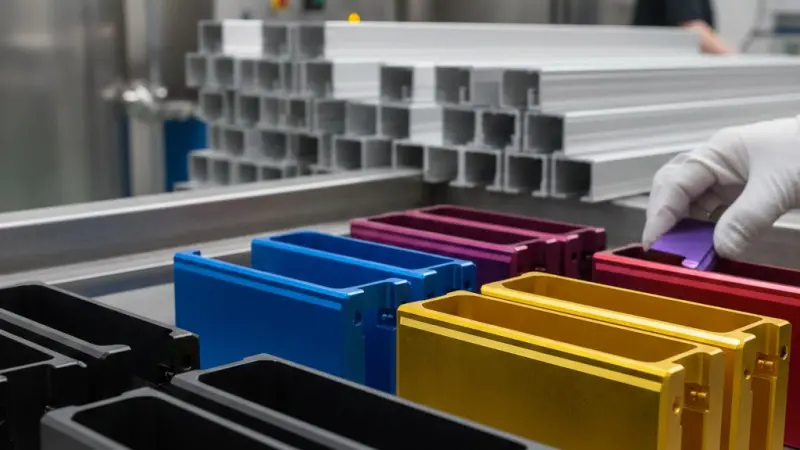
The anodising sector in the United Kingdom represents a vital cog in the nation’s industrial machinery. As a sophisticated electrochemical process used to increase the thickness of the natural oxide layer on the surface of metal parts—primarily aluminium—anodising is essential for sectors ranging from aerospace and automotive to high-end architecture and consumer electronics. In the UK, the demand for high-performance finishes has never been higher, driven by a domestic manufacturing base that prides itself on precision engineering and durability.
Anodisers across the UK provide more than just a coating; they offer structural integrity and aesthetic versatility. The economic importance of this sector cannot be understated. It supports thousands of skilled engineering roles and ensures that British-made products meet stringent international standards for corrosion resistance and hardness. For many start-ups and established workshops, finding a reliable finishing partner is a priority, often starting with a search through a business listing uk to identify accredited specialists.
As we move further into a decade defined by "Reshoring" and the "Made in Britain" marque, the role of the anodiser has evolved from a simple service provider to a strategic partner in the product development lifecycle. This guide explores the intricate landscape of the UK anodising industry, providing a definitive resource for professionals and consumers alike.
The Landscape of Anodisers in the UK
The UK anodising market is a diverse ecosystem of small, highly specialised boutiques and large-scale industrial plants. Historically concentrated in the industrial heartlands of the West Midlands, South Yorkshire, and the South East, the industry has shown remarkable resilience. Currently, the market size for metal finishing in the UK is valued in the hundreds of millions, with anodising accounting for a significant portion of the non-ferrous treatment sub-sector.
Post-pandemic, the landscape has shifted significantly. The global supply chain disruptions of 2020-2022 highlighted the risks of over-reliance on overseas finishing services. Consequently, there has been a notable surge in domestic demand as UK manufacturers seek to shorten lead times and reduce their carbon footprint. This "local-first" approach has led to a revitalisation of regional hubs, where businesses frequently update their local business listings uk to ensure they are visible to nearby procurement officers.
The evolution of the industry is also marked by a move toward "Industry 4.0." Modern UK anodising plants are increasingly adopting automated line controls, real-time chemical monitoring, and advanced filtration systems. This technological pivot ensures consistency in batch processing—a historical pain point for the industry—and allows UK firms to remain competitive against lower-cost international rivals by offering superior quality and faster turnaround times.
Comprehensive Services Breakdown
Anodising is not a "one size fits all" process. UK service providers offer a spectrum of treatments tailored to specific environmental and functional requirements. Understanding these services is crucial for engineers looking to specify the correct finish for their components.
1. Sulphuric Acid Anodising (Type II)
This is the most common form of anodising in the UK. It produces a clear, porous coating that is ideal for "colour anodising." By using organic or inorganic dyes, UK anodisers can produce a vibrant range of colours, from sleek "Apple-style" silvers to deep architectural bronzes. This service is highly sought after in the consumer electronics and signage industries.
2. Hard Anodising (Type III)
For applications requiring extreme wear resistance, such as hydraulic cylinders or high-performance automotive parts, Hard Anodising is the standard. This process uses lower temperatures and higher current densities to create a much thicker and denser oxide layer. Many industrial clients find these specialist providers through a uk business directory that filters for technical certifications.
3. Chromic Acid Anodising (Type I)
Though increasingly regulated due to environmental concerns, Chromic Anodising remains vital for the aerospace sector. It provides excellent corrosion resistance with minimal impact on the fatigue strength of the metal, making it ideal for thin-walled aerospace components.
4. Bright Anodising
Commonly used for decorative trim and lighting reflectors, this process involves a chemical or electro-brightening step before the anodising stage, resulting in a mirror-like finish.
For businesses looking to procure these specific technical services, using a uk service providers directory
is the most efficient way to compare capabilities and lead times across different regions.
How to Choose the Right Service Provider
Selecting an anodising partner is a high-stakes decision. A poor finish can ruin thousands of pounds worth of precision-machined parts. When vetting a provider, British businesses should look for four key pillars:
1. Accreditations: In the UK, ISO 9001 is the baseline. However, for aerospace work, AS9100 is mandatory. If you are working on architectural projects, look for the "Qualanod" mark, which guarantees the finish meets European standards for outdoor exposure.
2. Insurance and Liability: Ensure the provider has comprehensive professional indemnity and public liability insurance. This protects your assets while they are in their facility.
3. Reviews and Case Studies: A provider’s reputation in the trade is everything. Look for uk verified business listings where you can read authentic feedback from other engineering firms.
4. Environmental Compliance: With the UK’s strict REACH and COSHH regulations, a reputable anodiser must demonstrate robust chemical waste management and energy-efficient operations.
Local reputation remains a powerful indicator of quality. A provider that has served a local cluster of manufacturers for decades is often a safer bet than a cut-price alternative with no established track record.
Industry Challenges & Future Outlook
The UK anodising industry faces a dual challenge: rising energy costs and increasingly stringent environmental regulations. Anodising is an energy-intensive process, requiring constant refrigeration of acid baths and high-voltage electrical current. To combat this, many UK firms are investing in renewable energy sources and "cold sealing" technologies to reduce their thermal load.
Sustainability is the primary driver of innovation. The industry is moving away from hexavalent chromium and toward trivalent chromium or chrome-free alternatives to comply with evolving UK REACH standards. Furthermore, the push for a "Circular Economy" means anodisers are now working closely with recyclers to ensure that anodised aluminium can be stripped and reused without contaminating the metal stream.
Despite these challenges, the outlook is positive. The growth of the electric vehicle (EV) market in the UK provides a massive opportunity, as EVs require lightweight, corrosion-resistant aluminium components for battery housings and chassis. Forward-thinking firms are already listing their specialized EV-grade finishes on a uk business directory website to capture this burgeoning market. Additionally, for those just starting, securing a business listing uk is the first step toward building a digital footprint in this new green industrial era.
Business Tips for Anodisers Professionals
For the owners of metal finishing shops, technical excellence is only half the battle; the other half is marketing. In a niche B2B sector, your digital visibility determines your growth trajectory. Many UK anodisers still rely on "word of mouth," but as the older generation of procurement managers retires, the new "digital-native" workforce turns to the web first.
1. Optimize for Local SEO: Your business should appear when someone searches for "anodising near me." Ensure your Google Business
Profile is active and that you are listed in high-authority uk service listings to boost your domain authority.
2. Showcase Your Work: High-quality photography of different finishes (Hard vs. Bright vs. Colour) helps potential clients visualize the end product.
3. Educate Your Audience: Publish "spec sheets" or "design guides" on your website. This positions you as an expert rather than a commodity.
4. Networking and Directories: Be active where your customers are. If you provide architectural finishes, ensure you are in directories used by architects. If you are a generalist, being part of a comprehensive uk b2b business directory ensures you are in the running for diverse contracts.
Wrapping Up & Local Page Integration
The UK anodising industry is a testament to British engineering resilience. By combining age-old electrochemical principles with cutting-edge environmental tech, these businesses ensure that the "Made in Britain" label continues to represent world-class quality. Whether you are a manufacturer seeking a reliable partner or a finishing professional looking to expand your reach, the key to success lies in connection and visibility.
For businesses across the UK, from Cornwall to the Highlands, local page uk business directory offers the premier solution for bridging the gap between service providers and those who need them. In an increasingly digital world, your online presence is your storefront. By ensuring your business is accurately represented and easily found, you contribute to a stronger, more connected UK manufacturing sector.
Boost Your Visibility with Local Page UK
In the competitive world of UK metal finishing, being "the best kept secret" is a recipe for stagnation. To thrive, your business needs to be where the decision-makers are looking. Local Page UK provides a high-authority platform designed specifically to showcase the best of British trade and professional services.
Whether you specialize in aerospace-grade hard anodising or decorative consumer finishes, reaching local customers has never been simpler. We encourage all UK-based anodisers and engineering firms to claim their business listing uk today. By doing so, you tap into a network of local searchers, improve your SEO, and ensure your services are visible to the manufacturers and creators who drive our economy forward.
Frequently Asked Questions
1. What is the main difference between Type II and Type III anodising?
Anodising in the UK is typically categorized by these types. Type II (Sulphuric Acid Anodising) is thinner, more porous, and primarily used for decorative purposes or moderate corrosion resistance. It is the best choice for color dyeing. Type III (Hard Anodising) is much thicker and denser, created at lower temperatures. It is designed for industrial applications where extreme wear resistance and surface hardness are required, often resulting in a dark grey or black natural finish.
2. Can all metals be anodised by UK service providers?
No, the anodising process is almost exclusively reserved for non-ferrous metals, with aluminium being the most common. While titanium, magnesium, and zinc can also be anodised using specialized processes, you cannot anodise steel or iron.
For these metals, UK finishers usually offer galvanizing or electroplating services. It is best to check a uk trade services listings site to find specialists for non-aluminium metals.
3. How long does the anodising process typically take?
The actual time in the chemical tank is usually between 30 to 60 minutes. However, the entire "turnaround" time—including cleaning, degreasing, etching, de-smutting, anodising, dyeing, and sealing—usually takes 3 to 5 working days depending on the batch size and the provider’s current workload.
4. Is anodising environmentally friendly?
Compared to other finishes like spray painting or certain types of plating, anodising is relatively "green." It does not involve heavy metals like lead or cadmium. The primary by-products are aluminium hydroxide and sulphuric acid, which can be neutralized and filtered. Most modern UK anodisers follow strict environmental protocols to minimize their impact.
5. Why should I use a local UK anodiser instead of importing pre-finished parts?
Using a local provider offers significantly better quality control. You can visit the site, discuss tolerances, and verify batch consistency. Furthermore, it eliminates the risk of "transit damage" to sensitive finishes and drastically reduces the carbon footprint of your supply chain.
6. Does anodising change the dimensions of my part?
Yes, anodising is a "growth" and "penetration" process. Roughly 50% of the coating thickness grows outwards from the surface, and 50% penetrates into the metal. Engineers must account for this "build-up" during the design phase, especially for precision-fitted components.
7. Can I anodise a part that has already been assembled?
Generally, no. Anodising must be done on individual components. If you have steel inserts, brass bushings, or other metals attached to the aluminium, the acid bath will likely destroy the non-aluminium parts or cause the anodising to fail.
8. What causes "patchy" or inconsistent colour in anodising?
Inconsistency is usually caused by variations in the aluminium alloy or the "grain" of the metal. If a batch contains parts from different material heats, they may react differently in the dye bath. High-quality UK anodisers use sophisticated racking and agitation techniques to minimize this.
9. How do I find the best-rated anodisers in my region?
The most effective way is to use a dedicated uk local business search tool. Look for providers with verified reviews and specific mentions of the certifications (like ISO 9001) that your project requires.
10. Can anodising hide scratches or machining marks?
To an extent, yes. A "matte etch" pre-treatment can hide very fine machining lines. However, deep scratches or gouges will often be highlighted rather than hidden by the anodising process. Surface preparation is key to a perfect finish.
11. Is dyed anodising light-fast?
Organic dyes used for indoor products can fade over time if exposed to direct UV sunlight. For outdoor architectural use, UK specialists use "inorganic" dyes or "two-step" electrolytic colouring, which are significantly more resistant to fading.
12. What is "Sealing" in the anodising process?
Sealing is the final, critical step. Because the anodic layer is porous (like a honeycomb), it must be sealed to close those pores. This prevents corrosion and locks in the dye. This is usually done in a boiling deionized water bath or a chemical seal.
13. Is anodising expensive compared to powder coating?
For small, precision parts, anodising is often more cost-effective. For large, structural steel-like items, powder coating might be cheaper. Anodising is generally considered a "premium" finish due to its durability and the fact that it cannot flake or peel.
14. What information do I need to provide for a quote?
You should provide the alloy grade (e.g., 6061, 7075), the required thickness (microns), the
desired colour, and whether any areas need "masking" (where no anodising is allowed).
15. Are there specific UK regulations for anodising chemicals?
Yes, the UK industry must comply with REACH (Registration, Evaluation, Authorisation, and Restriction of Chemicals). This has led to the phasing out of certain substances, ensuring that the finishes produced in the UK are safe for both the environment and the end-user.
Disclaimer: The information provided in this article is for general informational and research purposes only. Company details, features, services, and market positions may change over time. Readers are advised to visit official company websites and conduct independent research before making any business decisions or purchasing services.
Most Searchable Keywords
Recent Blogs

Related Listings
Categories
- Accountants (295)
- Advertising Agencies (559)
- Architects (149)
- Automobiles (377)
- Beauty (300)
- Carpenters (146)
- Cleaning Services (387)
- Dentists (189)
- Driving (62)
- Electricians (215)
- Energy (8)
- Event Organiser (686)
- Finance (602)
- Guide (3373)
- Health (2207)
- Information technology (206)
- Legal Services (353)
- Logistics (6)
- Maintenance (65)
- Manufacturing (35)
Sponsored Listings in Travel Agencies

Related Blogs

Explore Dog Friendly Walks in the Cotswolds f...
Read this insightful article "Explore Dog Friendly Walks in the Cotswolds for 2026" to expand your knowledge!

How Much Do UK Actors Really Earn Full Indust...
Read this insightful article "How Much Do UK Actors Really Earn Full Industry Breakdown" to expand your knowledge!

Blue Light Card UK 2026 Check Eligibility and...
Read this insightful article "Blue Light Card UK 2026 Check Eligibility and Claim" to expand your knowledge!
Questions & Answers – Find What
You Need, Instantly!
How can I update my business listing?
Is it free to manage my business listing?
How long does it take for my updates to reflect?
Why is it important to keep my listing updated?
