
Antiques Repair & Restoring UK: Techniques, Specialists & Preservation
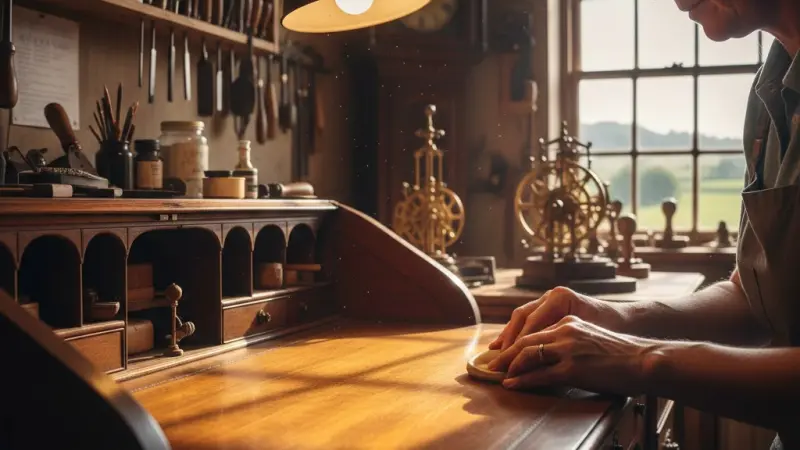
The British heritage sector is far more than a collection of dusty relics; it is a vibrant, multi-billion pound ecosystem that serves as the custodian of the nation's aesthetic and cultural history. Within this ecosystem, the Antiques – Repairing & Restoring sector stands as a vital pillar. This industry is dedicated to the meticulous preservation of craftsmanship, ensuring that historical artifacts—from Regency-era mahogany tables to intricate Victorian chronometers—retain both their functional utility and their investment value for future generations.
In the United Kingdom, the restoration market is uniquely positioned. Unlike mass-market furniture repair, antique restoration requires a profound understanding of historical chemistry, period-correct materials, and traditional construction methods. Whether it is the application of traditional French polish or the delicate stabilization of ancient textiles, the work of a master restorer is an act of historical stewardship. Economically, this sector supports thousands of highly skilled artisans, many of whom operate as sole traders or within small, specialized ateliers.
For many small businesses entering this niche, the challenge lies in connecting with a discerning clientele that values heritage over speed. Modern restorers are increasingly looking toward digital infrastructure to bridge this gap. For instance, many artisans find that securing a business listing uk is the first step in establishing a digital footprint that mirrors their physical reputation for excellence. As we navigate an era of "throwaway" culture, the UK's restoration industry champions the principles of the circular economy, proving that preservation is not just a nod to the past, but a sustainable strategy for the future.
The Landscape of Antiques – Repairing & Restoring in the UK
The landscape of the UK antiques restoration market has undergone a significant transformation over the last decade. Historically centered in hubs like London’s Chelsea or the Cotswolds, the industry is now more geographically diverse than ever. While London remains a critical international hub for high-end auctions and elite restoration houses, regions such as the South West, the Midlands, and Yorkshire have seen a resurgence in independent workshops.
The market size for antiques and restoration in the UK is estimated to be worth several hundred million pounds annually, though much of this is fragmented across small, independent operators. The "pandemic effect" served as a surprising catalyst for the industry. As lockdowns forced homeowners to spend more time in their domestic environments, there was a notable shift toward home improvement and "meaningful" consumption. Instead of purchasing mass-produced items, many consumers turned to heirlooms or auction finds, seeking professional restoration to integrate these pieces into modern living spaces.
Post-pandemic, the industry has also had to adapt to a new digital reality. Consumers no longer rely solely on word-of-mouth or physical storefronts; they utilize local business listings uk to find vetted experts in their immediate vicinity. This shift has forced traditional craftsmen—many of whom have spent decades at the bench—to embrace online visibility.
Furthermore, the evolution of the industry has been shaped by the scarcity of traditional materials. Environmental regulations and the CITES treaty have restricted the use of certain woods and animal-derived products (such as ivory or certain exotic veneers) that were common in 18th and 19th-century furniture. This has led to the development of ethical, synthetic alternatives and a renewed focus on "conservation" over "restoration"—a philosophy that emphasizes maintaining the original character of a piece rather than making it look brand new.
Comprehensive Services Breakdown
The breadth of services within the UK restoration sector is staggering, reflecting the diverse materials used throughout history. Each sub-discipline requires a unique set of tools and a lifetime of training.
Furniture and Cabinet Making
This is perhaps the most visible arm of the industry. Services include structural repairs to joints, the replacement of missing veneers, and traditional finishing. A master restorer must be proficient in "French Polishing"—a technique involving hundreds of layers of shellac applied by hand—and "Inlay," where intricate patterns of wood or bone are set into a surface.
Horology and Scientific Instruments
The repair of antique clocks, watches, and barometers is a precise science. It involves the dismantling of complex movements, cleaning of brass plates, and the hand-turning of replacement parts on a lathe. Because many parts for 100-year-old movements no longer exist, the horologist must often manufacture them from scratch.
Textiles and Upholstery
Restoring a Louis XIV chair involves more than just new fabric. "Traditional Upholstery" uses horsehair, hessian, and hand-tied springs rather than modern foam. Textile conservators also work on tapestries and rugs, using specialized washing and needle-weaving techniques to stabilize fragile fibers.
Ceramics and Glass
For high-value porcelain (such as Meissen or Sèvres), restorers use "Invisible Mending." This involves re-bonding shards and using airbrushing techniques to perfectly match original glazes. In contrast, "Museum-grade" restoration might leave the repair slightly visible to ensure the piece’s history is not obscured.
For those seeking these highly specific skills, navigating a uk local business directory can help pinpoint specialists who hold the exact expertise required for a specific material.
Simultaneously, new businesses entering the market can benefit from a business listing uk to ensure their niche skills are discoverable by collectors.
How to Choose the Right Service Provider
Selecting a restorer is a high-stakes decision; an unskilled hand can permanently devalue a rare artifact. In the UK, the "Gold Standard" for restoration is accreditation by the Institute of Conservation (ICON) or membership in The British Antique Furniture Restorers' Association (BAFRA). These organizations ensure that the provider adheres to a strict code of ethics regarding material use and historical accuracy.
Beyond formal accreditations, consumers should look for the following:
Portfolio of Work: A reputable restorer will have a portfolio showing "before and after" photos of similar projects.
Insurance: Restoration involves the handling of expensive, sometimes irreplaceable items. Ensure the provider has specific "Goods in Trust" insurance.
The "Minimal Intervention" Philosophy: A good restorer will often advise against over-cleaning. Patina—the natural wear and oxidation of a surface—is a key component of an antique's value.
Local Reputation: While large London firms have prestige, many of the finest artisans work from rural workshops. Checking uk service listings can provide insights into local reputations and client reviews.
Always ask for a detailed quote. A professional should be able to break down the costs of materials versus labor and provide a realistic timeline. Beware of any service that promises a "quick turnaround" on complex finishes; traditional oils and lacquers require weeks of curing time.
Industry Challenges & Future Outlook
The Antiques – Repairing & Restoring sector faces a complex array of challenges in the 21st century. The foremost challenge is the "Skills Gap." As the current generation of master craftsmen approaches retirement, there is a shortage of apprentices entering traditional trades. While some colleges still offer courses in furniture restoration, the specialized training required for crafts like gilding or clock-making is becoming harder to find.
Technology, however, is providing some solutions. 3D printing is now being used to recreate missing decorative elements or hardware that would be impossible to source otherwise. Laser cleaning is being adopted for delicate stonework and metal, allowing for the removal of grime without the use of abrasive chemicals.
Sustainability is another major trend. The restoration industry is inherently "green"—it promotes the repair and reuse of existing goods rather than the manufacture of new ones. As UK regulations tighten around VOCs (Volatile Organic Compounds), restorers are moving toward more eco-friendly solvents and traditional, natural finishes like beeswax and linseed oil.
For the modern professional, staying relevant means being visible. The competition isn't just the shop down the road; it’s the global marketplace. This makes being listed in a uk online business directory essential. Furthermore, as the government pushes for digital-first business models, businesses that utilize a business listing uk are better positioned to weather economic shifts. The future of restoration lies in the marriage of 18th-century skill with 21st-century digital strategy.
Business Tips for Restoration Professionals
For those operating within the restoration sector, technical skill is only half the battle.
In a digital-first economy, the "Master Craftsman" must also be a "Master Marketer."
1. Document Everything
High-quality photography and video are your best sales tools. Time-lapse videos of a restoration project can go viral on social media, showcasing the labor-intensive nature of your work and justifying premium pricing.
2. Focus on Local SEO
Most restoration clients prefer to hand-deliver their items rather than trust them to a courier. Therefore, your local search presence is paramount. Ensure your business is appearing in uk local business search results. Use keywords specific to your town and your craft (e.g., "Clock repair Manchester").
3. Educate Your Audience
Blog posts or social media updates about how to care for antiques (e.g., "Why you should never use spray wax on 18th-century oak") build trust and establish you as an authority.
4. Leverage Directories
Don't rely on a website alone. A standalone site can be hard to rank on Google. However, a profile on a high-traffic uk business directory can provide immediate "domain authority" and lead generation. This multi-channel approach ensures that whether a customer is looking for a general repair or a specific specialist, you are in their line of sight.
Wrapping Up & Local Page Integration
The UK’s Antiques – Repairing & Restoring industry is a testament to the enduring value of quality and heritage. It is a sector that refuses to be sidelined by modern mass-production, offering instead a connection to history and a commitment to environmental sustainability. Whether you are a collector looking to save a family heirloom or a professional artisan looking to grow your workshop, the importance of a robust, connected community cannot be overstated.
In an increasingly crowded digital landscape, finding the right specialist or being found by the right client requires the right tools. Local Page UK Business Directory serves as the premier bridge between the British public and the nation's finest service providers. By centralizing local expertise, it ensures that the art of restoration remains accessible and prosperous.
Boost Your Visibility with Local Page UK
In the niche world of antiques and restoration, your reputation is your most valuable asset. However, even the most skilled restorer needs to be found to be appreciated. Local Page UK is designed specifically to help British small businesses and artisans stand out in their local communities.
By joining our directory, you gain access to a platform that prioritizes local search and verified business information. Whether you specialize in Victorian cabinetry or ancient coin cleaning, we help your target audience find you. Don't let your craftsmanship go unnoticed. Take five minutes today to claim your business listing uk and ensure your workshop is part of the UK’s most trusted network of professionals.
Frequently Asked Questions
1. What is the difference between restoration and conservation?
Restoration aims to return an object to its original appearance or a "like-new" state, often replacing missing parts.
Conservation focuses on stabilizing the item and preventing further decay, often leaving the signs of age (patina) intact to preserve historical integrity.
2. Will restoring my antique lower its value?
Generally, professional restoration increases value by making a piece functional and aesthetically pleasing. However, "over-restoring" or using modern materials on a rare 17th-century piece can devalue it. Always consult a specialist who understands the market for your specific item.
3. How can I find a reliable restorer in my area?
You should look for professionals with recognized accreditations like BAFRA or ICON. Additionally, using a uk local trades directory can help you find vetted local experts with verified customer reviews.
4. Can modern damage like water rings or heat marks be removed?
Yes, most surface damage on polished furniture can be treated. Restorers often use "fading" techniques or specific chemical applications to lift stains from the wood fibers without needing to strip the entire piece.
5. Is it possible to restore an antique that has missing pieces?
Absolutely. Master restorers can "cast" missing metal hardware or use period-correct timber to carve replacement legs, moldings, or carvings. The key is to match the grain and color so the repair is seamless.
6. How long does a typical restoration project take?
This varies widely. A simple polish might take a week, while a full structural restoration of a complex cabinet or a clock movement can take several months, especially if specialized parts must be sourced or made.
7. Why is traditional French Polishing better than modern spray lacquer?
French polishing uses natural shellac, which has a depth and clarity that synthetic lacquers cannot match. It also allows the wood to "breathe" and is easier to repair in the future if it gets scratched.
8. Are there items that are "too far gone" to be restored?
Rarely. While the cost of restoration might exceed the financial value of the item, sentimental value often justifies the work. Even charred wood or shattered porcelain can often be stabilized and reconstructed.
9. How should I care for my antiques after they have been restored?
Avoid direct sunlight and proximity to radiators, as extreme temperature and humidity changes cause wood to warp. Use high-quality beeswax rather than aerosol sprays, which often contain damaging silicones.
10. Do restorers offer a collection and delivery service?
Many professional workshops offer specialized transport, as they have the padding and equipment to move fragile items safely. Always check if this service is included in your quote.
11. What materials are prohibited in modern restoration?
Under CITES regulations, the use of new ivory is banned. Restorers must use legal pre-1947 stocks or ivory substitutes like bovine bone or "Tagua nut" (vegetable ivory) for repairs.
12. Can I restore an antique myself?
For minor cleaning, perhaps. However, structural repairs and finishing require professional tools and chemicals. DIY attempts with modern glues (like PVA or Superglue) often cause more damage and are difficult for a professional to undo later.
13. How do restorers match the color of old wood?
Restorers use a variety of "stains" made from natural dyes, such as vandyke crystals (made from walnut husks). They apply these in layers to match the oxidized color of the original timber.
14. Is antique restoration an environmentally friendly industry?
Yes. It is one of the most sustainable industries in the UK. It preserves existing resources and
carbon sequestered in old timber, reducing the need for new logging and manufacturing energy.
15. How much does restoration cost?
Costs are based on labor hours. Simple repairs may cost under £100, while complex projects can run into the thousands. A reputable restorer will provide an estimate based on a physical inspection or detailed photos.
Disclaimer: The information provided in this article is for general informational and research purposes only. Company details, features, services, and market positions may change over time. Readers are advised to visit official company websites and conduct independent research before making any business decisions or purchasing services.
Most Searchable Keywords
Recent Blogs


Related Listings

Categories
- Accountants (295)
- Advertising Agencies (559)
- Architects (149)
- Automobiles (377)
- Beauty (300)
- Carpenters (146)
- Cleaning Services (387)
- Dentists (189)
- Driving (62)
- Electricians (215)
- Energy (8)
- Event Organiser (686)
- Finance (602)
- Guide (3373)
- Health (2207)
- Information technology (206)
- Legal Services (353)
- Logistics (6)
- Maintenance (65)
- Manufacturing (35)
Sponsored Listings in Travel Agencies


Related Blogs

Explore Dog Friendly Walks in the Cotswolds f...
Read this insightful article "Explore Dog Friendly Walks in the Cotswolds for 2026" to expand your knowledge!

How Much Do UK Actors Really Earn Full Indust...
Read this insightful article "How Much Do UK Actors Really Earn Full Industry Breakdown" to expand your knowledge!

Blue Light Card UK 2026 Check Eligibility and...
Read this insightful article "Blue Light Card UK 2026 Check Eligibility and Claim" to expand your knowledge!
Questions & Answers – Find What
You Need, Instantly!
How can I update my business listing?
Is it free to manage my business listing?
How long does it take for my updates to reflect?
Why is it important to keep my listing updated?
