
Architectural Woodwork UK: Craftsmanship Standards, Finishes & Suppliers
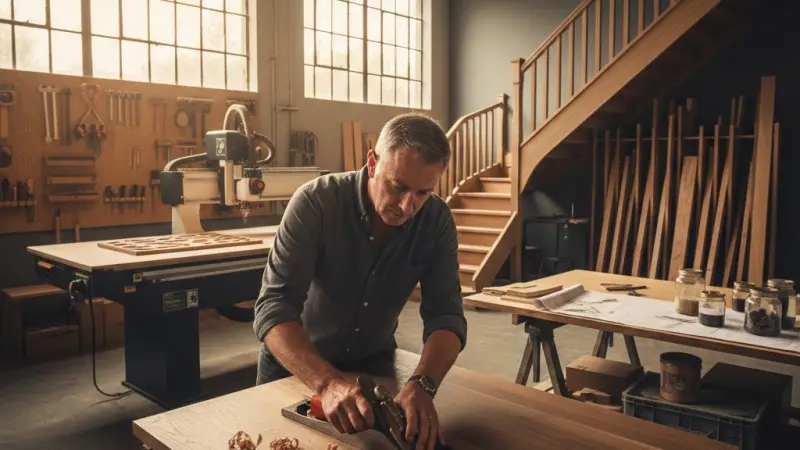
The architectural woodwork sector in the United Kingdom represents a sophisticated intersection of heritage, artistry, and modern engineering. In an era dominated by mass-produced solutions, the demand for bespoke joinery and high-end timber fabrication remains a cornerstone of the British construction and interior design industries. From the restorative work found in Grade I listed buildings in London to the sleek, contemporary fit-outs of modern corporate headquarters in Manchester, architectural woodwork defines the character and longevity of the UK's built environment.
Economically, this sector is a vital component of the UK’s secondary manufacturing economy. It encompasses a diverse range of specialists, from small-scale artisanal workshops to large industrial joinery firms capable of delivering multi-million-pound contracts. The industry does not merely produce "wood products"; it creates value through technical design, material science, and precision installation. As the market moves towards more sustainable and high-quality interiors, businesses are increasingly looking to establish their presence through a business listing uk to connect with architects and developers who prioritise British craftsmanship.
The importance of this sector extends beyond aesthetics. High-quality woodwork improves building thermal performance, contributes to carbon sequestration, and enhances the psychological well-being of occupants through the principles of biophilic design. In the current British market, where the "Quality Over Quantity" movement is gaining traction, architectural woodwork stands as the gold standard for luxury and durability.
The Landscape of Architectural Woodwork in the UK
The UK architectural woodwork market is currently valued at several billion pounds, integrated deeply within the broader £110 billion UK construction industry. While the sector faced significant disruptions during the early 2020s, it has emerged with a renewed focus on domestic resilience and digital integration. Post-pandemic, there has been a notable shift in consumer and commercial behaviour: a "flight to quality" where clients are investing in permanent, high-value assets rather than temporary fixtures.
Key regions of activity remain concentrated in London and the South East due to high-value residential projects and commercial developments. However, hubs like the Midlands and the North West have seen a resurgence in specialist manufacturing, driven by the Northern Powerhouse initiatives and a decentralisation of the luxury property market. The evolution of the industry is marked by the marriage of Traditional Joinery with Industry 4.0 technologies. CNC (Computer Numerical Control) machining and BIM (Building Information Modelling) are now standard tools in the workshop, allowing for tolerances that were previously impossible to achieve.
Despite these technological leaps, the industry remains a "local" one at its heart. Personal reputation and local availability are paramount. Clients often start their journey by browsing local business listings uk to find specialists within a manageable radius to ensure site visits and material selection can happen in person. The post-pandemic landscape has also forced a tightening of supply chains. With international timber prices fluctuating, many UK firms have returned to sourcing British-grown hardwoods like Oak, Ash, and Sweet Chestnut, fostering a more sustainable and circular domestic economy.
Comprehensive Services Breakdown
The scope of architectural woodwork in the UK is vast, ranging from structural elements to the finest decorative finishes. To understand the niche, one must look at the specific services that distinguish a master joiner from a general carpenter.
Bespoke Internal Joinery
This includes the design and manufacture of custom staircases, wall panelling (boiserie), and fitted furniture. In the UK, particularly in Victorian and Georgian renovations, the ability to replicate historical moulding profiles is a highly sought-after skill. Master craftsmen use a combination of hand-planes and modern spindle moulders to ensure that new timber elements are indistinguishable from original features.
External Architectural Timber
Services here cover high-performance timber windows (often requiring double or triple glazing while maintaining slim heritage profiles), external doors, and timber cladding. These products must meet rigorous UK building regulations regarding thermal efficiency (U-values) and fire safety.
Specialist Finishes and Material Integration
Modern woodwork often requires the integration of metal, glass, and stone. Professional service providers manage the entire process, from CAD drawings to the final French polish or AC (Acid Catalyst) lacquer finish. For commercial clients looking for these integrated solutions, finding the right partner through a uk business directory is the first step in the procurement process.
Heritage Restoration
The UK has more listed buildings per square mile than almost anywhere else in Europe. Restoration joinery requires an intimate knowledge of traditional glues, timber species, and historical construction methods.
It is a sector where accreditation from bodies like the British Woodworking Federation (BWF) is non-negotiable. Many of these heritage specialists are listed in a uk online business directory, providing a bridge between conservation officers and skilled artisans.
How to Choose the Right Service Provider
Selecting an architectural woodwork firm is a high-stakes decision. Unlike flat-pack furniture, bespoke woodwork is an architectural intervention that becomes part of the building's fabric.
Accreditations and Standards
Look for membership in the British Woodworking Federation (BWF) or the Timber Trade Federation (TTF). These organisations ensure that members adhere to strict codes of conduct and quality standards. Furthermore, check for FSC (Forest Stewardship Council) or PEFC (Programme for the Endorsement of Forest Certification) chain of custody to ensure the timber is ethically sourced.
Insurance and Guarantees
A reputable firm should hold Professional Indemnity insurance, particularly if they are providing design services, alongside Public and Employers' Liability insurance. In the UK, a standard 10-year guarantee on joinery items is a sign of a confident and reliable provider.
Reviewing the Portfolio
Don't just look at photos; ask for case studies. A high-end woodwork company should be able to demonstrate their process from initial sketches to finished installation. To find a curated list of vetted professionals, many developers rely on uk service listings to verify a company's standing and past performance within the local community. Reputation in this industry is built over decades but can be verified through modern digital footprints and verified client feedback.
Industry Challenges & Future Outlook
The UK architectural woodwork industry is at a crossroads, facing both significant challenges and unprecedented opportunities. The primary challenge remains the "skills gap." As an older generation of master joiners retires, the industry is struggling to recruit young talent. However, this is being mitigated by the rise of "Digital Craftsmanship," where apprentices are trained in both hand-tool techniques and advanced robotics.
Sustainability is the other major driver of change. The UK government’s Net Zero targets are placing pressure on the construction industry to reduce embodied carbon. Wood, being a carbon-storing material, is the natural solution. We are seeing a shift towards "Modified Timbers" like Accoya or Kebony, which offer the durability of tropical hardwoods without the environmental cost.
Regulatory changes, particularly following the Building Safety Act, have made fire-rated joinery a massive growth area. Doorsets and panelling in commercial and multi-occupancy residential buildings must now meet stringent certification (such as the Certifire scheme). Businesses that stay ahead of these regulations often gain a competitive edge. To maintain visibility in this evolving market, savvy professionals ensure their credentials are listed on a business listing uk to attract B2B contracts. Furthermore, the uk b2b business directory landscape is becoming a vital tool for firms to find reliable subcontractors for specialised tasks like metalwork or glass tempering.
Business Tips for Architectural Woodwork Professionals
For the independent joinery shop or the medium-sized fabrication firm, technical skill is only half the battle. In the modern UK market, business acumen and digital visibility are equally critical for survival and growth.
Target Local Markets First
While your work might be world-class, your most profitable jobs are often those within a 50-mile radius. Shipping heavy timber products is expensive and increases the risk of damage. Focus on local SEO and ensure your business appears in every relevant uk local trades directory.
Invest in Professional Photography
Architectural woodwork is a visual medium. Low-quality phone photos do not do justice to a hand-carved oak staircase or a book-matched walnut library.
Hire a professional architectural photographer to capture your projects; these images will be your most powerful marketing assets.
Leverage B2B Networking
Architects, interior designers, and high-end property developers are your primary "gatekeeper" clients. Building relationships with them is essential. Many of these professionals use a uk business directory website to source new suppliers for their tender lists. Ensure your profile is complete, professional, and highlights your specific niche—whether that is "ultra-modern minimalist" or "period-correct restoration."
Wrapping Up & Local Page Integration
The British architectural woodwork industry is a testament to the enduring value of quality and craftsmanship. As we look to the future, the integration of traditional skills with digital precision will continue to define the most successful firms. Whether you are a homeowner seeking a statement staircase or a developer looking for a reliable joinery partner, the UK market offers a wealth of talent that is second to none globally.
For businesses operating in this space, the challenge is no longer just about the quality of the dovetail joint, but about being found by the right client at the right time. This is where local page uk business directory becomes an indispensable partner. By providing a platform that bridges the gap between skilled tradespeople and the UK public, Local Page ensures that the heritage of British woodworking continues to thrive in the digital age.
Boost Your Visibility with Local Page UK
In the competitive landscape of UK architectural services, standing out is essential. For professionals in the woodwork and joinery sector, digital discoverability is the bridge between a quiet workshop and a full order book. Local Page UK offers a dedicated environment for your business to be seen by homeowners, architects, and contractors specifically searching for quality local services. By choosing to claim your business listing uk, you are taking a vital step toward securing your local market share. Don't let your craftsmanship go unnoticed—join the premier directory for UK businesses and let your work speak to the audience it deserves.
FAQ
1. What is the difference between joinery and carpentry in the UK?
Joinery refers to the creation of timber components (doors, windows, stairs) in a workshop by "joining" pieces of wood. Carpentry usually refers to the installation of these items or structural timber work on a construction site.
2. What are the best woods for architectural panelling?
In the UK, Oak and Walnut are the most popular hardwoods for high-end panelling due to their grain pattern and durability. For painted finishes, high-quality MR-MDF or Tulipwood is often used to ensure a stable, crack-free surface.
3. How do I know if a woodwork company is environmentally friendly?
Look for FSC or PEFC certifications. These ensure that the timber is sourced from responsibly managed forests where trees are replanted and biodiversity is protected.
4. What is Accoya wood?
Accoya is a "modified" timber treated through acetylation. It is highly sustainable and offers incredible dimensional
stability and rot resistance, making it ideal for external UK joinery like sash windows.
5. Can I get bespoke woodwork for a listed building?
Yes, but it must comply with "Like-for-Like" requirements. You should hire a specialist heritage joiner who can replicate historical profiles and work with conservation officers.
6. Why is bespoke woodwork so expensive?
You are paying for high-grade materials, specialised machinery, and, most importantly, the many hours of skilled labour required for design, fabrication, and finishing.
7. How should I maintain my internal oak joinery?
Most modern joinery is finished with hard-wax oils or lacquers. Regular dusting and the occasional application of a manufacturer-recommended refresher oil are usually sufficient. Avoid harsh chemical cleaners.
8. Is fire-rated woodwork available for homes?
Yes. FD30 and FD60 fire doors are common requirements in UK building regs. Many architectural woodwork firms are certified to manufacture decorative doors that meet these safety standards.
9. How long does a bespoke staircase take to build?
Depending on complexity, the process usually takes 6 to 12 weeks from design approval to installation.
10. Do joinery companies provide CAD drawings?
Most professional architectural woodwork firms provide detailed CAD or BIM drawings for client approval before any timber is cut.
11. What is "book-matching" in woodwork?
This is a technique where two adjacent surfaces are veneered with slices from the same log, creating a mirrored grain pattern, often used in high-end cabinetry.
12. Can I install architectural woodwork myself?
While possible for simple items, high-end architectural joinery requires precision fitting to account for building movement and seasonal timber expansion. Professional installation is highly recommended.
13. What is a "U-Value" in timber windows?
It measures heat loss. The lower the U-value, the better the window is at keeping heat inside your home. Modern timber windows can achieve very low U-values.
14. How do I find a reputable joiner near me?
Use a verified uk local business search to find companies with established
reputations, local reviews, and a physical workshop you can visit.
15. What are the current trends in UK architectural woodwork?
We are seeing a move toward "darker" timbers like Smoked Oak, the integration of hidden LED lighting within joinery, and a massive surge in fluted or ribbed timber wall textures.
Disclaimer: The information provided in this article is for general informational and research purposes only. Company details, features, services, and market positions may change over time. Readers are advised to visit official company websites and conduct independent research before making any business decisions or purchasing services.
Most Searchable Keywords
Recent Blogs


Related Listings
Categories
- Accountants (295)
- Advertising Agencies (559)
- Architects (149)
- Automobiles (377)
- Beauty (300)
- Carpenters (146)
- Cleaning Services (387)
- Dentists (189)
- Driving (62)
- Electricians (215)
- Energy (8)
- Event Organiser (686)
- Finance (602)
- Guide (3373)
- Health (2207)
- Information technology (206)
- Legal Services (353)
- Logistics (6)
- Maintenance (65)
- Manufacturing (35)
Sponsored Listings in Travel Agencies


Related Blogs

Explore Dog Friendly Walks in the Cotswolds f...
Read this insightful article "Explore Dog Friendly Walks in the Cotswolds for 2026" to expand your knowledge!

How Much Do UK Actors Really Earn Full Indust...
Read this insightful article "How Much Do UK Actors Really Earn Full Industry Breakdown" to expand your knowledge!

Blue Light Card UK 2026 Check Eligibility and...
Read this insightful article "Blue Light Card UK 2026 Check Eligibility and Claim" to expand your knowledge!
Questions & Answers – Find What
You Need, Instantly!
How can I update my business listing?
Is it free to manage my business listing?
How long does it take for my updates to reflect?
Why is it important to keep my listing updated?
