
Automotive Paint & Lacquer Guide: Quality Finishes Explained
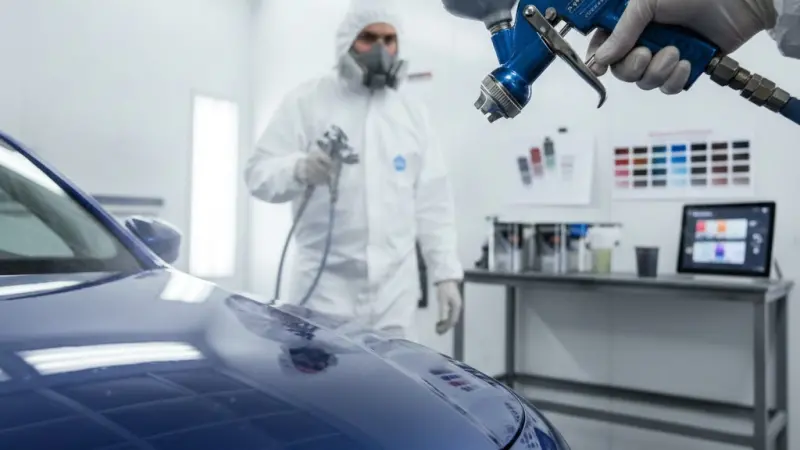
The UK automotive sector is a powerhouse of engineering excellence, and at its aesthetic and protective heart lies the Car Paint & Lacquer Manufacturers & Suppliers industry. This niche yet vital sector is responsible for more than just the "shiny finish" on a vehicle; it provides the primary defense against the harsh British climate, industrial pollutants, and physical wear. For business analysts observing the UK landscape, this industry serves as a critical barometer for the health of both the manufacturing and the after-sales automotive markets.
Economically, the paint and coatings industry contributes billions to the UK GDP. It supports a vast ecosystem ranging from chemical engineers and industrial chemists to local specialist shops and high-end restoration garages. When we look at the uk business directory website, we see a dense network of professionals who ensure that everything from a mass-produced hatchback to a bespoke luxury supercar leaves the workshop with a finish that meets international standards. The sector's importance cannot be overstated; without high-quality lacquers and paints, the longevity of the UK’s vehicle fleet would be halved, leading to increased waste and significant economic loss for consumers.
In recent years, the focus has shifted toward high-tech applications, including ceramic-infused clears and self-healing polymers. This evolution reflects a broader trend in British industry: a move away from volume and toward high-value, specialized expertise. As we delve into this guide, we will explore the intricate layers of this market, the science behind the shine, and how both professionals and consumers can navigate the vast array of uk business listings online to find the perfect finish.
The Landscape of Car Paint & Lacquer Mnfrs & Suppliers in the UK
The landscape of the UK automotive paint industry is one of resilience and rapid adaptation. Historically centered in the industrial heartlands of the West Midlands and Northern England, the industry has decentralized, with specialist suppliers now found in every corner of the country. Post-pandemic, the market has seen a significant shift. While initial lockdowns hampered production, the subsequent boom in the used car market and a renewed interest in vehicle restoration have driven a surge in demand for high-quality refinishing products.
Currently, the market size for automotive coatings in the UK remains robust, valued at hundreds of millions of pounds annually. This growth is supported by a mix of global chemical giants with UK-based manufacturing plants and smaller, agile independent blenders who cater to the "custom" and "classic" markets. For those looking to find local businesses uk specializing in these products, the variety is staggering—from water-borne basecoats that comply with strict VOC (Volatile Organic Compounds) regulations to traditional cellulose paints for vintage restorations.
The evolution of the industry has also been marked by a digital transformation. Manufacturers are no longer just selling a tin of paint; they are providing digital color-matching tools, online technical support, and sophisticated supply chain logistics. This digital-first approach allows even the smallest local supplier to compete on a national level by appearing in a uk online business directory, ensuring they are visible to the workshops and DIY enthusiasts who need their expertise. Regional activity remains high in areas with a strong automotive heritage, such as the North West and the Midlands, but the "pro-sumer" market has expanded the footprint of the industry into more suburban and rural areas through e-commerce and local distribution hubs.
Comprehensive Services Breakdown
The services offered by UK manufacturers and suppliers in this sector are multifaceted, catering to a diverse clientele with varying technical requirements. At the foundational level, we have the production and supply of primers, basecoats, and clearcoats (lacquers).
Color Matching and Custom Mixing: This is perhaps the most critical service. Using spectrophotometers, suppliers can match the existing paint on a vehicle to a microscopic level of accuracy. This service is essential for "smart repairs" where only a small area of the car is being painted.
Specialist Coatings: Beyond standard colors, suppliers offer "flip" paints, pearlescent finishes, and matte clears. These require a high degree of technical knowledge to apply correctly and are often sourced through a business listing uk where specialists list their unique capabilities.
Industrial and Commercial Fleet Refinishing: Companies managing large fleets of vans or trucks require high-durability coatings that can withstand heavy use. Suppliers provide specific formulations designed for rapid drying and high impact resistance.
Aerosol Filling Services: For smaller repairs, many suppliers offer a bespoke aerosol filling service, putting professional-grade paint into a convenient delivery system for the consumer market.
Technical Training: Many of the UK's top-tier manufacturers run academies to train the
next generation of painters in the use of new, eco-friendly water-borne systems.
Finding a provider that offers these niche services is made significantly easier by browsing a business listing uk, which allows users to filter by specific service type and location. Whether it’s a high-volume repair center or a specialist classic car restorer, the diversity of the UK's product range ensures there is a solution for every automotive substrate, from traditional steel and aluminum to modern carbon fiber and plastics.
How to Choose the Right Service Provider
For the consumer or the business owner, choosing a paint and lacquer supplier is a decision that impacts the final value and safety of the vehicle. A poor-quality finish doesn't just look bad; it can lead to corrosion and structural degradation. When searching through local business listings uk, there are several key criteria to evaluate.
First and foremost is Accreditation. Look for suppliers and workshops that adhere to ISO standards or are members of the British Coatings Federation (BCF). These memberships indicate a commitment to quality and environmental responsibility. Secondly, Reviews and Reputation are paramount. In the digital age, a provider's past performance is usually documented online. Look for consistent praise regarding color accuracy and the "depth" of the lacquer finish.
Insurance and Guarantees are also non-negotiable. A reputable manufacturer or refinisher should provide a warranty on their product, especially regarding UV stability and resistance to peeling. Furthermore, for those looking for uk verified business listings, it is wise to check if the provider offers technical data sheets (TDS) and safety data sheets (SDS) for all their products, ensuring transparency in what is being applied to your vehicle. Finally, consider Local Knowledge. A supplier based in a coastal area will have a better understanding of the specific anti-corrosive properties needed for vehicles in that environment compared to one in a dry, inland city.
Industry Challenges & Future Outlook
The UK automotive paint industry is currently navigating a period of profound change. The primary challenge is the shift toward Sustainability. Regulatory changes in the UK have placed strict limits on VOC emissions, forcing a wholesale move from solvent-based systems to water-borne technologies. While better for the environment, these systems require different drying equipment and techniques, representing a significant capital investment for small businesses.
Technology shifts are also occurring in the "Smart Coating" space. We are seeing the emergence of heat-reflective paints that can reduce the load on vehicle air conditioning, and antimicrobial coatings for shared mobility fleets. For a business to stay relevant, they must ensure their business listing uk reflects these modern capabilities.
Furthermore, the rise of Electric Vehicles (EVs) presents unique challenges. EVs have different thermal management needs, and the coatings used on battery housings must provide electrical insulation while allowing for heat dissipation. The future outlook is one of "high-tech" integration. Suppliers who can offer eco-friendly, technologically advanced coatings will thrive. Professionals should look to list themselves on a business listing uk to ensure they are found by the growing number of EV manufacturers and repairers who require these specialized products.
Business Tips for Car Paint & Lacquer Professionals
For professionals in this sector, technical brilliance is only half the battle; the other half is visibility. In a competitive market, being the "best-kept secret" is a recipe for failure. Marketing a local paint supply or refinishing business requires a dual approach: local networking and a robust digital presence.
Claim Your Digital Real Estate: The first step for any local business is to ensure they appear where customers are searching. This means appearing on uk top rated local businesses lists and ensuring your contact details are accurate across the web.
Showcase Your Work: This is a visual industry. Use social media and your directory profile to show "before and after" photos of complex color matches or high-gloss lacquer finishes.
Educational Content: Position yourself as an expert. Write short guides on how to
maintain a new paint finish or how to prevent stone chips.
Leverage Local SEO: Use keywords like "car paint supplier in [Your City]" to attract local footfall.
Networking: Partner with local car clubs and detailing businesses.
The importance of digital visibility cannot be overstated. A professional who uses a uk professional services listings platform effectively will see a much higher return on investment than one relying solely on word-of-mouth. In the UK, where the automotive enthusiast community is vast, being easily discoverable online is the difference between a busy workshop and an empty one.
Wrapping Up & Local Page Integration
In conclusion, the UK's car paint and lacquer industry is a sophisticated blend of chemistry, artistry, and commerce. From the massive manufacturers providing the coatings for the global stage to the local mixing shop that saves a classic car's original patina, every player contributes to the UK's reputation for automotive excellence. As the industry moves toward a greener, more tech-heavy future, the need for reliable, verified information becomes even more critical.
For consumers, finding the right specialist is about more than just a quick search; it’s about finding a partner who understands the nuances of British weather and automotive standards. For businesses, it’s about being seen by those who need your specific expertise. This is where Local Page UK serves as the ultimate bridge. By providing a comprehensive and user-friendly uk local business directory, it ensures that the best in British automotive refinishing is only a click away. Whether you are looking for a supplier, a specialist painter, or an industrial manufacturer, utilizing a trusted directory is the most efficient way to ensure a quality finish for your vehicle and your business.
Boost Your Visibility with Local Page UK
In the highly specialized world of automotive finishes, your reputation is your most valuable asset. However, even the most skilled paint technician or the most well-stocked supplier needs to be found to succeed. Digital presence is no longer optional; it is the primary way that modern customers—from DIY hobbyists to major fleet managers—find the services they need.
Local Page UK offers a dedicated platform designed to highlight the best of British business. For professionals in the Car Paint & Lacquer Manufacturers & Suppliers sector, claiming a business listing uk is the most effective first step in your digital marketing journey. Don't let your competitors take the lead; ensure your business is visible, verified, and ready to serve the UK's automotive community today.
Frequently Asked Questions (FAQs)
1. What is the difference between automotive paint and lacquer?
Automotive paint, specifically the basecoat, provides the color and aesthetic character of the vehicle. It is typically matte once dry and does not offer significant protection against the elements. Lacquer, or clearcoat, is the final transparent layer applied over the basecoat. Its primary job is to provide a high-gloss finish and act as a protective shield against UV rays, bird droppings, road salt, and minor abrasions. In modern two-stage painting processes, both are essential. The lacquer ensures the paint underneath doesn't fade or peel. Without a high-quality lacquer, the paint would quickly oxidize and lose its luster.
2. Why is professional color matching so important for car repairs?
Vehicles are not all painted the exact same shade, even if they share the same paint code. Factors like the batch of paint used at the factory, the age of the car, and its exposure to sunlight can subtly change the hue over time.
Professional color matching involves using a spectrophotometer to analyze the current state of the paint and then mixing a bespoke batch to match it perfectly. This ensures that the repaired panel blends seamlessly with the rest of the car. Without this, the repair will be glaringly obvious, which can significantly devalue the vehicle when it comes time to sell.
3. Are water-borne paints as good as solvent-based ones?
Yes, and in many ways, they are superior. While the industry initially struggled with the transition due to longer drying times, modern water-borne automotive paints offer excellent color accuracy and metallic flake orientation. From an environmental standpoint, they are far better as they release significantly fewer volatile organic compounds (VOCs) into the atmosphere. This makes them safer for the painters and the surrounding community. Most major car manufacturers now use water-borne systems in their factories, proving that they meet the highest standards for durability and finish quality.
4. How long does it take for a fresh lacquer finish to fully cure?
While a car might feel dry to the touch within a few hours and can often be driven the next day, the lacquer finish is not fully "cured" for several weeks. During this period, the solvents in the paint are still evaporating (a process called outgassing). It is generally recommended to wait at least 30 to 60 days before applying any heavy waxes or ceramic coatings. Doing so too early can trap the solvents, leading to a hazy finish or even "solvent pop," where tiny bubbles form in the lacquer. Always follow the specific advice of your supplier or refinisher.
5. Where can I find a reliable car paint supplier in my local area?
The most effective way to find a reliable supplier is to consult a verified Localpage listing. Look for suppliers who have positive customer feedback and provide detailed information about their product range, such as whether they offer custom mixing or professional-grade aerosols. A good local supplier should be able to provide technical advice as well as the products themselves. By using a dedicated directory, you can compare different providers in your region and find one that specializes in the specific type of finish you require, whether it is for a modern car or a classic restoration.
6. Can I apply automotive lacquer over any type of paint?
No, compatibility is key. Applying a modern 2K (two-pack) lacquer over an old cellulose paint, for example, will often cause a chemical reaction known as "reacting" or "lifting," where the paint underneath wrinkles and ruins the finish. It is vital to use a paint system that is designed to work together—usually from the same manufacturer. Always check the technical data sheets or ask your supplier for advice on "inter-coat compatibility." Using an isolator primer can sometimes help when painting over unknown old finishes, but it is always better to stay within a single product ecosystem.
7. What does "2K" mean in the context of paint and lacquer?
"2K" stands for two-pack or two-component. This type of paint or lacquer consists of a base (the paint or clearcoat) and a hardener (the activator). When mixed, a chemical reaction occurs that causes the material to harden into a very durable, plastic-like surface. Unlike 1K products, which dry simply through the evaporation of solvents, 2K products are much more resistant to chemicals, petrol spills, and weather. However, the hardeners in 2K products often contain isocyanates, which are hazardous if inhaled, so they should only be used with the correct respiratory protective equipment, ideally in a spray booth.
8. How do I maintain a high-gloss lacquer finish?
Maintenance is about prevention and gentle cleaning. Avoid automatic car washes with stiff brushes, as these create "swirl marks" in the lacquer. Instead, use a two-bucket hand wash method with a high-quality microfibre wash mitt and a pH-neutral car shampoo. Regularly applying a high-quality wax or sealant will provide an extra sacrificial layer of protection against UV rays and environmental contaminants. If the lacquer does become lightly scratched or dull over time, it can often be restored through a process of machine polishing, which removes a microscopic layer of the lacquer to reveal a fresh, flat surface underneath.
9. Is it possible to repair just a small scratch in the lacquer?
Yes, this is often referred to as a "smart repair." If the scratch has not gone through the lacquer into the color coat, it can often be polished out. If it is slightly deeper, it may require a "touch-up" of clear lacquer followed by sanding and polishing to level the surface. However, if the scratch is deep enough to catch your fingernail, it usually requires a more involved repair. Many local specialists found in a trades directory offer mobile smart repair services, which can save the cost of painting an entire panel while still achieving a near-invisible result.
10. What are VOCs and why are they regulated in the UK?
VOC stands for Volatile Organic Compounds. These are chemicals that evaporate easily at room temperature and are found in many traditional solvent-based paints. In the atmosphere, they react with other pollutants to form ground-level ozone, which is a major component of smog and can cause respiratory issues. The UK has strict regulations (the VOC Solvents Emissions Directive) to limit the amount of these chemicals that can be released. This is why the industry has shifted toward water-borne paints and high-solids lacquers, which have much lower solvent content, making the entire process safer for the environment and the operator.
11. What is the difference between a matte finish and a gloss finish?
The difference lies entirely in the lacquer or clearcoat used. A gloss finish uses a lacquer that dries to a perfectly smooth, glass-like surface that reflects light directly. A matte finish uses a lacquer that contains "flattening agents"—microscopic particles that scatter the light in different directions when it hits the surface, preventing a reflection. Matte finishes are popular for their stealthy, modern look but require different maintenance; you cannot polish a matte finish, as polishing it would gradually make it shiny and uneven. Specialist matte-safe cleaning products must be used.
12. Can automotive lacquer be used on other surfaces like wood or metal?
Yes, automotive lacquer is incredibly versatile due to its durability and high-gloss potential. It is frequently used by furniture makers, luthier (guitar) builders, and industrial designers who want a "piano-black" or high-clarity finish. However, the surface preparation must be immaculate. Wood, for example, must be properly sealed to prevent the lacquer from soaking in unevenly, and metal must be primed to ensure adhesion. While it is a high-performance coating, the cost and the complexity of application mean it is usually reserved for high-end projects where a standard wood varnish isn't sufficient.
13. Why does some lacquer "peel" or "delaminate" over time?
Lacquer peel usually happens for one of three reasons: poor surface preparation, poor application technique, or extreme UV damage. If the basecoat was allowed to dry for too long before the lacquer was applied, they wouldn't "bond" chemically. Similarly, if the surface was contaminated with grease or silicone, the lacquer would eventually lift. In older cars, years of intense sunlight can break down the chemical bonds in the lacquer, causing it to become brittle and flake away. Once peeling starts, the only permanent fix is to sand the panel back and repaint it properly.
14. What are "High Solids" (HS) and "Ultra High Solids" (UHS) lacquers?
These terms refer to the amount of actual "protective material" left on the car after the solvents have evaporated. A "High Solids" lacquer has a higher concentration of resins and a lower concentration of solvents compared to traditional clearcoats.
This means you can achieve a thicker, more protective layer with fewer coats of paint. It also means fewer VOCs are released into the air. UHS lacquers take this even further. For the painter, these products require slightly different spray gun settings but result in a deeper, more durable shine that is more resistant to "sinkage" over time.
15. How can I ensure the business I hire is truly expert in paint?
Expertise is demonstrated through transparency and portfolio. Ask to see examples of their previous work, specifically looking for how they handle difficult areas like door shuts and panel gaps. A true expert will be happy to explain their process and the products they use. You should also verify their status through a professional Local page search, as reputable businesses often invest in their online reputation and show their accreditations clearly. Choosing a business that is part of a verified network gives you peace of mind that they meet the professional standards expected within the UK automotive industry.
Disclaimer: The information provided in this article is for general informational and research purposes only. Company details, features, services, and market positions may change over time. Readers are advised to visit official company websites and conduct independent research before making any business decisions or purchasing services.
Most Searchable Keywords
Recent Blogs


Related Listings

Categories
- Accountants (295)
- Advertising Agencies (559)
- Architects (149)
- Automobiles (377)
- Beauty (300)
- Carpenters (146)
- Cleaning Services (387)
- Dentists (189)
- Driving (62)
- Electricians (215)
- Energy (8)
- Event Organiser (686)
- Finance (602)
- Guide (3373)
- Health (2207)
- Information technology (206)
- Legal Services (353)
- Logistics (6)
- Maintenance (65)
- Manufacturing (35)
Sponsored Listings in Travel Agencies

Related Blogs

Explore Dog Friendly Walks in the Cotswolds f...
Read this insightful article "Explore Dog Friendly Walks in the Cotswolds for 2026" to expand your knowledge!

How Much Do UK Actors Really Earn Full Indust...
Read this insightful article "How Much Do UK Actors Really Earn Full Industry Breakdown" to expand your knowledge!

Blue Light Card UK 2026 Check Eligibility and...
Read this insightful article "Blue Light Card UK 2026 Check Eligibility and Claim" to expand your knowledge!
Questions & Answers – Find What
You Need, Instantly!
How can I update my business listing?
Is it free to manage my business listing?
How long does it take for my updates to reflect?
Why is it important to keep my listing updated?
