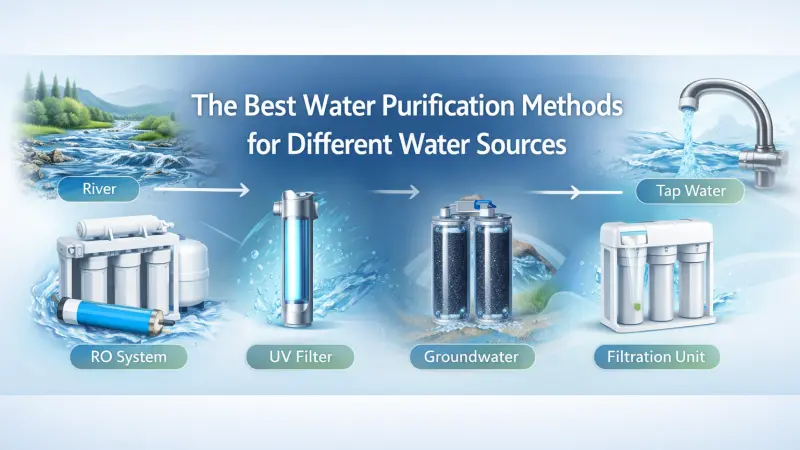
Have you ever considered the complex journey water takes before it reaches your tap or how its origin dictates the necessary treatment it must undergo? In the United Kingdom, water is sourced from a variety of environments, ranging from deep underground aquifers to vast surface reservoirs and even direct rainwater collection. Each of these sources presents a unique chemical and biological profile, requiring specific purification strategies to ensure the final output is safe for consumption and industrial use. Understanding these distinctions is the first step toward achieving optimal water quality in any setting.
The Fundamental Principles of Water Purification
Water purification is the process of removing undesirable chemicals, biological contaminants, suspended solids, and gases from water. The primary objective is to produce water that is fit for a specific purpose, most commonly human consumption. However, purification also serves medical, pharmacological, chemical, and industrial applications. The methods employed vary significantly based on the level of contamination and the intended purity grade required by the end-user.
In a professional capacity, purification is often viewed as a multi-stage defensive strategy. It begins with mechanical separation and progresses through chemical neutralisation, biological disinfection, and finally, molecular-level filtration. Each stage is designed to target specific particulates or solutes that the previous stage could not address. This hierarchical approach ensures that the most delicate and expensive components, such as high-grade membranes or ultraviolet lamps, are protected from premature degradation by larger debris.
Treatment Methods for Mains Water Supplies
Most residents and businesses in the UK rely on the public mains supply, which is already treated to meet rigorous national standards. However, "treated" does not always mean "optimised" for every specific use. Mains water often contains residual chlorine used for disinfection and minerals picked up during its travel through the pipe network. For many, secondary purification is necessary to improve taste, protect appliances, or meet the needs of sensitive skin.
Activated Carbon Filtration
Activated carbon is perhaps the most widely used purification medium for municipal water. It operates through a process called adsorption, where contaminants are trapped within the porous structure of the carbon granules. This method is exceptionally effective at removing chlorine, volatile organic compounds, and certain pesticides. It significantly improves the aesthetic qualities of water, such as its clarity and flavour, making it a staple in domestic carafes and under-sink systems.
Ion Exchange and Water Softening
In many parts of Britain, particularly the south and east, "hard water" is a significant concern. This occurs when water travels through limestone and chalk deposits, absorbing high concentrations of calcium and magnesium. While not a health risk, hard water causes limescale buildup in boilers and pipes. Ion exchange systems replace these hardening minerals with sodium or potassium ions. This chemical swap prevents the formation of scale, extending the lifespan of household infrastructure and reducing energy consumption by improving heating efficiency.
Purifying Private Ground Water Sources
For properties that are not connected to the national grid, such as remote farms or rural estates, water is often drawn from boreholes or wells. This groundwater is naturally filtered through layers of rock and soil, which often makes
it clear, but it can contain high levels of dissolved minerals or naturally occurring heavy metals such as iron and manganese. Furthermore, there is always a risk of microbiological contamination from agricultural runoff.
Sediment Filtration
The first line of defence for groundwater is mechanical sediment filtration. These filters are rated by microns and are designed to catch sand, silt, and rust particles. For borehole water, a tiered approach is often used, starting with a coarse 50-micron filter and finishing with a 5-micron or 1-micron polished filter. This prevents physical damage to more sensitive equipment downstream.
Oxidation and Media Filtration
When groundwater contains high levels of iron or manganese, it can lead to staining of sanitaryware and a metallic taste. Oxidation filters introduce air or a chemical oxidant into the water to turn these dissolved metals into solid particles, which can then be trapped by a specialized media bed. This is a crucial process for ensuring that borehole water remains visually appealing and chemically balanced.
Addressing Surface Water and Rainwater Collection
Surface water from streams, lakes, or harvested rainwater is highly susceptible to environmental pollutants. This includes decaying organic matter, animal waste, and airborne pollutants. Consequently, the purification requirements for these sources are much more stringent than for groundwater, with a heavy emphasis on biological safety.
Ultraviolet Disinfection
Ultraviolet (UV) light is a powerful, non-chemical method for neutralising bacteria, viruses, and cysts. By exposing water to a specific wavelength of UV-C light, the DNA of microorganisms is disrupted, rendering them unable to reproduce. In the UK, UV systems are a legal requirement for many private water supplies to ensure that they are bacteriologically safe without the need for adding harsh chemicals like chlorine.
Ultrafiltration
Ultrafiltration (UF) uses a membrane with extremely small pores to physically block pathogens and fine suspended solids. It sits between standard sediment filtration and reverse osmosis in terms of its capabilities. UF is particularly useful for surface water because it can remove colloidal matter and large organic molecules while retaining the natural minerals that contribute to the water's character and health benefits.
Real World Context and UK Infrastructure
The application of these purification technologies is a fundamental aspect of maintaining public health and supporting the UK's diverse economic sectors. From the pharmaceutical laboratories in the North West to the agricultural heartlands of the Midlands, the ability to tailor water quality to specific needs allows for innovation and safety.
Individual households benefit from reduced maintenance costs on heating systems, while businesses ensure their products meet the highest safety standards through the work of dedicated water treatment professionals. These service providers play an essential role in bridging the gap between raw natural resources and the high-grade water required for modern British life.
Specialized Purification for Sensitive Applications
In certain scenarios, such as medical dialysis, aquarium maintenance, or high-precision manufacturing, even the slightest trace of dissolved solids can be catastrophic. In these cases, the water must be stripped of almost all its non-H2O components through advanced molecular separation.
Reverse Osmosis
Reverse osmosis is the gold standard for comprehensive purification. By applying pressure against a semi-permeable membrane, water is separated from dissolved salts, heavy metals, and nearly all organic contaminants. While it produces the purest water possible, it is a slower process and generates a small amount of wastewater. It is typically reserved for drinking water taps or laboratory use where chemical purity is the primary concern.
Deionisation
Deionisation involves passing water through ion-exchange resins that remove all ionized minerals and salts. This results in "deionised water," which has very low electrical conductivity. It is frequently used in the automotive industry for cooling systems and in the production of cosmetics to ensure that the final product remains stable and free from mineral interference.
The Future of Water Treatment
As the UK faces challenges from climate change and population growth, the focus is shifting toward water recycling and more energy-efficient purification methods. Desalination, once considered too expensive for the British climate, is becoming a reality in coastal areas during periods of drought.
Innovations in graphene-based filters and solar-powered UV systems are also on the horizon, promising to make high-quality water more accessible and sustainable for everyone.
Connecting Expertise with Community Needs
The practical application of water purification methods is a vital service that keeps the nation running smoothly, ensuring that both domestic and commercial environments have access to life-sustaining resources. For the professionals who design, install, and maintain these complex systems, maintaining a high level of discoverability is essential for reaching those in need of technical support. Many specialist firms find that being included in a free uk directory list for business provides a valuable platform for connecting with local clients who require urgent assistance with their water quality. By securing uk business directories free listings, these experts can effectively showcase their niche skills to a wider audience, ensuring that technical knowledge is never out of reach. Engaging with a Local Page UK allows service providers to build trust within their specific regions, highlighting that the path to pure water is best navigated with the help of verified local professionals who are easily found through a free directory listing uk search.
Frequently Asked Questions
Is British tap water safe to drink without further purification?
Yes, tap water in the UK is among the safest in the world and is strictly regulated. However, many people choose secondary purification to improve the taste or remove limescale-forming minerals.
Which method is best for removing limescale?
Ion exchange water softeners are the most effective method for completely removing the calcium and magnesium ions that cause limescale buildup in pipes and appliances.
Does boiling water remove all contaminants?
Boiling is effective for killing biological pathogens like bacteria and viruses, but it does not remove chemical contaminants, heavy metals, or dissolved solids; in fact, it can concentrate them as water evaporates.
What is the difference between a water filter and a water purifier?
Generally, a filter uses mechanical means to remove particulates, while a purifier uses more advanced processes like reverse osmosis or UV light to remove a broader range of chemical and biological contaminants.
Do I need to maintain my purification system regularly?
Yes, all systems require maintenance. Carbon filters and sediment cartridges usually need replacing every 6
to 12 months, while UV lamps typically require annual replacement to ensure effective disinfection.
How do I know what is in my water?
Mains water users can request a water quality report from their local utility provider. Private supply users should have their water tested by an accredited laboratory at least once a year.