
Boat Deliverers UK: Skippers, Routes & Safe Transport Protocols
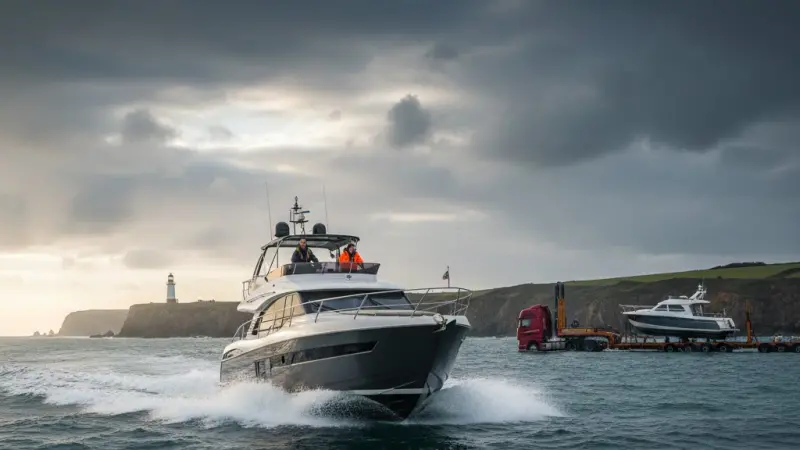
The maritime sector has long been the lifeblood of the United Kingdom, a nation defined by its rugged coastline and deep-rooted seafaring heritage. Within this vast blue economy, the specialized niche of boat delivery plays a critical role that often goes unnoticed by the general public. Whether it is a luxury yacht moving from a shipyard in Plymouth to a Mediterranean berth or a modest family cruiser transitioning between marinas on the South Coast, the movement of these assets requires a sophisticated blend of logistical precision and high-level seamanship.
Economically, boat deliverers are essential cogs in a machine that contributes billions to the UK’s Gross Value Added (GVA). The industry facilitates the sales cycle for brokers, enables global trade for manufacturers, and supports the "staycation" boating boom that has gripped the British Isles. For every vessel in transit, there is a network of professional skippers, logistics coordinators, and port authorities ensuring that the UK remains a global hub for maritime excellence. Navigating the complexities of the British coastline—with its significant tidal ranges and unpredictable North Atlantic weather—demands more than just a boat; it requires the expertise found in a high-quality uk business directory. As we look toward 2026, the sector is modernising, moving away from informal "delivery by hand" to highly regulated, professionalised service models that prioritise safety and transparency above all else.
The Landscape of Boat Deliverers in the UK
The UK boat delivery market is currently experiencing a period of robust refinement. While the immediate post-pandemic years saw an unprecedented surge in boat ownership—driven by a desire for socially distanced recreation—2024 and 2025 have seen the market stabilise into a more professionalised arena. Current estimates suggest the leisure marine sector contributes over £4.2 billion to the UK economy, with a significant portion of that revenue circulating through support services, including professional transport and skippered deliveries.
Geographically, activity is concentrated in key maritime hubs. The Solent remains the undisputed heart of the industry, serving as a gateway for international transit. However, we have seen substantial growth in the South West, particularly around Falmouth and Dartmouth, as well as the East Coast and Scotland’s Clyde estuary. Post-pandemic, the evolution of the industry has been marked by a shift toward digital integration. Yacht owners now expect real-time tracking, digital logs, and verified credentials. To find reputable operators in these regions, many owners now turn to a uk local business directory to vet providers based on local reputation and proximity.
Furthermore, the post-Brexit landscape has added layers of complexity to cross-border deliveries. Skippers must now be experts not only in navigation but also in VAT status, Customs (C88) forms, and the nuances of the Returned Goods Relief (RGR). This regulatory burden has actually benefited established UK delivery firms, as owners prefer to outsource the "headache" of paperwork to professionals who understand the shifting tides of maritime law.
Comprehensive Services Breakdown
Professional boat delivery is not a "one size fits all" service; it is a bespoke logistical operation tailored to the specific vessel and the owner's requirements. The primary division in the industry is between Skippered Delivery (by sea) and Road Transport (by trailer/low-loader).
1. Skippered Sea Deliveries: This involves a professional RYA-qualified skipper and a competent crew sailing the vessel to its destination. This is the preferred method for larger yachts and blue-water cruisers. It includes a comprehensive "pre-departure inspection," where the skipper audits the engine, standing rigging, and safety gear. For businesses looking to offer these specialised services, appearing in a business listing uk is the first step toward securing local contracts.
2. Road Transport & Freight: For smaller motorboats, RIBs, and racing yachts with fixed keels, road transport is often more cost-effective. This requires specialized equipment like hydraulic boat trailers and escort vehicles for wide loads. Professionals in this space must navigate the UK's "Abnormal Load" regulations, ensuring that every bridge clearance and route deviation is planned to the centimetre.
3. Assisted Passages: A growing trend in 2025 is the "Assisted Passage," where a professional skipper joins the owner on board. This acts as both a delivery service and a form of advanced coaching, allowing the owner to gain
confidence in tidal navigation or night sailing while their vessel is moved to a new home port. Many owners find these experts through business listing uk where independent skippers showcase their specific qualifications.
How to Choose the Right Service Provider
Selecting a delivery partner is a decision that involves handing over a high-value asset to a third party. Therefore, the vetting process must be rigorous. The "gold standard" for a delivery skipper in the UK is the RYA Yachtmaster Ocean or Offshore qualification, ideally with a Commercial Endorsement. This ensures the skipper has undergone medical fitness checks and possesses advanced survival training.
Insurance is the next critical pillar. A professional delivery firm should carry "Goods in Transit" insurance (for road transport) or specialized "Skipper’s Liability" insurance. It is a common mistake for owners to assume their personal hull insurance covers a professional delivery; often, a specific "delivery rider" must be added to the policy.
To ensure you are hiring a legitimate entity, consult uk service listings to check for verified reviews and long-standing presence in the industry. Look for providers who offer a detailed contract that specifies the "Daily Rate," "Fuel and Provisions" responsibilities, and "Weather Delay" clauses. A local reputation in a historic harbour is worth its weight in gold, and finding uk verified business listings can help filter out "cowboy" operators who lack the necessary legal protections for your vessel.
Industry Challenges & Future Outlook
The boat delivery sector is currently navigating two major shifts: the "Green Transition" and the "Digital Revolution." Regulatory changes, such as the expansion of the UK Emissions Trading Scheme (ETS) to maritime sectors, are trickling down to the leisure market. There is increasing pressure for delivery firms to demonstrate sustainability, whether through carbon-offsetting sea miles or utilizing HVO (Hydrotreated Vegetable Oil) for motorboat deliveries.
Technological shifts are also changing the skipper's toolkit. Starlink has revolutionised offshore communication, allowing skippers to provide daily video updates to owners from the middle of the Bay of Biscay. Furthermore, autonomous survey vessels are beginning to share UK waters, requiring skippers to be more vigilant than ever regarding AIS (Automatic Identification System) monitoring and ColRegs compliance. For companies staying ahead of these trends, a business listing uk serves as a platform to highlight their adoption of "Green Seamanship" and modern tech.
The future outlook remains positive, with a 6.8% projected growth in the yachting market through 2029. However, the "skills gap" remains a challenge. There is a high demand for young, qualified crew members to support senior skippers. Firms that invest in training and digital visibility will be the ones to capture this growing market.
Business Tips for Boat Deliverers Professionals
For the independent skipper or the small transport firm, marketing in 2026 is about "Digital Trust." In a maritime town, word of mouth is powerful, but in a global market, your online footprint is your resume. Professionals should focus on local SEO, ensuring that when an owner searches for "boat delivery near me," their business appears at the top of the uk professional services listings.
High-quality visual content is essential. Photos of a clean engine room after a delivery or a video testimonial from a satisfied owner can convert a lead faster than any sales pitch. Additionally, maintaining an active presence in a uk trade services listings ensures that your business is indexed correctly by search engines, allowing brokers and manufacturers to find your specific expertise—be it catamaran relocation or narrowboat towing. Digital visibility is no longer optional; it is the anchor that holds your business steady in a fluctuating economy.
Wrapping Up & Local Page Integration
The UK boat delivery industry is a testament to British maritime resilience and expertise. As we have explored, the combination of highly skilled skippers, rigorous safety protocols, and evolving technology makes this sector indispensable to the wider economy.
For the boat owner, choosing a professional ensures peace of mind; for the professional, delivering a vessel safely is a point of pride and a boost to their local reputation.
For businesses looking to dominate this niche, visibility is the key to success. In an age where every journey begins with a search, being part of a trusted uk online business directory is vital. Local Page UK stands as the premier solution for British maritime professionals, offering a bridge between expert service providers and the customers who need them. By integrating into the Local Page ecosystem, boat deliverers can ensure their skills are seen by the right audience at the right time.
Boost Your Visibility with Local Page UK
In the maritime world, your reputation is everything, but it only works if people can find you. For boat delivery professionals, skippers, and transport companies, digital presence is the modern-day "Flare" that signals your availability to the market. By claiming your business listing uk on Local Page UK, you position your business in front of thousands of potential clients looking for verified, local expertise. Don't let your services stay over the horizon—join the UK's most trusted business network today and let your business set sail toward new opportunities.
Frequently Asked Questions
Q1: What qualifications are required for a professional boat delivery skipper in the UK?
A professional skipper should ideally hold an RYA Yachtmaster Offshore or Ocean certificate. Crucially, for commercial work where they are being paid to move a vessel, this certificate must be "Commercially Endorsed." This involves passing a ML5 or ENG1 medical fitness exam, completing a Basic Sea Survival course, and holding a Professional Practices and Responsibilities (PPR) certificate. These standards ensure the skipper is legally qualified to operate vessels up to 200gt.
Q2: How much does it typically cost to have a boat delivered by sea?
The cost is usually calculated on a "Daily Rate" plus expenses. For a standard 40ft yacht, a professional skipper may charge between £250 and £450 per day, with crew members costing between £100 and £150. Expenses such as fuel, marina fees, travel back to the base, and on-board provisions are billed at cost. Some firms offer a "Fixed Price" quote, which provides more budget certainty for the owner but may include a premium to cover potential weather delays.
Q3: Is the boat owner's insurance sufficient for a professional delivery?
Usually, no. Standard private marine insurance policies often have clauses that exclude "commercial use" or "hired skippers." Before a delivery begins, the owner must contact their insurer to request a "Delivery Rider" or "Skipper’s Extension." This informs the insurer that a professional is in charge. Furthermore, the delivery company should carry their own professional indemnity and public liability insurance to cover any negligence.
Q4: What is the difference between sea delivery and road transport for boats?
Sea delivery involves sailing the vessel on its own hull, which is ideal for larger yachts and allows the machinery to be "tested" during the journey. Road transport involves a low-loader or trailer and is often faster and safer for smaller boats or those with engine issues. Road transport avoids wear and tear on the vessel’s sails and engines but requires the mast to be "unstepped" (taken down), which adds to the cost of craneage at both ends.
Q5: How can I find a reliable and verified boat delivery service in my local area?
To find a reputable provider, you should consult a verified Localpage listing. This allows you to browse through local providers who have been vetted by the community and have a documented history of service.
Look for listings that display certifications, insurance details, and customer testimonials. Avoid hiring through social media groups where credentials are not verified, as this poses a significant risk to your asset.
Q6: What happens if the boat faces bad weather during a sea delivery?
Safety is always the priority. A professional skipper will monitor GRIB files and Met Office shipping forecasts. If the conditions exceed the "Safe Operating Parameters" of the vessel or the crew’s comfort, the skipper will "Seek Shelter" in a safe haven. Most contracts include a "Weather Day" rate (often 50% of the daily rate) to cover the time spent waiting for a safe window. A good skipper never "pushes" a boat into dangerous seas just to meet a deadline.
Q7: What is a "Pre-Departure Inspection" (PDI) in boat delivery?
A PDI is a rigorous audit conducted by the skipper before taking command. It includes checking the engine oil/coolant, inspecting the seacocks, testing the bilge pumps, and ensuring all safety equipment (life rafts, flares, EPIRBs) is in date. The skipper will also check the standing rigging and sails for signs of fatigue. A detailed PDI report protects both the owner and the skipper by documenting the boat’s condition at the point of handover.
Q8: Can I stay on board during the delivery of my boat?
Yes, this is known as an "Owner Assisted Passage." It is a popular option for new owners who want to learn their vessel’s systems under the guidance of a professional. However, the skipper remains the "Master" of the vessel legally. Owners should be aware that deliveries are often "delivery focused," meaning they involve long hours and night sailing, which may be more intense than a standard leisure cruise.
Q9: How are fuel and marina expenses handled during a delivery?
Standard industry practice is for the owner to provide a "float" or a credit card for the skipper to use for boat-related expenses. All receipts are kept and presented in a final reconciliation at the end of the journey. For road transport, these costs are usually bundled into the initial quote. For sea deliveries, the owner is responsible for ensuring the boat is handed over with full tanks, or providing the funds to fill them.
Q10: What documents are needed for a boat delivery between the UK and the EU?
Following Brexit, skippers must carry the original Registration Document (SSR or Part 1), the Insurance Certificate, and proof of VAT-paid status (like the original Sales Invoice). They must also manage the "Q-Flag" for customs and complete the necessary SPCR (Single Period of Carriage) forms. For deliveries into the EU, the skipper will also need to handle the "Temporary Admission" or "Returned Goods Relief" paperwork to avoid unexpected tax bills for the owner.
Q11: How long does it take to deliver a boat from the South Coast to Scotland?
By sea, a delivery from the Solent to the Clyde is roughly 450-500 nautical miles. In a modern motorboat cruising at 15-20 knots, this could take 3-4 days including fuel stops. In a sailing yacht averaging 5-6 knots, it could take 5-8 days of continuous sailing. However, weather is the deciding factor; a "low pressure" system in the Irish Sea can easily add 3-4 days of waiting time to the schedule.
Q12: Do delivery skippers provide their own crew?
Most professional delivery firms have a "Pool" of regular, trusted crew members. For a standard delivery, a skipper will usually bring at least one competent mate to allow for a "watch system" (2 hours on, 2 hours off) during night passages. Using their own crew ensures the skipper knows the skill level of the people they are working with, which is a key safety component. The cost of the crew is typically passed on to the owner.
Q13: What should be included in a boat delivery contract?
A solid contract should include: the agreed route, the daily/fixed rate, the crew size, insurance responsibilities, a breakdown of estimated expenses, a "Force Majeure" clause for weather, and a "Termination" clause. It should also state that the skipper has the final authority on all safety matters. This legal clarity ensures that both parties are protected in the event of an engine failure or a change in the delivery schedule.
Q14: Are narrowboats and canal boats handled differently in delivery?
Yes, inland deliveries are a different specialty. While they don't face "Heavy Seas," they require knowledge of lock operations, bridge timings, and depth restrictions on the UK’s canal network.
Professional "Canal Boat Deliverers" often charge by the mile or by the "Flight of Locks" rather than a daily rate. Because these boats are slower (4mph limit), these deliveries can take several weeks for cross-country transits.
Q15: Why is digital visibility important for small boat delivery businesses?
In 2026, the first thing a broker or owner does is "Google" a skipper's name. If you don't have a professional presence in a Local page, you lose credibility. A digital listing acts as a permanent business card that proves you are a legitimate, tax-paying UK entity. It allows you to compete with larger firms by showcasing your specific local expertise and your commitment to the high standards of the British maritime industry.
Disclaimer: The information provided in this article is for general informational and research purposes only. Company details, features, services, and market positions may change over time. Readers are advised to visit official company websites and conduct independent research before making any business decisions or purchasing services.
Most Searchable Keywords
Recent Blogs


Related Listings


Categories
- Accountants (295)
- Advertising Agencies (559)
- Architects (149)
- Automobiles (377)
- Beauty (300)
- Carpenters (146)
- Cleaning Services (387)
- Dentists (189)
- Driving (62)
- Education (1)
- Electricians (215)
- Energy (8)
- Event Organiser (687)
- Finance (602)
- Guide (3439)
- Health (2207)
- Information technology (206)
- Legal Services (361)
- Logistics (6)
- Maintenance (65)
Sponsored Listings in Legal Services
Related Blogs

When Is My MOT Due Free Check and Common Fail...
Read this insightful article "When Is My MOT Due Free Check and Common Failures" to expand your knowledge!

Lost V5C Log Book Cost Timescale and Rules
Read this insightful article "Lost V5C Log Book Cost Timescale and Rules" to expand your knowledge!

Intensive Driving Courses: Costs Pass Rates a...
Read this insightful article "Intensive Driving Courses: Costs Pass Rates and Who They Suit" to expand your knowledge!
Questions & Answers – Find What
You Need, Instantly!
How can I update my business listing?
Is it free to manage my business listing?
How long does it take for my updates to reflect?
Why is it important to keep my listing updated?
