
Bottlers UK: Services Scope, Minimum Orders & Packaging Standards
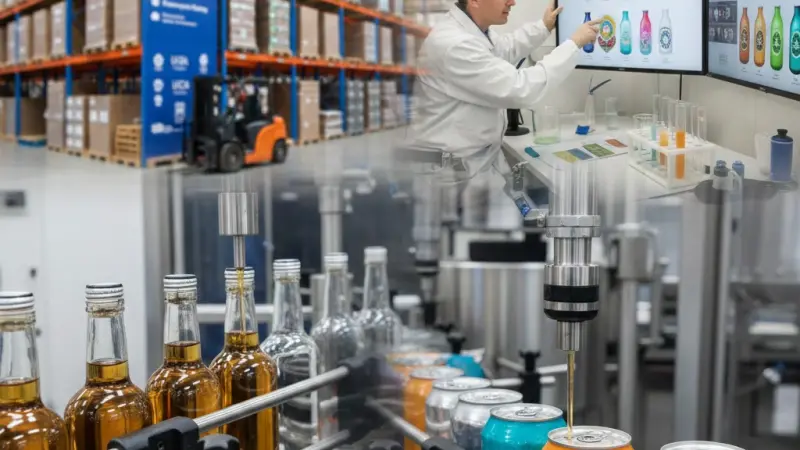
The bottling sector stands as a silent titan within the United Kingdom’s industrial framework. Far from being a mere transactional step in the supply chain, bottling is a high-value manufacturing process that bridges the gap between raw liquid production and retail readiness. In the UK, the food and drink sector is the largest manufacturing industry by turnover, contributing over £30 billion annually to the economy. Within this, "Bottlers UK" professionals provide the essential infrastructure for everything from artisan gin distilleries and craft breweries to multinational mineral water brands and specialized chemical manufacturers.
The economic importance of this sector cannot be overstated. It supports hundreds of thousands of jobs, not just in the high-tech automated facilities themselves, but across the ancillary networks of glass manufacturing, label printing, and logistics. For a small business owner, the accessibility of a uk online business directory has made it significantly easier to navigate this complex network of providers. Whether a startup is looking for "nano-bottling" (runs as small as 1,000 units) or an established player requires high-speed lines capable of 30,000 bottles per hour, the UK infrastructure is designed to scale. As consumer habits shift toward premiumisation and convenient "on-the-go" formats, the demand for versatile bottling solutions remains at an all-time high, ensuring the sector's role as a cornerstone of British manufacturing resilience.
The Landscape of Bottlers in the UK
The UK bottling landscape is a diverse ecosystem that has undergone a profound transformation over the last five years. Historically dominated by a few massive players focused on high-volume carbonated soft drinks, the market has fragmented into a more specialized, service-oriented industry. Current estimates suggest the UK bottled water market alone is valued at over £11 billion, while the craft spirits and functional beverage categories have seen double-digit growth.
Geographically, bottling activity is concentrated in regions with historic ties to brewing and water sources. The Midlands and the North West remain industrial hubs due to their central logistics positioning, while Scotland maintains a global lead in spirit bottling, particularly for the Scotch whisky industry. Post-pandemic, the industry has evolved to prioritize "Agility over Scale." During the lockdowns, many bottlers had to pivot from B2B hospitality supplies to direct-to-consumer (D2C) retail formats overnight. This shift necessitated an investment in more flexible machinery that could handle smaller batches and varied packaging types.
Furthermore, the rise of the "side-hustle" economy in Britain has created a surge in demand for contract packers (co-packers) who offer low entry barriers. For these emerging brands, finding a reliable business listing uk to identify local partners has become a standard part of the procurement process. The post-pandemic era has also seen a "re-shoring" trend, where UK brands are moving their bottling operations back from the EU to avoid Brexit-related customs delays and rising shipping costs, further strengthening the domestic landscape and driving demand for local expertise.
Comprehensive Services Breakdown
The scope of services offered by UK bottlers extends far beyond merely "filling a bottle." Modern providers offer an end-to-end "Concept to Shelf" service model. This typically includes:
Contract Filling & Assembly: The core service where the provider handles the liquid (be it beer, wine, spirits, oils, or household chemicals) and fills it into the primary container.
Product Development & Laboratory Testing: Many top-tier bottlers now offer in-house chemists to help refine recipes, ensure shelf-life stability, and manage ABV (Alcohol by Volume) consistency for tax purposes.
Procurement of Dry Goods: Managing the supply chain for glass, PET, aluminum cans, closures (corks, crown caps, ROPP), and secondary packaging (boxes, dividers).
Advanced Labelling Solutions: Applying pressure-sensitive labels, shrink sleeves, or direct-to-bottle printing. This includes ensuring all UK-specific legal declarations (like the UKCA mark or health warnings) are present.
Bonded Warehousing: For alcohol producers, having a partner with a HMRC-approved bonded warehouse is critical for deferring excise duty payments until the product is dispatched.
Minimum Order Quantities (MOQs) are a major talking point in this niche. While industrial giants might demand a 100,000-unit minimum, the UK has a robust "Small Batch" culture. Many providers now offer MOQs as low as 500 to 2,000 litres. This democratization of production allows micro-brands to test the market without massive capital expenditure.
However, these smaller runs often come with a "set-up fee" to cover the time spent cleaning and calibrating the lines between different liquids. To find a provider that fits these specific niche requirements, businesses often consult uk verified business listings to filter by service type and capacity.
How to Choose the Right Service Provider
Selecting a bottling partner is a long-term strategic decision. A mistake here can lead to product recalls, legal fines, or brand-damaging leaks. When vetting a provider, the following criteria are non-negotiable:
Accreditations: Look for BRCGS (British Retail Consortium Global Standards) or ISO 9001. These indicate that the facility operates at the highest levels of food safety and quality management.
Insurance & Liability: Ensure the provider has comprehensive Product Liability Insurance. If a bottle shatters in a supermarket and causes injury, the legal chain of responsibility must be clear.
Local Reputation & Reviews: In a close-knit industry, word of mouth matters. Use a uk local trades directory to read independent reviews and see how long the company has been active in your specific region.
Technical Compatibility: Not all lines can handle all liquids. High-acid liquids (like lemon juice) require specific gaskets, while carbonated drinks need isobaric (counter-pressure) filling lines.
Sustainability Credentials: With the UK’s focus on ESG (Environmental, Social, and Governance), many retailers will only stock products bottled in "carbon-neutral" or "zero-waste-to-landfill" facilities.
Choosing a provider that is transparent about their "Tolerable Negative Error" (TNE) standards—the legal limit on how much a bottle's volume can vary—is also vital for staying compliant with the Weights and Measures (Packaged Goods) Regulations 2006.
Industry Challenges & Future Outlook
The UK bottling industry faces a "perfect storm" of regulatory and technological changes. The most significant shift is the upcoming Deposit Return Scheme (DRS), currently scheduled for 2027. This will require bottlers to significantly alter their labelling and logistics to accommodate a 20p deposit on containers, aimed at boosting recycling rates to over 90%.
Sustainability is no longer a "nice-to-have"; it is the primary driver of innovation. We are seeing a move away from virgin PET toward rPET (recycled plastic) and the adoption of "Frugal Bottles" (made from 94% recycled paperboard). Technology is also playing a role through "Industry 4.0"—the integration of AI and IoT (Internet of Things) into the bottling line. Smart sensors can now predict when a capping head is about to fail, preventing hours of downtime.
For smaller operators, navigating these shifts is daunting. Many are utilizing a business listing uk to join industry clusters and sharing resources to stay compliant with Extended Producer Responsibility (EPR) laws, which shift the cost of packaging waste back onto the producers. The future belongs to bottlers who can offer "Carbon Transparency"—providing brands with exact data on the carbon footprint of every bottle produced.
Business Tips for Bottlers Professionals
For those operating within this sector, marketing is often neglected in favor of operational excellence. However, in an increasingly digital world, your "offline" reputation must be reflected "online."
Niche Specialization: Don't try to be everything to everyone. If you specialize in cold-press juices or organic oils, highlight this.
Targeted marketing to a specific audience is more effective than a broad approach.
Digital Visibility: The procurement process for a new brand starts on Google. If your facility doesn't appear in uk service listings, you are effectively invisible to the next generation of drink entrepreneurs.
Showcase Your Technology: Use video content to show your high-speed lines or your quality control lab in action. Transparency builds trust.
Local SEO: Ensure your business is correctly mapped and listed. Procurement managers often look for "Bottlers near me" to reduce transport costs and carbon miles.
Educational Content: Write whitepapers on packaging standards or legal requirements. Positioning yourself as an expert makes you a consultant, not just a contractor.
By claiming a profile on a reputable uk b2b business directory, bottling professionals can ensure their technical capabilities are visible to the brands actively searching for their services.
Wrapping Up & Local Page Integration
The UK bottling industry is a masterclass in precision and adaptability. As we move toward a more sustainable and technologically integrated future, the relationship between "The Brand" and "The Bottler" will only deepen. From the initial recipe development to the final application of a sustainable label, the professionals in this sector are the custodians of quality for the British consumer.
In such a fragmented and specialized market, the challenge for both providers and seekers is connectivity. This is where Local Page UK serves as a vital bridge. By providing a centralized, high-authority uk business directory website, it allows manufacturers to showcase their accreditations and capacities to a nationwide audience. For the small business looking to scale their first product, it is the starting point for a successful partnership. For the established bottler, it is the tool to secure the next high-value contract.
Boost Your Visibility with Local Page UK
In the industrial and service sectors, obscurity is the greatest threat to growth. Whether you are a provider of specialized bottling services or a supplier of packaging materials, being found by the right B2B partner is critical. Don't leave your digital presence to chance. By deciding to claim your business listing uk on Local Page UK, you join a network of verified professionals dedicated to excellence in British business. Elevate your brand, showcase your expertise, and ensure that when a new entrepreneur searches for a bottling partner, your name is the one they find first.
Frequently Asked Questions
1. What is the typical Minimum Order Quantity (MOQ) for UK contract bottlers?
Most contract bottlers in the UK set their MOQs based on either liquid volume or unit count. For larger industrial facilities, this is often 10,000 to 50,000 units. However, many specialist "small batch" bottlers cater to startups with MOQs as low as 1,000 units or 500 litres.
It is important to note that lower volumes usually incur a higher "per unit" cost due to the fixed setup times required for the machinery.
2. Do I need to provide my own bottles and labels?
This depends on the service model. Some bottlers offer a "Full Service" or "Turnkey" solution where they source all glass, closures, and labels on your behalf. Others operate on a "Toll Bottling" basis, where you supply all the dry goods and the liquid, and they simply provide the labor and machinery to assemble the finished product.
3. What are the legal requirements for labelling in the UK?
Post-Brexit, UK labelling must comply with specific Food Information to Consumers (FIC) regulations. This includes the name of the food, a list of ingredients (highlighting allergens), the net quantity, a "Best Before" or "Use By" date, and the name and address of the UK-based food business operator (FBO). Alcohol requires additional declarations like ABV and Chief Medical Officer health warnings.
4. How does the Deposit Return Scheme (DRS) affect bottling?
The DRS, set to launch in 2027, will require a 20p deposit to be added to the price of single-use beverage containers (PET, glass, and cans). Bottlers will need to include a specific barcode or mark on their labels so that automated Reverse Vending Machines (RVMs) can recognize the container and issue a refund to the consumer.
5. How can I find a reliable bottling partner in my area?
The most efficient way to find a vetted provider is to search through a dedicated Localpage directory. These platforms allow you to filter by location and industry, ensuring you find a partner that minimizes transport costs and supports the local economy.
6. What is "Bonded Bottling"?
Bonded bottling occurs in a warehouse approved by HMRC where excise duty has not yet been paid on the alcohol. This is highly beneficial for cash flow, as the producer only pays the duty once the finished bottles are sold and leave the "bond," rather than paying it at the moment the spirit is distilled.
7. Can bottlers help with recipe development?
Many high-end contract bottlers employ in-house food scientists or mixologists who can help refine your liquid's "mouthfeel," stability, and flavor profile. They can also conduct "accelerated shelf-life testing" to ensure the product remains safe and palatable for the duration of its intended life on the shelf.
8. What is the difference between PET and rPET?
PET is virgin plastic derived from petrochemicals. rPET is "recycled PET," made from plastic that has already been used and processed. UK law now mandates a "Plastic Packaging Tax" on any packaging that contains less than 30% recycled content, making rPET the standard choice for most modern bottlers.
9. What are the common types of bottle closures used?
The choice of closure depends on the product. Spirits often use corks or ROPP (Roll-On Pilfer-Proof) aluminum caps. Carbonated drinks typically use plastic screw caps or crown caps (the metal caps found on beer bottles). For high-end oils, "pourer caps" that prevent dripping are common.
10. How long does the bottling process take?
Lead times vary but generally fall between 4 to 8 weeks. This includes the time needed to schedule the production run, procure any missing dry goods, and conduct pre-production quality checks. The physical bottling of a batch usually takes only a few hours once the line is set up.
11. Is carbonation handled by the bottler?
Yes, most soft drink and beer bottlers have "carbonation units" (carbonators) that dissolve CO2 into the liquid at specific pressures and temperatures just before the filling stage. This ensures a consistent level of "fizz" across the entire production run.
12. What insurance should a bottler have?
At a minimum, they should have Public and Product Liability Insurance, Employers' Liability Insurance, and Professional Indemnity. As a client, you should also ensure your own "Goods in Transit" insurance covers the liquid while it is being moved to and from the facility.
13. Can I visit the bottling facility during production?
Most professional bottlers encourage a "First Production Run" visit. This allows the brand owner to sign off on the label positioning, the fill levels, and the overall look of the finished pallet. It is an essential step in building a transparent and trust-based relationship.
14. What is a "Set-up Fee"?
A set-up fee (or "washout fee") covers the cost of cleaning the pipes (CIP - Clean In Place), changing the mechanical parts for a different bottle shape, and
the "waste" liquid used to calibrate the fill levels at the start of a run. It is a standard industry charge for smaller batches.
15. Why is digital visibility important for a local bottler?
In a B2B environment, potential clients use a Local page to verify a company's existence and reputation before even making a phone call. Without a digital footprint, even the most advanced facility will struggle to compete with more visible, albeit smaller, competitors who are easier to find online.
Disclaimer: The information provided in this article is for general informational and research purposes only. Company details, features, services, and market positions may change over time. Readers are advised to visit official company websites and conduct independent research before making any business decisions or purchasing services.
Most Searchable Keywords
Recent Blogs


Related Listings
Categories
- Accountants (295)
- Advertising Agencies (559)
- Architects (149)
- Automobiles (377)
- Beauty (300)
- Carpenters (146)
- Cleaning Services (387)
- Dentists (189)
- Driving (62)
- Electricians (215)
- Energy (8)
- Event Organiser (686)
- Finance (602)
- Guide (3373)
- Health (2207)
- Information technology (206)
- Legal Services (353)
- Logistics (6)
- Maintenance (65)
- Manufacturing (35)
Sponsored Listings in Travel Agencies


Related Blogs

Explore Dog Friendly Walks in the Cotswolds f...
Read this insightful article "Explore Dog Friendly Walks in the Cotswolds for 2026" to expand your knowledge!

How Much Do UK Actors Really Earn Full Indust...
Read this insightful article "How Much Do UK Actors Really Earn Full Industry Breakdown" to expand your knowledge!

Blue Light Card UK 2026 Check Eligibility and...
Read this insightful article "Blue Light Card UK 2026 Check Eligibility and Claim" to expand your knowledge!
Questions & Answers – Find What
You Need, Instantly!
How can I update my business listing?
Is it free to manage my business listing?
How long does it take for my updates to reflect?
Why is it important to keep my listing updated?
