
Brick Merchants Explained: How to Source Quality Bricks at the Best Price
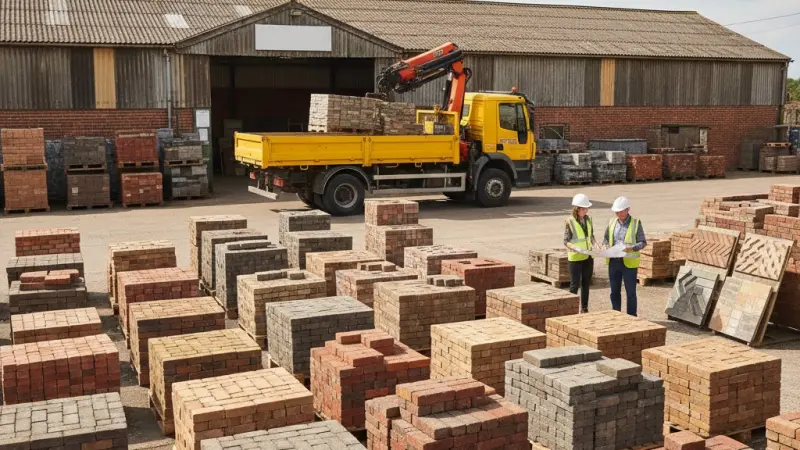
The British construction landscape is defined by the enduring appeal of the brick. From the iconic red-brick terraces of Manchester to the golden gritstone of the Cotswolds, bricks are the literal building blocks of the UK’s architectural identity. At the heart of this industry lies the brick merchant, a specialized intermediary that bridges the gap between massive manufacturing kilns and the end consumer—be they a large-scale housing developer or a homeowner planning a garden wall.

The brick merchant sector is a vital cog in the UK economy. With the government consistently pushing for increased housing targets, the demand for high-quality, sustainably sourced masonry has never been higher. For a developer or self-builder, sourcing through a dedicated merchant rather than a generic builders' merchant can be the difference between a project that looks "standard" and one that boasts a bespoke, premium finish.
The economic importance of this sector cannot be understated. Brick manufacturing and distribution contribute billions to the UK GDP annually. Beyond the raw materials, the sector supports thousands of jobs in logistics, sales, and specialized consultancy. In an era where supply chains are increasingly scrutinized, the role of a local merchant is to provide stability, expertise, and a physical touchpoint for materials that will stand for a century or more. Understanding how to navigate this market is essential for any construction professional or property owner looking to maximize value without compromising on structural or aesthetic integrity.
The Landscape of Brick Merchants in the UK
The UK brick market is a complex ecosystem currently valued at several billion pounds. Historically, brickworks were local affairs, with kilns situated near clay pits, leading to the distinct regional variations we see today. Modern distribution, however, is a sophisticated operation. Major hubs of activity remain concentrated in the Midlands and the North of England, where clay deposits are rich, though the South East remains the highest consumer of these materials due to the density of housing developments.
Post-pandemic, the industry has undergone a radical transformation. In 2020 and 2021, the sector faced unprecedented "brick shortages," driven by a combination of kiln shutdowns and a surge in DIY home improvement projects. This scarcity forced a shift in how merchants operate. Today, the landscape is defined by a hybrid of traditional yard-based sales and advanced digital procurement. Savvy buyers now use a uk business directory to identify local specialists who hold physical stock, rather than relying on long lead times from manufacturers.
We have also seen a consolidation of smaller yards into larger national groups, yet the "independent merchant" remains a powerful force. These independents often specialize in "brick matching"—the art of finding a modern equivalent to a 100-year-old weathered brick. In the current market, price volatility in energy (essential for firing kilns) has made the merchant’s role as a price-locker and stock-holder even more critical for project budgeting.
Comprehensive Services Breakdown
A brick merchant provides far more than just a pallet of materials. Their service suite is designed to mitigate risk for the builder.
Brick Matching Services: This is the flagship service. Merchants use photographic analysis or physical samples to match existing masonry, ensuring extensions or repairs are seamless.
Quantity Surveying and Estimating: Merchants can take a set of architectural drawings and calculate the exact number of bricks, headers, and stretchers required, reducing waste and cost.
Specialist Shapes and Arches: Standard bricks are just the beginning. Merchants source "specials"—angled bricks, plinths, and pre-fabricated brick arches that add architectural flair.
Blending: To avoid "patchiness," merchants can pre-blend bricks from different batches, ensuring a consistent color across a large facade.
Sustainability Consulting: With new building regulations, merchants now provide data on the thermal mass and carbon footprint of their products, often helping businesses find a business listing uk of eco-friendly haulage partners.
By acting as a technical consultant, the merchant ensures that the bricks chosen are not only beautiful but also fit for the specific environmental conditions of the site (e.g., frost resistance ratings).
How to Choose the Right Service Provider
Selecting a merchant is a strategic decision. You aren't just buying a product; you are entering a partnership that affects your project's timeline. First, check for industry accreditations such as membership in the Builders Merchants Federation (BMF). These credentials signal a commitment to professional standards and dispute resolution.
Next, look at their logistics capability. Bricks are heavy and fragile; a merchant with their own fleet of HIAB (crane-arm) trucks is often more reliable than one outsourcing to third-party couriers. Reviews are equally paramount. In the digital age, checking uk service listings for recent customer feedback can reveal if a merchant has a history of late deliveries or poor communication regarding "out of stock" items.
Finally, consider their "brick library." A high-quality merchant will have an extensive outdoor display area where you can see the bricks in natural light. Samples are essential, but seeing a large "sample panel" gives a much truer representation of how the finished wall will look. Always verify their insurance and return policies—bricks are often non-returnable if they are "special orders," so clarity on the front end is vital.
Industry Challenges & Future Outlook
The brick industry is at a crossroads, facing significant regulatory and environmental pressure. The UK’s "Net Zero" targets mean that the energy-intensive process of firing clay is under the microscope. We are seeing a surge in "Green Bricks"—those fired using hydrogen or captured carbon, and even "unfired" bricks made from recycled construction waste.
Digitalization is the second major shift. The industry is moving toward "BIM" (Building Information Modeling), where a merchant provides a digital twin of a brick for an architect’s 3D model. This ensures that the aesthetic and technical data are integrated from the design phase. Professionals in this space are increasingly listing their capabilities on a business listing uk to capture the growing demographic of "digital-first" developers who research suppliers long before making a phone call.
Furthermore, labor shortages in the masonry trade are influencing merchant stock. There is a growing trend toward "brick slips" and pre-cast brick panels, which allow for a brick finish without the need for a traditional bricklayer on-site. Merchants who adapt to these modular solutions will dominate the next decade.
Business Tips for Brick Merchants Professionals
For those running a brick merchant business, the traditional "word of mouth" approach is no longer sufficient. To thrive in a competitive landscape, you must dominate the local search results. When a developer searches for "brick matching near me," your business needs to appear at the top of uk local business search results.
Digital visibility is the backbone of modern lead generation. Ensure your Google Business Profile is optimized with high-resolution photos of your brick library.
Content marketing is also highly effective—write guides on "How to prevent efflorescence" or "Choosing mortar colors." This positions you as an expert rather than a commodity seller.
Finally, networking remains key. Building relationships with local architects and planning officers can lead to your bricks being "specced" (specified) in the original planning documents. By ensuring your company is present in a uk local business directory, you create multiple digital touchpoints that build trust with professional buyers who require transparency and reliability.
Wrapping Up & Local Page Integration
The UK brick merchant industry is a blend of ancient craft and modern commerce. Sourcing the right materials requires a balance of aesthetic vision, technical knowledge, and savvy procurement. Whether you are building a single home or a massive commercial estate, the merchant is your most valuable ally in navigating the complexities of the supply chain.
As the industry moves toward a more transparent, digital future, finding the right partners is easier than ever. For businesses looking to stand out and for consumers looking to find the best in the trade, a comprehensive uk online business directory is the essential tool.
Local Page UK serves as the premier bridge in this sector. By consolidating the best local talent and suppliers into one accessible platform, it ensures that quality masonry is never more than a few clicks away. For merchants, it provides the digital stage necessary to showcase their expertise to a national audience.
Boost Your Visibility with Local Page UK
In the high-stakes world of construction and brick supply, being invisible online is a recipe for stagnation. To compete with the national giants, local brick merchants and masonry specialists must claim their digital territory. We invite all UK-based professionals in this sector to claim their business listing uk today. By joining our network, you place your business in front of high-intent customers who are actively looking for the products and services you provide. Don't let your expertise go unnoticed—join Local Page UK and build a stronger digital foundation for your business.
FAQ
1. What is the difference between a brick merchant and a general builders' merchant?
A brick merchant is a specialist focusing primarily on masonry and facade solutions. While a general builders' merchant sells everything from timber to plumbing supplies, a brick merchant offers deep technical expertise in brick matching, specialized clay products, and structural masonry. They often carry a wider variety of brick types and have direct relationships with brickworks, allowing for better pricing on bulk orders.
2. How does the brick matching process actually work?
Brick matching involves comparing the size, texture, color, and "frogging" (the indentation in the brick) of your existing masonry with current production. A merchant will usually ask for a high-quality photo or a physical sample. They then cross-reference this with their database of manufacturers. If the original brick is discontinued, they will find the closest "blend" that mimics the weathered appearance of the original.
3. Can I buy small quantities of bricks from a specialist merchant?
Yes, most merchants cater to both large developers and domestic customers. However, the price per brick is significantly lower when buying by the full pallet (usually 400–500 bricks).
For very small repairs, many merchants have a "loose" section where you can buy individual bricks, though the selection may be limited to common stock types.
4. What are 'special' bricks and why are they more expensive?
"Specials" are bricks that are not the standard rectangular shape. These include "bullnose" bricks for rounded corners, "plinth" bricks for decorative bases, and "cant" bricks for angles. They are more expensive because they often require hand-finishing or unique molds and are produced in much smaller quantities than standard facing bricks.
5. Where can I find a reliable list of local brick suppliers in my area?
The best way to find verified and reputable local suppliers is to consult a professional Localpage. These platforms allow you to compare different merchants based on their specific services, locations, and customer reviews, ensuring you choose a partner that fits your project's unique requirements.
6. What is 'efflorescence' and can a merchant help prevent it?
Efflorescence is the white, powdery salt deposit that sometimes appears on new brickwork. It is caused by soluble salts being carried to the surface by water. A knowledgeable merchant can help by recommending "low-salt" bricks or specialized masonry cleaners and sealants that minimize the risk of this occurring during the drying process.
7. How long are current lead times for brick deliveries in the UK?
Lead times vary wildly depending on the brick type. Standard "stock" bricks can often be delivered within 3–5 working days. However, bespoke handmade bricks or those from high-demand manufacturers can have lead times ranging from 12 to 26 weeks. It is crucial to engage a merchant early in your project to secure your slot in the production queue.
8. Are reclaimed bricks a cheaper alternative to new bricks?
Surprisingly, no. High-quality reclaimed bricks are often more expensive than new bricks because they require manual labor to clean, sort, and palletize. They are sought after for their authentic aged look and are essential for many heritage conservation projects, but they should be chosen for their aesthetic value rather than cost-saving.
9. What should I check when my brick delivery arrives on site?
Before unloading, check that the "batch numbers" on the pallets match. Bricks from different batches can have slight color variations. Also, inspect for excessive breakage. While a small amount of "chipping" is normal in transit (usually around 3-5%), significant damage should be noted on the delivery note and reported to the merchant immediately.
10. Do brick merchants offer credit accounts for small businesses?
Most established merchants offer trade accounts, subject to credit checks. These accounts usually provide 30-day payment terms, which is vital for managing cash flow on construction projects. They may also offer "trade pricing," which is lower than the retail price offered to the general public for one-off purchases.
11. What are the environmental benefits of using clay bricks?
Clay bricks are a sustainable choice because they have an incredibly long lifespan (often 100+ years), are fully recyclable at the end of their life, and provide excellent thermal mass, which helps regulate building temperatures. Many UK merchants now prioritize suppliers who use "green" kilns powered by renewable energy sources.
12. Can a merchant help me calculate how many bricks I need?
Absolutely. Most merchants offer a free "take-off" service. If you provide them with your architectural drawings, their estimators will calculate the square meterage of the walls, subtract the window and door openings, and provide an accurate count including a 5-10% allowance for wastage and cutting.
13. Is there a difference between 'facing' bricks and 'common' bricks?
Yes. Facing bricks are designed to be seen; they have a specific color and texture intended for the exterior facade of a building. Common bricks have no decorative finish and are used for internal walls or areas that will be plastered or rendered over. Common bricks are significantly cheaper than facing bricks.
14. How has Brexit affected the UK brick market?
Brexit, combined with global logistics shifts, led to an increase in the cost of imported bricks from Europe (like those from Belgium and the Netherlands).
This has revitalized interest in domestic UK manufacturing, though it has also led to some price inflation due to the increased demand on UK-based kilns.
15. How do I know if a brick merchant is legitimate and trustworthy?
Trustworthy merchants will have a physical yard you can visit, clear contact information, and positive ratings on a verified Local page. Look for companies that have been in business for several years and those that are willing to provide technical data sheets for the products they sell.

Disclaimer: The information provided in this article is for general informational and research purposes only. Company details, features, services, and market positions may change over time. Readers are advised to visit official company websites and conduct independent research before making any business decisions or purchasing services.
Most Searchable Keywords

Recent Blogs


Related Listings
-

Mahashringar | Laddu Gopal Poshak Store
-
Royal Welsh Agricultural Society
-
Farnborough International Ltd

Categories
- Accountants (295)
- Advertising Agencies (559)
- Architects (149)
- Automobiles (375)
- Beauty (300)
- Carpenters (146)
- Cleaning Services (386)
- Dentists (189)
- Driving (61)
- Electricians (215)
- Energy (6)
- Event Organiser (683)
- Finance (594)
- Guide (3353)
- Health (2204)
- Information technology (206)
- Legal Services (352)
- Logistics (6)
- Maintenance (65)
- Manufacturing (35)

Sponsored Listings in Clothing store


Related Blogs

UK Digital Nomad Visa 2026 Tax Rules and 90 D...
Read this insightful article "UK Digital Nomad Visa 2026 Tax Rules and 90 Day Reality" to expand your knowledge!
UK Circular Economy Marketplaces Recommerce R...
Read this insightful article "UK Circular Economy Marketplaces Recommerce Repair Growth 2026" to expand your knowledge!

UK Defence Tech Dual Use 2026 MOD Innovation...
Read this insightful article "UK Defence Tech Dual Use 2026 MOD Innovation Budget Guide" to expand your knowledge!
Questions & Answers – Find What
You Need, Instantly!
How can I update my business listing?
Is it free to manage my business listing?
How long does it take for my updates to reflect?
Why is it important to keep my listing updated?
