
Capital Equipment Manufacturers: A Buyer’s Guide to Long-Term Value
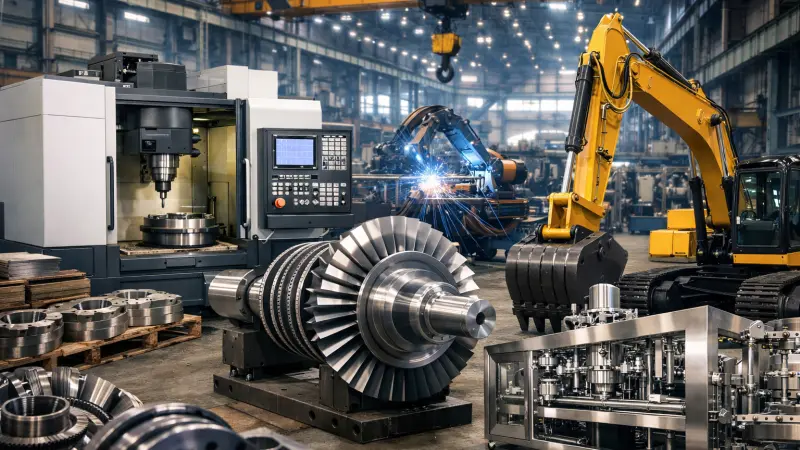
The landscape of British industry is anchored by the strength of its Capital Equipment Manufacturers. These entities are the silent engines of the UK economy, producing the heavy machinery, specialized tooling, and complex automated systems that allow other sectors—from pharmaceuticals to aerospace—to function. Unlike consumer goods, capital equipment represents a significant financial investment, often sitting on a company’s balance sheet for decades. Therefore, the relationship between a buyer and a manufacturer is not merely a transaction; it is a long-term strategic partnership.

In the United Kingdom, this sector contributes billions to the national GDP. From the industrial heartlands of the Midlands to the high-tech clusters in the South East, British engineering prowess remains a global benchmark for quality. However, for a procurement manager or a business owner, navigating this space requires more than just technical knowledge. It requires an understanding of Total Cost of Ownership (TCO), lifecycle support, and the ability to distinguish between a simple hardware provider and a true solutions partner.
As we look at the current economic climate, characterized by fluctuating energy costs and a drive toward "Net Zero," the role of the manufacturer has expanded. They are now consultants in efficiency. This guide is designed to help you navigate the complexities of sourcing from a uk business directory website, evaluating engineering standards, and ensuring that your capital expenditure (CAPEX) translates into long-term operational excellence and sustainable growth.
The Landscape of Capital Equipment Manufacturers in the UK
The UK’s capital equipment sector has undergone a profound transformation over the last five years. Historically, the UK was the "workshop of the world," and while the scale of mass production has shifted globally, the UK has successfully pivoted toward high-value, low-volume, and highly complex machinery. This evolution has been accelerated by the post-pandemic recovery, where supply chain resilience became more important than the lowest unit cost.
Currently, the industry is seeing a resurgence in regional hubs. The "Northern Powerhouse" remains a critical base for heavy engineering and automotive equipment, while the "Golden Triangle" between London, Oxford, and Cambridge is increasingly home to manufacturers of precision medical and laboratory equipment. For those looking to source locally, utilizing a uk online business directory is the most efficient way to identify regional specialists who can offer faster lead times and lower transportation overheads.
Post-pandemic, the industry has seen a massive shift toward "servitization." Manufacturers no longer just sell a machine; they sell "uptime." This means that the landscape is now dominated by companies that offer sophisticated remote monitoring, IoT-enabled predictive maintenance, and flexible financing models. The British government’s focus on "Leveling Up" has also seen increased investment in manufacturing technology, encouraging firms to modernize their facilities with home-grown equipment. By consulting a local businesses list uk, buyers can find manufacturers that are benefiting from these local grants and passing those efficiencies onto their clients.
Comprehensive Services Breakdown
When engaging with capital equipment manufacturers, it is vital to understand the breadth of services available. The offering usually begins with bespoke design and engineering. In the UK, many manufacturers pride themselves on "Design for Excellence" (DfX), ensuring that equipment is not only functional but also easy to maintain and upgrade.
Custom Fabrication and Assembly: Many projects require equipment tailored to specific factory footprints or unique chemical processes. UK manufacturers excel at bespoke integration.
Automation and Robotics: With labor shortages affecting many sectors, there is a high demand for manufacturers who can provide integrated robotic cells and automated conveyor systems.
After-Market Support: This is where long-term value is truly realized. Leading firms offer comprehensive
service level agreements (SLAs) that include 24/7 technical support and rapid parts replacement.
Retrofitting and Upgrading: In an era of sustainability, many manufacturers offer services to modernize existing machinery, adding new sensors or more efficient motors to extend the asset's life.
For businesses looking to enter this competitive marketplace as a provider, securing a business listing uk is the first step in showcasing these specialized services to a national audience. Furthermore, utilizing a business listing uk allows smaller, niche engineering firms to compete with larger conglomerates by highlighting their unique certifications and specialized skill sets. Whether it’s high-pressure vessels or precision CNC machinery, the depth of the UK service offering is unparalleled, provided you know where to look.
How to Choose the Right Service Provider
Selecting a manufacturer for a multi-million-pound piece of equipment is a high-stakes decision. The first metric should always be reliability and reputation. In the UK, look for ISO 9001 certification for quality management and, where applicable, ISO 14001 for environmental standards. These aren't just badges; they are indicators of a disciplined internal culture.
Beyond certifications, you must examine the manufacturer's local reputation. Are they known for meeting deadlines? How do they handle equipment failure during the warranty period? Searching through local business listings uk can provide insights into a company’s footprint and longevity in the market. A company with a long-standing presence in a uk local trades directory is often a safer bet than a startup with no proven track record in heavy industry.
Insurance and liability are equally critical. Ensure the manufacturer has comprehensive Professional Indemnity and Public Liability insurance. Furthermore, ask for case studies or "site visits" to see their equipment in a live environment. The most reputable providers will be listed on a uk verified business listings platform, ensuring that the data you are reviewing has been vetted for accuracy. Finally, consider the "cultural fit." You need a manufacturer that speaks your language and understands the specific regulatory hurdles of your industry.
Industry Challenges & Future Outlook
The path ahead for capital equipment manufacturers is paved with both challenges and opportunities. The most significant shift is the "Green Industrial Revolution." As the UK targets net-zero emissions, manufacturers are under pressure to reduce the carbon footprint of their production processes and the energy consumption of the machines they sell. This has led to the rise of "Circular Economy" models where machines are designed to be disassembled and recycled at the end of their life.
Technology is the other major driver. The integration of Artificial Intelligence (AI) and Machine Learning (ML) into capital equipment is no longer a futuristic concept—it is a current requirement. Smart machines can now self-calibrate and report their own wear-and-tear. However, this digital shift brings the challenge of cybersecurity. As equipment becomes more connected, it becomes more vulnerable to digital threats, requiring manufacturers to invest heavily in secure software layers.
To stay competitive and visible during these shifts, companies are increasingly relying on digital platforms. Many are moving beyond traditional trade shows and ensuring their presence in a business listing uk to capture the growing number of "digital-first" procurement officers. Regulatory changes, particularly post-Brexit UKCA marking, have also added a layer of administrative complexity. However, for the savvy manufacturer, these regulations are a chance to prove superior compliance. Engaging with a business listing uk helps these firms communicate their compliance and "Made in Britain" credentials to a global audience.
Business Tips for Capital Equipment Manufacturers Professionals
If you are a professional operating within this sector, your engineering brilliance is only half the battle; the other half is visibility. In the B2B world, the buying cycle is long, and the first point of contact is almost always a search engine. Therefore, your digital presence must be impeccable.
Start by optimizing your local SEO. Many buyers prefer a local partner for ease of maintenance. Ensure your business is accurately represented in a uk professional services listings database.
This provides the "Social Proof" that modern buyers crave. Additionally, content marketing is king. Write white papers on efficiency, create video demos of your machinery, and ensure these are linked to your profile in a uk local business search engine.
Networking also remains vital. While digital visibility is key, the capital equipment world still runs on trust. Align your digital strategy with your physical presence. Use a uk trade services listings platform to find complementary businesses for joint ventures. For example, a machine manufacturer might partner with a software firm to provide a "turnkey" solution. By appearing in a uk top rated local businesses list, you establish your brand as a leader, making it easier to attract high-caliber talent and lucrative contracts.
Wrapping Up & Local Page Integration
The capital equipment manufacturing sector is the backbone of the UK’s industrial strategy. As we move further into a decade defined by technological disruption and environmental responsibility, the importance of choosing the right manufacturing partner cannot be overstated. Long-term value is found at the intersection of robust engineering, digital innovation, and local reliability.
For buyers, the challenge is filtering through the noise to find the best partners. For manufacturers, the challenge is standing out in a crowded, globalized market. This is where Local Page becomes an indispensable tool. As a premier uk b2b business directory, it bridges the gap between those who build the future and those who need the tools to succeed. By centralizing data and providing a platform for verified businesses, it ensures that the UK’s engineering heritage continues to thrive in a digital age. Whether you are looking to source a bespoke hydraulic press or market a new line of industrial sensors, a uk small business directory like Local Page provides the infrastructure for growth.
Boost Your Visibility with Local Page UK
In the high-stakes world of capital equipment, your next big contract is likely searching for you right now. Don't leave your visibility to chance. Whether you are a large-scale manufacturer or a specialized service provider, being found in the right place at the right time is the key to sustainable revenue. By choosing to business listing uk on our platform, you ensure that your expertise is accessible to the thousands of procurement professionals who use our directory every day. Join the most trusted network of British businesses today and build the connections that power the industry.
FAQ
1. What exactly qualifies as capital equipment in a manufacturing context?
Capital equipment refers to high-value, long-term physical assets used by a business to produce goods or provide services. In the manufacturing sector, this typically includes items like industrial machinery, CNC machines, robotic arms, heavy-duty vehicles, and large-scale cooling or heating systems. Unlike raw materials or operating supplies, capital equipment is capitalized on the balance sheet and depreciated over its useful life, which usually exceeds one year. These assets are fundamental to a company's production capacity and often require significant investment, making the selection of a manufacturer a critical strategic decision for long-term operational success.
2. How has Brexit impacted capital equipment manufacturers in the UK?
The primary impact of Brexit has been the transition from the CE marking to the UKCA (UK Conformity Assessed) marking for products placed on the market in Great Britain. Manufacturers have had to adjust their compliance processes to meet these new domestic standards. Additionally, changes in customs procedures have affected supply chains for components sourced from the EU. However, many UK manufacturers have used this as an opportunity to strengthen domestic supply chains and emphasize the quality of British engineering. Navigating these regulations requires staying informed through trade bodies and reputable business networks that understand the evolving legal landscape.
3. Why is "Total Cost of Ownership" (TCO) more important than the initial purchase price?
The initial purchase price of capital equipment is often just the "tip of the iceberg." TCO accounts for all costs incurred over the asset's entire lifespan, including installation, energy consumption, operator training, maintenance, spare parts, and eventual disposal or decommissioning. A cheaper machine that breaks down frequently or consumes excessive energy will ultimately cost a business far more than a premium, efficient machine. Savvy buyers prioritize manufacturers who provide detailed energy-efficiency data and robust maintenance plans, ensuring that the return on investment remains positive over ten or twenty years of service.
4. What are the benefits of sourcing equipment from a local UK manufacturer?
Sourcing locally offers several logistical and strategic advantages. Firstly, it significantly reduces shipping costs and the carbon footprint associated with transporting heavy machinery. Secondly, it facilitates easier site visits for design consultations and factory acceptance testing (FAT).
Perhaps most importantly, local manufacturers can provide much faster technical support and spare parts delivery, minimizing downtime. Building a relationship with a local firm also supports the UK economy and ensures that your equipment complies with all local health and safety regulations, such as the Provision and Use of Work Equipment Regulations (PUWER).
5. Can I find specialized niche engineering firms on a business directory?
Yes, specialized niche firms are often the hidden gems of the UK manufacturing sector. While large corporations dominate the headlines, small-to-medium enterprises (SMEs) often provide the most innovative, bespoke solutions for specific industry challenges. By using a specialized platform like Localpage, procurement managers can filter by region and service type to find experts in fields like precision instrumentation, bespoke hydraulics, or specialized food-grade machinery that might not be visible on broader, non-UK-specific search engines.
6. What should I look for in a manufacturer’s after-sales service agreement?
A comprehensive after-sales agreement should include clearly defined response times for technical support, availability guarantees for critical spare parts, and a schedule for preventative maintenance. You should also look for "future-proofing" clauses, such as options for software updates or hardware retrofits as technology advances. Some manufacturers now offer remote diagnostics, where they can troubleshoot your machine via the cloud, potentially saving hours of downtime. Ensure the agreement specifies whether labor and travel costs for technicians are included, as these can become significant over time.
7. How are UK manufacturers contributing to "Net Zero" targets?
UK manufacturers are innovating in two main ways: "Green Manufacturing" (reducing the carbon footprint of the production process) and "Green Products" (building machines that use less energy, water, or raw materials). Many are implementing closed-loop water systems, solar-powered factories, and lightweighting techniques in machine design. Buyers are increasingly asking for Environmental Product Declarations (EPDs) to understand the embodied carbon in their capital assets. Manufacturers who lead in sustainability are not only helping the environment but are also becoming the preferred partners for large corporations with strict ESG (Environmental, Social, and Governance) targets.
8. What role does IoT and Industry 4.0 play in modern capital equipment?
Industry 4.0 refers to the "Smart Factory," where equipment is interconnected via the Internet of Things (IoT). Modern capital equipment is equipped with sensors that collect real-time data on performance, temperature, vibration, and energy use. This data is analyzed to predict when a part might fail before it actually does—a process known as predictive maintenance. For the buyer, this means fewer unexpected breakdowns. For the manufacturer, it allows them to offer "Equipment as a Service" (EaaS), where the customer pays based on usage or output rather than a flat fee for the hardware.
9. How do I verify the reputation of a manufacturer before signing a contract?
Verification should be multi-layered. Start by checking their financial stability through public records to ensure they will be around to service the equipment in five years. Next, look for verified reviews and presence in reputable industry lists. Check for active memberships in trade organizations like "Make UK." Finally, request a reference list of existing clients who use similar equipment. A reputable manufacturer will be proud to showcase their work and will often facilitate a conversation between you and one of their long-standing customers to discuss their experience with the equipment's reliability.
10. Is it possible to lease capital equipment instead of buying it outright?
Leasing is an increasingly popular option for businesses that want to preserve cash flow or keep up with rapid technological changes. Operating leases allow you to use the equipment for a set period without the risks of ownership, while capital leases (or hire purchase) lead to eventual ownership. Many UK manufacturers have their own financing arms or work with specialist industrial lenders to offer these packages. This can make high-end, efficient equipment accessible to smaller firms that might otherwise be forced to settle for lower-quality, used machinery.
11. What is the importance of "Design for Manufacturability" in capital assets?
Design for Manufacturability (DfM) means the equipment is designed in a way that makes it easy and cost-effective to produce, which usually results in a more reliable and affordable final product for the buyer. In the context of capital equipment, this also extends to "Design for Serviceability." If a machine is designed so that its most common wear parts are easily accessible, your internal maintenance team can perform repairs quickly without needing specialized tools or three-day visits from the manufacturer’s engineers, significantly reducing the long-term cost of maintenance.
12. How do I handle the decommissioning of old capital equipment?
Decommissioning is a critical part of the asset lifecycle. In the UK, you must comply with environmental regulations regarding the disposal of industrial waste, especially if the machinery contains oils, refrigerants, or electronic components (WEEE regulations). Many manufacturers now offer "buy-back" schemes or disposal services where they will take away the old machine, refurbish what they can, and recycle the rest. This not only simplifies the process for the buyer but also ensures that the disposal is handled in an environmentally responsible manner, aligning with corporate sustainability goals.
13. What are the current trends in industrial automation for 2024 and 2025?
The biggest trend is "Cobotics"—collaborative robots designed to work alongside human operators rather than replacing them. These are smaller, more flexible, and easier to program than traditional industrial robots. Another trend is the use of "Digital Twins," where a virtual replica of a piece of equipment is created. This allows manufacturers to test different configurations or troubleshoot problems in a virtual environment before making any physical changes. We are also seeing a move toward decentralized control systems, where individual components of a production line can make autonomous decisions to optimize flow.
14. Why should manufacturers focus on digital visibility in 2025?
The B2B buying journey has changed. Recent studies show that up to 70% of the buyer's journey is completed before a customer even contacts a salesperson. If a manufacturer isn't visible in online searches, they effectively don't exist to a large portion of the market.
Digital visibility through directories, SEO, and social proof builds trust and brand authority. For a sector that traditionally relied on "word of mouth," the shift to digital is a significant change, but those who embrace it are seeing much wider market reach, including international export opportunities.
15. Where is the best place to start searching for a UK-based equipment manufacturer?
The best place to start is a dedicated, high-quality business directory that focuses specifically on the UK market. Unlike global search engines that might return irrelevant results from overseas, a local directory ensures that you are connecting with businesses that understand UK regulations, power standards, and logistical requirements. By using Local page, you can quickly narrow down your search by industry and location, viewing verified business details that help you build a shortlist of potential partners for your next capital investment project.

Disclaimer: The information provided in this article is for general informational and research purposes only. Company details, features, services, and market positions may change over time. Readers are advised to visit official company websites and conduct independent research before making any business decisions or purchasing services.
Most Searchable Keywords

Recent Blogs


Related Listings


Categories
- Accountants (295)
- Advertising Agencies (559)
- Architects (149)
- Automobiles (377)
- Beauty (300)
- Carpenters (146)
- Cleaning Services (386)
- Dentists (189)
- Driving (62)
- Electricians (215)
- Energy (8)
- Event Organiser (685)
- Finance (599)
- Guide (3365)
- Health (2207)
- Information technology (206)
- Legal Services (353)
- Logistics (6)
- Maintenance (65)
- Manufacturing (35)

Sponsored Listings in Locksmith Services


Related Blogs

Gen Z Political Reporters and News Creators i...
Read this insightful article "Gen Z Political Reporters and News Creators in the UK" to expand your knowledge!

Famous Female Social Media Influencers Across...
Read this insightful article "Famous Female Social Media Influencers Across the UK" to expand your knowledge!

Your UK Sponsor Licence 2026 Step by Step Gui...
Read this insightful article "Your UK Sponsor Licence 2026 Step by Step Guide" to expand your knowledge!
Questions & Answers – Find What
You Need, Instantly!
How can I update my business listing?
Is it free to manage my business listing?
How long does it take for my updates to reflect?
Why is it important to keep my listing updated?
