
Car Breakers & Dismantlers: Sustainable Auto Parts Explained
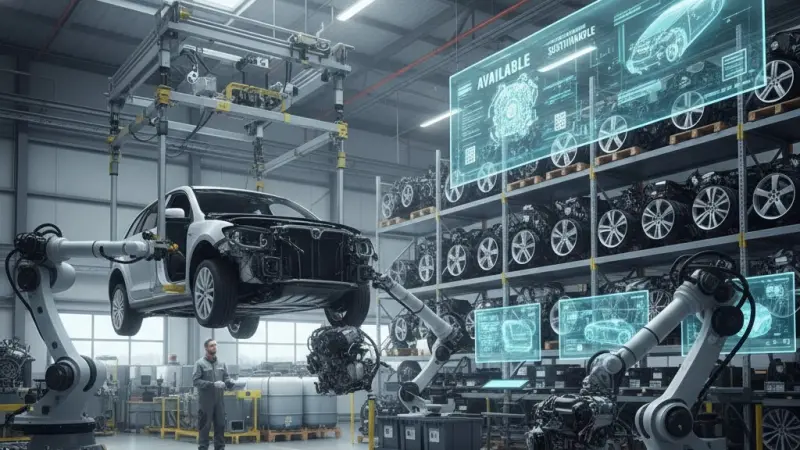
The automotive landscape in the United Kingdom is undergoing a seismic shift. While the headlines are often dominated by the transition to electric vehicles (EVs) and the ban on new petrol and diesel cars, a quieter but equally vital revolution is taking place in the circular economy. The Car Breakers and Dismantlers sector—once viewed through the lens of the traditional "scrap yard"—has evolved into a sophisticated, multi-billion pound industry that sits at the heart of British environmental policy and economic resilience.
In the UK, nearly two million vehicles reach the end of their life every year. Historically, these vehicles might have been seen as waste; today, they are viewed as high-value assets. Car breakers are the primary engineers of this value recovery. By meticulously dismantling vehicles, testing components, and reintroducing "green" parts into the supply chain, these businesses significantly reduce the carbon footprint of the automotive industry. Economically, the sector contributes hundreds of millions to the UK GDP, providing a backbone for the second-hand parts market that keeps millions of motorists on the road during periods of high inflation and supply chain disruption.
For a consumer or a trade professional, navigating this sector requires a reliable uk online business directory to separate accredited Authorised Treatment Facilities (ATFs) from unlicensed operators. As we delve into this guide, we will explore why the dismantling industry is no longer just about "breaking" cars, but about the high-tech preservation of sustainable auto parts and the digital infrastructure that connects these local heroes to the wider British public.
The Landscape of Car Breakers & Dismantlers in the UK
The current market for vehicle dismantling in the UK is characterized by increasing consolidation and rigorous environmental standards. Key hubs of activity are naturally clustered around major industrial and logistical arteries—the West Midlands, Greater Manchester, and the South East—where the volume of end-of-life vehicles (ELVs) is highest. However, the true strength of the industry lies in its local reach. From the Highlands to the Cornish coast, small-to-medium enterprises (SMEs) provide essential salvage services.
Post-pandemic, the industry has seen a massive surge in demand. As global semiconductor shortages led to a dearth of new cars, the used car market skyrocketed. Consequently, the value of salvaged parts increased as motorists sought to extend the life of their current vehicles. This shift has forced the industry to modernize rapidly. Many traditional breakers have transitioned into "dismantlers," employing skilled technicians who use digital inventory systems to track every nut, bolt, and engine block.
Sustainability is the primary driver of current policy. The UK government mandates that 95% of a vehicle's weight must be recycled or recovered. This target would be impossible to meet without the specialized expertise of dismantlers. To ensure they are reaching the right audience in this competitive landscape, many firms now ensure they are listed on a business listing uk to capture the growing "green-conscious" consumer base. The evolution from grease-stained yards to high-tech, clean-room dismantling facilities is not just a trend; it is a necessity for survival in the modern British economy.
Comprehensive Services Breakdown
Understanding the breadth of services offered by modern dismantlers is essential for both the trade and the public. It is no longer a case of simply "finding a part." The modern service suite includes:
Tested Recycled Parts (Green Parts): These are original equipment manufacturer (OEM) parts that have been removed, cleaned, and tested for quality. They offer the same fitment and safety as new parts but at a fraction of the cost.
Vehicle Collection and ATF Processing: Legally, an ELV must be processed by an ATF to ensure hazardous fluids (oil, coolant, brake fluid) are safely removed.
Certificate of Destruction (CoD) Issuance: This is the legal document that informs the DVLA that a vehicle has been scrapped, protecting the owner from future tax or fine liabilities.
Specialist Dismantling: Some providers focus exclusively on high-performance vehicles or specific marques
(e.g., German specialists), offering deep technical expertise.
B2B Supply Chains: Many breakers act as primary suppliers to garages and body shops across the country.
For those looking to source these specific services, checking local business listings uk is the most efficient way to find a provider that specializes in your specific vehicle make or model. By utilizing these services, consumers contribute to a closed-loop system that prevents thousands of tonnes of metal and plastic from entering landfills.
How to Choose the Right Service Provider
With the rise of online marketplaces, the risk of purchasing "stolen-to-order" parts or dealing with "ghost" breakers has increased. Choosing a reputable service provider is paramount for safety and legality.
First, always verify if the business is a licensed Authorised Treatment Facility. This ensures they meet the Environment Agency’s strict standards for pollution control. Second, look for membership in trade bodies such as the Vehicle Recyclers’ Association (VRA). These organisations audit their members for ethical and technical standards.
Third, local reputation remains king. Even in the digital age, a provider with high ratings in a uk service listings platform is likely to offer better after-sales support and warranty terms. Warranty is a key differentiator; professional dismantlers typically offer a 3-month to 12-month warranty on major components like engines and gearboxes, providing the same peace of mind as a new part purchase.
Industry Challenges & Future Outlook
The "Right to Repair" movement and the rise of EVs represent both the greatest challenge and the greatest opportunity for the sector. Dismantling an EV requires entirely different skill sets—technicians must be trained in high-voltage system deactivation and battery storage protocols.
Regulatory pressure is also mounting. The UK's move toward a "Net Zero" economy means that car breakers are being scrutinized not just for how they dispose of waste, but for their own energy consumption. Digital transformation is the answer to these challenges. By moving inventories online through a business listing uk, businesses can reduce the "miles traveled" for parts by matching local demand with local supply, further enhancing their green credentials.
The future outlook is one of "Data-Driven Salvage." We expect to see more integration between insurance companies and dismantlers, where total-loss vehicles are automatically routed to the most efficient dismantling centers, ensuring that the maximum number of components are saved for reuse rather than being crushed.
Business Tips for Car Breakers & Dismantlers Professionals
For the business owner, the transition from a "hands-on" yard manager to a digital-first CEO is difficult. Marketing a local dismantling business in the UK requires a multi-faceted approach.
SEO and Digital Presence: Your business must be visible where your customers are searching. This starts with a robust profile on a uk verified business listings site.
Inventory Accuracy: Ensure that your online listings reflect your actual stock. Nothing damages a reputation
faster than a customer driving 50 miles for a part that isn't there.
Customer Service: The old stereotype of the "grumpy scrap man" must die. Professionalism, clear communication, and clean waiting areas are the new standards.
Local Networking: Partner with local independent garages. Be their first call when they need a cost-effective solution for a customer's repair.
Small businesses in this sector often struggle with marketing budgets. This is why utilizing a uk business directory that offers high domain authority can help your business rank on Google without the need for expensive PPC campaigns.
Wrapping Up & Local Page Integration
The car breakers and dismantlers of the UK are the unsung heroes of the automotive industry. They provide the parts that keep key workers on the road, the recycling services that protect our countryside, and the technical expertise that drives the circular economy. As we move further into a decade defined by sustainability, their role will only grow in importance.
Whether you are a consumer looking for a reliable gearbox or a business owner looking to expand your reach, the key to success is connectivity. Local Page UK serves as the premier bridge between these vital local services and the people who need them. By centralizing verified data and providing a platform for growth, we ensure that the British automotive sector remains robust, sustainable, and local.
Boost Your Visibility with Local Page UK
In the digital age, a business that isn't found online simply doesn't exist to the modern consumer. For those in the car breaking and dismantling industry, competition is fierce. To ensure you aren't left behind, you must take control of your digital footprint. Claim your business listing uk today on Local Page UK. It is the fastest, most cost-effective way to signal your reliability to customers, improve your local search rankings, and join a network of the finest service providers in the United Kingdom.
FAQs
1. What exactly is a Car Breaker or Auto Dismantler?
A car breaker or auto dismantler is a specialist business that acquires end-of-life vehicles or insurance write-offs to salvage usable components. Unlike a traditional scrap yard that might simply crush a car for its metal value, a dismantler carefully removes parts such as engines, transmissions, body panels, and electronics. These parts are then cleaned, tested, and catalogued for resale as "green" or recycled parts. This process is highly regulated in the UK, requiring the facility to be an Authorised Treatment Facility (ATF) to ensure that hazardous materials like oils and batteries are disposed of without harming the environment.
2. Are recycled car parts safe to use?
Yes, recycled car parts are generally very safe, provided they are sourced from a reputable, professional dismantler. Professional dismantlers test mechanical components before sale and offer warranties to back their quality. Because these are original equipment manufacturer (OEM) parts, they often fit better and perform more reliably than cheap, unbranded aftermarket alternatives. However, it is standard industry practice to avoid certain salvaged items for safety reasons, such as deployed airbags or heavily corroded structural components. Always check the reputation of the seller via a verified directory before purchasing.
3. How does the car dismantling industry help the environment?
The industry is a cornerstone of the circular economy. By reusing parts, we significantly reduce the energy and raw materials required to manufacture new components. For instance, recycling a single steel engine block saves a substantial amount of iron ore and carbon emissions compared to smelting a new one.
Furthermore, car breakers are responsible for the safe "depollution" of vehicles, ensuring that toxic fluids like antifreeze and brake fluid do not leak into the soil or water systems. This process helps the UK meet its strict 95% vehicle recovery targets.
4. What is a Certificate of Destruction (CoD)?
A Certificate of Destruction is an official document issued by an Authorised Treatment Facility (ATF) when a vehicle is scrapped. It is linked directly to the DVLA's system. Once the CoD is issued, it confirms that the vehicle has been disposed of legally and permanently. This document is crucial for the vehicle owner as it terminates their legal responsibility for the vehicle, ensuring they are no longer liable for road tax, insurance requirements, or potential traffic fines associated with that vehicle's registration mark.
5. Where can I find a reliable local car breaker in the UK?
Finding a reliable provider requires using a platform that filters for quality and location. You should consult a dedicated Localpage to find verified businesses in your area. This allows you to view contact details, check services offered, and ensure you are dealing with a legitimate business rather than an unlicensed site. Using a trusted directory helps you avoid "fly-by-night" operators and ensures you receive a proper warranty for any parts you purchase.
6. Can I sell my old car to a dismantler if it doesn't run?
Absolutely. In fact, non-running vehicles are the primary "stock" for many dismantlers. Most professional car breakers offer a collection service where they will pick up your vehicle using a recovery truck. Even if a car has a blown engine or major structural damage, it still contains valuable components like catalytic converters (which contain precious metals), alloy wheels, and interior trim that can be salvaged and sold to other motorists.
7. What is the difference between an ATF and a standard scrap yard?
An Authorised Treatment Facility (ATF) is a site that has been specifically licensed by the Environment Agency (or SEPA in Scotland) to handle end-of-life vehicles. Standard scrap yards may deal with general metal waste, but only an ATF is legally permitted to depollute vehicles and issue a Certificate of Destruction. Using a non-ATF for car disposal is illegal in the UK and can lead to significant fines for the vehicle owner, as the vehicle might not be properly deregistered.
8. Why are some parts called "Green Parts"?
"Green Parts" is an industry term for recycled original parts. They are called "green" because their use is environmentally friendly, preventing the waste of a perfectly functional component and reducing the carbon footprint associated with new part production. Many insurance companies in the UK are now increasingly using green parts for repairs to keep costs down and improve their sustainability metrics, provided the parts meet the required safety and quality standards.
9. Do car breakers offer warranties on their parts?
Most professional UK dismantlers offer a warranty, though the length varies. Typically, you can expect a 30, 60, or 90-day warranty on standard parts, while major components like engines and gearboxes might come with a 6-month or even a 12-month warranty. Always clarify the warranty terms before purchase—specifically whether it covers just the part or the labor costs for replacement (usually, it is part-only).
10. How do I know if a part will fit my car?
Modern car breakers use sophisticated software that links your vehicle registration (VRM) to the original part numbers used by the manufacturer. When you provide your registration number, the dismantler can cross-reference the exact specifications of your vehicle to ensure the salvaged part is a perfect match. This reduces the risk of compatibility issues that often plague generic aftermarket parts.
11. Can I buy EV batteries from car dismantlers?
Yes, as the UK's fleet of electric vehicles ages, the salvage of EV batteries is becoming a major sub-sector. These batteries are highly sought after, not just for vehicle repair, but for "second-life" applications such as home solar energy storage. However, only specially trained dismantlers are equipped to handle the high-voltage systems of EVs safely.
12. Are car breakers open to the general public?
Most modern car breakers are open to both the trade and the general public. While the "self-service" yards (where you go into the yard with your own tools) are becoming rarer due to health and safety regulations, most facilities have a counter-service where you can request a part and have a staff member retrieve it for you. Many also offer nationwide delivery via courier for parts ordered online or over the phone.
13. What should I do with my V5C logbook when scrapping a car?
When you sell your car to an ATF, you should provide them with the V5C (logbook). The ATF will need this to process the vehicle. You must also complete the "selling or transferring your vehicle to a member of the motor trade" section and send it to the DVLA, or complete the process online on the GOV.UK website to inform them that the vehicle has been transferred to a dismantler.
14. Is it worth buying interior parts from a breaker?
Interior parts such as seats, steering wheels, and dashboard trim are some of the best items to buy from a breaker. These parts do not suffer from mechanical wear and tear in the same way an
engine does, and they are often available in "as-new" condition from vehicles that were involved in rear-end or side-impact collisions. It is a very cost-effective way to refresh a car's interior.
15. How has technology changed the car breaking industry?
Technology has transformed the industry from a manual, paper-based trade into a high-tech logistics business. Inventory is now tracked with barcodes, parts are photographed and listed on global marketplaces instantly, and AI is used to predict which vehicles will have the most in-demand parts. To find these tech-forward businesses, users should always consult a modern Local page to see which companies are leading the way in professionalized vehicle recycling.
Disclaimer: The information provided in this article is for general informational and research purposes only. Company details, features, services, and market positions may change over time. Readers are advised to visit official company websites and conduct independent research before making any business decisions or purchasing services.
Most Searchable Keywords
Recent Blogs


Related Listings

Categories
- Accountants (295)
- Advertising Agencies (559)
- Architects (149)
- Automobiles (377)
- Beauty (300)
- Carpenters (146)
- Cleaning Services (387)
- Dentists (189)
- Driving (62)
- Electricians (215)
- Energy (8)
- Event Organiser (686)
- Finance (602)
- Guide (3373)
- Health (2207)
- Information technology (206)
- Legal Services (353)
- Logistics (6)
- Maintenance (65)
- Manufacturing (35)
Sponsored Listings in Travel Agencies


Related Blogs

Explore Dog Friendly Walks in the Cotswolds f...
Read this insightful article "Explore Dog Friendly Walks in the Cotswolds for 2026" to expand your knowledge!

How Much Do UK Actors Really Earn Full Indust...
Read this insightful article "How Much Do UK Actors Really Earn Full Industry Breakdown" to expand your knowledge!

Blue Light Card UK 2026 Check Eligibility and...
Read this insightful article "Blue Light Card UK 2026 Check Eligibility and Claim" to expand your knowledge!
Questions & Answers – Find What
You Need, Instantly!
How can I update my business listing?
Is it free to manage my business listing?
How long does it take for my updates to reflect?
Why is it important to keep my listing updated?
