
Chemical Plant & Equipment for Safe Production Processes
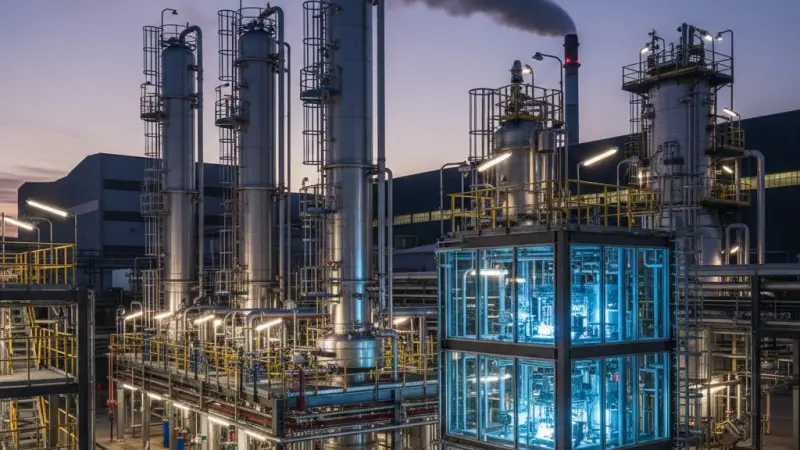
The chemical industry remains the backbone of the British manufacturing sector, contributing billions to the national GDP and supporting hundreds of thousands of high-skilled jobs. At the heart of this powerhouse is the "Chemical Plant & Equipment" sector—the specialized field responsible for designing, manufacturing, and maintaining the complex machinery that transforms raw materials into essential products. From pharmaceuticals and agrochemicals to advanced polymers, the equipment used must meet the highest standards of safety and efficiency.
In the United Kingdom, the demand for sophisticated chemical plant infrastructure is driven by a rigorous regulatory framework and a relentless pursuit of innovation. Modern chemical production is no longer just about volume; it is about precision, sustainability, and safety. Navigating this landscape requires an understanding of the intricate supply chains involved. For procurement managers and engineers, using a reputable uk business directory website is often the first step in identifying the specialized partners needed to maintain plant integrity.
The economic importance of this sector cannot be overstated. As the UK transitions toward a high-value, low-carbon economy, chemical plant providers are adapting to support "Green Chemistry" initiatives. This transition ensures that the UK remains a global leader in chemical exports while adhering to the most stringent environmental protocols in the world.
The Landscape of Chemical Plant & Equipment in the UK
The UK’s chemical equipment market has shown remarkable resilience in the face of global economic shifts. Historically centered in industrial clusters such as Teesside, Grangemouth, and the North West (the "Northern Powerhouse"), the industry has evolved into a sophisticated network of high-tech manufacturing hubs. Today, the landscape is characterized by a mix of legacy engineering firms and agile startups focusing on modular plant design and process intensification.
Post-pandemic, the industry has undergone a digital transformation. Supply chain disruptions highlighted the need for localized procurement and robust maintenance schedules. Consequently, there has been a significant surge in companies looking to find local businesses uk to reduce lead times and ensure that specialist engineers are readily available for onsite inspections. The market size for chemical machinery continues to grow as existing plants undergo "de-bottlenecking" and modernization to incorporate Industry 4.0 technologies.
Technological evolution is particularly visible in the rise of automated control systems and the adoption of exotic materials for corrosion resistance. As the UK establishes its post-Brexit industrial strategy, the chemical plant sector is prioritizing local resilience. This has led to a revitalized interest in domestic manufacturing, where businesses utilize a uk local business directory to source everything from pressure vessels to bespoke filtration systems within British shores.
Comprehensive Services Breakdown
The services within the chemical plant niche are diverse, ranging from initial feasibility studies to decommissioning. A safe production process is built on several key pillars of equipment and service:
Pressure Vessel Fabrication: The core of most chemical plants, these must be designed to withstand extreme temperatures and pressures. UK fabricators must adhere to PED (Pressure Equipment Directive) standards.
Specialist Filtration & Separation: Essential for purification, particularly in the pharmaceutical sector.
Process Instrumentation & Control: The "brain" of the plant, ensuring that every variable is monitored in real-time to prevent runaway reactions.
Asset Integrity Management: Ongoing maintenance and non-destructive testing (NDT) to ensure the longevity of the plant.
For engineering firms specializing in these niche areas, visibility is paramount. Many successful providers choose to list their expertise on a business listing uk to ensure they are visible to major Tier 1 contractors.
Furthermore, the use of a business listing uk allows smaller, highly specialized component manufacturers to compete on a level playing field with larger conglomerates.
Safety-critical services also include the provision of ATEX-rated equipment for hazardous environments. Given the high stakes, chemical plant operators often rely on a business listing uk to verify the service history and capabilities of potential subcontractors before initiating a tender process.
How to Choose the Right Service Provider
Selecting a partner for chemical plant equipment is a decision that impacts the safety of personnel and the surrounding environment. An authoritative choice should be based on four primary criteria:
Accreditations: Look for ISO 9001 (Quality), ISO 14001 (Environmental), and specifically ISO 45001 (Occupational Health and Safety). In the UK, membership in the Chemical Industries Association (CIA) is a strong indicator of reputability.
Reviews & Case Studies: Verified performance in similar projects is the best predictor of future success. Utilizing local business listings uk can help procurement teams see how a provider is perceived in the local industrial community.
Insurance: Comprehensive professional indemnity and public liability insurance are non-negotiable in high-hazard sectors.
Local Reputation: The ability of a provider to respond quickly to an emergency is vital. Searching for uk service listings ensures that you find a partner within a reasonable geographic radius.
Using a uk local trades directory or specialized professional lists helps filter out generic providers, allowing you to focus on those with a proven track record in heavy industrial engineering. Safety audits often require a transparent paper trail, so choosing a provider from uk verified business listings adds an extra layer of security to the selection process.
Industry Challenges & Future Outlook
The chemical sector is currently facing a "dual transition": digital and green. The primary challenge is the aging infrastructure of many UK plants, which requires significant investment to meet modern energy efficiency standards. Furthermore, regulatory shifts—including UK REACH—have changed how chemicals are handled and processed, necessitating equipment upgrades.
Sustainability is the dominant trend. We are seeing a shift toward "modular manufacturing," where smaller, more efficient units replace massive, energy-intensive reactors. These modular units are easier to maintain and can be scaled according to demand. To keep up with these shifts, equipment professionals are increasingly using a business listing uk to market their new, eco-friendly technological solutions.
The future outlook remains positive, provided that firms embrace automation and the "Internet of Things" (IoT). Predictive maintenance, powered by sensors on equipment, is significantly reducing downtime. For businesses looking to expand their reach in this evolving market, being part of a business listing uk helps them stay connected with the wider industrial supply chain as it moves toward a more sustainable future.
Business Tips for Chemical Plant & Equipment Professionals
For those operating a business in this sector, technical excellence is only half the battle; digital visibility is the other. In a B2B environment, potential clients often conduct extensive online research before making contact.
Claim Your Digital Real Estate: Ensure your business is listed in every
relevant uk home services directory or trade-specific list.
Optimize for Local Search: Many contractors search for "Chemical plant maintenance near me." Appearing in uk top rated local businesses results can drastically increase your inquiry rate.
Showcase Expertise: Use your digital listings to highlight specific certifications like ASME or CE marking.
Leverage Verified Platforms: Trust is the currency of the chemical industry. Being found through local page uk listings provides a level of third-party validation that a standalone website might lack.
Marketing a local engineering firm requires a mix of traditional networking and modern SEO. By ensuring your company appears in a uk professional services listings, you bridge the gap between your technical workshop and the procurement offices of major chemical producers.
Wrapping Up & Local Page Integration
The chemical plant and equipment industry is a vital component of the UK's industrial future. Its commitment to safety, innovation, and efficiency keeps our economy moving and our production processes secure. As we have explored, the transition to smarter, greener, and safer plants is well underway, but success depends on the strength of the partnerships formed between manufacturers and service providers.
Finding the right partner or being found by the right client is the ultimate goal. This is where Local Page serves as an indispensable tool. As a premier uk b2b business directory, it connects the specialized world of chemical engineering with the broader market. Whether you are a plant manager looking for an urgent repair or a manufacturer of high-end equipment, a local businesses list uk provides the visibility and reliability required in today's fast-paced economy.
By leveraging the power of a comprehensive uk online business directory, UK businesses can ensure that the chemical sector remains safe, innovative, and globally competitive for decades to come.
Boost Your Visibility with Local Page UK
In the high-stakes world of chemical plant engineering, being invisible is not an option. Your potential clients are searching for reliable, accredited, and local experts right now. To ensure your business stands out, you must take control of your online presence. We encourage all professionals in this sector to claim their business listing uk on Local Page UK. Join the most trusted network of British service providers and ensure your expertise is seen by those who need it most.
FAQ
What is the most important safety standard for chemical plant equipment in the UK?
The most critical safety standards usually involve the Pressure Equipment Directive (PED) and the ATEX directive for explosive atmospheres. Compliance with these ensures that equipment can handle high-pressure reactions without catastrophic failure and that electrical components will not ignite flammable vapours.
Furthermore, ISO 45001 is the international standard for occupational health and safety, which is essential for any firm operating in this high-risk environment. Adhering to these standards is not just a legal requirement but a fundamental part of risk management in chemical production.
How has Brexit affected the chemical equipment supply chain?
Brexit has introduced new regulatory hurdles, such as the transition from REACH to UK REACH and the introduction of the UKCA mark to replace the CE mark for equipment sold in Great Britain. This has led to an increased focus on domestic sourcing. Many engineers now use specialized platforms to find local partners to avoid the complexities of importing specialized components from the EU. This shift has actually strengthened the UK's internal manufacturing base, encouraging more collaboration between local engineering firms and chemical producers.
Why is modular plant design becoming popular?
Modular design allows for "plug-and-play" installation, which significantly reduces onsite construction time and minimizes disruption to existing operations. It also offers better scalability; if production needs to increase, additional modules can be added. This approach is more sustainable as it optimizes energy use and reduces waste. From a safety perspective, modules are often built and tested in controlled factory environments, which is safer than assembling complex systems in the middle of an active chemical site.
What role does predictive maintenance play in chemical plants?
Predictive maintenance uses IoT sensors to monitor heat, vibration, and pressure in real-time. By analyzing this data, engineers can predict when a part is likely to fail before it actually happens. This moves the industry away from "reactive" maintenance, which can be dangerous and expensive, toward a proactive model that ensures 100% uptime. This technology is a cornerstone of Industry 4.0 and is essential for maintaining the integrity of aging chemical infrastructure across the UK.
How can I find a verified chemical plant service provider?
The best way to find a verified provider is to use a dedicated professional directory that vets its members. You should look for platforms that allow you to filter by specific industrial categories and view the credentials of the listed firms. Using a site like Localpage ensures you are looking at businesses that are active and committed to their digital presence. Always cross-reference directory listings with official trade body memberships like the Chemical Industries Association to ensure maximum reliability.
What materials are best for corrosion-resistant chemical equipment?
The choice of material depends on the chemicals being processed, but common choices include high-grade stainless steel (like 316L), Hastelloy, Tantalum, and PTFE linings. For highly acidic or caustic environments, exotic alloys are necessary to prevent the thinning of vessel walls, which could lead to leaks. Material science is a constantly evolving field, and modern plants are increasingly using composite materials that offer the strength of steel with the chemical resistance of advanced polymers.
What is a "Safe Production Process" in the chemical industry?
A safe production process is a holistic approach that combines robust equipment design, automated safety interlocks, rigorous operator training, and constant environmental monitoring. It follows the principle of "inherently safer design," where hazards are eliminated rather than just controlled. This includes minimizing the inventory of hazardous materials and using less extreme temperatures or pressures wherever possible. It is a continuous cycle of improvement aimed at achieving zero accidents or incidents.
How do UK chemical plants handle hazardous waste?
Hazardous waste management is strictly governed by the Environment Agency in England and equivalent bodies in Scotland and Wales. Equipment must be designed to contain and neutralize waste products effectively. This often involves specialized scrubbers, separators, and filtration units that remove toxic elements before air or water is discharged. Many plants are now adopting "circular" methods, where waste products from one process are purified and used as raw materials for another, reducing the overall environmental footprint.
Is automation reducing jobs in the chemical sector?
While automation reduces the need for manual labor in dangerous environments, it actually creates a higher demand for skilled technicians, data analysts, and maintenance engineers. The "jobs" are shifting from manual operation to system oversight and optimization. Automation improves safety by removing humans from high-risk areas, allowing the workforce to focus on high-value tasks such as process improvement and innovation. The UK's chemical sector continues to be a major employer of high-skilled talent.
What is the importance of ATEX certification?
ATEX certification is mandatory for equipment used in environments where there is a risk of explosion due to gases, vapours, or dust. This includes most chemical processing areas. ATEX-certified equipment is designed to prevent sparks and limit surface temperatures, ensuring that the machinery itself doesn't become an ignition source. Without this certification, a chemical plant would be in breach of health and safety laws and would be unable to obtain insurance or operating permits.
How can small engineering firms compete with global giants?
Small firms can compete by offering highly specialized, bespoke services and faster response times. While global giants handle massive infrastructure projects, smaller UK firms often excel at precision components, specialized maintenance, and custom fabrication. By utilizing digital marketing tools and appearing in local business lists, these smaller players can gain visibility with the procurement departments of major chemical companies who value agility and local expertise over purely the size of the contractor.
What are the energy efficiency trends in chemical processing?
The industry is moving toward "Process Intensification," which uses smaller equipment to achieve the same or higher throughput, significantly reducing energy consumption. Heat recovery systems are also standard, capturing waste heat from one reaction to power another. Modern pumps and motors are also much more efficient than those from twenty years ago. These improvements are driven by both the high cost of energy in the UK and the government's "Net Zero" targets for 2050.
Can I use used equipment in a chemical plant?
While it is possible to buy refurbished equipment, it must be subjected to rigorous testing and recertification to ensure it meets current safety standards. Any second-hand pressure vessel, for example, would require a full NDT (Non-Destructive Testing) suite and a new written scheme of examination. In many cases, the cost of recertifying old equipment can approach the cost of buying new, especially when factoring in the shorter lifespan and lower efficiency of older machinery.
What is the role of a Business Analyst in the chemical sector?
A business analyst in this sector looks at market trends, regulatory changes, and technological shifts to help companies decide where to invest. They analyze the cost-benefit of upgrading equipment versus maintaining old assets and identify gaps in the supply chain.
Their work ensures that chemical companies remain profitable while meeting their environmental and safety obligations. They bridge the gap between technical engineering and financial sustainability, ensuring the industry remains a viable part of the UK economy.
Why is digital visibility so important for industrial suppliers?
In the modern B2B world, the "buyer's journey" begins online. Even in highly technical sectors like chemical equipment, decision-makers use search engines and directories to shortlist potential partners. If a company doesn't have a strong digital presence, it effectively doesn't exist to a significant portion of the market. Platforms like Local page provide an accessible way for even the most traditional engineering firms to modernize their marketing and ensure they aren't left behind by more tech-savvy competitors.
Disclaimer: The information provided in this article is for general informational and research purposes only. Company details, features, services, and market positions may change over time. Readers are advised to visit official company websites and conduct independent research before making any business decisions or purchasing services.
Most Searchable Keywords
Recent Blogs


Related Listings
Categories
- Accountants (295)
- Advertising Agencies (559)
- Architects (149)
- Automobiles (377)
- Beauty (300)
- Carpenters (146)
- Cleaning Services (387)
- Dentists (189)
- Driving (62)
- Electricians (215)
- Energy (8)
- Event Organiser (686)
- Finance (602)
- Guide (3373)
- Health (2207)
- Information technology (206)
- Legal Services (353)
- Logistics (6)
- Maintenance (65)
- Manufacturing (35)
Sponsored Listings in Travel Agencies



Related Blogs

Explore Dog Friendly Walks in the Cotswolds f...
Read this insightful article "Explore Dog Friendly Walks in the Cotswolds for 2026" to expand your knowledge!

How Much Do UK Actors Really Earn Full Indust...
Read this insightful article "How Much Do UK Actors Really Earn Full Industry Breakdown" to expand your knowledge!

Blue Light Card UK 2026 Check Eligibility and...
Read this insightful article "Blue Light Card UK 2026 Check Eligibility and Claim" to expand your knowledge!
Questions & Answers – Find What
You Need, Instantly!
How can I update my business listing?
Is it free to manage my business listing?
How long does it take for my updates to reflect?
Why is it important to keep my listing updated?
