
Essential UK Guide to Water Purification Services for Clean and Safe Water
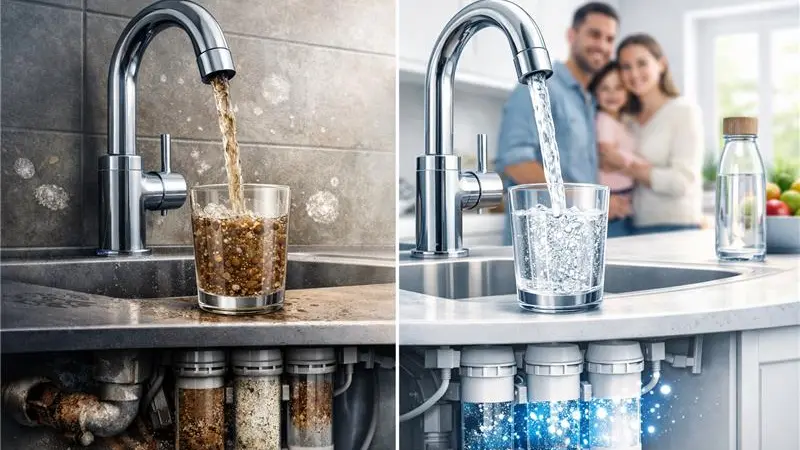
Have you ever paused to consider the complex journey your tap water takes before it reaches your glass? While the United Kingdom boasts some of the highest water quality standards in the world, the demand for professional water purification services continues to rise among health-conscious homeowners and businesses alike. Despite the rigorous processing by municipal utilities, factors such as ageing infrastructure, local geological variations, and the presence of micro-pollutants mean that "safe" water is not always "pure" water. Understanding the distinction between these two concepts is the first step toward ensuring the long-term well-being of your household and the longevity of your plumbing systems.
What Are Water Purification Services?
Water purification services encompass a broad range of professional solutions designed to remove contaminants, minerals, and biological impurities from a water supply. Unlike basic jug filters, these professional services involve the installation and maintenance of sophisticated systems such as Point-of-Entry (POE) whole-house filters or Point-of-Use (POU) systems like reverse osmosis units under the kitchen sink.
In a professional context, these services involve a comprehensive assessment of your local water chemistry. Technicians evaluate the levels of "hardness"—the concentration of calcium and magnesium—as well as the presence of chlorine residuals, heavy metals, and organic compounds. By tailoring a solution to these specific findings, purification services ensure that the water is not only safe to drink but optimised for taste, skin health, and appliance efficiency.
The Essential Nature of Water Purification in the UK
Many residents wonder why additional filtration is necessary if the water has already been treated. The necessity stems from several environmental and structural realities unique to the British Isles.
1. Combatting Hard Water and Limescale
A significant portion of the UK, particularly in the South East and Midlands, is classified as having hard or very hard water. This occurs when rainwater filters through limestone and chalk deposits. While not harmful to health, hard water leads to significant limescale buildup in kettles, boilers, and washing machines.
Professional purification services often include water softening components that prevent this "furring" of pipes, potentially saving households hundreds of pounds in avoided plumbing repairs and energy costs, as scaled heating elements require more power to operate.
2. Addressing Ageing Infrastructure
While water treatment plants are modern, the network of pipes delivering that water can be decades or even a century old. Lead piping remains a concern in older Victorian properties. Furthermore, "brown water" incidents—often caused by iron deposits from corroding cast iron mains—can occur during maintenance or pressure changes. A domestic purification system acts as a final fail-safe barrier, catching sediment and metallic particles before they reach your tap.
3. Chemical Removal and Palatability
To keep water free from pathogens during its transit, UK water companies use chlorine. While essential for public health, chlorine can impart a distinct chemical taste and odour. Moreover, many individuals with sensitive skin or conditions like eczema find that chlorinated water exacerbates irritation during bathing. Purification services often utilise activated carbon blocks to effectively strip away chlorine and its by-products, resulting in water that tastes like a premium bottled brand and is gentler on the skin.
Types of Purification Technology
When engaging a service provider, you will likely encounter several different technologies. Each serves a specific purpose:
- Reverse Osmosis (RO): This is the gold standard for drinking water. It uses a semi-permeable membrane to remove up to 99% of dissolved solids, including nitrates, pesticides, and fluoride.
- Ultra-Violet (UV) Sterilisation: Commonly used for properties relying on private boreholes or wells, UV light neutralises bacteria and viruses without adding chemicals.
- Ion Exchange: The primary method used in water softeners to swap calcium ions for sodium ions, eliminating hardness.
- Activated Carbon Filtration: Highly effective at removing organic pollutants, chlorine, and Improving the overall clarity of the water.
Environmental and Economic Benefits
The move toward home purification is also driven by a desire for sustainability. The UK consumes billions of plastic water bottles annually, a large percentage of which end up in landfills or the ocean.
By investing in a high-quality purification system, households can eliminate their reliance on single-use plastics. From an economic perspective, while the initial investment in professional services requires a budget, the cost per litre of purified tap water is a fraction of the price of bottled alternatives.
Health Considerations: Beyond Basic Hydration
Emerging concerns regarding microplastics and "forever chemicals" (PFAS) have highlighted the limitations of standard municipal treatment. While regulations are tightening, the peace of mind offered by a bespoke purification system is invaluable. For families with young children or immunocompromised individuals, ensuring that water is free from even trace amounts of lead or cryptosporidium provides an essential layer of protection.
Maintenance and Professional Oversight
It is important to note that water purification is not a "set and forget" solution. Regular servicing is vital to ensure that filters haven't become saturated and that membranes remain intact. Professional services typically include annual check-ups, filter replacements, and water quality testing to verify that the system is still performing to its specified standard.
Ensuring your home or commercial premises has access to high-quality water is a vital step in maintaining a healthy environment. For those looking to find reputable local specialists or for firms seeking to enhance their reach, utilizing a business listing uk can be an excellent starting point.
At Local Page UK, we assist in connecting residents with essential service providers across the country. By leveraging free business directories uk, local companies can significantly improve their online visibility, making it easier for customers to access the vital water purification services they require.
Frequently Asked Questions
Is UK tap water not already safe to drink?
Yes, it is among the safest in the world. However, "safe" means it meets legal limits for contaminants. Purification services aim for "purity," removing legal but undesirable elements like chlorine, limescale, and trace micro-pollutants that affect taste and appliance health.
How much do professional water purification services cost?
Costs vary depending on the complexity of the system. A basic under-sink filter might cost a few hundred pounds, while a comprehensive whole-house softener and filtration system could range from £800 to £2,000. Maintenance typically costs between £50 and £150 per year.
Will a water purifier remove healthy minerals?
Systems like Reverse Osmosis remove most minerals. However, many modern systems include a "remineralisation" stage that adds essential minerals like
magnesium and calcium back into the water in controlled, healthy amounts after the purification process is complete.
Can I install these systems myself?
While some basic filters are DIY-friendly, professional installation is recommended for whole-house systems to ensure they comply with UK building and water regulations (WRAS) and to prevent potential leaks or pressure issues.
Disclaimer: The information provided in this article is for general informational and research purposes only. Company details, features, services, and market positions may change over time. Readers are advised to visit official company websites and conduct independent research before making any business decisions or purchasing services.
Most Searchable Keywords
Recent Blogs


Related Listings
Categories
- Accountants (295)
- Advertising Agencies (559)
- Architects (149)
- Automobiles (377)
- Beauty (300)
- Carpenters (146)
- Cleaning Services (387)
- Dentists (189)
- Driving (62)
- Education (1)
- Electricians (215)
- Energy (8)
- Event Organiser (687)
- Finance (602)
- Guide (3482)
- Health (2207)
- Information technology (206)
- Legal Services (361)
- Logistics (6)
- Maintenance (65)
Sponsored Listings in Plumbers

Related Blogs

Ghost Brokers Fake Car Insurance Scam Explain...
Read this insightful article "Ghost Brokers Fake Car Insurance Scam Explained" to expand your knowledge!

UK Baby Names Fastest Rising and Falling Name...
Read this insightful article "UK Baby Names Fastest Rising and Falling Names" to expand your knowledge!

How to Claim for Pothole Damage From Your Cou...
Read this insightful article "How to Claim for Pothole Damage From Your Council" to expand your knowledge!
Questions & Answers – Find What You Need, Instantly!
Connect with local business experts, share verified insights, and find trusted answers across the Local Page UK network.
Ask Community
Ask questions to the Local Page UK community
Share Knowledge
Share your knowledge to help out others
Find Solutions
Find answers or offer instant solutions
For retail fit-out in Manchester, leading commercial architects include Leach Rhodes Walker, SimpsonHaugh, and Buttress, each delivering precise, brand-focused interiors with strong project management. Alternatively, consult the RIBA Manchester directory for accredited practices vetted for retail sector expertise. Always review their retail portfolio and contractor relationships to ensure seamless delivery against programme and budget.
To identify a reputable architectural consultancy in Birmingham, consult the Royal Institute of British Architects’ directory, filter by commercial or industrial expertise, and review project case studies. Prioritise firms with demonstrable success in warehouse planning applications, local planning authority knowledge, and positive client testimonials. Request references and verify their accreditation before commissioning services.
Notable London-based firms offering in-house 3D visualisation for large-scale mixed-use schemes include Foster + Partners, Zaha Hadid Architects, RSHP, PLP Architecture, and WilkinsonEyre. These practices combine architectural design with advanced CGI, enabling comprehensive pre-construction analysis, stakeholder engagement, and photorealistic representation of complex urban projects.
Yes, several Bristol architectural practices focus on historic building restoration for commercial clients, including Ferguson Mann and Stride Treglown. When selecting a specialist, verify their experience with listed buildings, conservation area consent, and heritage-led funding. Engaging a RIBA-accredited conservation architect ensures compliance, sensitive material reuse, and robust project stewardship. We recommend requesting case studies of similar commercial restorations before commissioning services.
When selecting a UK-wide architectural practice, prioritise proven retail sector expertise, national delivery capacity, and robust quality-control systems ensuring consistent store standards. Assess their experience with complex roll-outs, planning compliance, cost management, and multi-site logistics. Verify they offer strong project management, supplier coordination, and agile design adaptability to local constraints while maintaining brand integrity. Request references and evidence of meeting tight, concurrent deadlines.
For bulk church candles and liturgical supplies in Birmingham, consider reputable UK wholesalers such as A.W. Price, Vanpoulles, and J.W. Rudd, all delivering to the city. For specialised candle orders, contact the Birmingham Church Supplies Centre or national chandler The Candle Company. Verify trade accounts directly to access wholesale pricing and timely delivery.
Faith communities in the UK can open trade accounts with specialist liturgical suppliers such as Vanpoulles, or through established church goods wholesalers offering altar wine and wafers. Additionally, many diocesan offices maintain approved vendor lists, and reputable wine merchants provide trade accounts for sacramental use. Contact these suppliers directly to verify eligibility and order requirements.
Yes, several religious goods distributors in Manchester can provide private label vestments, though offerings vary. For a professional solution, contact local ecclesiastical suppliers such as Vanpoulles or Watts & Co., who often accommodate customisation. Alternatively, consult the National Church Supplies catalogue or Manchester’s diocesan office for referrals. Always request samples and confirm embroidery or fabric options before placing large orders.