
How to Fix a Leaking Tap
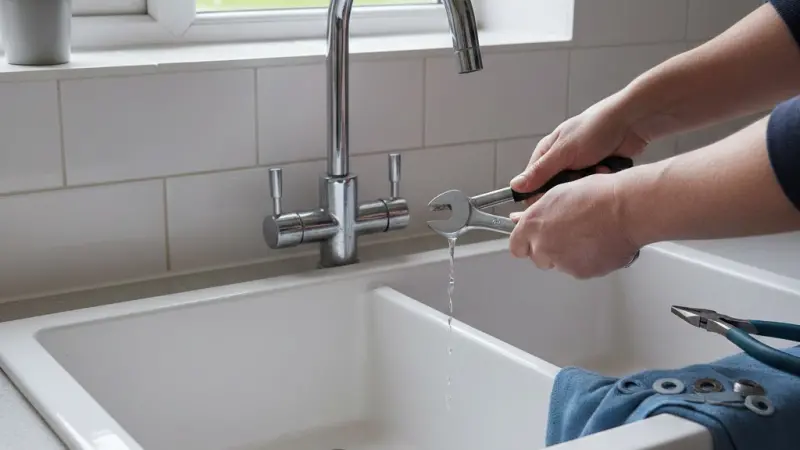
How to Fix a Leaking Tap: A Strategic Guide for UK Business Premises
Published by LocalPage.uk Content Architecture Team | Updated for 2026 Compliance
A leaking tap may seem like a minor inconvenience, but for a UK small business or hospitality venue, it represents a multifaceted drain on resources. Beyond the irritating sound of dripping water, a single faulty tap can waste upwards of 5,000 litres of water per year. In the current economic climate of 2025-2026, where utility costs remain a primary concern for the 5.6 million private sector businesses in the UK, mastering basic property maintenance is no longer just a DIY skill—it is a financial necessity.
76% of UK consumers now research a business's sustainability practices before visiting. A visible leak in a public-facing washroom can significantly undermine your brand's professional image and environmental credentials.
Identifying the Commercial Impact of Water Wastage
The Rising Cost of Business Water Rates in 2026
Water deregulation in England has allowed businesses to switch suppliers, yet many SMEs remain on expensive "deemed" contracts. A leaking tap in a London office or a Manchester cafe can add hundreds of pounds to annual overheads. Unlike domestic properties, most business premises are metered, meaning every drop contributes to the bottom line. Whilst residential rates are often subsidised, business water retailers are increasingly moving towards consumption-based models that penalise wastage.
Sustainability and the "Green" Business Image
In Scotland, where Scottish Water provides a robust framework for business consumption, the emphasis has shifted heavily towards the "Net Zero" transition. A leaking tap is more than a maintenance fail; it is a failure of resource management. Businesses that fail to address these issues promptly may find themselves at odds with local environmental audits or Corporate Social Responsibility (CSR) targets expected by modern UK consumers.
Legal Obligations for Commercial Landlords
If you are operating from a leased premises in Wales or Northern Ireland, the responsibility for fixing a leaking tap often depends on the specifics of your Repairing and Insuring (FRI) lease. However, under the Defective Premises Act 1972 (England and Wales), landlords have a general duty of care to ensure the property is safe and fit for purpose.
Essential Tools and Preparation for Tap Repair
The Professional Toolkit for UK Property Maintenance
Before attempting a repair, ensure you have high-quality tools that comply with British Standards. You will typically require an adjustable spanner, a selection of screwdrivers (both flat-head and Phillips), and a pair of water pump pliers. For modern ceramic disc taps, a specialist cartridge puller might be necessary, though most can be removed with standard tools if handled with care.
Locating the Internal Stop Tap and Isolation Valves
In older UK buildings, particularly in the Midlands and North East, finding the stopcock can be a challenge. It is usually located under the kitchen sink or where the main service enters the building. Modern commercial units often feature individual isolation valves on the pipework leading to each tap—identifiable by a small screw slot that can be turned 90 degrees to shut off the flow immediately.
A Note on Health and Safety Compliance
Always ensure that any maintenance work does not interfere with Legionella prevention protocols. Stagnant water in faulty pipework can pose a risk. If you are unsure, consulting a Water Regulations Advisory Scheme (WRAS) approved plumber is the safest route for compliance with the Water Supply (Water Fittings) Regulations 1999.
Diagnosing the Source: Compression vs. Ceramic Disc Taps
Traditional Compression Taps and Rubber Washers
Common in older hospitality venues and traditional office blocks, compression taps work by tightening a rubber washer against a metal seat. If the tap drips from the spout, the washer is likely perished. If it leaks from the handle when turned on, the "O" ring or the gland packing may be the culprit. These parts are inexpensive and readily available at merchants like Screwfix or Toolstation across the UK.
Modern Ceramic Disc Technology
Found in contemporary retail units and new-build offices, these taps utilize two ceramic plates with holes. A quarter-turn aligns the holes to let water through. These rarely "wear out" in the traditional sense, but they can be compromised by
limescale—a frequent issue in hard water areas like East Anglia and the South East of England. In these regions, the "fix" is often replacing the entire cartridge rather than a simple washer.
Regional Insight: Hard water affects approximately 60% of the UK. If your business is located in London or the Home Counties, you should expect to replace tap cartridges more frequently than a business in Scotland, where the water is significantly softer.
Step-by-Step: Replacing a Perished Washer
Dismantling the Tap Assembly Safely
Once the water is isolated and the tap is opened to drain any residual pressure, remove the decorative cap (often marked 'H' or 'C'). Use your adjustable spanner to unscrew the headgear nut. If the tap is old and stubborn, hold the spout firmly to prevent the entire unit from twisting and damaging the thin copper pipework underneath, which is a common failure point in older Northern Irish terrace properties converted for business use.
Replacing the Washer and Reseating
The washer is usually held in place by a small brass nut or simply pushed onto a central peg. Replace it with an identical size (typically 1/2 inch for basins and 3/4 inch for baths/sinks). If the leak has been occurring for a long time, the metal "seat" inside the tap might have become eroded (pitted). In this instance, a "seating tool" can be used to grind the metal back to a smooth finish, ensuring a watertight seal.
Checking for Cross-Border Differences in Fittings
Whilst plumbing standards are largely unified, some properties in the border regions between Northern Ireland and the Republic of Ireland may occasionally feature non-standard metric or imperial hybrid fittings. Always measure the diameter of your existing washer before purchasing a replacement to avoid unnecessary downtime.
Dealing with Leaking Tap Glands and O-Rings
Resolving Leaks from the Tap Body
When water seeps from the handle during use, the problem lies within the "gland" or the "O-ring" at the base of the spindle. This is a common maintenance task for facilities managers in large UK office complexes. Often, simply tightening the gland nut slightly will stop the leak. If not, the gland packing (often a PTFE tape or specialized cord) needs to be replaced.
Lubrication and Reassembly
Before reassembling, apply a small amount of WRAS-approved silicone grease to the spindle threads. This ensures smooth operation and prevents the "seizing" of components, which is particularly prevalent in coastal businesses in Cornwall or Wales where salt air can accelerate corrosion of external plumbing fixtures.
Maintaining Ceramic Disc Taps for Longevity
Removing and Cleaning the Cartridge
To fix a ceramic disc tap, you must remove the handle (usually via a hidden grub screw under the indices) and unscrew the cartridge. Unlike washers, these cannot be easily "fixed." However, soaking the cartridge in a white vinegar solution for an hour can often dissolve the calcium deposits that prevent the discs from closing fully, saving the cost of a replacement part.
Sourcing the Correct Replacement Cartridge
If cleaning fails, you must find an exact match. There are hundreds of variations in the UK market. Take the old cartridge to a local plumbing merchant or use a digital identification tool. For businesses in rural Scotland or Wales, ordering online might be necessary, so ensure you have a temporary isolation solution in place to keep the rest of your water system functional while waiting for the part.
"How do I know if my tap has a washer or a ceramic disc?"
If you have to turn the handle several times to turn the water on fully, it is a compression tap with a washer.
If it only requires a 90-degree or 180-degree turn, it uses ceramic discs.
"Can I fix a leaking tap myself in a commercial property?"
Yes, for basic maintenance like replacing a washer. However, for work involving the main supply or in specialised environments like healthcare, a qualified plumber is required to ensure compliance with the Water Supply Regulations.
When to Call a Professional: Risk and Compliance
Recognising the Limits of DIY Repair
If the tap body itself is cracked or if the isolation valves are seized, the risk of a major flood outweighs the cost of a professional call-out. For hospitality businesses, a flood can lead to immediate closure and loss of revenue. In 2025, the average emergency plumber call-out fee in London ranges from £90 to £150 per hour, whilst rates in Northern Ireland and Northern England are typically 20-30% lower.
Insurance and Liability Considerations
Many UK business insurance policies require that "substantial" plumbing work be carried out by a member of a recognised professional body, such as the Chartered Institute of Plumbing and Heating Engineering (CIPHE). If a DIY repair fails and causes water damage to a neighbouring unit—common in multi-storey office blocks—your insurers may scrutinise the standard of the initial repair.
The Impact of Smart Water Metering
By 2026, a significant portion of UK SMEs will have transitioned to smart water meters. These devices can detect "continuous flow," indicating a leak before it is even visible. Monitoring your data through your provider's portal (such as Wave, Water Plus, or Castle Water) can help you identify a leaking tap in a remote part of your building, such as a basement staff room or an outdoor yard tap.
Strategic Water Management for the Modern UK SME
The Role of Preventative Maintenance
Rather than waiting for a leak to occur, implement a quarterly "tap audit." Check all fixtures for tightness and signs of limescale. For businesses in Wales, Business Wales provides resources on resource efficiency that include maintenance checklists for physical premises.
Upgrading to Sensor Taps and Flow Limiters
If a tap is frequently left dripping or is prone to leaks, consider upgrading to infrared sensor taps. Not only do these eliminate the mechanical wear of handles and washers, but they also reduce water consumption by up to 70%. Many UK local authorities offer grants or tax incentives for "green" property upgrades, especially in designated Enterprise Zones.
Summary of Regional Guidance and Support
Across the UK, the approach to fixing a leaking tap remains technically consistent, but the support network varies. In England, the Federation of Small Businesses (FSB) offers legal and insurance advice regarding property maintenance. In Scotland, Scottish Enterprise focuses on the efficiency of business operations.
Welsh companies should look to the "Prosperous Wales" goals which encourage circular economy practices, including the repair rather than replacement of hardware. In Northern Ireland, Invest NI provides guidance for businesses managing the rising costs of utilities in a cross-border economy.
Need Help Managing Your UK Business Property?
From finding local tradespeople to understanding your commercial compliance, LocalPage.uk is here to support your growth.
Frequently Asked Questions
Why does my tap still drip after I've changed the washer?
This is usually due to a damaged "seat." Over time, the constant flow of water through a leak carves a small channel (pitting) into the metal where the washer sits. Even a new rubber washer cannot seal against an uneven surface. You will need to use a reseating tool to smooth the metal or replace the entire tap unit.
How much water does a leaking tap actually waste in a day?
A slow drip (about 10 drips per minute) can waste 3-4 litres a day. However, a steady trickle can waste up to 100 litres daily. For a UK business on a metered supply, this isn't just wasted water; it's money directly off your profit margin. By 2026, average business water rates make even a slow leak a £50-£100 annual expense.
Can I use WD-40 to loosen a stuck tap head?
You can use it to loosen the external shroud or handle, but you must be extremely careful not to let it enter the internal water path. Furthermore, WD-40 can degrade rubber washers. It is better to use a dedicated penetrating oil for the exterior and WRAS-approved silicone grease for any parts that touch the water supply.
Does a leaking tap affect my business's EPC rating?
Directly, no. An Energy Performance Certificate (EPC) focuses on energy for heating and lighting. However, if the leak is on a hot water tap, you are wasting the energy used to heat that water. This increases your gas or electricity bills and negatively impacts your business's overall carbon footprint, which is increasingly scrutinized in commercial property valuations.
Is it better to repair an old tap or buy a new one?
If the tap is a high-quality brass fixture, a 50p washer can make it as good as new. However, if the tap is a cheap modern import where the chrome is pitting and the body is thin, replacement is often more cost-effective. Modern taps also come with better flow-rate aerators that can help your business save water in the long term.
I'm a tenant in a London office - who pays for the tap repair?
Generally, internal "non-structural" repairs like tap washers fall under the tenant's responsibility in a standard UK commercial lease. However, check your "Schedule of Dilapidations." If the leak is part of a larger plumbing failure in the building's main risers, the landlord or the management company (via the service charge) should handle it.
How do I find a reliable plumber for my business in Scotland?
Look for a plumber who is a member of SNIPEF (Scottish and Northern Ireland Plumbing Employers’ Federation). This ensures they have the correct insurance and qualifications to work on commercial systems and understand the specific water regulations applicable north of the border.
What are the signs that a tap cartridge has failed?
The most obvious sign is a drip that doesn't stop when the handle is turned off. Other signs include the handle becoming stiff to operate, a "grinding" sensation when turning, or water leaking from under the handle. In hard water areas like the Midlands, this is often caused by grit getting trapped between the ceramic plates.
Are there different water regulations in Wales compared to England?
The technical Water Supply (Water Fittings) Regulations are largely identical. However, the enforcement and strategic goals (such as the Well-being of Future Generations Act) mean that Welsh businesses
are often encouraged to be more proactive in water conservation. Dŵr Cymru (Welsh Water) provides specific "Water Efficiency" audits for businesses in Wales.
Can a leaking tap cause structural damage?
Yes. If the leak is "internal" (seeping behind the sink or into the wall), it can lead to dry rot in floorboards or mould in plasterwork. For businesses in older buildings, particularly in historic city centres like Bath or Edinburgh, undetected water ingress can lead to incredibly expensive structural repairs and potential issues with listed building consent if the fabric of the building is damaged.
Disclaimer: The information provided in this article is for general informational and research purposes only. Company details, features, services, and market positions may change over time. Readers are advised to visit official company websites and conduct independent research before making any business decisions or purchasing services.
Most Searchable Keywords
Recent Blogs


Related Listings

Categories
- Accountants (295)
- Advertising Agencies (559)
- Architects (149)
- Automobiles (377)
- Beauty (300)
- Carpenters (146)
- Cleaning Services (387)
- Dentists (189)
- Driving (62)
- Education (1)
- Electricians (215)
- Energy (8)
- Event Organiser (687)
- Finance (602)
- Guide (3482)
- Health (2207)
- Information technology (206)
- Legal Services (361)
- Logistics (6)
- Maintenance (65)
Sponsored Listings in Web Developers

Related Blogs

Ghost Brokers Fake Car Insurance Scam Explain...
Read this insightful article "Ghost Brokers Fake Car Insurance Scam Explained" to expand your knowledge!

UK Baby Names Fastest Rising and Falling Name...
Read this insightful article "UK Baby Names Fastest Rising and Falling Names" to expand your knowledge!

How to Claim for Pothole Damage From Your Cou...
Read this insightful article "How to Claim for Pothole Damage From Your Council" to expand your knowledge!
Questions & Answers – Find What
You Need, Instantly!
How can I update my business listing?
Is it free to manage my business listing?
How long does it take for my updates to reflect?
Why is it important to keep my listing updated?
