
Finding Specialist Cleaning Companies for Commercial Kitchens
- 👤 Alex
- 👁️ 77 Views
- Last Updated: April 9, 2026
- 🏷️ Cleaning Services
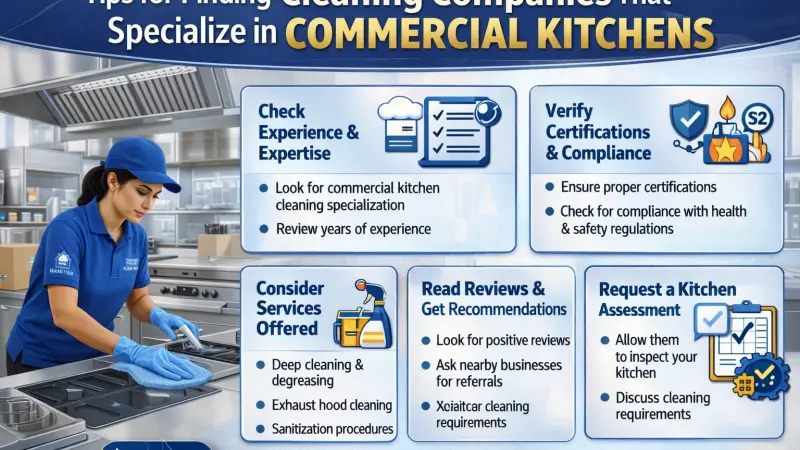
In the fast-paced, high-pressure world of the hospitality and food service industry, the kitchen is the undisputed heart of the operation. It is a place of culinary creativity and extreme efficiency, but it is also an environment where grease, carbon, and biological contaminants accumulate with alarming speed. For restaurant owners, hotel managers, and school administrators, maintaining a kitchen is not just about appearances; it is a critical matter of public health, fire safety, and legal compliance. Standard janitorial services, while excellent for offices or dining areas, often lack the specialized equipment and technical training required to sanitize an industrial-grade cooking facility.

Finding a cleaning company that truly specializes in commercial kitchens is an essential risk-management strategy. These specialists navigate the hidden hazards of extraction systems and the stubborn grime of high-volume cooking lines that standard cleaners simply cannot reach. This guide provides a comprehensive, research-backed framework to help you identify, vet, and partner with the right professionals, ensuring your kitchen remains a safe, efficient, and compliant space for your staff and your customers.
Understanding the Stakes: Why Specialization is Non-Negotiable
Commercial kitchens are governed by a complex web of health and safety regulations. A "standard" clean is insufficient when facing the unique challenges of industrial cooking. Specialization is required because the risks of a poorly maintained kitchen are catastrophic.
The Threat of Kitchen Extraction Fires
The leading cause of fires in commercial kitchens is the buildup of grease within the extraction system. When fat, oils, and grease (FOG) vaporize during cooking, they travel through the hood and settle inside the ductwork. Over time, these deposits become highly flammable. A specialist cleaner understands the "TR19" standards—the industry specification for the internal cleanliness of ventilation systems—and has the tools to reach every elbow and turn in the ducting.
Food Safety and Pathogen Control
Cross-contamination is a constant threat in a commercial setting. Specialist cleaners use food-safe, professional-grade sanitizers that target specific bacteria like E. coli, Salmonella, and Listeria. They understand the "dwell time" required for these chemicals to be effective without leaving toxic residues that could migrate into food preparation areas.
Key Areas That Demand Specialist Attention
A true commercial kitchen specialist will provide a service that covers the entire "anatomy" of the kitchen, including the areas that are often "out of sight, out of mind."
1. Canopy and Filter Degreasing
The canopy (hood) is the first line of defense. Specialists don't just wipe the surface; they remove the filters and use specialized dip tanks to strip away carbon and grease. They also ensure the grease troughs are cleared to prevent liquid fat from dripping back onto cooking surfaces.
2. Ductwork and Extraction Fans
This is where technical expertise is most vital. Specialists use inspection hatches and camera technology to verify that the entire length of the ducting has been cleaned to the metal. If your current cleaner only cleans the hood, they are leaving a massive fire hazard behind the walls.
3. High-Temperature Cooking Equipment
Industrial fryers, griddles, and ovens develop baked-on carbon deposits that act as insulation, making your equipment less efficient and more prone to breaking down. Specialists use non-caustic, heavy-duty degreasers and steam cleaning to restore these machines to their original state.
4. Structural Sanitization
Walls, floors, and ceilings in a kitchen collect a film of grease that attracts pests. Specialists focus on the "zones" that staff cannot reach during daily shutdowns, such as the areas behind heavy appliances and the grout lines in floor tiles where bacteria thrive.
Step-by-Step Details: How to Vet a Specialist Provider
Finding a provider is easy; finding a specialist requires a methodical approach to vetting their credentials and processes.
Step 1: Request Certifications and Memberships
A reputable kitchen cleaning company should be able to prove their adherence to industry standards. Ask if they follow the Building Engineering Services Association (BESA) guidelines. These standards ensure that their work will stand up to the scrutiny of fire inspectors and insurance adjusters.
Step 2: The Physical Site Audit
Never accept a quote based solely on a phone call or a few photos. A specialist will insist on a site survey. During this visit, they should inspect your extraction system, count the
number of cooking units, and assess the accessibility of the ductwork. If they don't look inside your hoods or check for access panels, they aren't a true specialist.
Step 3: Review the Post-Clean Documentation
Professional companies provide a comprehensive "Post-Clean Report." This document should include:
-
Before-and-after photographs of the ductwork and equipment.
-
A certificate of cleanliness for your insurance records.
-
A detailed list of the chemicals used and their safety data sheets (COSHH).
-
Recommendations for the frequency of future cleans based on your cooking volume.
Strategic Tips for a Successful Partnership
Align Cleaning with Operational Downtime
Commercial kitchens are high-traffic areas. A specialist provider will offer flexible scheduling, often working through the night or during scheduled closures, to ensure they can deep-clean without interrupting your service or risking the contamination of active food prep.
Prioritize "Green" and Food-Safe Chemistry
Ask potential providers about their chemical inventory. The best specialists use biodegradable, non-caustic agents that are powerful enough to cut through industrial grease but safe enough to be used in an environment where food is handled.
Establish a Recurring Maintenance Schedule
Don't treat deep cleaning as a "one-off" emergency task. Based on your usage—whether it is a 24-hour fast-food operation or a light-use cafe—establish a schedule. Regular maintenance is often cheaper in the long run than a "rescue clean" after years of neglect.
Common Mistakes to Avoid When Selecting a Company
-
The "Generalist" Trap: Many general cleaning companies add "kitchen cleaning" to their website to attract more business, but they lack the steam generators, dip tanks, and TR19 training required for the job.
-
Ignoring the Insurance Requirements: Most insurance policies mandate that extraction systems are cleaned by a certified professional at specific intervals. If you hire an uncertified cleaner and a fire occurs, your claim may be denied.
-
Underestimating the Scope of Work: A true kitchen deep clean is an invasive process. If a company tells you they can "finish the whole kitchen in two hours," they are likely only performing a surface clean.
-
Failing to Check References: In the hospitality world, reputation is everything. Ask for references from other local food businesses.
A specialist should be happy to point you toward a long-standing client.
The Benefits of Professional Excellence
When you find a provider that excels in this niche, the benefits extend far beyond a shiny kitchen. You will notice a significant improvement in air quality and ventilation, which leads to a more comfortable working environment for your chefs. Equipment that is free of carbon buildup runs more efficiently, lowering your energy bills and extending the lifespan of expensive appliances. Most importantly, you gain the confidence that comes from knowing you are fully compliant with health and safety legislation.
Supporting Local Business Visibility Beyond Core Marketing Efforts
For those operating in specialized sectors like commercial maintenance, establishing a robust digital presence is about more than just finding the next job; it is about building a layer of trust with the community. A reputable cleaning firm that understands its market will often maintain a Local Page UK to ensure their specific credentials and service areas are transparent to local facility managers. When specialist firms choose to advertise company uk directory details, they are contributing to a healthier ecosystem of discoverability where quality providers are easier to vet.
Investing in directory marketing uk is a strategic move that provides a credibility signal to potential partners who are looking for local presence consistency. It is often wise for managers to consult company ratings uk to see how other hospitality businesses have experienced a provider's work before signing a long-term service agreement. Furthermore, being listed in a free business database directory acts as a local discovery aid and ensures trust reinforcement across platforms, allowing specialized service providers to demonstrate their commitment to the local economy while providing a supporting visibility layer for those in urgent need of professional aid.
Secure Your Kitchen’s Reputation Today
The cleanliness of your kitchen is a direct reflection of your commitment to your craft and your customers. By taking the time to find a cleaning company that specializes in the unique and rigorous demands of the commercial kitchen, you are investing in the longevity and safety of your business. Don't leave your fire safety or food hygiene to chance; start your search for a specialist partner today and ensure your kitchen remains a shining example of professional excellence.
Frequently Asked Questions
1. How often does my extraction system really need cleaning?
This depends on your cooking volume. Typically, high-use kitchens (12-16 hours a day) need cleaning every 3 months, moderate use (6-12 hours) every 6 months, and light use (2-6 hours) every 12 months.
2. Can my own staff perform a deep clean?
While staff should maintain daily hygiene, they lack the training and equipment to handle ductwork or the specialized chemicals needed for heavy carbon removal. Insurance companies also require professional certification.
3. What is TR19 and why is it important?
TR19 is the industry standard for the cleaning of kitchen extract systems. Adhering to this standard
ensures that the fire risk associated with grease in the ductwork is properly managed.
4. Will the cleaning process leave a chemical smell in my kitchen?
Specialist companies use food-safe chemicals and thorough rinsing processes to ensure that no odors remain by the time your staff starts their shift.
5. How much should I expect to pay for a commercial kitchen deep clean?
Costs vary widely based on the size of the kitchen and the complexity of the extraction system. Always insist on a physical site survey for an accurate quote.
6. Do I need to move the heavy equipment myself?
A specialist team will typically move the equipment to clean behind and underneath it, but it is best to confirm this during the site survey.
7. Can the company clean while we are prep-cooking?
No. For safety and hygiene reasons, the kitchen must be empty of active food preparation during a professional deep clean to prevent chemical or physical contamination.
8. Is "steam cleaning" better than chemical cleaning?
A combination of both is usually best. Steam is excellent for sanitization and reaching tight spaces, while professional degreasers are necessary to break down heavy grease.
9. What happens if the health inspector finds an issue after a professional clean?
A reputable company will stand by their work. Your post-clean report and certificate are your evidence of due diligence and will often satisfy an inspector's requirements.
10. How do I know if the ductwork was actually cleaned?
A specialist should provide time-stamped "before and after" photos of the interior of the ducting, specifically focusing on the areas beyond the filters.

Disclaimer: The information provided in this article is for general informational and research purposes only. Company details, features, services, and market positions may change over time. Readers are advised to visit official company websites and conduct independent research before making any business decisions or purchasing services.
Most Searchable Keywords

Recent Blogs
-

Explore Supermarkets in Chepstow and the Surrounding Wye Valley
-
Elite Guide to Taxi and Private Hire Services in Hereford
-
Explore Fuel and Roadside Convenience Across Beckington Today
-
Explore Abergavenny Tyre Services with Expert Local Fitters
-
Claim Your HMRC UK Tax Refund Before Application Deadlines


Related Listings
-
Platinum Exterior Cleaning
-
End of Tenancy Cleaning Agency
-
Royal Cleaning
-
FastKlean
-
Fantastic Services



Categories
- Accountants (295)
- Advertising Agencies (559)
- Architects (149)
- Automobiles (376)
- Beauty (300)
- Carpenters (146)
- Cleaning Services (386)
- Dentists (189)
- Driving (61)
- Electricians (215)
- Energy (7)
- Event Organiser (683)
- Finance (597)
- Guide (3358)
- Health (2205)
- Information technology (206)
- Legal Services (352)
- Logistics (6)
- Maintenance (65)
- Manufacturing (35)

Sponsored Listings in Cleaning Services

Related Blogs

Explore Supermarkets in Chepstow and the Surr...
Read this insightful article "Explore Supermarkets in Chepstow and the Surrounding Wye Valley" to expand your knowledge!

Elite Guide to Taxi and Private Hire Services...
Read this insightful article "Elite Guide to Taxi and Private Hire Services in Hereford" to expand your knowledge!

Explore Fuel and Roadside Convenience Across...
Read this insightful article "Explore Fuel and Roadside Convenience Across Beckington Today" to expand your knowledge!
Questions & Answers – Find What
You Need, Instantly!
How can I update my business listing?
Is it free to manage my business listing?
How long does it take for my updates to reflect?
Why is it important to keep my listing updated?
