
Guide to Reading Water Purification Labels and UK Safety Certifications
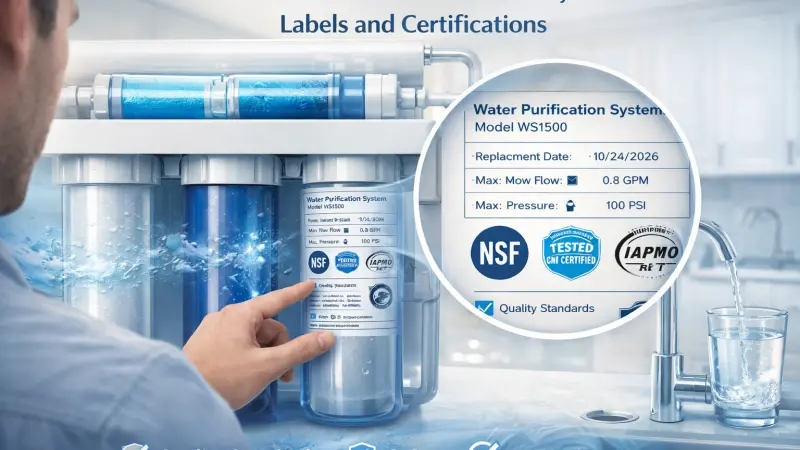
Have you ever paused to consider what actually happens inside your kitchen tap filter or the complex industrial system beneath your sink when you press the lever for a glass of water. Understanding how to read water purification system labels and certifications is the primary method for British homeowners to ensure that the fluid entering their bodies is free from harmful contaminants such as lead microplastics and chlorine. With an increasing variety of products appearing on the UK market ranging from simple gravity fed jugs to complex reverse osmosis units the terminology used on packaging can often feel overwhelming and impenetrable for the average consumer.
The Fundamental Importance of Water Quality Standards in the United Kingdom
Water quality in Britain is generally of a very high standard when it leaves the treatment works managed by regional providers such as Thames Water or United Utilities. However the journey through Victorian era lead pipes or modern domestic plumbing systems can introduce unwanted elements into the supply. This is where domestic purification systems play a vital role in providing an additional layer of safety and taste improvement. To navigate this market effectively one must understand that not all filters are created equal and the claims made by manufacturers are only as reliable as the third party testing that supports them.
When you examine a product label you are looking for evidence of rigorous scientific validation. These certifications act as a bridge of trust between the engineering team that designed the device and the household that relies on it for daily hydration. In the UK specifically we look for alignment with both international bodies and local regulations to guarantee that the materials used in the construction of the filter do not leach chemicals back into the water while effectively removing the targets they claim to eliminate.
Navigating International and Domestic Certification Bodies
One of the most frequently encountered acronyms on high quality water systems is NSF International. Originally known as the National Sanitation Foundation this global organisation develops public health standards and certification programmes that help protect the worlds food water and consumer products. If a device carries an NSF mark it signifies that the product has undergone extensive testing to verify that its contaminant reduction claims are accurate and that the structural integrity of the housing is sound.
NSF ANSI 42 Aesthetic Effects
This is perhaps the most common certification found on entry level carbon filters. Standard 42 focuses on the reduction of aesthetic or non health related contaminants. This includes things like chlorine which affects the smell and taste of water as well as particulate matter that might make the liquid appear cloudy. While it does not guarantee the removal of dangerous pathogens or heavy metals it is an excellent benchmark for those who simply want their tap water to taste more refreshing for drinking and cooking purposes.
NSF ANSI 53 Health Effects
For those concerned with safety and long term health Standard 53 is the benchmark to seek out. This certification indicates that the system is capable of reducing specific health related contaminants such as lead arsenic cysts and volatile organic compounds. Unlike Standard 42 which focuses on how the water looks and tastes Standard 53 is about what is actually in the water at a microscopic level. British households in older properties with potential lead piping issues should prioritise systems that explicitly state compliance with this standard.
NSF ANSI 58 Reverse Osmosis Systems
Reverse osmosis is a more advanced technology that uses a semi permeable membrane to remove a vast array of dissolved solids. Standard 58 is specific to these types of units. It covers the reduction of substances like nitrates fluoride and total dissolved solids.
Because RO systems can be complex the certification also ensures that the recovery rate and efficiency of the unit meet specific industry requirements ensuring that water waste is kept to a minimum during the purification process.
The Role of the Water Regulations Approval Scheme WRAS
In the United Kingdom the Water Regulations Approval Scheme or WRAS is a crucial identifier. Any water fitting which when installed will carry or receive water from the public mains water supply in the UK must comply with the Water Supply Water Fittings Regulations. A WRAS approved product has been checked to ensure it does not cause waste misuse undue consumption or contamination of the water supply. Seeing the WRAS logo on a purification system provides peace of mind that the unit is suitable for the British plumbing infrastructure and meets local legal requirements.
Identifying Common Contaminants on Product Labels
To read a label effectively you must know what pollutants you are trying to target. Manufacturers often list a percentage reduction for various elements. It is essential to understand that 99 percent reduction of chlorine is significantly easier to achieve than 99 percent reduction of lead or hormones. Below are the key categories usually found on a UK water filter specification sheet.
- Heavy Metals These include lead mercury and cadmium which can accumulate in the body over time. Professional grade systems will often cite specific test results for these elements.
- Chemical Disinfectants Chlorine and chloramine are added by water companies to kill bacteria but they can leave an unpleasant chemical aftertaste. Carbon block filters are the industry standard for removing these.
- Microbial Cysts Cryptosporidium and Giardia are parasites that can survive standard chlorination. High quality filters with a sub micron pore size are required to physically block these organisms.
- Emerging Contaminants Recent labels may mention PFAS which are often called forever chemicals. As public awareness grows more brands are seeking specific testing to prove their efficacy against these persistent substances.
Understanding Filter Life and Replacement Indicators
A certification is only valid if the filter is functioning correctly. Most labels will specify a capacity in litres or a time frame in months. For example a typical under sink filter might be rated for 2000 litres or 6 months. It is vital to adhere to these guidelines because a saturated filter can eventually start releasing trapped contaminants back into the water stream a process known as breakthrough. Many modern systems include an LED indicator or a mechanical calendar to remind the user when maintenance is due.
The Difference Between Filtration and Purification
While often used interchangeably the terms filtration and purification have different technical meanings on a label. Water filtration generally refers to the use of a physical barrier or chemical process to remove impurities. Water purification is a broader term that implies a higher level of cleansing often including the removal of bacteria and viruses which standard filters might miss. If you are using water from a private well or a non mains source in the UK you should look for systems labelled as purifiers which often include ultraviolet light stages to neutralise biological threats.
How to Verify Claims Made by Manufacturers
Regrettably some companies use misleading language to make their products seem more effective than they are. Terms like chemical free or laboratory tested are often used without context. To protect yourself always look for a specific certification number or a link to a performance data sheet. A reputable manufacturer will always provide a detailed breakdown of exactly which contaminants were tested the initial concentration of the pollutant and the final reduction percentage. If this information is hidden or unavailable it is best to approach the product with caution.
Installation Considerations for British Homes
British plumbing systems can vary significantly from older gravity fed tanks in the loft to modern high pressure unvented cylinders. When reading the label of a purification system check the minimum and maximum operating pressures. A system designed for high pressure might not function correctly in a low pressure environment leading to poor flow rates or even damage to the internal membranes.
Additionally ensure that the fittings provided are compatible with British standard pipe sizes which are usually measured in millimetres or inches depending on the age of the property.
The Environmental Impact of Your Choice
Modern consumers are increasingly concerned with sustainability. Labels now often feature information regarding the recyclability of the filter cartridges. Some UK based companies offer take back schemes where used filters are returned for professional recycling of the plastic housing and the carbon media. Choosing a system with a long life cartridge or one that uses sustainable materials like coconut shell carbon can significantly reduce the environmental footprint of your household hydration.
Advanced Technologies Featured on Premium Labels
As technology evolves we see more sophisticated terms appearing on labels. Ion exchange resin is a common feature for softening hard water particularly in the South and East of England where limescale is a major issue. You might also see mentions of hollow fibre membranes which are capable of ultrafiltration at a microscopic level. Understanding these terms allows you to match the technology to your specific local water conditions ensuring you do not pay for features you do not need while securing the protection you do require.
The Financial Value of Certified Systems
While a certified system might carry a higher initial price tag it often represents better long term value. Non certified filters may fail prematurely or provide inconsistent results leading to more frequent replacements. By investing in a system with verified performance you are ensuring that your money is being spent on a product that actually delivers the benefits it promises. Over a year the cost per litre of purified water from a high quality home system is significantly lower than that of bottled water while providing comparable or superior quality.
Improving Visibility for Professional Water Services
Finding a reliable expert to install or maintain these complex systems is a vital step for many households. For professionals in the plumbing and water treatment industry appearing in a local business directory uk free can be a transformative step for their outreach. By securing a spot on the best uk business directories free companies can ensure that local residents looking for water purification assistance find them easily.
Utilising a free uk directory list for business allows service providers to build credibility within their specific geographic area. When consumers look for the best free business listing directories uk they are often in search of trustworthy local experts who understand the nuances of regional water quality. Listing on Local page UK provides an essential platform for small businesses to showcase their certifications and expertise to an engaged audience interested in home improvement and health. Improving your online presence via a free uk directory list for business ensures that your specialist skills are visible to those who need them most.
Frequently Asked Questions
What is the most important certification for removing lead from water
The NSF ANSI 53 certification is specifically designed to verify that a system can reduce lead and other health related contaminants to safe levels.
Do all water filters remove chlorine and improve taste
Most carbon based filters will carry the NSF ANSI 42 certification which confirms their ability to reduce chlorine and improve the aesthetic qualities of water.
How often should I really change my water filter cartridge
You should always follow the manufacturer guidelines found on the label as exceeding the rated capacity can lead to bacteria growth or contaminant breakthrough.
Is WRAS approval a legal requirement for water filters in the UK
While not a law for the filter itself any fitting connected to the mains water supply must comply with water regulations and WRAS approval is the easiest way to prove compliance.
Can a standard jug filter remove fluoride
Standard jug filters usually do not remove fluoride unless they specifically state they use activated alumina or reverse osmosis technology on the label.
What does sub micron filtration mean on a product description
This means the filter has pores smaller than one micrometre which is effective
at physically straining out very small particles and some types of bacteria.
Are forever chemicals like PFAS covered by standard certifications
Standard certifications are currently being updated to include PFAS but you should look for specific testing documentation from the manufacturer for these substances.
Disclaimer: The information provided in this article is for general informational and research purposes only. Company details, features, services, and market positions may change over time. Readers are advised to visit official company websites and conduct independent research before making any business decisions or purchasing services.
Most Searchable Keywords
Recent Blogs


Related Listings
Categories
- Accountants (295)
- Advertising Agencies (559)
- Architects (149)
- Automobiles (377)
- Beauty (300)
- Carpenters (146)
- Cleaning Services (387)
- Dentists (189)
- Driving (62)
- Education (1)
- Electricians (215)
- Energy (8)
- Event Organiser (687)
- Finance (602)
- Guide (3482)
- Health (2207)
- Information technology (206)
- Legal Services (361)
- Logistics (6)
- Maintenance (65)
Sponsored Listings in Plumbers
Related Blogs

Ghost Brokers Fake Car Insurance Scam Explain...
Read this insightful article "Ghost Brokers Fake Car Insurance Scam Explained" to expand your knowledge!

UK Baby Names Fastest Rising and Falling Name...
Read this insightful article "UK Baby Names Fastest Rising and Falling Names" to expand your knowledge!

How to Claim for Pothole Damage From Your Cou...
Read this insightful article "How to Claim for Pothole Damage From Your Council" to expand your knowledge!
Questions & Answers – Find What
You Need, Instantly!
How can I update my business listing?
Is it free to manage my business listing?
How long does it take for my updates to reflect?
Why is it important to keep my listing updated?
