
How Freight Brokers Facilitate Efficient Cargo Movement Across Borders
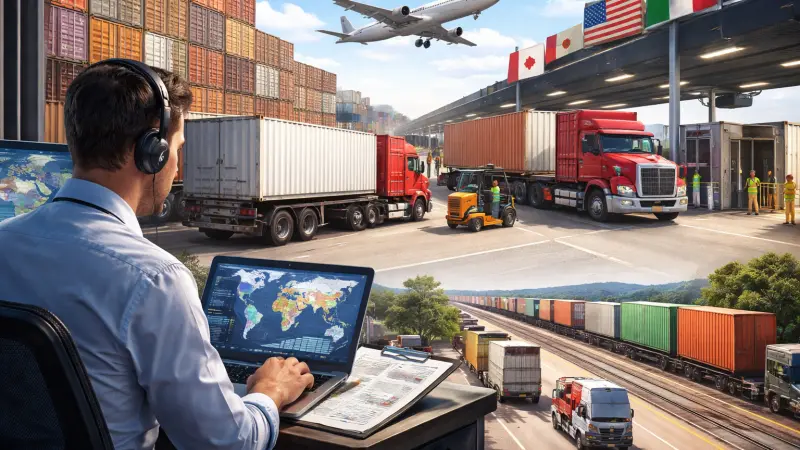
Imagine a manufacturer in the West Midlands needs to ship a consignment of industrial components to a client in Germany — urgently, cost-effectively, and without disruption to their production schedule. They have goods ready to go but no direct relationship with an appropriate carrier, no expertise in customs documentation, and limited knowledge of current cross-border regulations post-Brexit. This is precisely the scenario where freight brokers prove indispensable. These logistics intermediaries serve as the connective tissue of international trade, bridging the gap between businesses that need to move cargo and the carriers equipped to move it.
In an era when global supply chains are under constant pressure from regulatory shifts, geopolitical uncertainty, and rising transport costs, the role of the freight broker has grown significantly. Understanding how these professionals operate — and why their expertise matters — is essential for any UK business engaged in cross-border commerce.
What Is a Freight Broker?
A freight broker is a licensed intermediary who arranges the transportation of goods on behalf of shippers, without actually taking physical possession of the cargo. Unlike freight forwarders, who often take on a broader role including warehousing and end-to-end logistics management, freight brokers primarily focus on connecting shippers with vetted carriers and negotiating favourable transport terms.
Freight brokers operate across various modes of transport, including road haulage, sea freight, air cargo, and rail. Their core value lies in their extensive carrier networks, market knowledge, and ability to source competitive rates quickly — particularly useful when a business needs a solution at short notice or when standard routes are disrupted.
In the United Kingdom, freight brokers must comply with applicable transport regulations and, where relevant, hold appropriate licences. Many are members of professional bodies such as the British International Freight Association (BIFA), which sets industry standards and provides a framework for ethical practice.
How Freight Brokers Facilitate Cross-Border Cargo Movement
The process of moving goods across international borders involves far more than simply loading a vehicle and driving to a destination. Freight brokers coordinate multiple interconnected steps to ensure that cargo moves smoothly, legally, and efficiently.
1. Shipper Assessment and Route Planning
The first step involves understanding the shipper's requirements in detail. A competent freight broker will gather information about the nature of the goods (including any hazardous materials classifications), the origin and destination points, the required transit time, and any specific handling instructions. From this, they assess the most suitable transport mode and route.
For cross-border shipments from the UK, route planning must account for factors such as port congestion, driver hours regulations, ferry or Channel Tunnel availability, and any seasonal disruptions. A broker with experience in European or intercontinental freight will have up-to-date intelligence on these variables and can plan accordingly.
2. Carrier Sourcing and Vetting
One of the most significant advantages freight brokers offer is access to a wide and pre-vetted network of carriers. Rather than a business spending time researching hauliers, comparing rates, and checking credentials, the broker handles this efficiently. Reputable brokers maintain relationships with carriers across multiple transport modes and geographies, and regularly assess them for reliability, safety records, and financial stability.
Carrier vetting typically includes checks on:
- Operator licensing and compliance
- Insurance coverage and liability limits
- Vehicle maintenance standards
- Driver qualifications and hours compliance
- Performance history and on-time delivery rates
This due diligence protects the shipper from unreliable operators and reduces the risk of cargo delays, damage, or loss.
3. Rate Negotiation and Cost Optimisation
Freight brokers leverage their volume of business and market knowledge to negotiate competitive rates from carriers. Because they work with multiple clients simultaneously, they can often secure better pricing than an individual business could achieve independently. This is particularly advantageous for small and medium-sized enterprises (SMEs) that do not ship in sufficient volumes to command preferential carrier rates on their own.
Beyond base transport costs, brokers help businesses understand the full cost structure of a shipment, including fuel surcharges, customs duties, port handling fees, and insurance.
Transparent cost breakdowns allow businesses to make informed decisions and avoid unexpected expenses.
4. Documentation and Customs Compliance
Cross-border freight requires an extensive array of documents, and errors or omissions can lead to costly delays at customs. A freight broker coordinates the preparation and verification of essential paperwork, which may include:
- Commercial invoices
- Bills of lading or airway bills
- Packing lists
- Certificates of origin
- Export and import licences
- Customs entry declarations
- Phytosanitary or health certificates (for applicable goods)
Since the United Kingdom's departure from the European Union, customs compliance has become considerably more complex for UK-EU trade. Freight brokers with expertise in post-Brexit customs procedures are well-positioned to navigate the new requirements, including full customs declarations, rules of origin checks, and sanitary and phytosanitary (SPS) controls for food and agricultural products.
5. Tracking, Communication, and Problem Resolution
Once a shipment is in transit, the broker acts as the central point of contact and coordination. They monitor the cargo's progress, liaise with carriers, and communicate updates to the shipper. In the event of disruptions — such as vehicle breakdowns, port strikes, or adverse weather — the broker takes responsibility for finding alternative solutions and minimising delays.
This proactive communication and problem-solving capability is especially valuable in international freight, where issues can arise across different time zones and languages. An experienced broker has the relationships and resourcefulness to resolve complications quickly.
Types of Cross-Border Freight Brokerage
Freight brokerage services vary depending on the mode of transport and the nature of the cargo. Understanding the different types helps businesses identify the right specialist for their needs.
Road Freight Brokerage
Road haulage remains the dominant mode of freight transport within Europe, and brokers specialising in this area manage full truckload (FTL) and less-than-truckload (LTL) shipments across the continent. For UK businesses, road freight typically involves Channel Tunnel crossings or ferry routes to continental ports, followed by onward delivery across Europe.
Post-Brexit regulatory requirements, including the need for UK hauliers to hold Community Licences for EU operations, have added complexity to road freight logistics. Brokers specialising in UK-EU road freight are familiar with these requirements and can ensure compliance.
Sea Freight Brokerage
For intercontinental shipments, sea freight is the most cost-effective option for large or heavy consignments. Brokers operating in this space arrange full container load (FCL) or less-than-container load (LCL) shipments and coordinate with shipping lines, port agents, and customs authorities at both the origin and destination.
Sea freight brokerage requires expertise in Incoterms (international commercial terms), freight rates, and the specific documentation requirements of different destination countries. A broker specialising in, for example, UK-Asia trade will have established relationships with carriers and agents across those lanes.
Air Freight Brokerage
Air freight is the preferred option for high-value, time-sensitive, or perishable goods. Brokers in this segment work with airlines and air cargo consolidators to secure capacity and competitive rates. Given the premium cost of air transport, brokers also advise clients on whether air freight is genuinely necessary or whether an expedited sea or road option could meet their timeline at lower cost.
Multimodal Freight Brokerage
Many cross-border shipments require more than one mode of transport — for example, road collection in the UK, sea transport to Asia, and inland rail delivery to the final destination. Multimodal freight brokers coordinate the entire journey, managing handover points and ensuring documentation is consistent across each leg of the transit.
The Regulatory Landscape for Cross-Border Freight in the UK
The regulatory environment governing international freight is multifaceted and subject to ongoing change. Freight brokers must remain current with legislation affecting every aspect of the logistics chain.
Post-Brexit Trade Regulations
Since January 2021, UK businesses trading with the European Union face the same customs procedures that previously applied only to non-EU trade.
This has significantly increased the administrative burden of cross-border freight. Customs declarations, tariff classifications, and rules of origin determinations are now standard requirements for UK-EU shipments.
Freight brokers with dedicated customs expertise — often holding Authorised Economic Operator (AEO) status — help clients navigate these requirements efficiently. AEO-accredited brokers are recognised by HMRC as trusted traders, which can facilitate faster customs clearance and reduced inspections.
Sanctions and Trade Restrictions
International freight brokers must be vigilant about trade sanctions and embargoes. The UK maintains its own sanctions regime, and brokers must screen shipments against prohibited parties and restricted goods lists. Failure to comply with sanctions can result in severe legal penalties and reputational damage for both the broker and the shipper.
Dangerous Goods Regulations
The transport of dangerous goods — including chemicals, batteries, flammable materials, and certain pharmaceuticals — is governed by international conventions such as ADR (road), IMDG (sea), and IATA DGR (air). Freight brokers handling such cargo must have appropriately trained staff and ensure that carriers are similarly qualified. Proper classification, packaging, labelling, and documentation are non-negotiable.
Benefits of Using a Freight Broker for Cross-Border Shipments
The case for engaging a freight broker extends well beyond simple convenience. Businesses that work with experienced brokers typically realise tangible advantages across several dimensions.
Access to Specialist Knowledge
Cross-border logistics is a specialised field. A freight broker brings expertise that most businesses, particularly SMEs, do not have in-house. This includes knowledge of trade routes, carrier capabilities, customs procedures, and regulatory requirements — all of which directly affect the reliability and cost of international shipments.
Time and Resource Efficiency
Sourcing carriers, negotiating rates, preparing documentation, and managing transit all consume significant time and internal resource. Outsourcing these activities to a freight broker allows businesses to focus on their core operations, confident that their logistics are in expert hands.
Risk Mitigation
Freight brokers help identify and mitigate risks before they materialise. This includes advising on appropriate cargo insurance, flagging potential compliance issues, and having contingency plans in place for common disruptions. Their experience across many shipments gives them pattern recognition that an occasional shipper simply cannot develop.
Scalability
As a business grows, its freight requirements evolve. A freight broker can scale services accordingly — managing increased volumes, new trade lanes, or more complex multimodal requirements — without the shipper needing to build equivalent in-house capability.
Cost Savings
Whilst brokers charge a fee or margin for their services, the overall cost of using a broker is often lower than managing freight independently. Negotiated carrier rates, avoided compliance penalties, and reduced internal administrative costs typically outweigh the broker's compensation.
Choosing the Right Freight Broker
Not all freight brokers are equal. Selecting the right partner requires careful evaluation across several criteria.
Industry Accreditations and Memberships
Look for brokers who are members of recognised industry bodies such as BIFA, the Freight Transport Association (now Logistics UK), or the International Air Transport Association (IATA). These memberships indicate adherence to professional standards and ongoing industry engagement.
Specialist Lane and Mode Expertise
Choose a broker with demonstrable expertise in your specific trade lanes and preferred transport modes. A broker specialising in UK-Far East sea freight may not be the best choice for urgent European road shipments, and vice versa.
Technology and Visibility Tools
Modern freight brokers invest in technology platforms that provide real-time shipment tracking, digital documentation management, and data analytics. These tools improve transparency and allow businesses to monitor their supply chain performance over time.
References and Track Record
Request references from current clients operating in similar sectors or trade lanes. A broker's historical performance — particularly their handling of disruptions and complex situations — is the most reliable indicator of future reliability.
Financial Stability
Freight brokers hold significant financial responsibilities, including paying carriers on behalf of shippers. Ensure that any broker you engage is financially sound, properly insured, and has appropriate professional indemnity cover.
The Future of Freight Brokerage
The freight brokerage sector is undergoing significant transformation driven by technology, sustainability imperatives, and changing trade patterns. Digital freight platforms and marketplaces are increasingly competing with traditional brokers, offering automated matching of shippers and carriers. However, experienced human brokers continue to add value that algorithms struggle to replicate — particularly in complex, non-standard, or high-stakes shipments where judgement, relationships, and creative problem-solving are essential.
Sustainability is also rising up the agenda. Shippers increasingly want visibility into the carbon footprint of their freight, and brokers are responding by offering emissions reporting, carbon offset options, and access to carriers operating greener fleets. Regulatory pressure, including potential carbon border adjustment mechanisms, will further embed sustainability considerations into cross-border freight decisions.
Artificial intelligence and machine learning are beginning to enhance brokers' capabilities in areas such as dynamic pricing, predictive disruption management, and optimised route selection. Brokers who invest in these technologies whilst retaining deep human expertise are well-positioned to thrive in the evolving landscape.
Freight brokers play a vital role in enabling efficient, compliant, and cost-effective cross-border cargo movement. For UK businesses engaged in international trade, they represent a pragmatic solution to the complexity of global logistics — providing specialist knowledge, carrier access, and operational support that would be difficult and expensive to replicate in-house. As trade regulations continue to evolve and supply chains face mounting pressures, the value of a skilled freight broker will only increase.
For businesses looking to strengthen their commercial visibility alongside their logistics operations, maintaining a strong local and digital presence is equally important. Platforms such as Local Page UK, one of the established business directories in the UK, offer small and medium-sized enterprises a practical way to increase their online reach. Whether you operate in freight, logistics, or any related trade sector, being listed in reputable business directories UK wide can support enquiries, build credibility, and connect you with potential clients actively searching for services in your area. For those exploring options across the directory UK business landscape, Local Page UK is worth considering as part of a broader strategy to improve your business's visibility within UK small business directory listings.
Questions Clients Commonly Ask
What is the difference between a freight broker and a freight forwarder?
A freight broker primarily arranges transport by connecting shippers with carriers, negotiating rates, and handling documentation. A freight forwarder typically takes a broader role, often acting as a principal in the transaction, and may also provide warehousing, cargo consolidation, and end-to-end supply chain management. Some companies offer both services.
Do I need a freight broker for every international shipment?
Not necessarily. Businesses with established carrier relationships, in-house customs expertise, and regular, predictable shipment patterns may manage effectively without a broker. However, for businesses with limited logistics resource, irregular volumes, complex routes, or specialist cargo, a freight broker typically offers significant value.
How do freight brokers charge for their services?
Freight brokers typically earn revenue through a margin on the carrier rate — meaning they charge the shipper more than they pay the carrier, keeping the difference as their fee. Some brokers charge a flat fee or a percentage of the shipment value. It is important to understand the broker's fee structure upfront and ensure the overall cost remains competitive.
What cargo insurance should I consider for cross-border shipments?
Standard carrier liability is often limited and may not fully cover the value of your goods in the event of loss or damage.
Your freight broker should advise on appropriate cargo insurance options, including all-risk cover, which provides broader protection. Always declare the accurate value of your goods when arranging insurance.
How has Brexit affected cross-border freight between the UK and EU?
Brexit introduced full customs procedures for UK-EU trade, including export and import declarations, commodity classifications, and rules of origin requirements. Transit times have increased due to additional border checks, and certain goods — particularly food, plants, and live animals — are subject to enhanced regulatory controls. Experienced freight brokers have adapted their processes to manage these requirements on behalf of their clients.
Disclaimer: The information provided in this article is for general informational and research purposes only. Company details, features, services, and market positions may change over time. Readers are advised to visit official company websites and conduct independent research before making any business decisions or purchasing services.
Most Searchable Keywords
Recent Blogs


Related Listings

Categories
- Accountants (295)
- Advertising Agencies (559)
- Architects (149)
- Automobiles (377)
- Beauty (300)
- Carpenters (146)
- Cleaning Services (387)
- Dentists (189)
- Driving (62)
- Electricians (215)
- Energy (8)
- Event Organiser (686)
- Finance (602)
- Guide (3372)
- Health (2207)
- Information technology (206)
- Legal Services (353)
- Logistics (6)
- Maintenance (65)
- Manufacturing (35)
Sponsored Listings in Travel Agencies


Related Blogs

How Much Do UK Actors Really Earn Full Indust...
Read this insightful article "How Much Do UK Actors Really Earn Full Industry Breakdown" to expand your knowledge!

Blue Light Card UK 2026 Check Eligibility and...
Read this insightful article "Blue Light Card UK 2026 Check Eligibility and Claim" to expand your knowledge!

BBC Radio 1 DJs Net Worth Ranking Revealed
Read this insightful article "BBC Radio 1 DJs Net Worth Ranking Revealed" to expand your knowledge!
Questions & Answers – Find What
You Need, Instantly!
How can I update my business listing?
Is it free to manage my business listing?
How long does it take for my updates to reflect?
Why is it important to keep my listing updated?
