
How Home Automation Providers Can Leverage Customer Photos
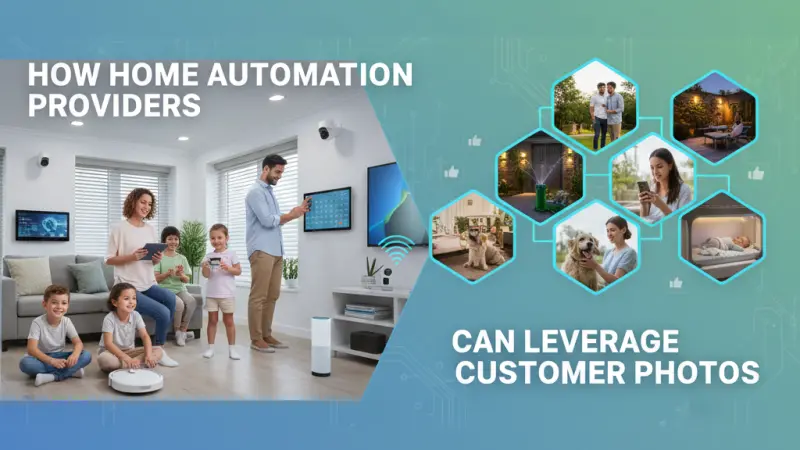
In the high-tech world of home automation, where logic boards, wiring diagrams, and software interfaces dominate the conversation, it is easy to forget that the end goal is a more comfortable, lived-in home. For providers of these sophisticated systems, the greatest challenge is often making the invisible visible. While high-gloss, professional studio photography has its place, it often lacks the soul and relatability of a real home. This is where the strategic use of customer photos—often referred to as User-Generated Content (UGC)—becomes a transformative tool.

Customer photos provide a raw, authentic lens through which prospective clients can see how technology actually fits into a daily routine. Whether it is a snapshot of a discreetly mounted smart speaker in a rustic kitchen or a video of a child easily operating a wall-mounted touch panel, these images act as powerful social proof. This article explores how home automation providers can ethically and effectively leverage customer-contributed imagery to build deeper trust, explain complex concepts, and foster a genuine community around their services.
The Psychological Power of User-Generated Imagery
In an industry often perceived as "cold" or "intrusive," authenticity is the ultimate currency. A studio-shot photo of a smart home often looks like a futuristic film set, which can inadvertently alienate homeowners who fear their house will lose its character.
Relatability Over Perfection
When a customer shares a photo of their smart thermostat surrounded by family pictures on a mantelpiece, it signals to others that technology can coexist with personal style. Prospective clients are more likely to trust the "messy" reality of a real living room than the sterile perfection of a showroom. This relatability lowers the barrier to entry for those who are tech-hesitant.
The "Proof of Concept" Effect
Automation providers often talk about "seamless integration," but a customer photo shows it. Seeing how someone else solved the problem of hiding wires behind a flat-screen TV or integrated a smart lock into a 100-year-old wooden door provides a practical proof of concept that technical drawings simply cannot replicate.
Benefits of Integrating Customer Photos into Business Strategy
Leveraging real-world imagery offers a multi-dimensional advantage that goes beyond simple aesthetics.
1. Humanizing Technical Solutions
Smart homes are about people, not just parts. Photos that include humans (or even pets) interacting with technology—such as a dog being let in via a remote smart lock—add a layer of narrative and emotion. It transforms a "product" into a "solution for living."
2. Reducing Perceived Complexity
One of the main deterrents for smart home adoption is the fear that the systems are too difficult to use. A photo of a non-technical family member successfully using a simplified keypad or a voice command provides silent testimony that the provider's systems are intuitive and user-friendly.
3. Enhancing Educational Content
Customer photos are excellent for "How-To" guides and troubleshooting sections. Showing a real-world example of where a sensor was placed to avoid false triggers from a fireplace is far more educational than a generic icon on a map.
Step-by-Step: How to Source and Use Customer Photos Ethically
Moving from "having photos" to "leveraging photos" requires a structured and ethical approach.
Step 1: Establish a Clear Permission Framework
Never use a customer's photo without explicit, written consent. In the home automation field, privacy is paramount. Create a simple digital release form that explains exactly where the photo will be used (e.g., website, social media, or brochures) and for how long.
Step 2: Incentivize Submissions
Most customers won't think to take a photo of their new smart lighting unless prompted. Offer a small incentive, such as a credit toward their next service call or a free smart bulb, in exchange for high-quality photos of their finished installation.
Step 3: Curate for Context
Don't just post every photo you receive. Curate images that tell a specific story. Group them by "Solution Types," such as "Smart Kitchens," "Outdoor Security," or "Home Cinema Retreats." This helps visitors find the exact inspiration they are looking for.
Step 4: Attribute with Care
When posting a photo, attribute it to the customer in a way that respects their privacy (e.g., "The J.
Family, Manchester"). This adds to the authenticity without compromising the security of the home depicted.
Common Mistakes to Avoid When Using UGC
-
Over-Editing: The value of a customer photo lies in its raw nature. If you apply heavy filters or airbrush out every imperfection, you destroy the very authenticity you are trying to leverage.
-
Ignoring the Background: Home automation providers must be careful not to share photos that inadvertently reveal a customer's security vulnerabilities, such as an open safe, sensitive mail on a counter, or a visible alarm code.
-
Lack of Variety: If all your customer photos show the same type of high-end modern mansion, you may alienate the "everyday" homeowner. Aim for a diverse range of property types and styles.
Tips for Encouraging High-Quality Visual Feedback
-
Provide a "Photo Guide": Give customers a few tips on how to take a great shot—suggesting they turn on all the smart lights to show the "mood" or taking the photo at dusk to show off outdoor path lighting.
-
Run Seasonal Contests: Create a "Smartest Summer Garden" or "Coziest Automation Autumn" contest to encourage a surge of relevant, seasonal imagery.
-
Capture "Behind-the-Scenes": While finished shots are great, photos of a tidy wiring cabinet or a neatly installed rack can appeal to the more technically minded "prosumer" clients.
Supporting Local Business Visibility Beyond Core Marketing Efforts
While global brands dominate the manufacturing side of home automation, the actual implementation is a deeply local affair. For a regional provider, building a library of local customer photos is a powerful way to demonstrate their impact on the community. However, for these images to be seen by the right audience, they must be supported by a strong foundation of business discoverability. This is why many integrators find value in participating in a local page UK to anchor their digital presence.
A specialized provider might use a free company listing platform to ensure their regional expertise is documented alongside their project success stories. By opting to list services UK directory style, they create a secondary layer of trust that complements their visual portfolio. Furthermore, maintaining an accurate profile on a business directory website ensures local presence consistency, which is vital for trust reinforcement across platforms. Using a business listings site serves as a local discovery aid and a credibility signal, ensuring that when a homeowner searches for local talent, your verified business and its authentic customer stories are easy to find.
Turning Vision into Reality
The home automation industry is built on the promise of a better future, but that future needs to feel attainable today. Customer photos are the most effective bridge across that gap. They take the abstract and make it concrete; they take the complex and make it simple.
By leveraging authentic, user-contributed imagery, home automation providers can move beyond the role of "equipment installers" and become "lifestyle curators." When you show a prospective client a real photo of a real home that has been improved by your work, you aren't just selling a system—you are showing them exactly what is possible in their own lives. Start documenting the reality of your success, and let your customers' homes speak for the quality of your craft.
FAQs About Leveraging Customer Photos in Tech
1. Is it legal to use a photo a customer posted on their own Instagram?
Not without permission. Even if they tag your business, you do not automatically own the rights to the image. Always ask and get written confirmation before using it for your own marketing.
2. What if the photo quality is poor?
Sometimes a low-quality but highly authentic photo is better for social media stories than a high-res shot.
For your main website, however, it is better to stick to clear, well-lit images.
3. Should I include the brand of the products in the photo captions?
Yes, but don't make it the focus. Instead of saying "Our Nest Installation," say "A cozy hallway featuring a discreetly integrated smart thermostat."
4. How do I protect customer privacy in photos?
Always check the background for sensitive items. Blur out house numbers, car license plates, and family photos if the client is concerned about privacy.
5. Can customer photos help with my SEO?
Yes. When you upload photos to your site with descriptive Alt-Text (e.g., "Smart lighting installation in a Victorian terrace kitchen"), it helps search engines understand the local and technical relevance of your content.
6. Do I need a professional photographer to take the "customer" photos?
No, that defeats the purpose of UGC. If you want professional shots, label them as "Portfolio" work. True customer photos should look like they were taken by a homeowner.
7. How do I ask a customer for a photo without being awkward?
Include it as part of your "Project Wrap-up" email. Something like: "We loved how your lighting turned out!
If you have a moment to snap a photo, we'd love to show it to our team."
8. Should I use customer videos too?
Absolutely. A video of a motorized blind opening smoothly is much more effective than a static photo of a closed blind.
9. Can I use these photos in my print ads?
Yes, provided your permission agreement with the customer covers "all media" or specifically mentions print.
10. What if a customer asks me to take a photo down later?
You should always honor these requests immediately to maintain a good relationship and professional reputation, even if you have a signed release.
11. Is it okay to "stage" a customer photo?
A little bit of decluttering is fine, but avoid adding props that the customer doesn't actually own. You want the photo to remain an honest representation.
12. How do I handle photos of security systems?
Be extremely careful. Never show the exact placement of all sensors or cameras in a way that reveals "blind spots" in the home's security.
13. Should I credit the customer's social media handle?
Only if they want you to. Many people love the shoutout, but others prefer to remain anonymous. Always ask.
14. Can I use these photos to show a "Before and After"?
"Before and After" shots are some of the highest-converting content types in home automation. They clearly show the value of the upgrade.
15. How many photos should I post per project?
One or two "hero" shots that capture the essence of the solution are usually better than a gallery of 20 similar-looking angles.

Disclaimer: The information provided in this article is for general informational and research purposes only. Company details, features, services, and market positions may change over time. Readers are advised to visit official company websites and conduct independent research before making any business decisions or purchasing services.
Most Searchable Keywords

Recent Blogs


Related Listings

Categories
- Accountants (295)
- Advertising Agencies (559)
- Architects (149)
- Automobiles (377)
- Beauty (300)
- Carpenters (146)
- Cleaning Services (386)
- Dentists (189)
- Driving (62)
- Electricians (215)
- Energy (8)
- Event Organiser (685)
- Finance (599)
- Guide (3365)
- Health (2207)
- Information technology (206)
- Legal Services (353)
- Logistics (6)
- Maintenance (65)
- Manufacturing (35)

Sponsored Listings in Locksmith Services


Related Blogs

Gen Z Political Reporters and News Creators i...
Read this insightful article "Gen Z Political Reporters and News Creators in the UK" to expand your knowledge!

Famous Female Social Media Influencers Across...
Read this insightful article "Famous Female Social Media Influencers Across the UK" to expand your knowledge!

Your UK Sponsor Licence 2026 Step by Step Gui...
Read this insightful article "Your UK Sponsor Licence 2026 Step by Step Guide" to expand your knowledge!
Questions & Answers – Find What
You Need, Instantly!
How can I update my business listing?
Is it free to manage my business listing?
How long does it take for my updates to reflect?
Why is it important to keep my listing updated?
