
How to Manage and Pay Your DVLA Vehicle Tax Online
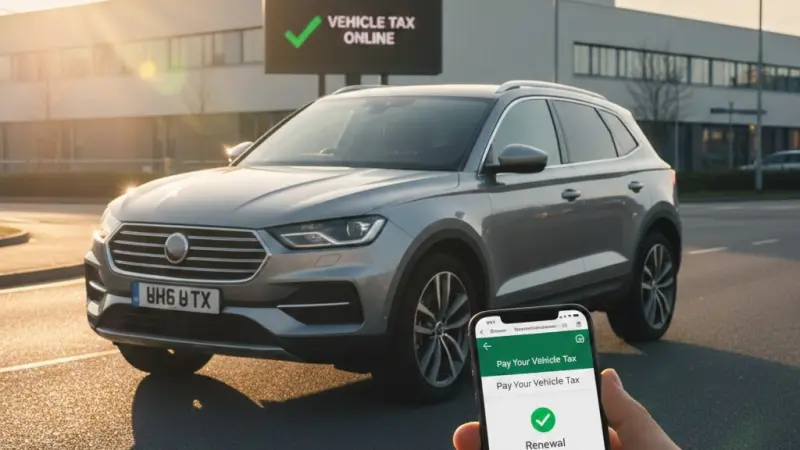
Vehicle tax, technically known as Vehicle Excise Duty (VED), is a legal requirement for almost every driver using public roads in the United Kingdom. To pay your DVLA vehicle tax, you simply need your V11 reminder letter or your vehicle logbook (V5C) to complete the process via the official government portal. Most motorists choose to pay annually, every six months, or through a monthly Direct Debit. You can verify if a vehicle is taxed instantly by entering the registration number on the DVLA website. Failure to maintain valid tax can lead to automatic fines, wheel clamping, or even vehicle impoundment. Whether your vehicle is petrol, diesel, or electric, ensuring your records are up to date with the Driver and Vehicle Licensing Agency is the primary responsibility of the registered keeper.
Managing your car tax has become significantly more streamlined since the abolition of the physical paper disc. The system now relies entirely on digital records and Automatic Number Plate Recognition (ANPR) cameras. To tax your vehicle today, you should ensure you have a valid MOT certificate and the appropriate level of insurance, as the DVLA database cross-references these automatically. If you have recently purchased a car, remember that tax is no longer transferable between owners; you must tax the vehicle yourself before driving it away from the forecourt or a private seller’s home.
Navigating the Official Digital Payment Portal
The transition to a digital-first approach means that most British motorists now interact with the DVLA through their robust online interface. This portal is designed to be accessible twenty-four hours a day, providing a convenient alternative to the traditional Post Office queues. When you land on the official service page, the first step is always identifying the vehicle in question. This is typically done using the sixteen-digit reference number found on your V11 reminder letter. If you have misplaced this letter, the eleven-digit reference number from your V5C logbook serves as an equally valid identifier. The system is designed to be intuitive, guiding you through a series of confirmations regarding your current address and the vehicle's details before proceeding to the payment stage.
Identifying Necessary Documentation for Success
Before beginning your online application, it is essential to have your paperwork in order to avoid a session timeout. The most critical document is the V5C registration certificate, often referred to as the logbook. If you are a new keeper and the permanent logbook hasn't arrived yet, the green V5C/2 slip is your lifeline. Without one of these reference numbers, the DVLA system cannot verify your authority to tax the vehicle. Additionally, your vehicle must have a valid MOT in the database. If your MOT expires on the day you are taxing the vehicle, the system may block the transaction until a new certificate is issued by a registered testing centre. Ensure your insurance policy is active, as the Motor Insurance Database must reflect your coverage for the tax to be authorised.
Verifying your V5C logbook details
The V5C logbook is the definitive record of your vehicle's history and specifications. Ensure the document reference number matches the most recent version issued by the DVLA. If you have recently moved home or changed your name, these details must be updated before taxing, as the tax record is tied specifically to the registered keeper's information currently held on file at Swansea.
Understanding Different Payment Tiers and Methods
The cost of vehicle tax is not a flat rate across the board; it is determined by several factors including carbon dioxide emissions, engine size, and the date the vehicle was first registered. For cars registered after April two thousand and seventeen, the system uses a first-year rate based on emissions, followed by a standard annual rate for subsequent years. Motorists have the flexibility to pay in a single lump sum, which is often the most cost-effective route as it avoids the five percent surcharge applied to six-monthly or monthly instalments. Setting up a Direct Debit is an increasingly popular choice for many UK households, as it ensures the tax is automatically renewed each year, significantly reducing the risk of accidental non-compliance and the resulting penalties.
Evaluating the Benefits of Monthly Direct Debits
Choosing the Direct Debit route offers a layer of financial protection and convenience that traditional one-off payments lack. Once established, the DVLA will continue to take payments until you tell them to stop or until you sell the vehicle. This method is particularly useful for those who might forget their renewal date, as the system handles the transition between tax years seamlessly. It is important to note that the Direct Debit will only remain active if the vehicle has a valid MOT. If the MOT expires, the DVLA will eventually cancel the Direct Debit and notify you that the vehicle is untaxed. While there is a small additional cost for spreading the payments, many find the peace of mind worth the few extra pounds over the course of the year.
Managing your bank account instructions
When setting up a Direct Debit, ensure that the bank account holder’s name matches the person responsible for the vehicle. You can cancel a Direct Debit at any time through your bank, but you must also notify the DVLA to avoid being flagged for non-payment. Always monitor your statements to ensure the expected amount is being deducted on the agreed date each month.
Exemptions and Special Licensing Categories
Not every vehicle on British roads is subject to a standard tax payment, though every vehicle must still be "taxed" in the eyes of the law. Certain categories, such as vehicles used by disabled people or historic vehicles over forty years old, may be eligible for a nil-value tax rate. Electric vehicles currently enjoy a significant advantage, often falling into the zero-rated bracket to encourage the transition away from fossil fuels.
However, it is a common misconception that "exempt" means no action is required. Even if the cost is zero pounds, the registered keeper must still go through the renewal process every year to confirm the vehicle's status. Failure to "apply" for your free tax is just as much of an offence as failing to pay for a high-emission petrol engine.
Applying for Historic Vehicle Status
For enthusiasts of classic motoring, the rolling forty-year exemption is a major milestone. Once a vehicle reaches forty years from the date of its manufacture, it moves into the "historic" tax class. This transition is not always automatic. You may need to visit a Post Office with your V5C logbook to change the tax class for the first time. Once the DVLA records reflect the historic status, you will no longer be required to pay the annual fee, and in many cases, the vehicle also becomes exempt from the annual MOT test. This is part of the UK government's recognition of the cultural importance of preserving motoring heritage while acknowledging that these vehicles often cover very few miles compared to modern daily drivers.
Meeting the criteria for disability exceptions
Drivers who receive certain mobility benefits may be entitled to a tax reduction or full exemption. This applies if the vehicle is used solely for the purposes of the disabled person. To claim this, you usually need to provide a Certificate of Entitlement. This ensures that those with mobility challenges are not unfairly burdened by the costs of essential transport.
Common Mistakes to Avoid During Renewal
One of the most frequent errors made by UK drivers is assuming that car tax "follows" the car during a sale. Since October two thousand and fourteen, any remaining tax is automatically cancelled when a vehicle changes hands, and the seller receives a pro-rata refund. This means if you buy a car today, it is untaxed the moment you take ownership. Driving it home without taxing it yourself is illegal and can be caught by police cameras within minutes. Another common pitfall is ignoring the V11 reminder letter. Some drivers assume that if they haven't received the letter, they aren't responsible for the tax. In reality, it is the registered keeper's legal duty to ensure the vehicle is taxed, regardless of whether a reminder was delivered by the Royal Mail.
Ensuring your Address is Current and Correct
A surprising number of fines are issued simply because a driver moved house and forgot to update their V5C logbook. If the DVLA sends a reminder or a penalty notice to an old address, you are still liable for the consequences. Updating your driving licence is a separate process from updating your vehicle's logbook. You must ensure both are updated independently. If you are taxing your car online and notice the address is wrong, you should stop and update your details first. Keeping your records accurate ensures that you receive all vital correspondence and that your insurance remains valid, as insurers often cross-check address data with the DVLA to verify the risk profile of the area where the car is kept.
Double checking the registration mark entry
When typing your registration number into any official portal, a simple typo can lead to taxing the wrong vehicle or receiving an error message. Always take a moment to verify the characters on your physical number plate against the screen. Pay close attention to similar-looking characters like the number zero and the letter O to ensure a smooth transaction.
The Statutory Off Road Notification Process
If you intend to keep a vehicle on private land and not drive it on public highways, you can avoid paying vehicle tax by declaring it SORN. This Statutory Off Road Notification is a formal declaration to the DVLA that the vehicle is being taken out of circulation. This is common for project cars, seasonal vehicles like motorbikes, or cars being kept in a garage while the owner is abroad. Once a SORN is in place, it remains valid until the vehicle is taxed, sold, or scrapped. It is vital to remember that a SORN vehicle must stay entirely off the public road; even parking it on a public street for five minutes while you clear your driveway can lead to a fine and the immediate cancellation of its SORN status.
Reactivating a Vehicle After a Period of Storage
When you are ready to bring a SORN vehicle back into service, the process is straightforward but must be done in the correct order. You cannot drive a SORN vehicle on the road unless you are driving to a pre-booked MOT appointment. Before you head out for a general drive, you must pay the vehicle tax online or at a Post Office. The SORN is automatically cancelled the moment you tax the vehicle again. Ensure your insurance is also reactivated, as many "laid up" policies do not cover road use. Taking a car out of storage requires a thorough safety check, particularly for tyres and brakes, to ensure that it meets the legal roadworthiness standards after its period of inactivity.
Understanding the limits of private land
The definition of private land is quite strict. It must be a garage, a driveway, or land that the public does not have a right of access to. Council-owned car parks or shared residential parking areas often count as public roads in the eyes of the DVLA.
If there is any doubt, it is safer to keep the vehicle taxed rather than risk a heavy fine for an invalid SORN.
Future Outlook for UK Motoring Levies
The landscape of vehicle taxation in the United Kingdom is undergoing its most significant shift in decades. As the country moves toward the ban on the sale of new petrol and diesel cars, the government must find ways to replace the lost revenue from fuel duty and traditional VED. We are already seeing the introduction of the "expensive car supplement" for vehicles with a list price over forty thousand pounds, and it is widely expected that electric vehicles will soon begin to pay a standard rate of tax. There is also ongoing discussion regarding "road pricing" or "pay-per-mile" systems, which could track vehicle usage via GPS to charge drivers based on their actual road consumption. Staying informed about these changes is essential for any motorist planning a long-term vehicle purchase.
Adapting to Clean Air and Low Emission Zones
While not strictly a DVLA vehicle tax, local charges like the ULEZ in London or Clean Air Zones in cities like Birmingham and Bristol are closely linked to your vehicle's tax data. These zones use the emissions data held by the DVLA to determine if a vehicle must pay a daily charge to enter certain areas. As more cities adopt these schemes, the "total cost of ownership" for a vehicle involves more than just the annual tax disc fee. When choosing a new vehicle, looking at the Euro status recorded on the V5C is just as important as the VED rate. High-emission vehicles are becoming increasingly expensive to operate in urban environments, reflecting a broader national policy of improving air quality in densely populated areas.
Transitioning to greener transport solutions
For those looking to future-proof their motoring costs, moving towards hybrid or fully electric vehicles remains the most effective strategy. While the initial purchase price might be higher, the savings in annual tax and city-access charges can be substantial over several years. The government continues to adjust incentives, so checking the latest budget announcements is always recommended for prospective buyers.
Practical Steps for a Hassle Free Renewal
To ensure you never face a penalty, the best approach is to act as soon as you receive your V11 reminder. Set a reminder on your smartphone for two weeks before your tax expires. This gives you ample time to resolve any issues with your MOT or insurance that might prevent a successful renewal. If you prefer not to use the internet, you can still tax your vehicle by calling the DVLA's automated phone line or by visiting a participating Post Office branch. If you are going to a Post Office, you must bring your V11 reminder or V5C logbook, along with a valid MOT certificate (in paper or digital form) and, in Northern Ireland, your insurance certificate. Having these items ready ensures the clerk can process your request in minutes.
Confirming your Transaction is Complete
Once you have finished the online process, you will be presented with a confirmation page and sent a receipt via email. It is a good idea to keep a digital copy of this receipt for your records. You can also verify the update immediately by using the "check if a vehicle is taxed" service on the government website. While it can sometimes take up to five working days for the public-facing database to reflect the new expiry date, the DVLA's internal enforcement systems are updated almost instantly. If you have paid via Direct Debit, your first payment will usually be taken about ten working days after you set it up. Checking your bank's mobile app can provide additional confirmation that the instruction has been successfully processed.
Dealing with missing or lost reminders
If your renewal date is approaching and no letter has arrived, do not wait. Use your V5C logbook reference number to log into the portal. If you have also lost your logbook, you must apply for a replacement immediately, as you cannot tax your car without the reference number. This process can be done online and is much faster than the old postal applications, often resulting in a new logbook arriving within five working days.
Frequently Asked Questions
How do I check when my vehicle tax expires?
You can check your vehicle's tax status instantly by using the official DVLA 'Check if a vehicle is taxed' service online. You simply need to enter your vehicle's registration number. The system will then display whether the vehicle is currently taxed or SORN, along with the date the current tax expires. This is a public service and can be used for any UK-registered vehicle.
Can I tax a car without a V11 reminder letter?
Yes, you can tax your vehicle without the V11 reminder letter by using the 11-digit reference number found in your V5C logbook (the registration certificate). If you are a new owner and haven't received the full logbook yet, you can use the 12-digit reference number from the green V5C/2 new keeper's supplement. Without one of these documents, you will need to apply for a new logbook.
What happens to my tax if I sell my car?
When you sell a car in the UK, the vehicle tax is not transferred to the new owner. The seller automatically receives a refund from the DVLA for any full months of remaining tax, sent to the address on the logbook. The new owner must tax the vehicle immediately before driving it. This system ensures that every change of keeper results in a fresh tax application.
Why is the DVLA website not letting me tax my car?
The most common reason for a failed tax application is the lack of a valid MOT or insurance record. The DVLA system checks these databases in real-time. If your MOT has expired or your insurance hasn't been updated on the Motor Insurance Database yet, the transaction will be blocked. Also, ensure you are using the most recent V5C logbook reference number, as older versions are invalidated.
Is car tax cheaper if I pay it all at once?
Yes, paying for twelve months of vehicle tax in a single upfront payment is the most economical method. If you choose to pay monthly via Direct Debit or in a single six-month instalment, the DVLA applies a five percent surcharge. While spreading the cost can help with household budgeting, those who can afford the annual lump sum will save money over the course of the year.
Disclaimer: The information provided in this article is for general informational and research purposes only. Company details, features, services, and market positions may change over time. Readers are advised to visit official company websites and conduct independent research before making any business decisions or purchasing services.
Most Searchable Keywords
Recent Blogs


Related Listings

Categories
- Accountants (295)
- Advertising Agencies (559)
- Architects (149)
- Automobiles (377)
- Beauty (300)
- Carpenters (146)
- Cleaning Services (387)
- Dentists (189)
- Driving (62)
- Electricians (215)
- Energy (8)
- Event Organiser (686)
- Finance (602)
- Guide (3374)
- Health (2207)
- Information technology (206)
- Legal Services (354)
- Logistics (6)
- Maintenance (65)
- Manufacturing (35)
Sponsored Listings in Travel Agencies


Related Blogs

Meet the Fair Work Agency Changing UK Work Ru...
Read this insightful article "Meet the Fair Work Agency Changing UK Work Rules in 2026" to expand your knowledge!

Collective Redundancy Errors Now Carry Higher...
Read this insightful article "Collective Redundancy Errors Now Carry Higher 2026 Penalties" to expand your knowledge!

Explore Dog Friendly Walks in the Cotswolds f...
Read this insightful article "Explore Dog Friendly Walks in the Cotswolds for 2026" to expand your knowledge!
Questions & Answers – Find What
You Need, Instantly!
How can I update my business listing?
Is it free to manage my business listing?
How long does it take for my updates to reflect?
Why is it important to keep my listing updated?
