
Ultimate Guide to UK Road Tax: Rates, Exemptions, and Renewals
Road tax in the UK, officially known as Vehicle Excise Duty (VED), is a mandatory requirement for almost every vehicle driven or kept on public highways. To answer the most pressing query immediately: you must pay vehicle tax before using your car on the road, and the amount you owe depends primarily on the vehicle's CO2 emissions, fuel type, and its original list price. For cars registered after April 2017, there is a distinct first-year rate followed by a fixed annual standing rate. Failure to maintain valid tax can lead to significant fines, wheel clamping, or even vehicle impoundment by the DVLA. Since the abolition of the physical paper tax disc in 2014, the entire system has shifted to a digital database that is monitored via Automatic Number Plate Recognition (ANPR) cameras across the British road network. This digital transformation means that tax no longer transfers with the vehicle when it is sold; instead, the new owner must tax it afresh, while the seller receives a pro-rata refund for any remaining full months of coverage.
The Evolution of Vehicle Excise Duty
The landscape of British motoring taxation has undergone profound changes over the last decade. Originally designed as a way to fund road maintenance, VED has transitioned into a powerful tool for environmental policy. By linking taxation levels directly to carbon output, the government incentivises the adoption of cleaner, more efficient vehicles. This shift reflects a broader national commitment to achieving net-zero targets and improving air quality in urban centres. Drivers now find themselves navigating a tiered system where traditional combustion engines carry a heavier financial burden than their hybrid or electric counterparts. Understanding these historical shifts helps motorists appreciate why certain older vehicles might actually be cheaper to tax than newer, less efficient models.
Historical Changes to Emissions Standards
Before the major overhaul in April 2017, car tax was calculated using a simple lettered band system from A to M. Cars emitting less than 100g/km of CO2 enjoyed a zero-rate tax status, which led to a massive surge in small diesel engines. However, as the government realised this was impacting revenue and not adequately addressing nitrogen oxide levels, the rules were tightened. Now, the distinction between "pre-2017" and "post-2017" registrations is the most critical factor in determining your annual motoring budget.
Impact of the Paperless System
The removal of the physical disc was a landmark moment for the DVLA. It streamlined administration and reduced fraud, though it initially confused many buyers who assumed a "taxed" car stayed taxed upon purchase.
Current Tax Rates for Modern Vehicles
For any vehicle registered for the first time after 1 April 2017, the taxation process involves two distinct phases. The first-year rate, or 'showroom tax', is based solely on the vehicle's CO2 emissions and is usually included in the car's on-the-road purchase price. Following this initial period, the vehicle moves to a standard rate, which is currently a flat fee for most petrol and diesel cars. This simplified approach was intended to make costs more predictable for the average household. However, there are additional supplements for vehicles with a list price exceeding £40,000, which adds a premium tax for the subsequent five years of the vehicle's life, regardless of its emissions.
The Premium Vehicle Supplement Explained
If your car had a list price of over £40,000 when new, you are liable for the 'expensive car supplement'. This is a common pitfall for buyers of used luxury cars. Even if you paid significantly less than forty thousand pounds for the vehicle second-hand, the tax is calculated based on the original list price including options. This supplement currently sits at over £400 per year on top of the standard rate, making it a vital consideration for your total cost of ownership.
Calculation Methods for Used Buyers
Always check the original invoice or use the DVLA online portal to verify the list price before committing to a purchase. This ensures you are not blindsided by a high annual tax bill.
Navigating the Renewal Process Online
Renewing your road tax has never been more straightforward thanks to the DVLA's digital-first approach. Most drivers receive a V11 reminder letter in the post about three weeks before their current tax expires. This letter contains a sixteen-digit reference number that allows you to complete the renewal in minutes via the GOV.UK website. You can choose to pay the full annual amount, a six-month portion, or set up a monthly Direct Debit. The latter is increasingly popular as it spreads the cost, though it does result in a small surcharge of around five per cent compared to paying for the full year upfront.
Requirements for a Successful Application
Before you can tax your vehicle, three pillars of compliance must be met. Your vehicle must have a valid MOT certificate (unless it is under three years old or exempt), and it must be adequately insured for use on UK roads.
The DVLA system automatically checks these databases in real-time. If your MOT has expired, the tax application will be rejected immediately. Furthermore, you will need your V5C logbook if you have misplaced your V11 reminder letter, as the eleven-digit reference number on the logbook is also valid for renewal.
Direct Debit Benefits and Pitfalls
Direct Debits provide peace of mind by renewing automatically each year. However, you must ensure your bank details remain current and that the vehicle's MOT doesn't lapse, as this can trigger a cancellation of the payment plan.
Exemptions and Special Tax Classes
While most motorists must pay to use the roads, several categories of vehicles are exempt from VED or fall into a 'nil-value' tax band. Currently, fully electric vehicles are exempt from road tax, though this is scheduled to change in the coming years. Other exempt groups include vehicles used by disabled people, certain historic vehicles over forty years old, and 'mowing machines'. Even if your vehicle is exempt and you owe zero pounds, you are still legally required to 'tax' the vehicle annually. This ensures the DVLA database remains accurate and verifies that the vehicle has the necessary insurance and MOT.
Criteria for Historic Vehicle Status
In the UK, a vehicle moves into the 'historic' tax class once it reaches forty years of age from the date of its first registration. This is a rolling exemption that updates every April. Owners must apply to change the tax class at a Post Office initially, providing evidence of the vehicle's age. Once the status is granted, the owner no longer pays the annual fee, preserving British motoring heritage while reducing the financial burden on classic car enthusiasts who often drive limited miles.
Disabled Driver Exemptions and Discounts
Drivers receiving certain mobility benefits, such as the higher rate of the mobility component of Disability Living Allowance, may be eligible for a full exemption or a fifty per cent discount on their vehicle tax.
Common Pitfalls and Mistakes to Avoid
One of the most frequent mistakes made by UK drivers is assuming that road tax remains with a car when it is sold. Since 2014, any remaining tax is automatically cancelled when a V5C transfer is processed. This means the seller gets a refund for full months, and the buyer must tax the car before driving it away from the forecourt or the seller's home. Another common error is failing to update a change of address with the DVLA. If your V11 reminder is sent to an old address, you might miss your renewal date, leading to an automatic fine generated by the DVLA's computer system.
The Statutory Off Road Notification Trap
If you are not using your vehicle and keeping it on private land, you must declare it SORN (Statutory Off Road Notification). Many owners believe that simply letting the tax expire is sufficient if the car is in a garage. This is incorrect. Without a SORN, the DVLA assumes the vehicle is still on the road and will issue a Continuous Insurance Enforcement fine followed by a tax penalty. SORN lasts indefinitely until the vehicle is taxed, sold, or scrapped, so there is no need to renew it annually anymore.
Invalid Insurance and MOT Implications
If your insurance or MOT lapses, your road tax technically becomes invalid. Even if you have paid for the year, the vehicle is no longer legal to drive, and you may face prosecution for multiple offences.
Checking Your Tax Status Publicly
The DVLA provides a public 'Check if a vehicle is taxed' service which is invaluable for both owners and prospective buyers. By simply entering the registration number, anyone can see the current tax and MOT status of any vehicle registered in the UK. This tool is essential when buying a used car to ensure the vehicle has been legally maintained. It also allows owners to double-check their own expiry dates if they have lost their paperwork. It is a highly transparent system that makes it very difficult for untaxed vehicles to remain undetected for long.
Using the DVLA Enquiry Service
The enquiry service provides specific details including the date of first registration, CO2 emissions, fuel type, and the date the current tax expires. This data is pulled directly from the DVLA's master record.
If you spot a discrepancy between the physical vehicle and the digital record—such as the wrong engine size or colour—it could be a red flag for a 'cloned' vehicle or an undeclared modification that might invalidate your insurance.
Third Party Check Apps
While many third-party apps exist to check car history, they all rely on the same DVLA API. For the most accurate and up-to-date information, the official government portal is always the safest and most reliable source.
The Future Outlook for Road Taxation
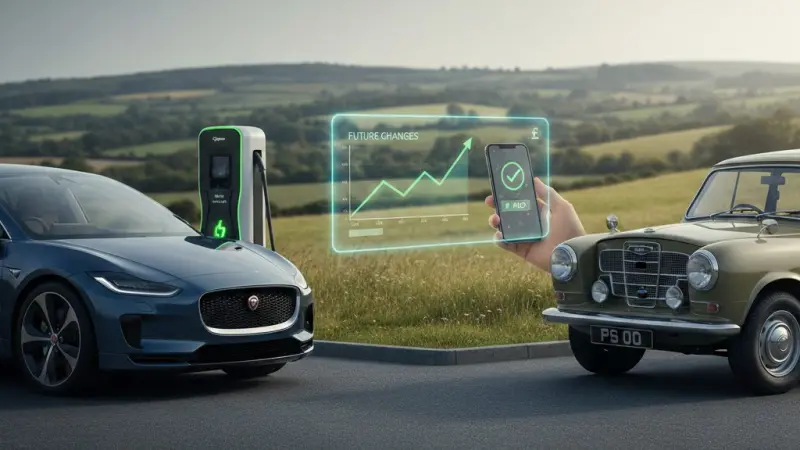
As the UK moves toward a 2035 ban on the sale of new petrol and diesel cars, the government faces a significant revenue shortfall. VED and fuel duty currently contribute billions to the Treasury, and the rise of electric vehicles threatens this income stream. Consequently, the Chancellor has already announced that from April 2025, electric vehicles will no longer be exempt from VED. They will begin to pay the standard rate, and new EVs will be subject to the first-year rates. There is also ongoing discussion regarding 'road pricing' or 'pay-as-you-drive' schemes as a long-term replacement for VED.
Transitioning to Zero Emission Mandates
The introduction of tax for EVs is a clear sign that the 'honeymoon period' for early adopters is coming to an end. This is a necessary step to ensure that all road users contribute to the infrastructure they use. However, the government will likely maintain some form of differential to ensure that the cleanest vehicles still pay less than the most polluting ones. Drivers should keep a close eye on Autumn Statements and Spring Budgets, as VED rates are typically adjusted in line with the Retail Price Index.
Potential for Geographic Road Pricing
Future systems might involve GPS tracking or more extensive ANPR usage to charge drivers based on the specific roads they use and the time of day, effectively merging road tax with congestion charging.
Practical Steps for Managing Your Tax
Staying compliant requires minimal effort if you follow a few basic steps. First, ensure your V5C logbook is always updated with your current address. Second, consider setting up a Direct Debit to automate the payment process and avoid accidental lapses. Third, use digital calendars to set reminders for your MOT expiry, as this is the most common reason for tax renewal failure. Finally, always check the tax status of a vehicle immediately after buying it, as the previous owner's tax is void the moment the sale occurs.
What to Do If You Receive a Fine
If you are caught with an untaxed vehicle, you will usually receive an out-of-court settlement letter. Paying this promptly is usually the cheapest way to resolve the issue. If you believe the fine was issued in error—for example, if you had already sold the vehicle or declared it SORN—you must provide evidence such as a confirmation letter from the DVLA or a bill of sale. Ignoring these letters will lead to the debt being passed to a collection agency or a court summons, which can severely impact your credit rating.
Dealing with Clamped Vehicles
If your car is clamped for being untaxed, you must pay a release fee and prove that you have taxed the vehicle before it can be freed.
If you do not tax it within twenty-four hours, the vehicle may be impounded.
Frequently Asked Questions
Can I drive my car to an MOT appointment without tax?
Yes, you are permitted to drive an untaxed vehicle on public roads if you are travelling to a pre-booked MOT appointment. You must be able to prove the appointment exists if stopped by the police. However, the vehicle must still be insured. Aside from this specific exception, driving an untaxed car is illegal and can result in immediate penalties or the vehicle being impounded.
How do I get a refund on my road tax?
A refund is automatically triggered when you notify the DVLA that the vehicle has been sold, scrapped, exported, or declared SORN. The DVLA will calculate the refund based on the number of full months remaining and send a cheque to the name and address on the V5C logbook. It is vital to ensure your logbook details are correct to avoid the refund being sent to the wrong person.
Does road tax cover the cost of road repairs?
Contrary to popular belief, Vehicle Excise Duty is not ring-fenced specifically for road repairs. It goes into the general taxation pot managed by the Treasury, which then allocates funds to various public services, including the National Health Service and education, as well as the Department for Transport. Since 2020, the government has moved toward a model where a portion of VED is dedicated to the National Roads Fund.
Is it cheaper to pay road tax monthly or annually?
Paying for a full twelve months in a single upfront payment is the most cost-effective method. Choosing to pay via monthly Direct Debit or a six-month single payment typically incurs a five per cent surcharge. While the monthly option helps with household budgeting, it does mean you will pay slightly more over the course of the year. For most drivers, the convenience of the Direct Debit outweighs the small extra cost.
What happens if I forget to tax my car?
The DVLA's system is automated and will identify an untaxed vehicle almost immediately after the grace period ends. You will likely receive an automated fine of £80, reduced to £40 if paid quickly. If the vehicle is seen on a public road by ANPR cameras or a traffic officer, the fines can escalate up to £1,000, and the vehicle could be clamped or towed away at your expense.
Disclaimer: The information provided in this article is for general informational and research purposes only. Company details, features, services, and market positions may change over time. Readers are advised to visit official company websites and conduct independent research before making any business decisions or purchasing services.
Most Searchable Keywords
Recent Blogs


Related Listings
Categories
- Accountants (295)
- Advertising Agencies (559)
- Architects (149)
- Automobiles (377)
- Beauty (300)
- Carpenters (146)
- Cleaning Services (387)
- Dentists (189)
- Driving (62)
- Electricians (215)
- Energy (8)
- Event Organiser (686)
- Finance (602)
- Guide (3375)
- Health (2207)
- Information technology (206)
- Legal Services (354)
- Logistics (6)
- Maintenance (65)
- Manufacturing (35)
Sponsored Listings in Web Developers



Related Blogs

BBC Radio 2 Presenters Family Age and Net Wor...
Read this insightful article "BBC Radio 2 Presenters Family Age and Net Worth Guide" to expand your knowledge!

Step-by-Step Guide to Claiming a TV Licence D...
Read this insightful article "Step-by-Step Guide to Claiming a TV Licence Discount or Exemption" to expand your knowledge!

Meet the Fair Work Agency Changing UK Work Ru...
Read this insightful article "Meet the Fair Work Agency Changing UK Work Rules in 2026" to expand your knowledge!
Questions & Answers – Find What
You Need, Instantly!
How can I update my business listing?
Is it free to manage my business listing?
How long does it take for my updates to reflect?
Why is it important to keep my listing updated?
